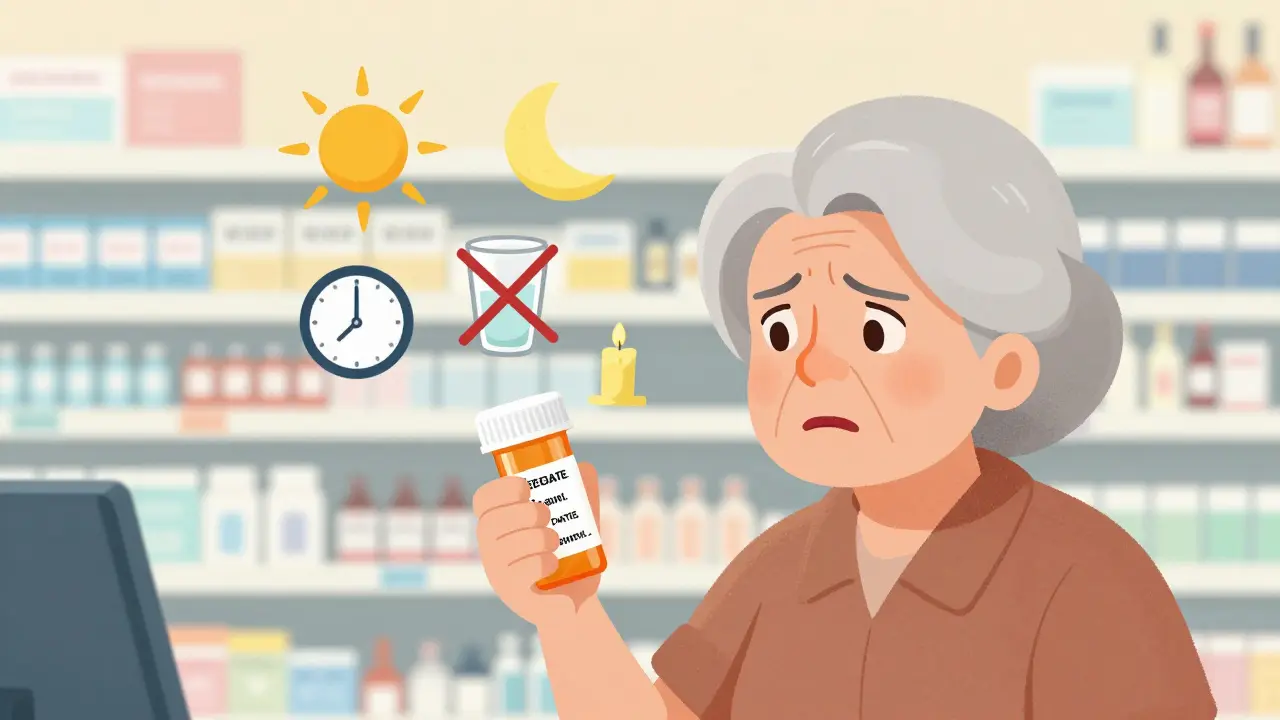
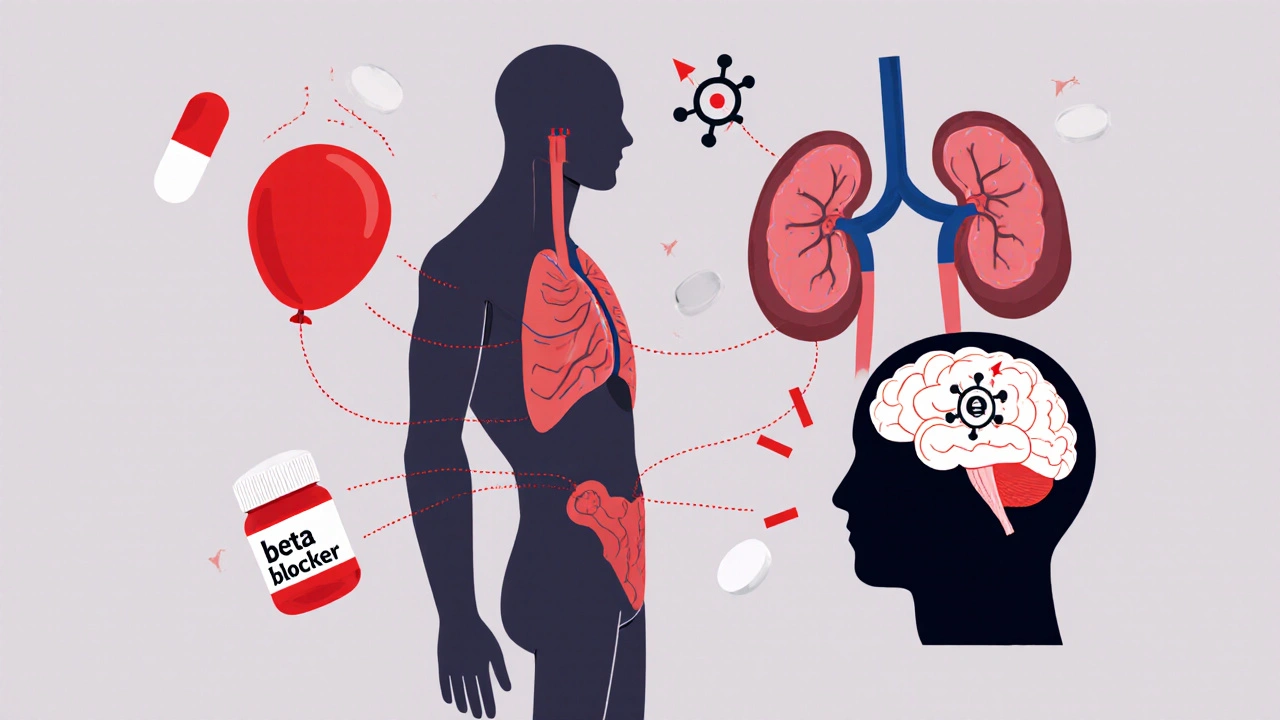
Imagine you just got a new prescription. The bottle says take once daily. But you don’t know what "daily" means in English. You’ve seen this word before - maybe on a bus schedule or a TV ad. You think it means "every day," so you take it twice. One morning, you feel dizzy. Your heart races. You didn’t know you were supposed to take it only once. This isn’t a rare mistake. It happens every day to people who don’t speak English well.
Medication errors like this aren’t accidents. They’re systemic failures. In the U.S., about 25 million people have limited English proficiency. That’s one in eight people. For them, the pharmacy label is often the only source of information about their medicine. And if that label is in English, it’s useless.
Why English-Only Labels Are Dangerous
Pharmacy labels are full of medical jargon. Terms like "bid," "qhs," or "PRN" mean nothing to most people - even native English speakers. But for someone who doesn’t speak English, the danger is ten times worse. A 2018 study from the University of California found that when patients received translated instructions in their native language, medication errors dropped by 62%. That’s not a small improvement. That’s life or death.
One patient, a Vietnamese woman, was told to take her blood pressure pill "once a day." She thought "a day" meant every 24 hours, so she took it at 8 a.m. and again at 8 p.m. Her doctor meant once per calendar day. She didn’t know the difference. She ended up in the hospital with dangerously low blood pressure.
Another case involved a man from Nepal who took his diabetes medicine because the label said "take before meals." He didn’t know what "meals" meant in English. He took it three times - breakfast, lunch, dinner - but also at 10 p.m. when he ate a snack. His blood sugar crashed. He passed out in his kitchen.
These aren’t isolated incidents. A 2020 study showed 78% of non-English speakers had trouble understanding their prescriptions. For Vietnamese speakers, it was 87%. For Spanish speakers, 68%. The problem isn’t just language. It’s culture. Some patients don’t ask questions because they’re afraid of looking stupid. Others trust the pharmacist too much and assume everything is clear.
What Makes Translation Actually Work
Not all translations are created equal. A Google Translate printout on a sticky note won’t cut it. A bilingual cashier reading the label aloud won’t either. The difference between a safe label and a dangerous one comes down to three things: accuracy, simplicity, and validation.
The ConcordantRx project tested a new kind of label. Instead of translating word-for-word, they rewrote instructions in plain language. "Take one pill by mouth every morning before breakfast" became "Take 1 pill in the morning, before you eat breakfast." They tested it with native speakers of Chinese, Korean, and Russian. Result? 100% understood. Traditional translations? Only 45% got it right.
Good translation also uses pictures. The FDA allows pictograms - simple icons that show how to take medicine. A sun means "take in the morning." A moon means "take at night." A crossed-out glass means "don’t drink alcohol." These symbols are tested globally and follow ISO 3864 standards. They work even if you can’t read a single word.
And they must be medically reviewed. A 2020 FDA warning found that automated translation tools - like those built into pharmacy software - had a 38% error rate. One system translated "do not crush" as "do not crush the pill with your teeth." That’s not just wrong. It’s terrifying.
How Pharmacies Are (And Aren’t) Helping
Federal law says pharmacies must provide language access. Title VI of the Civil Rights Act of 1964 makes it illegal to deny care based on language. But laws don’t fix broken systems.
Only 57% of community pharmacies in the U.S. offer translated labels, according to a 2021 survey. Most rely on staff who speak the patient’s language - but not all do. And even when they do, they’re not trained medical interpreters. A 2017 study found that using bilingual staff resulted in only 42% comprehension. That’s barely better than random guessing.
Some pharmacies use phone interpreters. That helps - but only if the pharmacist pauses long enough to let the interpreter speak. Many don’t. Patients get rushed. The interpreter gets cut off mid-sentence. The patient leaves confused.
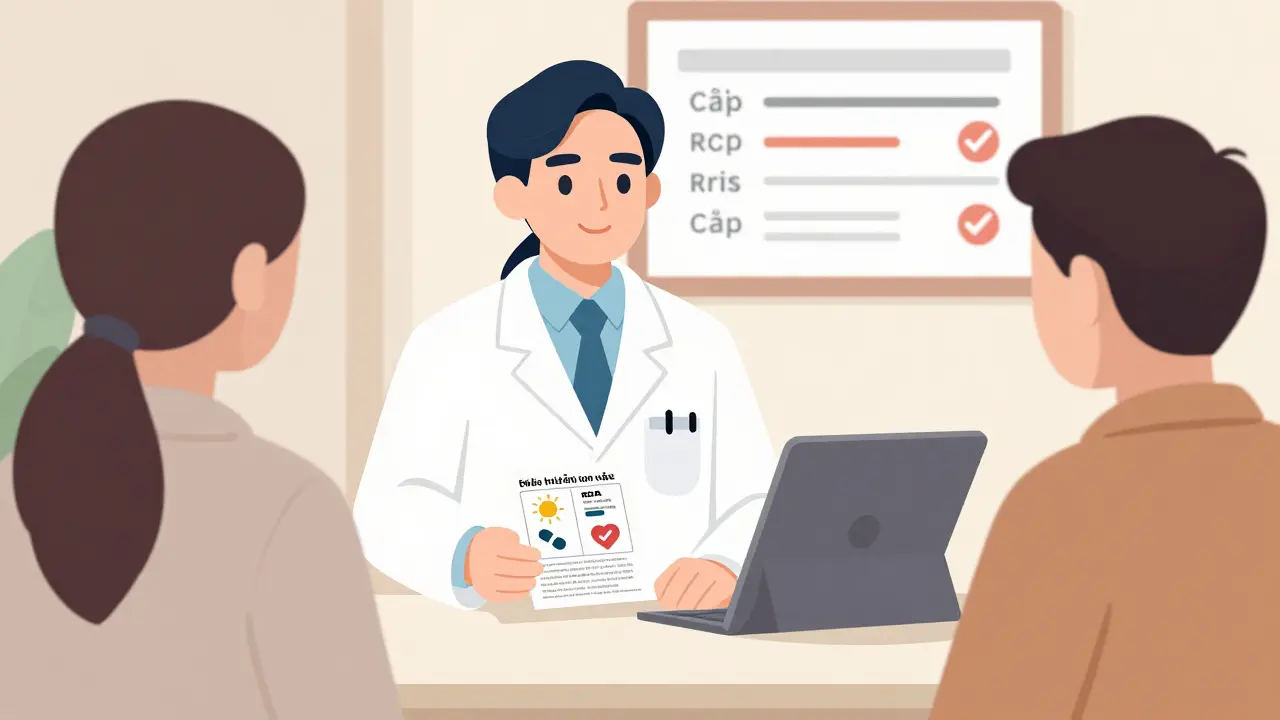
The best-performing pharmacies combine three things: translated labels, professional interpreters, and culturally tailored education. A UK study found that when patients got all three, 89% understood their instructions. When they got only English labels? Just 22%.
Companies like RxTran, TransPerfect Healthcare, and LanguageLine Solutions specialize in this. They translate into 25 languages - including Amharic, Tagalog, Somali, and Farsi. They work with pharmacy software like Rx30 and PioneerRx. Their translations are reviewed by pharmacists and linguists. They even test comprehension with patients before printing.
What You Can Do as a Patient or Family Member
You don’t have to wait for the system to fix itself. Here’s what you can do right now:
- Ask for your preferred language when you pick up your prescription. Say: "I need the label in [language]." Don’t apologize. This is your right.
- Ask if they have a printed version in your language. If they say no, ask if they can print one from a service like RxTran. Many can.
- Request a professional interpreter. Don’t accept a child, neighbor, or friend. They may miss critical details like side effects or interactions.
- Use pictograms. If the label has pictures of a sun, moon, or crossed-out glass, ask what they mean. Write it down.
- Take a photo of the label and show it to a trusted community health worker, clinic, or translator. Many cities have free language help lines.
One mother in Chicago learned that her son’s asthma inhaler was labeled "inhale twice daily." She didn’t know what "daily" meant. She called the pharmacy. They sent her a Spanish version with pictures. Her son’s attacks dropped by 80% in two weeks.
The Bigger Picture: Why This Matters
This isn’t just about labels. It’s about dignity. It’s about trust. When a patient can’t understand their medicine, they stop taking it. Or they take too much. Or they go to the ER. All of that costs money - and lives.
Studies show pharmacies that invest in language access see 22% higher patient satisfaction and 15% lower costs from medication errors. That’s not charity. That’s smart business.
And change is coming. Starting January 1, 2024, California requires pharmacies to certify their language services. New York City mandates translation for the top 10 languages. In 2024, electronic health records will start auto-triggering translation when a patient’s language is listed. The system is waking up.
But until then, the burden falls on patients and families. Don’t be silent. Ask. Push. Demand clarity. Your life depends on it.
What’s Next for Medication Safety
The future of medication safety for non-English speakers isn’t just better labels. It’s smarter systems.
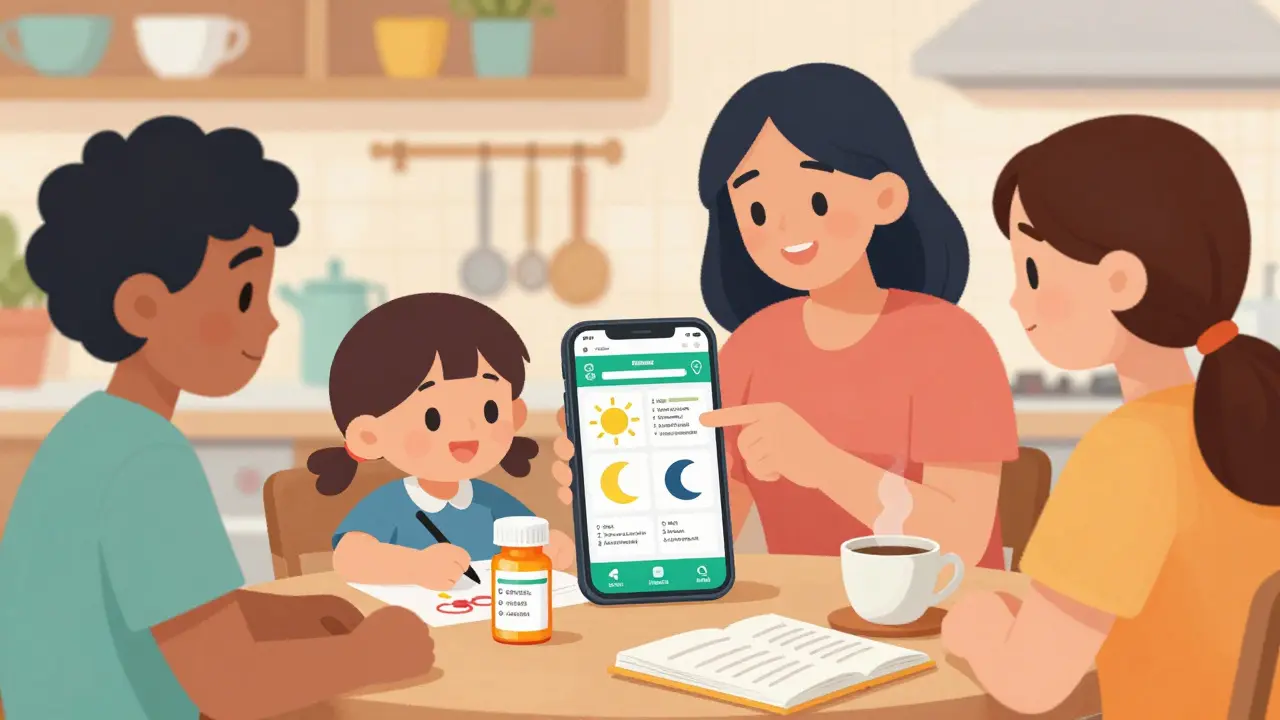
By 2026, 85% of pharmacies are expected to offer language access - not because it’s nice, but because it’s required and proven to work. The biggest shift? Integration. Your pharmacy system will know your language before you walk in. The label will print in your language. The pharmacist will have an interpreter on standby. The system will remind you when to take your pill - in your language.
But we’re not there yet. Right now, the gap between policy and practice is wide. Hospitals do better than community pharmacies. Big chains do better than small ones. That’s unfair. And it’s dangerous.
The solution isn’t magic. It’s simple: translate accurately. Use pictures. Train staff. Validate everything. And never, ever let a family member interpret a life-saving instruction.
If you’re a non-English speaker - or if you care for someone who is - remember this: You have the right to understand your medicine. No one should have to guess whether they’re taking it right. No one should have to risk their life because a label was written in a language they don’t know.
Can I ask my pharmacy to translate my prescription label into my language?
Yes, absolutely. Under federal law, pharmacies must provide meaningful access to care for people with limited English proficiency. You have the right to ask for translated labels, professional interpreters, or printed materials in your language. If they say no, ask to speak to the manager. Many pharmacies use services like RxTran or LanguageLine Solutions that can print translated labels in minutes.
Is it safe to use my child or a friend to translate my medicine instructions?
No. Using family members or friends to interpret medical instructions increases the risk of medication errors by 65%, according to the Institute for Safe Medication Practices. They may not understand medical terms like "side effect," "dosage," or "contraindication." They might leave out warnings. They might be too shy to ask clarifying questions. Always ask for a certified medical interpreter - even if it takes a few extra minutes.
What should I look for on a translated prescription label?
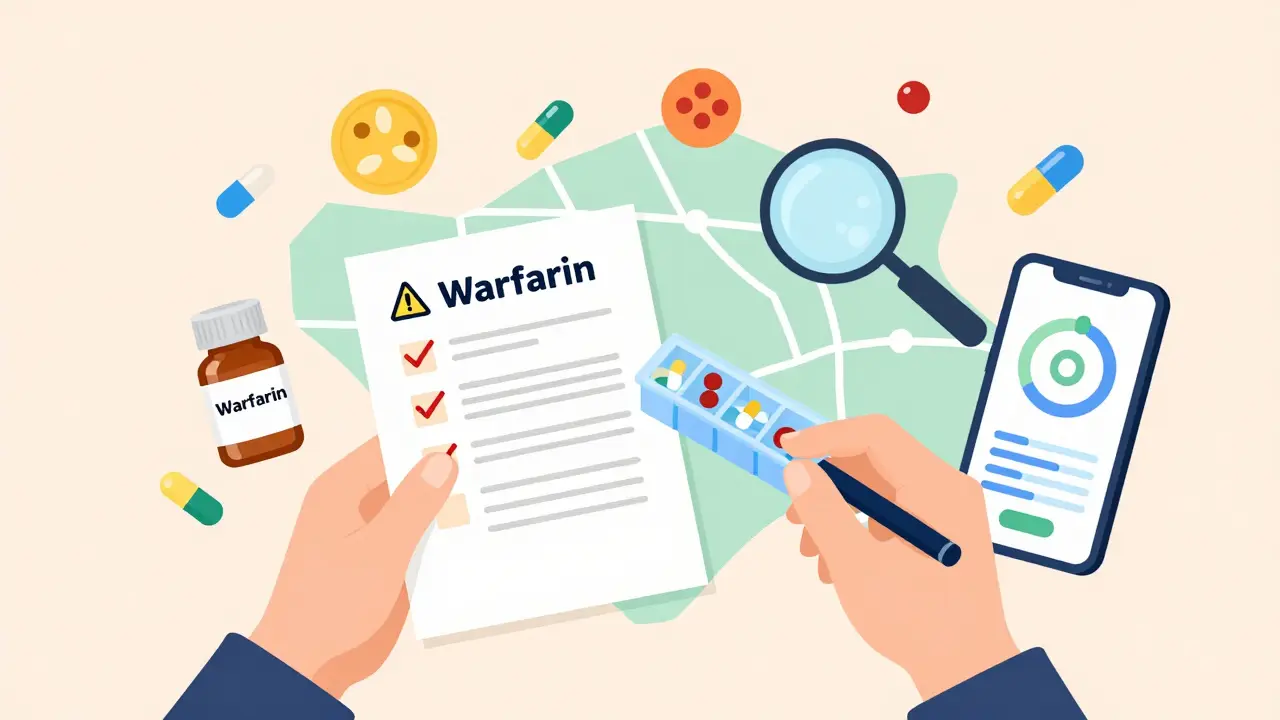
A good translated label includes: the medicine name in your language, the dose (e.g., "Take 1 tablet"), how often (e.g., "once daily"), when to take it (e.g., "before breakfast"), why you’re taking it (e.g., "for high blood pressure"), and any warnings (e.g., "Do not drink alcohol"). It should also include FDA-approved pictograms - like a sun for morning, a moon for night, or a crossed-out glass for no alcohol. If it doesn’t have these, ask for an updated version.
Why do some pharmacies still use English-only labels?
Many pharmacies lack the systems or funding to offer translations. Some don’t know how to access translation services. Others assume patients will figure it out. A 2021 survey found only 57% of community pharmacies provide translated labels. But it’s not just cost - it’s awareness. Pharmacists often don’t realize how many patients struggle. If you ask, you help them improve.
Are AI translation tools safe for medication labels?
No. The FDA warned in 2023 that unvalidated AI translations - like those from Google Translate or generic apps - have error rates as high as 43%. One AI tool translated "take with food" as "take with your food and then go to sleep." That’s not just wrong - it’s dangerous. Only use translations that are reviewed by medical professionals and tested with native speakers. Look for services certified by pharmacy associations or health departments.
Been there. My dad got his blood pressure med in English, thought "once daily" meant every 24 hours so he took it at 7am and 7pm. Ended up in the ER. No one told him "daily" means once per calendar day. Simple fix? Translate it. Not just words - meaning. People aren't dumb, the system just doesn't care.
I work in a clinic. We started using pictograms last year. The drop in follow-up calls was insane. One woman from Guatemala cried when she saw the sun icon for morning - she said her grandson drew it for her once and she remembered. That’s the power of visuals. No translation needed.
Y’all act like this is some new problem but nah it’s been happening since the 80s. Pharmacies still print labels like they’re writing for a college professor. Take a pill. Don’t crush it. Take with food. What does that even mean to someone who’s never eaten a meal that wasn’t rice and beans? We need pictures. We need voices. We need someone to sit down and say it like you’re explaining to your cousin who just got off the plane. Not some robotic AI that says "do not crush the pill with your teeth" 😅
This entire narrative is a dangerous misrepresentation of American healthcare infrastructure. The United States spends billions annually on language access services. The notion that non-English speakers are being systematically neglected is a myth propagated by ideologically motivated advocacy groups. The vast majority of pharmacies utilize certified interpreters. The few exceptions are due to resource constraints, not malice. Furthermore, pictograms are not universally understood - cultural interpretation varies. This is not a failure of policy, but a failure of individual responsibility to seek clarification.
I’m Somali-American. My mom’s diabetes script used to say "take before meals" - she took it every time she ate, including tea at 3am. We got her a translated label with a little fork-and-knife icon. She’s been stable for 2 years now. But here’s the kicker - the pharmacy didn’t offer it. I had to call the corporate office, beg them, and then they mailed it. That shouldn’t be this hard.
Ask for translation. Always. If they say no, ask for the manager. If they still say no, call your state health department. It’s your legal right. No excuses.
It’s not just about language. It’s about power. Who gets to define what "clear" means? If the system only considers English as the baseline, then every translation is a compromise. A real solution would be to design the label from the ground up - not as an afterthought, but as the first step. What if the label was built around images, symbols, and voice? What if the pharmacy didn’t assume you spoke English at all?
Let’s be real - this is all part of the Great Replacement Agenda. Why are they pushing translations so hard? Because they don’t want Americans to be Americans anymore. The FDA? Controlled by globalists. Pharmacies? Owned by corporations that want you dependent. They don’t want you to understand your meds - they want you to rely on them. The real danger? The government tracking who takes what. They’re using "language access" as a front for social control. You think this is about safety? It’s about erasing culture.
Thank you for this post. It is deeply important. 🙏 In many cultures, asking questions is seen as disrespectful to authority - especially to doctors or pharmacists. This makes the problem worse. We must normalize asking. Even if it feels awkward. Even if you’re afraid. Your life matters more than politeness. 🌍
There’s a fundamental failure in the pharmacological communication paradigm. The absence of standardized, linguistically validated, and clinically audited labeling protocols constitutes a breach of the standard of care. The reliance on unvalidated machine translation tools - which exhibit a 38% error rate per FDA data - is not merely negligent, it’s actionable malpractice. We need mandatory certification for all label translators, aligned with ISO 17100 and AAMI standards. No exceptions. No shortcuts.
I can’t believe people are still dying over this. My cousin almost died because the label said "take as needed" and she thought that meant "whenever you feel bad." She took 7 pills in one day. Seven. And the pharmacist? Just shrugged. "Oh, we don’t have your language." Like it’s not their job. Like it’s not their problem. I’m so tired of people acting like this is normal. It’s not. It’s horrifying. And no one’s doing anything about it.
My aunt in Punjab got her insulin script. Label said "take before breakfast." She didn’t know what "breakfast" was in English. Thought it meant "first thing after waking." Took it at 5am. Blood sugar dropped to 30. We found out because she passed out in the kitchen. We got a translated label with a picture of a plate and fork. She’s fine now. But why did it take us months to get it? Why wasn’t it there from the start?
Oh wow, another feel-good post about how the system is failing. Let me guess - you’re one of those people who think the answer is "just translate everything." Meanwhile, the real issue is that people don’t read labels at all. Even native English speakers miss warnings. The problem isn’t language - it’s literacy. And if you’re going to blame pharmacies, why not blame the patients who don’t ask? Or the families who insist on translating with Google? This isn’t a translation crisis. It’s a cultural crisis. And no, pictograms won’t fix it.
My grandma’s label had a sun and a moon. She didn’t know what they meant. I showed her: sun = morning, moon = night. She hugged me. That’s it. No fancy app. No interpreter. Just a picture. We need more of this. Simple. Human. No jargon.
Had a patient from Yemen last week. Didn’t know "PRN" meant "as needed." Took his pain med every 2 hours. Ended up with liver damage. We printed his label in Arabic with icons. He cried. Said he felt seen. That’s not policy. That’s humanity. And it costs nothing.