
When you walk into a doctor’s office, your list of medications might look perfect on paper. But what’s actually in your medicine cabinet? That’s where things go wrong. Every year, medication reconciliation catches errors that could have led to hospital visits, dangerous interactions, or even deaths. And the simplest, most reliable way to make sure your list matches what you’re really taking? Bring your pill bottles.
It sounds basic. But most people don’t do it. A 2023 study found that only 23% of older adults kept their medications in original bottles. The rest? They dumped pills into weekly organizers, mixed them in jars, or tossed the labels. And when you try to remember what you’re taking - especially if you’re on 10 or more pills - you’re bound to miss something. That’s why bringing the actual bottles isn’t just helpful. It’s essential.
Why Pill Bottles Matter More Than Your Memory
Your doctor doesn’t guess what you take. They rely on what you tell them. But memory is unreliable. Stress, confusion, or just plain forgetfulness can make you leave out a pill you take "as needed" - like painkillers or heart medication. Or maybe you stopped taking a drug last month but forgot to tell anyone. That’s dangerous. Research shows 60-70% of medication errors happen during transitions in care - like after a hospital stay or when switching doctors. And 80% of those errors happen because the list was incomplete.
Bringing your pill bottles cuts that risk by 67%. Why? Because labels don’t lie. They show the exact name, dose, frequency, and expiration date. They also reveal if you’re taking a generic version, or if you’ve been prescribed a different strength than what you think. A 2024 study in the Family Practice Management journal found that practices using this method saw 32% fewer adverse drug events. That’s not a small win. That’s life-saving.
What Exactly Should You Bring?
Don’t just grab your main prescriptions. Bring everything.
- All prescription medications - even if you think you don’t take them anymore
- All over-the-counter pills - pain relievers, antacids, sleep aids
- Vitamins and supplements - fish oil, magnesium, melatonin
- Herbal remedies - turmeric, ginseng, echinacea
- Any creams, patches, or inhalers - yes, even those
Don’t throw away empty bottles. Even if the bottle is half-full or nearly empty, keep it. That tells your doctor you were taking it - and might still be. If you tossed the label, take a photo of it before you discard it. Many pharmacists now recommend this. Apps like Medisafe can also help you scan and store digital copies.
And here’s the big one: bring the bottles with labels intact. About 38% of patients dump their pills into one big container. Maybe you’re trying to be neat. But that makes it impossible to know what’s inside. A bottle labeled "multivitamin" might actually contain blood pressure pills. A pill organizer with no labels? That’s a guessing game. Your doctor can’t reconcile what they can’t identify.
The Brown Bag Method: A Simple System That Works
Instead of carrying 10 separate bottles, put them all in one bag. This is called the "brown bag review" - and it’s become a gold standard in clinics across the U.S. and New Zealand. Why? Because it’s efficient. Instead of digging through drawers, your doctor can see everything at once. Studies show clinics using this method cut reconciliation time by 38% while improving accuracy.
Do this 24 hours before your appointment. Set aside 15-20 minutes. Go through your medicine cabinet, bathroom, nightstand, purse. Don’t skip anything. If you’re unsure if you still take a pill, bring it anyway. Better to have it and not need it, than to miss it and risk a reaction.
For those managing complex regimens - especially seniors on 5+ medications - this can take longer. You might need 30-45 minutes to sort through pill organizers, check expiration dates, and match each pill to its original label. That’s okay. It’s worth it.
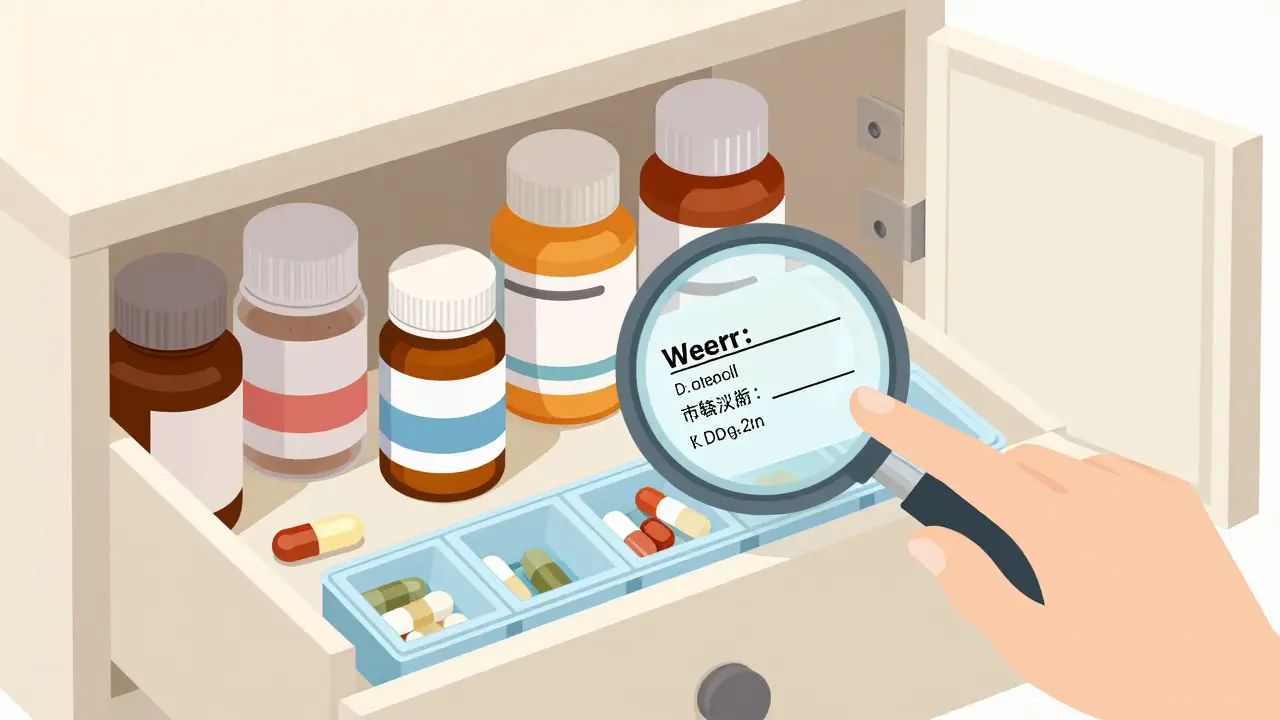
What About Pill Organizers? Are They Bad?
No - but they’re not enough.
Weekly or monthly pill organizers are great for staying on schedule. But they’re useless for reconciliation unless you bring the original bottles too. A 2023 study of 22 older adults found that 77% used organizers. Of those, 41% used a single 7-compartment box. Another 29% used two boxes for morning and evening doses. But none of them could tell their doctor what each slot contained unless they had the original labels.
Here’s what to do: Before you fill your organizer, lay out the original bottles. Match each pill to its label. If you’re unsure what a pill is, don’t guess. Bring both the organizer and the bottles. Your pharmacist or doctor can help you label the organizer later - but only if they can see the original source.
What If You Can’t Bring the Bottles?
Some people can’t. Maybe they live far away. Maybe they’re homebound. Maybe they’re in a care facility. In those cases, alternatives exist - but they’re not as good.
Some clinics now let you take photos of your pill bottles and send them ahead of time. Others use telehealth visits where you hold each bottle up to the camera. These methods are better than nothing. But they miss key details. A 2024 AMA report found that digital methods miss 22% of discrepancies - especially when pills are mixed, expired, or stored in unlabeled containers.
Another option: ask your pharmacy for a printed list. Most pharmacies can generate one showing all your filled prescriptions. But here’s the catch: it doesn’t show what you’re actually taking. You might have stopped a drug. Or taken half a pill. Or switched brands. Your pharmacy record won’t know that.
The bottom line: nothing replaces seeing the real bottles. Even the smartest apps and AI tools can’t replace the physical label with FDA-mandated details: drug name, strength, lot number, expiration date, and prescribing info.
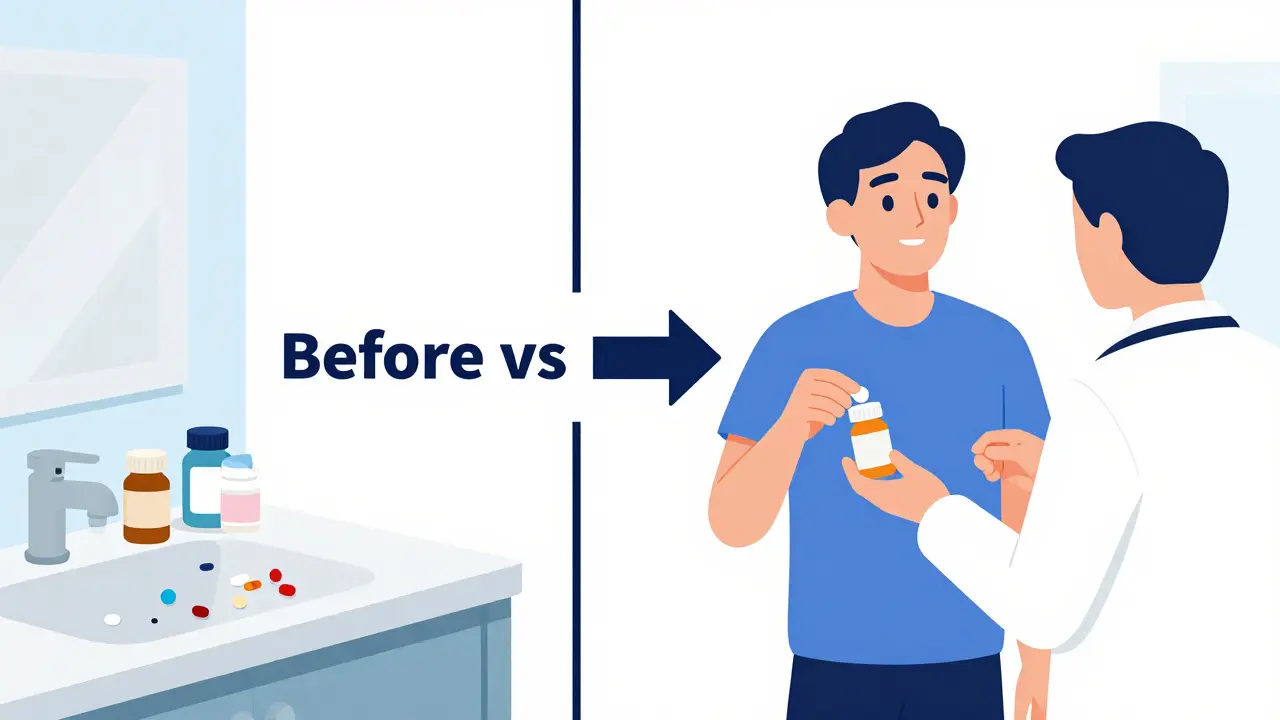
What Happens When You Bring the Bottles?
Your doctor or nurse will sit with you. They’ll go through each bottle. They’ll compare it to your electronic record. They’ll ask: "Are you still taking this?" "Do you have any side effects?" "Have you changed how you take it?"
And here’s what often happens:
- You’ll discover you’re taking two pills that shouldn’t be mixed
- You’ll realize you’ve been taking a higher dose than prescribed
- You’ll find a pill you stopped months ago - and your doctor will remove it from your list
- You’ll learn you’re missing a medication your doctor prescribed but you never filled
One nurse in Wellington told me: "I caught three dangerous interactions this month just because patients brought their bottles. One had been taking a blood thinner and an OTC painkiller together. Neither knew it was risky. Both were saved because they showed up with the bottles."
Common Mistakes (And How to Avoid Them)
Even when people try, they mess up. Here are the top mistakes - and how to fix them:
- Mistake: Only bringing current prescriptions. Fix: Bring everything - even discontinued meds. You might be taking a drug you think you stopped.
- Mistake: Leaving out "as needed" meds. Fix: PRN (as needed) drugs like ibuprofen or nitroglycerin cause 29% of missed errors. Bring them even if you haven’t used them.
- Mistake: Throwing away empty bottles. Fix: Take a photo. Or keep the bottle. You need proof you were on it.
- Mistake: Not knowing what your pills are for. Fix: Ask your pharmacist. Write it on a sticky note. You deserve to know why you’re taking each pill.
And don’t feel embarrassed. A 2023 survey found 28% of patients felt ashamed about unused medications. But your doctor isn’t judging you. They’re trying to keep you safe.
What’s Changing in 2026?
The system is getting smarter. By 2026, most pharmacies will share data directly with clinics using FHIR APIs. That means your prescription history will sync automatically. AI tools can now scan pill images and identify them with 78% accuracy. But here’s the truth: even with all that tech, the physical bottle is still the gold standard.
Dr. Michael A. Steinman, co-author of the 2023 Beers Criteria, put it simply: "The physical bottle remains the Rosetta Stone of medication reconciliation - nothing else provides the complete picture of what’s actually in the patient’s home."
That’s why, despite all the digital advances, clinics in New Zealand, the U.S., and beyond still ask: "Did you bring your pill bottles?"
Because for now - and likely for years to come - the answer to accurate, safe medication management is still in your medicine cabinet.
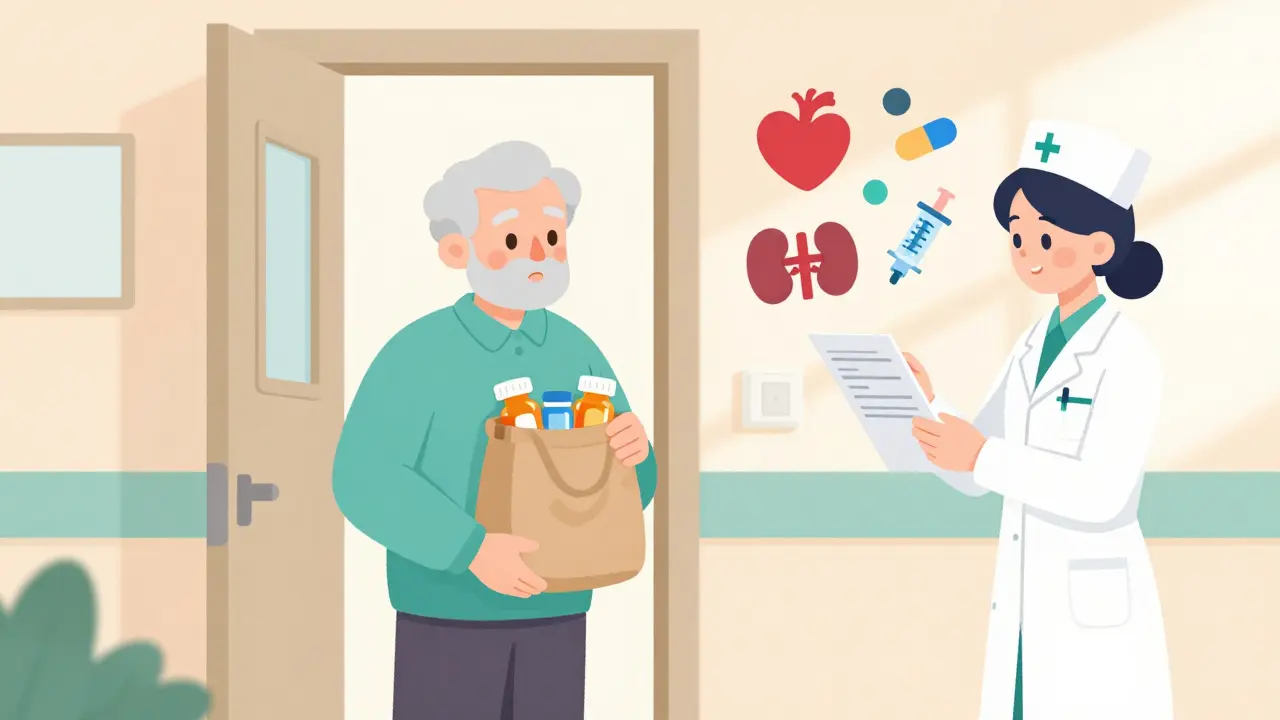
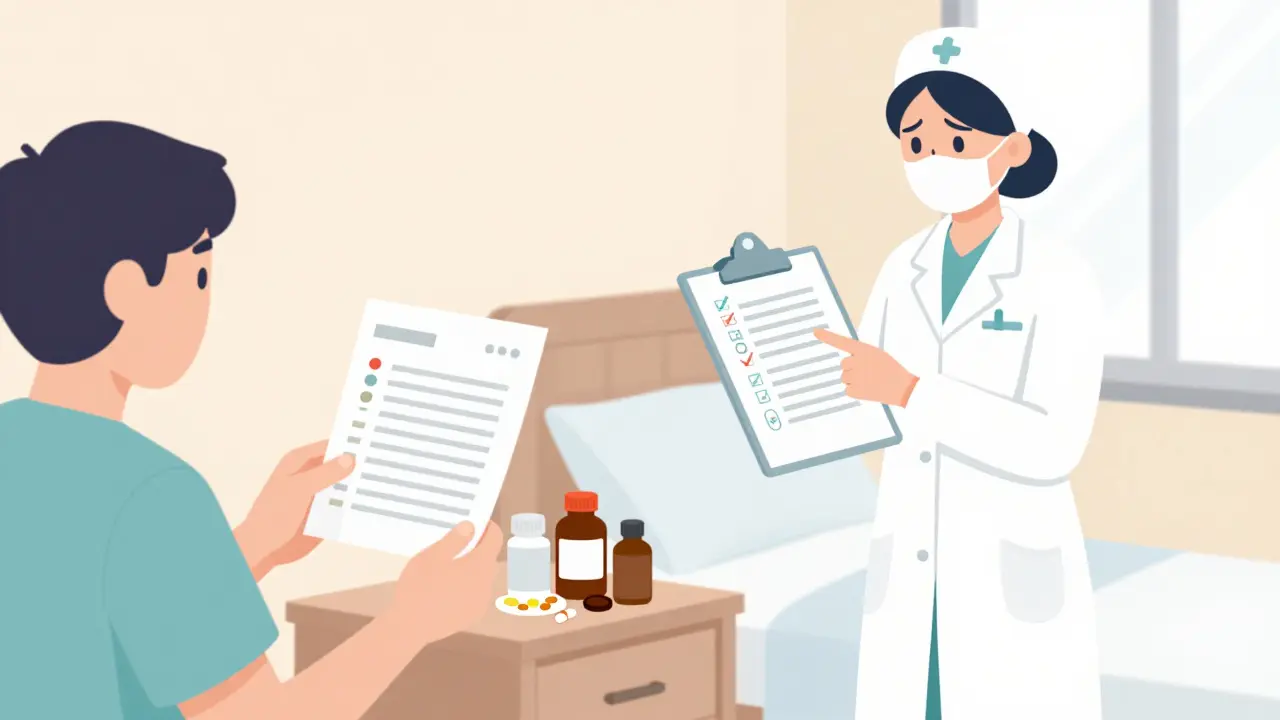
Meanwhile, my 82-year-old aunt uses a pill organizer labeled with Sharpie and swears by it. She’s been alive longer than most of these studies. Maybe the real issue is that doctors don’t listen - not that patients don’t bring bottles.
Each label is a silent testimony: 'Take with food.' 'For pain only.' 'Do not crush.' We treat these like sacred texts, yet we’re told to discard them as if they’re disposable packaging.
I once brought my grandmother’s bottles to her appointment. She didn’t know what half of them were for. The doctor paused. Said, 'This is why we do this.'
It wasn’t about compliance. It was about dignity. The bottles don’t lie. They remember what we forget.
my doctor found a duplicate blood pressure med i’d forgotten i was taking. i’d been doubling up. i almost had a stroke.
also… the brown bag method? life changing. i put everything in a grocery bag. it’s like a mini pharmacy museum. my nurse laughed and said, 'this is the first time in 3 years i’ve seen a patient actually show up with their meds.'
it’s not about being perfect. it’s about being alive.
My mom’s in a nursing home now. They don’t let residents keep bottles. So I send pics. They say ‘we have your meds on file.’ But file doesn’t mean ‘what you’re actually swallowing.’
One time, they gave her a pill she’d been allergic to since 2017. She had a rash. No one knew. Because the file said ‘active.’ The bottle? Gone.
Bring the damn bottles. Or at least the photos. Or write it on your hand. Do something.
I brought my dad’s bottles to his last appointment. He had dementia. He didn’t know what half of them were. But I did. And when the nurse saw the expired blood thinner in there? She said, 'We need to adjust this immediately.'
He lived another 14 months because of that.
It’s not about being organized. It’s about being loved. Bring the bottles. Even if you’re scared. Even if you’re tired. Even if you think it’s silly.
Someone’s life might depend on it.
It’s 2026. We have apps that track your coffee intake. But you can’t remember to bring your pills?
And let’s not pretend ‘digital photos’ are a substitute. A photo of a pill in a dim bathroom? With a blurry label? That’s not reconciliation - that’s a guessing game with a side of negligence.
If you can’t bring the bottle, you shouldn’t be trusted with a prescription. Period.
Our doctors scan QR codes on the medicine strip. We don’t carry bottles. We carry trust.
Why are you clinging to 1980s methods? Your system is broken. Not your patients.
Bring the bottles? Who cares? The doctor doesn’t even look at them. They just check the EHR and say ‘you’re good.’
And don’t get me started on ‘brown bag.’ That’s not a system. That’s a prop for a TED Talk.
Real solution? AI that auto-syncs pharmacy data. Not some guy holding up a half-empty bottle of lisinopril like it’s the Holy Grail.
Each label is a covenant between the body and the cosmos. The expiration date? Not merely a date - it is the ticking of the soul’s clock.
When you bring the bottle, you do not merely inform the physician. You surrender your autonomy to the sacred ritual of healing.
Yet in a world of digital abstraction, we have forgotten this. We have replaced the physical with the pixel. And in doing so, we have lost the truth.
And you think a photo is enough? A photo doesn’t tell you if the pill is cracked. If the bottle is 70% full. If the patient has been crushing them because they can’t swallow.
And don’t even get me started on supplements. That bottle of ‘turmeric’? 90% of the time, it’s just ground-up chalk.
Bring the bottles. Or stop pretending you care about your health.
She said, 'I’ve never seen someone so honest.'
Turns out, I was taking 3 pills I didn’t need… and had stopped 2 I did.
It wasn’t about memory. It was about shame.
I didn’t want to admit I was scared. That I didn’t know what half of them did. That I was taking them because ‘everyone else was.’
So I cried too.
And then I felt free.
Bring the bottles. Not because you’re supposed to. But because you’re ready to heal. 🙏
Now, we have algorithms. We have AI. We have blockchain-backed pharmacy logs.
But none of them can see the tremor in your hand. None of them can smell the alcohol on your breath. None of them can tell if you’re lying because you’re afraid of being judged.
The bottle doesn’t lie. It just waits.
And sometimes… that’s enough.