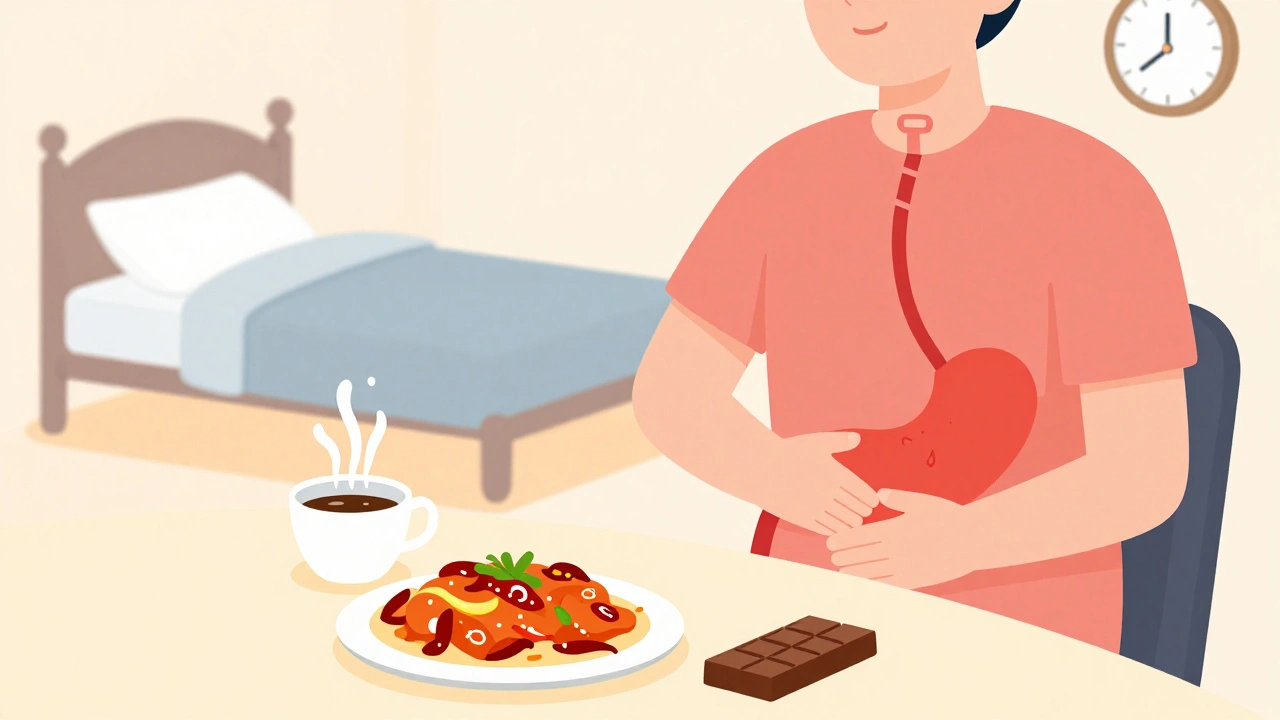
Heartburn after dinner. A sour taste in your mouth when you wake up. Coughing at night that won’t quit. If this sounds familiar, you’re not alone. About 20% of adults in the U.S. deal with GERD symptoms at least once a week. And while many turn to proton pump inhibitors (PPIs) like omeprazole or esomeprazole for quick relief, those pills aren’t the whole story. The truth is, managing GERD isn’t just about suppressing acid-it’s about fixing the conditions that let it happen in the first place.
What Really Causes GERD?
GERD isn’t just “bad heartburn.” It’s a chronic condition where the lower esophageal sphincter (LES)-a muscular ring at the bottom of your esophagus-doesn’t close tightly enough. That lets stomach acid, which is as strong as battery acid (pH 1.5-3.5), splash back up into your esophagus. Your esophagus doesn’t have the same protective lining as your stomach, so that acid burns. And over time, that burn can turn into inflammation, scarring, or even Barrett’s esophagus-a precancerous change that affects 10-15% of long-term GERD patients. The triggers aren’t always what you think. Yes, spicy food and coffee can set it off. But so can being overweight. People with a BMI over 30 are 2.5 times more likely to have GERD. A hiatal hernia, where part of the stomach pushes up through the diaphragm, is found in 94% of people with erosive esophagitis. Even pregnancy can trigger it-up to half of all pregnant women experience reflux. And smoking? It doubles your risk.How PPIs Actually Work (And When They’re Overused)
PPIs are powerful. They don’t just reduce acid-they shut down the acid pumps in your stomach cells, cutting production by 90-98%. That’s why they heal erosive esophagitis in 70-90% of cases, compared to 50-60% with older H2 blockers like famotidine. For many, they’re life-changing. Symptoms vanish. Sleep improves. Eating becomes normal again. But here’s the catch: PPIs don’t fix the leaky valve. They just mask the symptom. And long-term use comes with real risks. Studies show that taking PPIs for more than a year increases your chance of:- Enteric infections like C. diff by 20-50%
- Vitamin B12 deficiency (which can cause nerve damage and fatigue)
- Acute interstitial nephritis (a type of kidney inflammation)
- Hip fractures in older adults (35% higher risk with 3+ years of use)
Lifestyle Changes: The Real First-Line Treatment
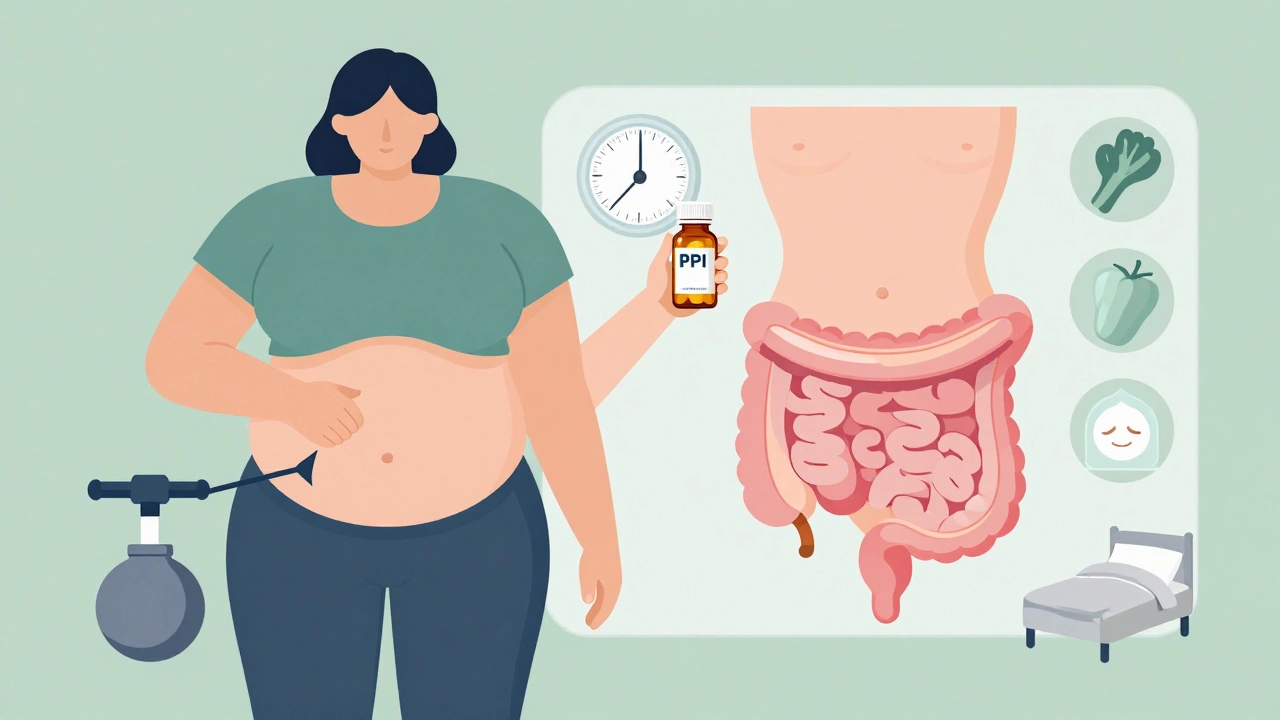
The American College of Gastroenterology says it clearly: lifestyle changes should come before medication for everyone with GERD. And the data backs it up. Losing just 5-10% of your body weight cuts symptoms in half. That’s not a miracle-it’s physics. Less belly fat means less pressure pushing stomach contents upward. Avoiding food 2-3 hours before bed reduces nighttime acid exposure by 40-60%. Why? Because lying down removes gravity’s help in keeping acid down. Elevating the head of your bed by 6 inches (using blocks or a wedge pillow) is just as effective as some medications for nighttime symptoms. Diet matters too. Studies show 70-80% of people have clear trigger foods. The biggest offenders:- Coffee (73% of users report improvement after cutting out)
- Tomatoes and tomato-based sauces (high acidity)
- Alcohol (relaxes the LES)
- Chocolate (contains methylxanthines that weaken the sphincter)
- Fatty or fried foods (delay stomach emptying)
The Best Way to Use PPIs (Without the Risks)
If you need a PPI, use it right. Take it 30-60 minutes before your first meal of the day. That’s when your stomach starts ramping up acid production. Taking it after eating? You’re late to the party. Start with the lowest effective dose. Most people do fine on once daily. Only severe cases need twice daily-and even then, it’s temporary. Plan to reassess. After 4-8 weeks, ask yourself: Are my symptoms gone? Can I try cutting back? Don’t wait until you’ve been on it for a year. To stop safely, don’t quit cold turkey. Gradually taper over 4-8 weeks. Bridge with an H2 blocker like famotidine on days you feel the rebound. Many patients find they can switch to “on-demand” use-taking it only when they know they’ve eaten something risky.What Happens When Lifestyle Changes Aren’t Enough?
Some people do everything right-and still have symptoms. That’s when you look beyond pills. Newer options like the LINX® device-a tiny ring of magnetic beads placed around the LES-helps the sphincter stay closed without blocking food passage. Studies show 85% of users have major symptom reduction at 5 years. Or there’s the transoral incisionless fundoplication (TIF), a minimally invasive endoscopic procedure that rebuilds the valve from the inside. At 2 years, 85% of patients say it improved their quality of life more than PPIs. And now, in 2023, the FDA approved Vonoprazan (Voquezna), the first new acid-blocking drug class in 30 years. It works faster than PPIs and may have fewer long-term risks. Early trials show 89% healing rates in erosive esophagitis-slightly better than PPIs.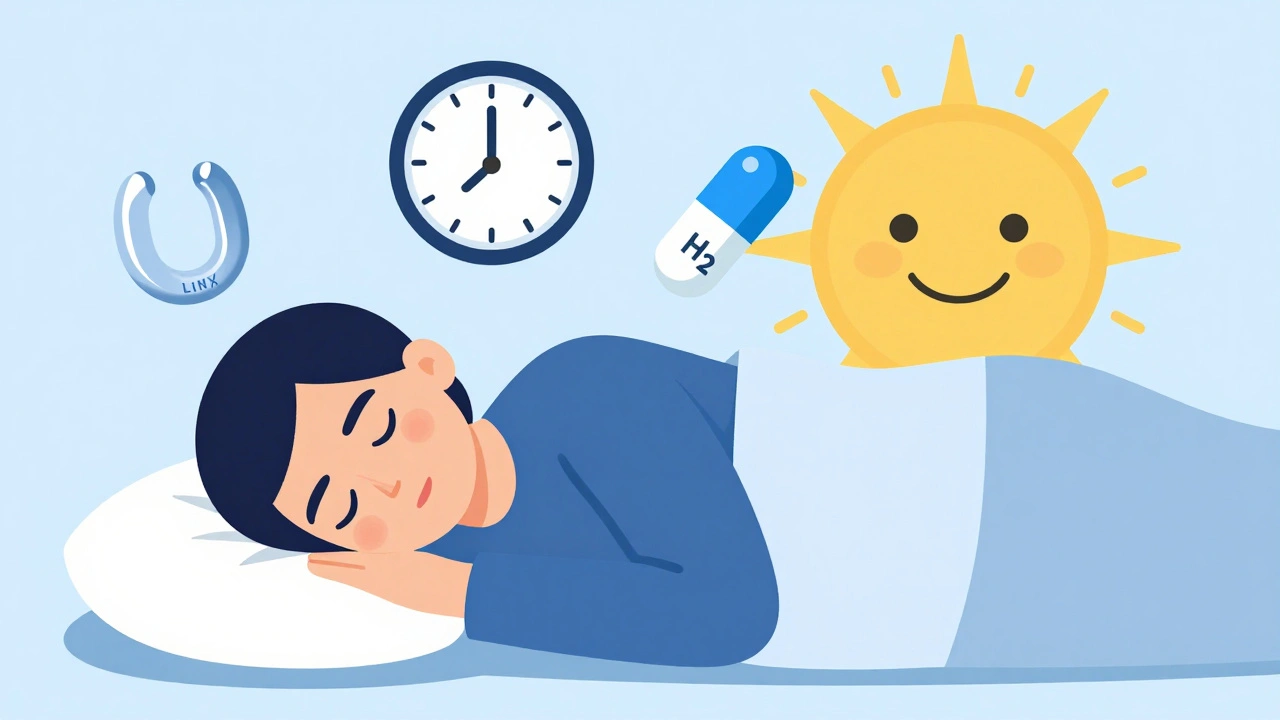
Why Most People Fail at Managing GERD
The biggest reason GERD keeps coming back isn’t bad medicine. It’s bad habits. A Cleveland Clinic survey found 41% of patients couldn’t stick to dietary changes because of social pressure-birthday cakes, weekend barbecues, holiday meals. It’s not that they didn’t know what to do. They just didn’t have a plan to make it work in real life. Others didn’t realize that symptom relief doesn’t mean healing. You can feel better while your esophagus is still inflamed. That’s why doctors recommend a full 8-week course of PPIs-even if you’re feeling fine after two weeks. And then there’s the rebound effect. People stop PPIs cold, get hit with worse heartburn than before, assume the drug was “working,” and go right back on it. That cycle keeps them trapped.What to Do Next
If you’re dealing with GERD, here’s your action plan:- Track your symptoms for 2 weeks. Note what you eat, when you eat, and how you feel afterward. Use an app like RefluxMD if it helps.
- Eliminate the top 3 triggers: coffee, late-night eating, and fatty foods.
- Elevate your bed or sleep on your left side.
- If you’re overweight, aim to lose 5-10% of your body weight.
- If you’re on a PPI, talk to your doctor about whether you still need it. Ask if you can try stepping down to an H2 blocker or going on-demand.
- If symptoms persist after 4-6 weeks of lifestyle changes, get an endoscopy. Don’t wait for complications like trouble swallowing or unexplained weight loss.
Can I stop taking PPIs cold turkey?
No. Stopping PPIs suddenly often causes rebound acid hypersecretion, where your stomach overproduces acid for weeks. This can make symptoms worse than before. Instead, taper slowly over 4-8 weeks, using an H2 blocker like famotidine on days you feel strong reflux. Always consult your doctor before making changes.
Do I need an endoscopy for GERD?
Not always. If you have typical symptoms like heartburn and regurgitation without warning signs, your doctor may start with lifestyle changes and medication. But if you have trouble swallowing, unexplained weight loss, vomiting blood, or anemia, an endoscopy is necessary to check for complications like Barrett’s esophagus or ulcers.
Are natural remedies like apple cider vinegar or baking soda effective?
There’s no strong evidence that apple cider vinegar helps GERD. In fact, vinegar is acidic and may worsen symptoms. Baking soda (sodium bicarbonate) can neutralize acid temporarily, but it’s high in sodium and can cause bloating or electrolyte imbalances if used often. It’s not a long-term solution and shouldn’t replace proven treatments.
Can GERD cause asthma or chronic cough?
Yes. About half of GERD patients have a chronic cough, and reflux is a known trigger for asthma flare-ups. Acid irritating the airways can cause coughing, wheezing, or throat tightness-even without heartburn. If you have unexplained respiratory symptoms, GERD should be ruled out.
How long does it take for lifestyle changes to work?
Most people notice improvement within 2-4 weeks of making changes like avoiding late meals and cutting trigger foods. But full healing of esophageal damage can take 6-8 weeks. Patience and consistency matter more than speed.
Is surgery the last resort for GERD?
Surgery isn’t always the last resort-it’s an option for people who don’t respond to lifestyle changes and medication, or who want to avoid lifelong pills. Procedures like LINX® or TIF have high success rates and low complication risks. Many patients report better quality of life after surgery than they did on PPIs.
I used to be on PPIs for years until my GI doc made me track my meals. Turns out, my midnight pizza habit was the real culprit. Cut it out, started sleeping on my left side, and within three weeks my heartburn was gone. No more pills. I didn’t even miss them.
Turns out, your body’s smarter than a pharmacy shelf.
My mum had GERD for 15 years. She tried everything. Then she lost 8% of her weight and stopped eating after 7pm. Done. No meds. No surgery. Just simple stuff. Why do we make it so complicated
Oh wow. Another ‘lifestyle changes fix everything’ sermon 🙄
Let me guess-you also think fluoride is a government plot and yoga cures cancer. Look, PPIs aren’t perfect, but they’re not the devil either. Millions of people rely on them. If you’re gonna preach about ‘fixing the leaky valve,’ maybe start by acknowledging that not everyone has the time, money, or energy to become a 17th-century monk with a celery diet.
And yes, I’ve been on omeprazole for 12 years. My esophagus is healed. My kidneys are fine. My B12? Supplemented. You don’t get to moralize about my meds just because you read one blog post.
Also, ‘elevate your bed’? I sleep in a studio apartment in Brooklyn. My ‘wedge pillow’ is a stack of old textbooks and regret.
They say ‘lifestyle changes first’ like it’s some kind of virtue signal. Meanwhile, I’m 42, work two jobs, and my kid throws up Cheerios at 10pm. I don’t have time to ‘track my symptoms’ or ‘eat before 7pm.’
And don’t get me started on ‘natural remedies.’ I tried apple cider vinegar once. Felt like swallowing a battery acid smoothie. Then I took a PPI and went back to sleeping. Who’s the real villain here-the pill or the guilt-tripping wellness cult?
Also, why is everyone so obsessed with ‘healing the esophagus’? I just want to eat a burger without crying. Is that too much to ask
For anyone feeling overwhelmed-start small. One change at a time. Maybe skip coffee for a week. Or don’t eat after 8pm. Don’t try to overhaul your life overnight.
And if you’re on a PPI, don’t panic. Talk to your doctor. Ask about tapering. Many people can reduce or stop safely with the right plan. You’re not weak for needing help. You’re smart for seeking it.
Also, if you’re considering surgery, know that LINX and TIF are legit options. Not magic, but they’ve changed lives. Don’t let fear of ‘last resort’ stop you from exploring what’s right for you.
And yes, weight loss helps. But it’s not about being thin. It’s about reducing pressure. Think of it like taking the weight off a spring. The spring doesn’t need to be perfect-just less compressed.
You’ve got this. One meal, one night, one step at a time.
Wow. So the real cause of GERD is… capitalism? No one has time to eat before 7pm because they’re working two shifts to afford rent.
And the ‘8-week PPI course’? Sure, if you’ve got health insurance and a doctor who doesn’t charge $300 for a 10-minute chat.
Meanwhile, the pharma companies are laughing all the way to the bank while you’re trying to figure out if ‘on-demand’ means you can take it after the taco truck.
They don’t want you to know this-but PPIs are a trap. The FDA? Controlled. The doctors? Paid. The ‘lifestyle changes’? A distraction. Real GERD is caused by EMFs from 5G towers and glyphosate in your kale. They push PPIs to keep you docile while they poison your microbiome and sell you ‘wedge pillows’ made in China.
Stop taking their pills. Drink lemon water. Sleep on the floor. Let your body detox. The system doesn’t want you healed-they want you dependent.
And if you think weight loss helps? You’re buying into the diet-industrial complex. Fat is energy. Your body is trying to protect you.
Wake up.
Thank you for writing this. I’ve been on PPIs for 7 years. I stopped last month-tapered with famotidine, cut out coffee and late dinners, and lost 12 pounds. No rebound. No panic. Just… peace. I didn’t know it was possible to feel this good without a pill.
It’s not about perfection. It’s about progress.