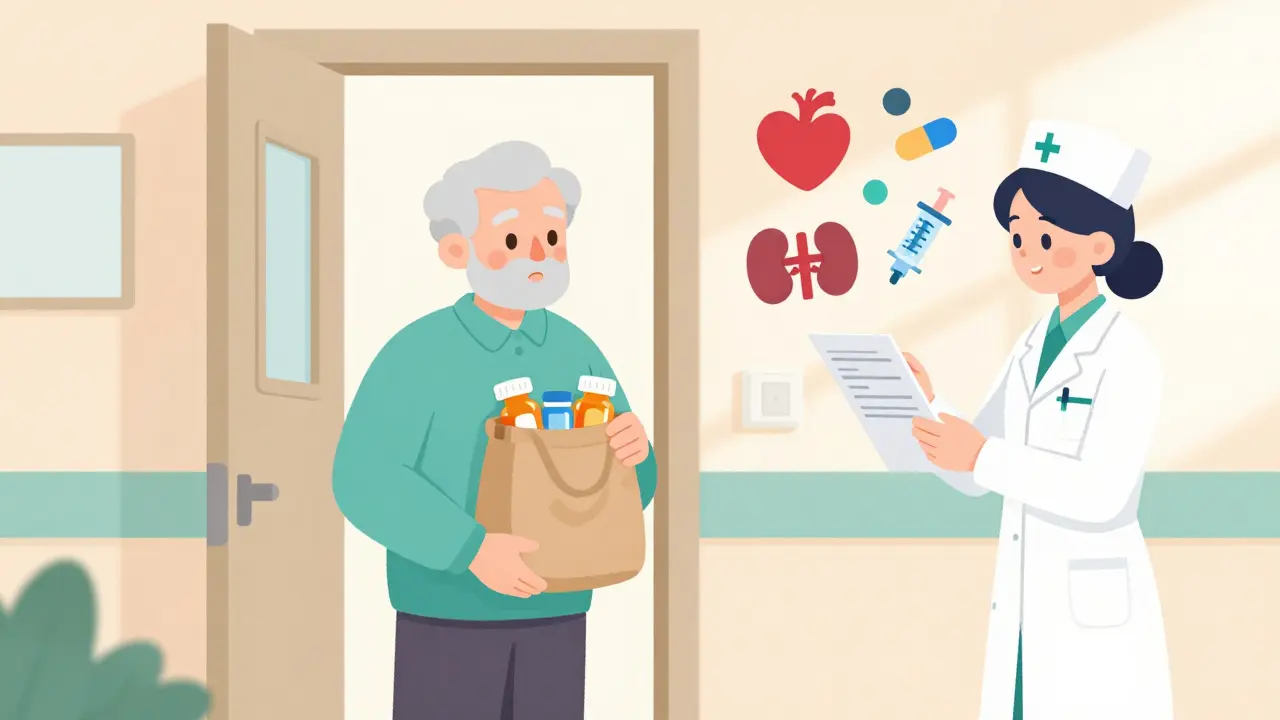
When a senior leaves the hospital after a stay, the biggest danger isn’t the illness they were treated for-it’s the medicines they take home. Studies show that 1 in 5 older adults experiences a medication error within three weeks of leaving the hospital. Many of these errors are preventable. They happen because the system breaks down at the handoff: pills get mixed up, doses change without clear communication, and patients don’t understand what they’re supposed to take-or why.
Why Medication Errors Happen at Discharge
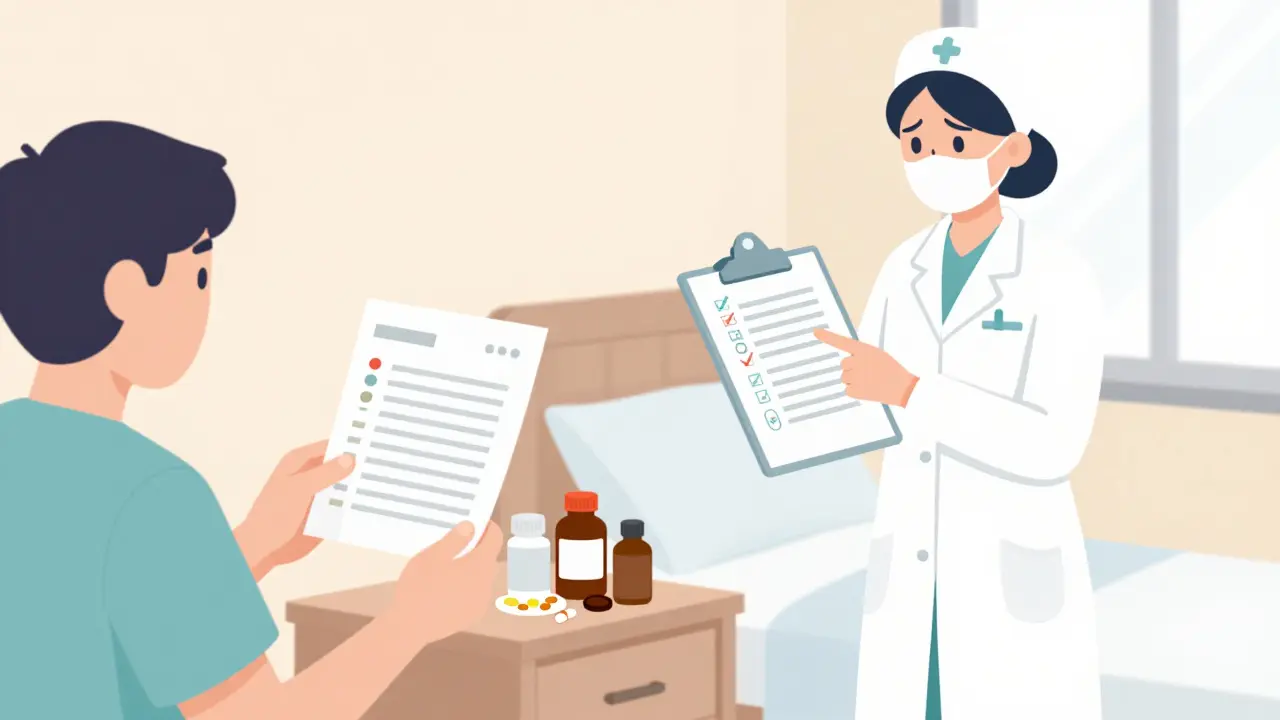
Medication errors during hospital discharge aren’t usually caused by one person making a mistake. They’re the result of a broken process. Hospitals are busy. Nurses are stretched thin. Doctors sign off on discharge papers without fully reviewing every medication. And patients? They’re tired, confused, and often overwhelmed. By the time they get home, they might be taking a drug they stopped in the hospital, missing one they need, or doubling up because two doctors prescribed the same thing. The biggest problem? Medication reconciliation. That’s the formal term for comparing what a patient was taking before admission, what they were given in the hospital, and what they’re being sent home with. In most hospitals, this process is rushed. Only 60-70% of discharge lists are accurate. In top-performing programs, that number jumps to 95%. The difference? Time, training, and accountability.The Five Steps to Safe Medication Reconciliation
A reliable medication reconciliation process has five non-negotiable steps. Skip any one, and the risk goes up.- Verification - Collect every medication the patient was taking before admission. This includes prescriptions, over-the-counter drugs like ibuprofen, herbal supplements like ginkgo, and even patches or eye drops. Don’t assume the patient remembers. Ask them to bring their pills in a brown bag.
- Clarification - Check each drug for correct dose, frequency, and reason. Is that blood thinner still needed? Is the insulin dose right for their kidney function? Many seniors have kidney issues that change how drugs are processed.
- Reconciliation - Compare the pre-admission list, the hospital list, and the proposed discharge list. Any differences? They must be explained and documented.
- Communication - Send the final, accurate list to the patient’s primary care doctor, pharmacist, and home health provider. Electronic records should talk to each other. Too often, they don’t.
- Education - The patient must understand what each pill is for. Use the Teach-Back method: ask them to explain it in their own words. If they can’t, you haven’t finished teaching.
Who Should Lead the Process?
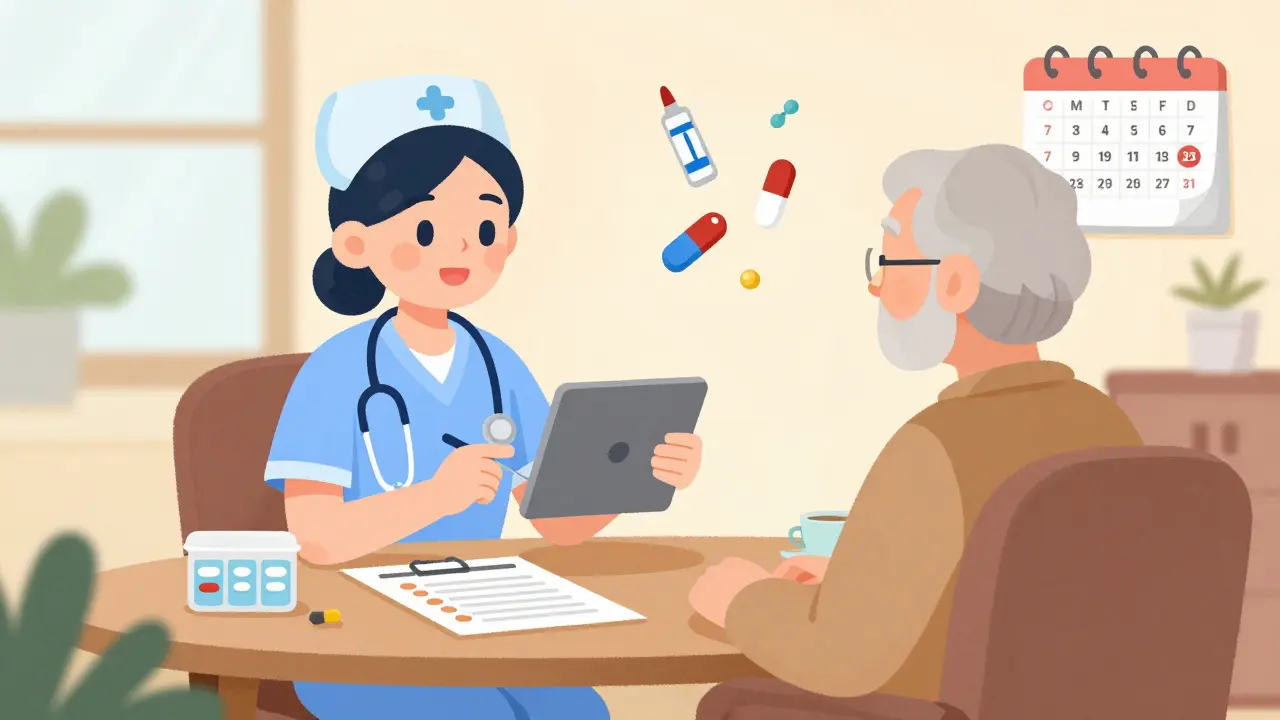
Pharmacists are the most effective people to lead medication reconciliation at discharge. A study in JAMA Internal Medicine found that pharmacist-led discharge reviews cut medication discrepancies by 67%. Pharmacists know drug interactions, dosing rules for aging bodies, and how to spot red flags like duplicate prescriptions or dangerous combinations. But not every hospital has a pharmacist on the discharge team. In rural areas, it’s rare. That’s why nurses and care coordinators must be trained to do it well. Even without a pharmacist, a nurse who asks the right questions and uses a checklist can prevent many errors. For seniors on five or more medications (polypharmacy), or those with dementia, kidney disease, or heart failure, pharmacist involvement isn’t optional-it’s essential.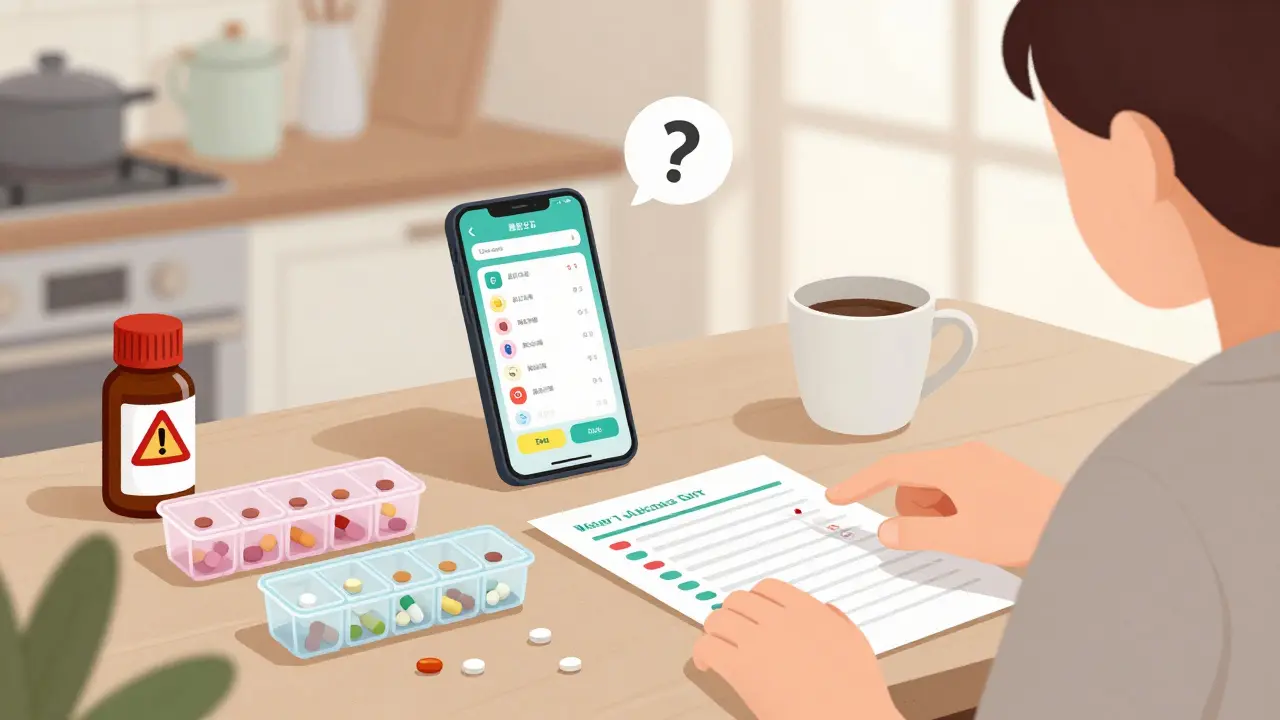
What Happens After They Get Home?
Sending a patient home with a perfect medication list means nothing if no one checks on them. The best programs follow up within 7 days. That’s when most errors show up-when the patient tries to refill a prescription, misses a dose, or has side effects. A phone call from a nurse, a visit from a home health aide, or even a video check-in can catch problems early. Telehealth follow-ups have increased medication adherence by 22% in recent studies. Mobile apps that show visual schedules of pills with alarms and icons have reduced errors by 41% in elderly patients. These tools aren’t fancy-they’re practical. A picture of a pill with the name and time underneath is easier for someone with memory issues than a printed list. Home health agencies must also reconcile medications within 24 hours of starting care. Many don’t. That’s a gap where mistakes slip through.High-Risk Medications to Watch
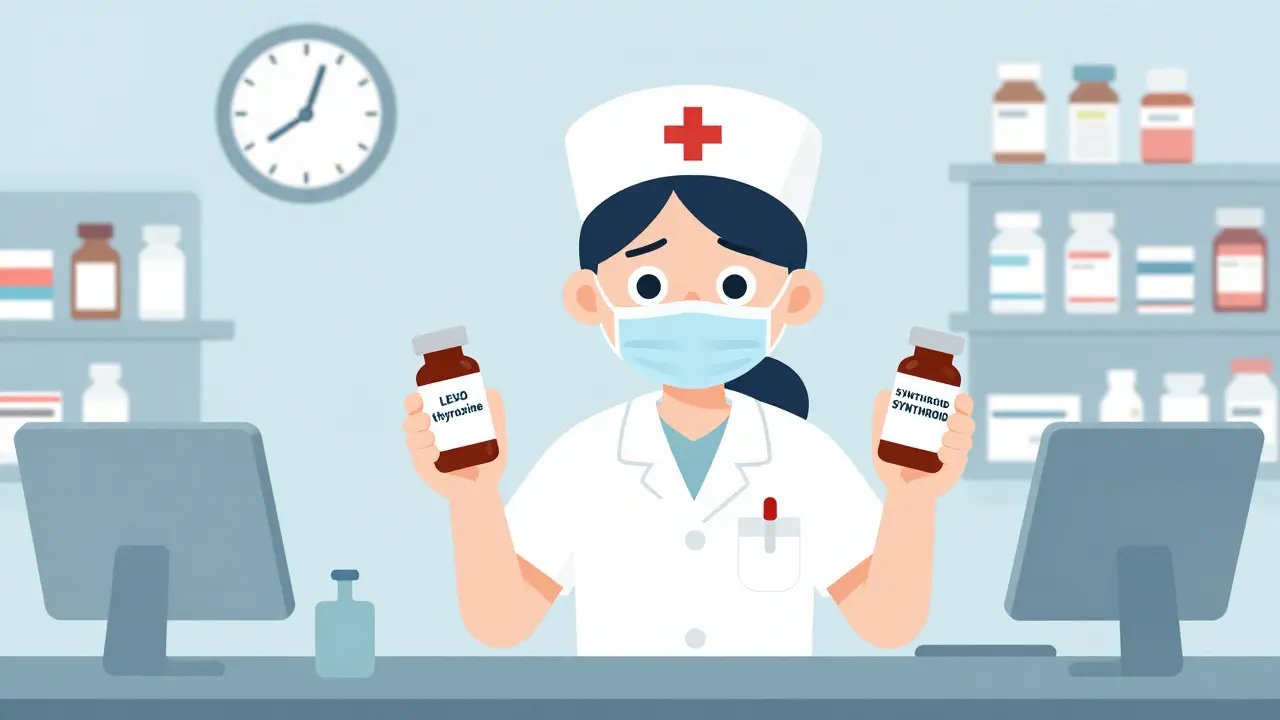
Some drugs are more dangerous than others during transitions. These require extra attention:- Anticoagulants - Warfarin, apixaban, rivaroxaban. These need regular blood tests. If the INR is off, the patient could bleed or clot.
- Insulin - Doses often change in the hospital. If the home dose isn’t adjusted properly, blood sugar can crash or spike.
- Opioids - Pain meds are frequently reduced or stopped in the hospital. Patients may still have old prescriptions at home. Mixing them can cause overdose.
- Antiplatelets - Aspirin, clopidogrel. Stopping these suddenly can trigger a heart attack or stroke.
- Benzodiazepines - Sleep or anxiety meds like lorazepam. These increase fall risk in seniors and should be reviewed carefully.
What Families Can Do
You don’t need to be a doctor to help. Here’s what you can do:- Go with the patient to discharge meetings. Take notes.
- Ask for a printed copy of the final medication list. Don’t rely on the hospital’s email or portal.
- Bring a brown bag with all the patient’s pills-prescription, OTC, supplements-to the first doctor’s visit after discharge.
- Ask the pharmacist to review the list. Most pharmacies offer free med reviews.
- Set up pill organizers and alarms. Use a simple phone app if they’re tech-savvy.
- Watch for signs of trouble: confusion, dizziness, falls, nausea, or extreme fatigue. Call the doctor immediately if these appear.
What Hospitals Should Be Doing
Hospitals that succeed at safe transitions don’t just check a box. They build systems:- Start discharge planning within 48 hours of admission-not the day before.
- Use standardized tools like AHRQ’s Re-Engineered Discharge (RED) toolkit.
- Require pharmacist review for all patients on 5+ medications.
- Train all staff in the Teach-Back method.
- Link discharge summaries electronically to outpatient providers.
- Track their own error rates and fix what’s broken.
The Bottom Line
Medication errors after hospital discharge aren’t inevitable. They’re a failure of systems, not people. With better processes, trained staff, family involvement, and follow-up care, nearly all of them can be prevented. Seniors deserve to go home with confidence-not fear.Every pill matters. Every dose counts. And every person who helps manage them-nurse, pharmacist, family member, or patient themselves-plays a role in keeping them safe.
What is medication reconciliation and why is it important?
Medication reconciliation is the process of comparing a patient’s current medication list with what they were taking before hospitalization and what they’re being discharged with. It’s important because up to 76% of discharge summaries still contain dangerous errors, even when labeled as "reconciled." This process prevents overdoses, missed doses, and harmful drug interactions, especially in seniors on multiple medications.
Can I trust the discharge medication list I’m given?
Don’t assume it’s perfect. Even in well-run hospitals, discrepancies happen. Always ask for a printed copy, compare it to the pills you have at home, and take them to your pharmacist for a free review. If something doesn’t match-like a drug you stopped or a new one you don’t recognize-ask why.
What should I do if my loved one is confused about their meds after leaving the hospital?
Use the Teach-Back method: ask them to explain each medication in their own words. If they can’t, they need help. Set up pill organizers, use a phone alarm app, or arrange for a home health nurse to visit. Never leave someone with a complex regimen alone. Confusion is a warning sign-not a normal part of aging.
Are over-the-counter drugs and supplements really a problem?
Yes. Over-the-counter painkillers like ibuprofen can cause kidney damage in seniors, and herbal supplements like ginkgo or garlic can interfere with blood thinners. Many hospital staff don’t ask about them. Always bring everything in a brown bag to every appointment-prescriptions, vitamins, and even cough syrup.
How soon after discharge should a senior see a doctor?
For seniors with heart failure, COPD, or more than four medications, a follow-up visit should happen within 7 days. For others, 14 days is acceptable. But don’t wait. Call the doctor’s office as soon as you get home if anything feels off. Early intervention prevents hospital readmissions.
What if the hospital doesn’t have a pharmacist involved in discharge?
Ask for a nurse to walk you through the medication list. Request a printed copy and insist on a Teach-Back explanation. Then, schedule a free medication review with your community pharmacist within 48 hours of getting home. Many pharmacies offer this service at no cost.
Can technology help prevent medication errors?
Yes. Mobile apps that show visual pill schedules with alarms and pictures have reduced errors by 41% in seniors. Electronic systems that automatically flag drug interactions or duplicate prescriptions also help. But tech isn’t a replacement for human checks. Use apps as tools, not solutions.
What’s the biggest mistake families make during this transition?
Waiting until something goes wrong to act. The most dangerous period is the first week after discharge. Don’t assume everything’s fine because the patient is home. Check the meds daily, watch for side effects, and communicate with the care team-even if they don’t reach out first.
My grandma got discharged last month and almost died because they gave her two blood thinners. I screamed at the nurse, grabbed the brown bag, and took everything to the pharmacy. They caught three errors. Don’t wait for the system to fix itself-be the person who shows up with the pills.
Medication reconciliation is not a suggestion. It’s a clinical imperative. The data is unequivocal: without standardized reconciliation, polypharmacy in elderly populations leads to iatrogenic harm at a rate exceeding most preventable adverse events.
I’ve worked in home health for 18 years, and let me tell you-this is the single biggest gap in our entire system. I’ve seen seniors on 12 meds, half of which were discontinued in the hospital but never removed from the list. One guy took his old beta-blocker for six weeks after his bypass because no one told him to stop. He ended up in the ER with bradycardia. It’s not negligence-it’s systemic collapse. We need pharmacists on every discharge team, period. And if they don’t have one? Train the nurses to do the Teach-Back like their life depends on it-because it does. I’ve watched families cry because they didn’t know what half the pills were for. A picture of a pill with the time and name? That’s not tech, that’s dignity. We’re talking about people who just got out of the hospital, not lab rats. They deserve clarity, not a stack of papers they can’t read. And yes, supplements matter. Ginkgo with warfarin? That’s a walking hemorrhage waiting to happen. No one asks about it. Why? Because it’s easier to assume. But assumption kills. I’ve lost patients to this. And I’m not gonna sit back and pretend it’s okay. If your mom’s on five meds and you didn’t go to discharge with her? You failed her. Not the hospital. You. Go. With. Her. Bring the bag. Ask the questions. Even if they roll their eyes. Even if it’s 8 PM. Even if you’re tired. Do it anyway.
Ugh. My aunt’s discharge list had her on a pill she’d been off for a year. I had to call the hospital three times before they fixed it. Why is this still a thing?
Pharmacists are the unsung heroes of discharge. In the UK, we’ve had community pharmacists lead discharge reviews for over a decade. Mortality rates dropped. Readmissions halved. It’s not rocket science-it’s just giving the right person the authority to speak up. Why are we still treating this like an afterthought?
Oh wow, another ‘helpful guide’ from someone who’s never actually worked in a hospital. Let me guess-you think a brown bag and a phone app are gonna fix a broken healthcare system? Newsflash: the problem isn’t the patient’s pills. It’s the $800 billion waste machine that calls itself ‘healthcare.’ You want to prevent errors? Stop paying hospitals per discharge. Pay them for outcomes. Fix the incentive structure, not the Post-Its.
As an American, I’m ashamed. This is what happens when you privatize everything. In Canada, discharge meds are reviewed by a pharmacist, then mailed to the patient with a printed schedule. No brown bags. No begging. Just care. We’re not even trying here.
Every single person reading this? You are the missing link. You don’t need a degree. You don’t need a badge. You just need to show up. Walk into that discharge room. Bring the bag. Say, ‘Can we go through each one?’ Then sit there until they do. That’s not being pushy-that’s being a guardian. And if you’re the one getting discharged? Don’t be polite. Be relentless. Your life is worth more than their paperwork.
I cried when my dad came home with 17 pills. I had no idea what half of them were for. I felt so stupid. I didn’t want to ask because I thought I’d sound dumb. But then I found out he was taking two different blood pressure meds that canceled each other out. I called the pharmacy and they said, ‘Oh, we see this every day.’ That’s not comforting. That’s terrifying. I wish I’d known to bring the bag. I wish someone had told me. I wish I hadn’t waited until he passed out in the kitchen to realize something was wrong. I’m still angry. And I’m still scared for my mom.
my cousin’s grandma got discharged with a new insulin dose and no instructions. she ended up in the er with a sugar crash. the nurse said ‘it’s on the paper’ but the paper was in a 6pt font and she’s legally blind. use big print. use pictures. use alarms. don’t just hand someone a list and say ‘good luck.’
Let’s be real-this whole ‘medication reconciliation’ thing is just a bureaucratic band-aid. The real problem? We’re keeping people alive longer than their bodies can handle. We’re dosing 85-year-olds with drugs designed for 45-year-olds. We’re treating aging like a disease. The real solution? Stop medicating the elderly into submission. Let them die with dignity, not with 12 pills they don’t understand.
Medication reconciliation is a paradigmatic failure of epistemological governance in post-industrial healthcare systems. The ontological dissonance between institutional protocol and embodied patient experience creates a hermeneutic vacuum wherein pharmacological agency is systematically eroded. The solution lies not in checklists, but in reconstructing the phenomenological framework of care delivery-centering the patient’s lived corporeality as the primary epistemic locus. Without this, even perfect reconciliation is merely performative compliance.
It’s not rocket science. If you’re not bringing your pills to the hospital, you’re not serious about your health. If you’re not asking for a printed list, you’re asking for disaster. If you’re not following up within a week, you’re gambling with someone’s life. There are no excuses. This isn’t complicated. It’s moral laziness. And if you’re the one who’s supposed to be helping? You’re failing. Get better.