Statins Eligibility Calculator
Check if you qualify for statins with NAFLD
This calculator uses the 2023 AASLD-EASL-EASD guidelines to determine if you qualify for statin therapy based on your cardiovascular risk factors and NAFLD status.
Enter your information above to see if you qualify for statin therapy.
For years, doctors avoided prescribing statins to people with nonalcoholic fatty liver disease (NAFLD). The fear? That these cholesterol-lowering drugs might damage an already stressed liver. But that fear was built on myths, not science. Today, the evidence is clear: statins are not only safe for people with NAFLD-they may actually protect the heart and even help the liver.
Why Statins Were Avoided in NAFLD
Back in the early 2000s, statins carried a warning label for liver injury. That label was based on rare cases of liver enzyme spikes in healthy people, not those with fatty liver. Many doctors took it literally. If your ALT or AST was high, they’d say, "No statins." That left millions of NAFLD patients without the one medication proven to cut heart attacks and strokes. The problem? NAFLD isn’t just a liver issue. It’s a metabolic disorder. Over 70% of people with NAFLD also have high blood pressure, diabetes, or high cholesterol. That means their real threat isn’t liver failure-it’s a heart attack. Yet, a 2022 national survey found that only 45% of NAFLD patients who qualified for statins actually got them. Meanwhile, 68% of the general population with similar risk did. That’s a gap of over 20 percentage points-and it’s costing lives.Statins Don’t Hurt the Liver-They Help It
Here’s the truth: statins don’t cause liver damage in NAFLD patients. In fact, multiple large studies show the opposite. A 2023 review of over 200 million research papers found no increase in serious liver side effects from statins in people with NAFLD, even those with early-stage fibrosis. What’s more, statins lower liver enzymes. In clinical trials, patients saw average drops of 15.8 U/L in ALT and 9.2 U/L in AST after six months on statins. That’s not random noise-it’s a consistent, measurable improvement. Why? Because statins do more than block cholesterol. They reduce inflammation, lower oxidative stress, and improve how fat is burned in liver cells. They even slow down the buildup of scar tissue. One study from Johns Hopkins followed 84 NAFLD patients on statins for two years. Ninety-two percent had stable or improved liver enzymes. Only three people stopped the drug due to side effects. Compare that to the old belief that statins worsen liver disease. The data says otherwise.How Statins Compare to Other Liver-Friendly Drugs
Some doctors turn to fibrates or ezetimibe for NAFLD patients with high triglycerides. But here’s the catch: those drugs don’t reduce heart attacks the way statins do. The GREACE study, which tracked NAFLD patients for years, found those on statins had a 48% lower rate of heart events compared to those not taking them. That’s bigger than the benefit seen in people with healthy livers. Pioglitazone and vitamin E can improve liver biopsy results in NASH (the more severe form of NAFLD). But they don’t touch cardiovascular risk. And they come with their own problems-weight gain, bone loss, bladder cancer concerns. Statins? They tackle the number one killer in NAFLD: heart disease. The bottom line: if you have NAFLD and high cholesterol, statins are the best tool you have-not just for your heart, but for your liver too.Who Should Take Statins? The Guidelines
You don’t need a perfect liver to qualify. The 2023 joint guidelines from the American Association for the Study of Liver Diseases (AASLD), the European Association for the Study of the Liver (EASL), and the European Association for the Study of Diabetes (EASD) say this clearly: Statins are recommended for NAFLD patients who meet standard cardiovascular risk criteria. That means:- You’re over 40 and have type 2 diabetes
- Your LDL cholesterol is above 190 mg/dL
- You have high blood pressure and a 10-year heart risk over 7.5%
- You’ve had a heart attack or stroke before
Monitoring: What to Check and When
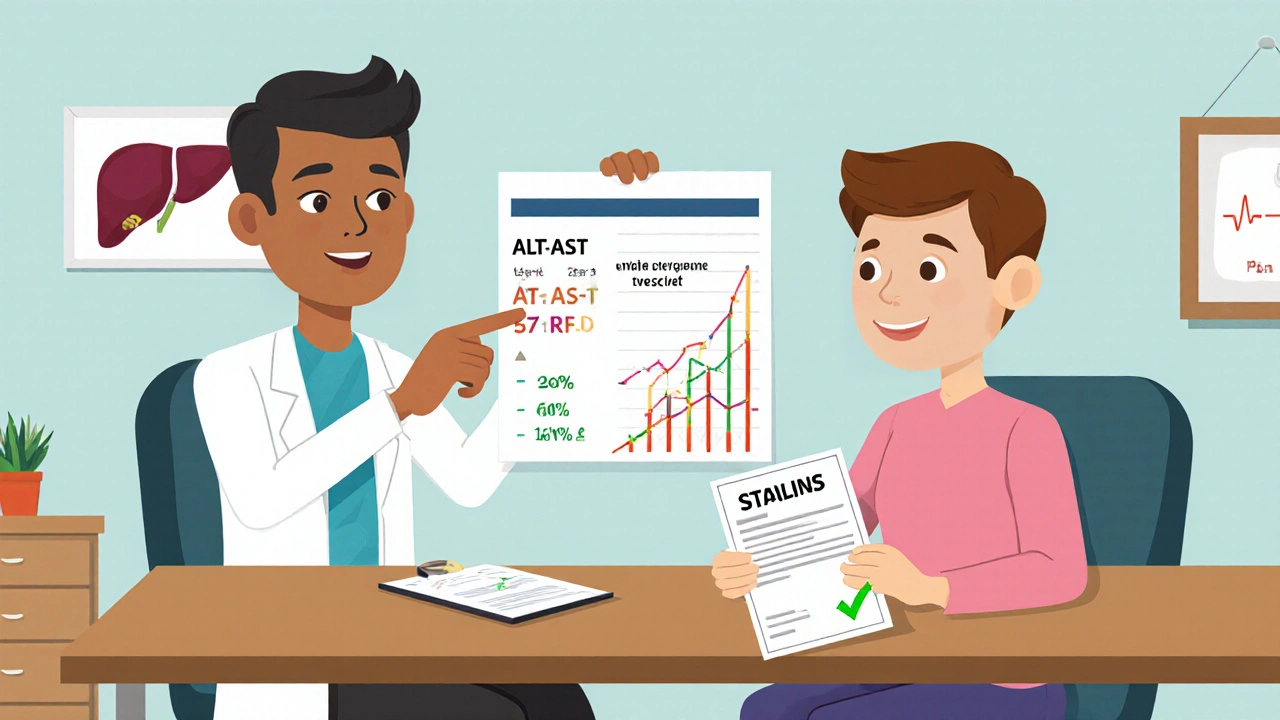
You don’t need monthly blood tests. The American Association for Clinical Chemistry recommends:- Baseline test: ALT, AST, and creatine kinase before starting
- Repeat at 12 weeks
- Then once a year if stable
Dosing in Advanced Liver Disease
If you have compensated cirrhosis (Child-Pugh A or B), standard statin doses are fine. But if you have decompensated cirrhosis (Child-Pugh C)-meaning fluid in your belly, confusion, or bleeding-you need lower doses. Studies show the risk of muscle injury (rhabdomyolysis) jumps 2.3 times at normal doses in this group. So switch to simvastatin 20 mg daily, or rosuvastatin 5-10 mg. Avoid high-dose atorvastatin or lovastatin. Always start low and go slow.Why So Many Doctors Still Say No
Despite the evidence, a 2023 survey found that 39% of hepatologists still refuse statins unless liver enzymes are normal. Why? Because old habits die hard. Many learned in medical school that elevated liver enzymes = statin contraindication. That rule was removed from FDA labels in 2012. But most doctors never got the memo. Primary care doctors are even more hesitant. Over 40% still see high liver enzymes as an absolute no-go. That’s why so many NAFLD patients are turned away. On patient forums, 68% report being denied statins because of their fatty liver diagnosis. The disconnect is dangerous. Cardiologists, who see the heart risks every day, are far more likely to prescribe statins-only 29% express concern. Hepatologists, focused on the liver, are missing the bigger picture.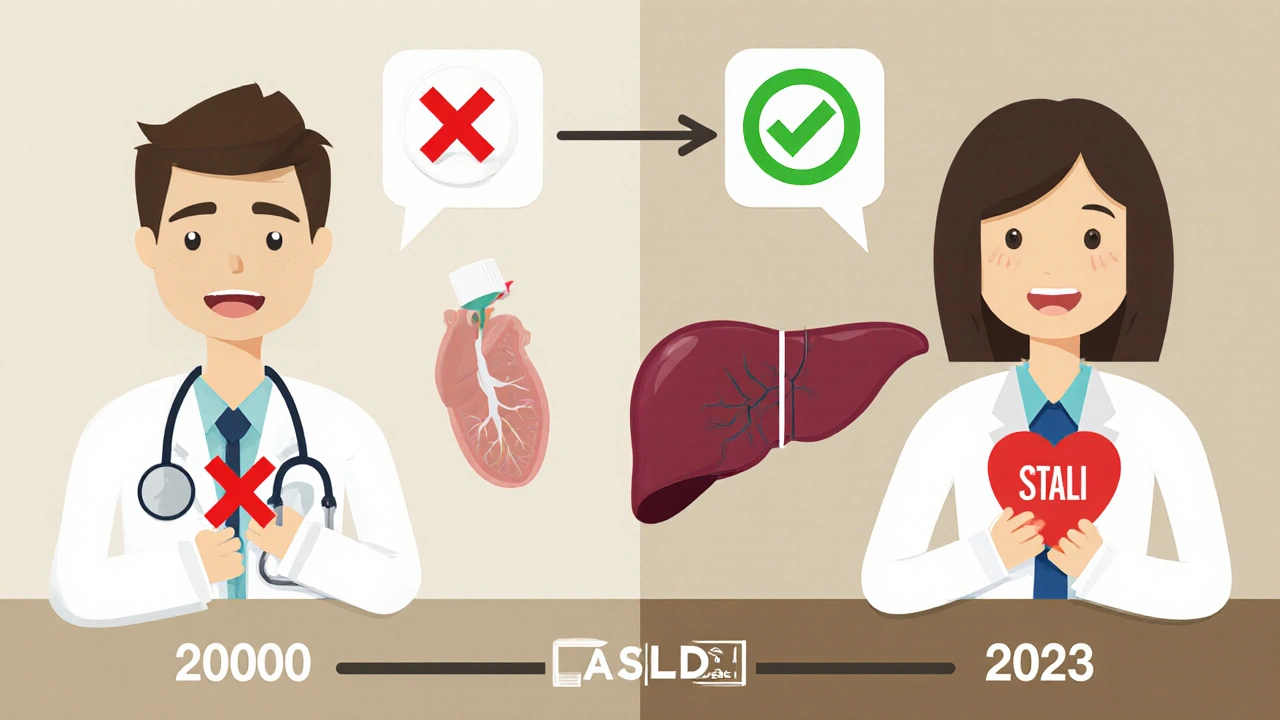
What You Can Do
If you have NAFLD and high cholesterol:- Ask your doctor if you qualify for a statin based on your heart risk-not your liver enzymes
- Bring up the 2023 AASLD-EASL-EASD guidelines
- Request baseline blood work and follow-up in 12 weeks
- If your doctor refuses, ask for a referral to a cardiologist or a liver specialist familiar with current guidelines
The Bigger Picture
NAFLD affects 1 in 4 people worldwide. By 2030, that number will rise 56%. And for most of them, the real danger isn’t cirrhosis-it’s a heart attack. Statins are the most effective tool we have to prevent that. The data is solid. The guidelines are clear. The only thing holding patients back is outdated thinking. The future of NAFLD care isn’t about avoiding statins. It’s about using them wisely. For the right person, at the right dose, with the right monitoring-they’re not just safe. They’re lifesaving.Are statins safe if I have fatty liver disease?
Yes, statins are safe for people with nonalcoholic fatty liver disease (NAFLD). Multiple large studies and major medical guidelines-including those from the American Association for the Study of Liver Diseases and the European Association for the Study of the Liver-confirm that statins do not worsen liver damage and may even improve liver enzyme levels. The risk of serious liver injury from statins in NAFLD patients is no higher than in people without fatty liver.
Will statins raise my liver enzymes?
No, statins typically lower liver enzymes in NAFLD patients. Studies show an average drop of 15.8 U/L in ALT and 9.2 U/L in AST after six months of use. Elevated liver enzymes alone are not a reason to avoid statins. Guidelines say it’s safe to start statins even if your enzymes are up to three times the normal limit.
Should I stop statins if my ALT is high?
Not necessarily. If your ALT is less than three times the upper limit of normal, you should keep taking statins. Only pause the medication if levels exceed this threshold and stay high after retesting in 4-6 weeks. High liver enzymes in NAFLD are often caused by the disease itself, not the statin. Stopping statins unnecessarily increases your heart attack risk.
What’s the best statin for someone with NAFLD?
There’s no single "best" statin for NAFLD, but some are safer in advanced liver disease. For compensated cirrhosis (Child-Pugh A/B), standard doses of atorvastatin, rosuvastatin, or simvastatin are fine. For decompensated cirrhosis (Child-Pugh C), use lower doses like simvastatin 20 mg daily or rosuvastatin 5-10 mg. Avoid high-dose statins in advanced disease due to increased muscle injury risk.
Do statins help with NASH, not just fatty liver?
Statins don’t directly reverse NASH (the inflammatory form of fatty liver) as well as pioglitazone or vitamin E. But they do reduce inflammation, oxidative stress, and fibrosis markers in the liver. Their biggest benefit is cutting heart disease risk-which is the leading cause of death in NASH patients. So while they may not fix the biopsy, they save lives.
How often should I get blood tests on statins with NAFLD?
Get baseline ALT, AST, and creatine kinase before starting. Repeat at 12 weeks. If results are stable, annual testing is enough. Only test more often if you develop muscle pain or if liver enzymes rise above three times the upper limit of normal. Routine monthly testing is unnecessary and not recommended by current guidelines.
Can I take statins if I have cirrhosis?
Yes-if you have compensated cirrhosis (Child-Pugh A or B), standard statin doses are safe. If you have decompensated cirrhosis (Child-Pugh C), use lower doses like simvastatin 20 mg daily. Avoid high-dose statins. Always monitor for muscle pain and weakness. The risk of muscle injury is higher in advanced cirrhosis, so caution is needed, but statins are still recommended for heart protection.
10 Comments
Write a comment