Anticholinergic Burden Calculator
Select the medications you are currently taking to calculate your cumulative Anticholinergic Cognitive Burden (ACB) score.
Select medications and click "Calculate Risk Score" to see your personalized assessment.
What is ACB?
The Anticholinergic Cognitive Burden scale measures how strongly medications block acetylcholine in the brain. Higher scores indicate greater risk of cognitive impairment and toxicity.
⚠️ Important Warning Signs
If you experience any of these symptoms, seek medical attention immediately:
- Sudden confusion or delirium
- Inability to urinate
- Severe constipation
- Rapid heart rate
- Blurred vision
- Extreme dry mouth/skin
- Hallucinations
- Seizures
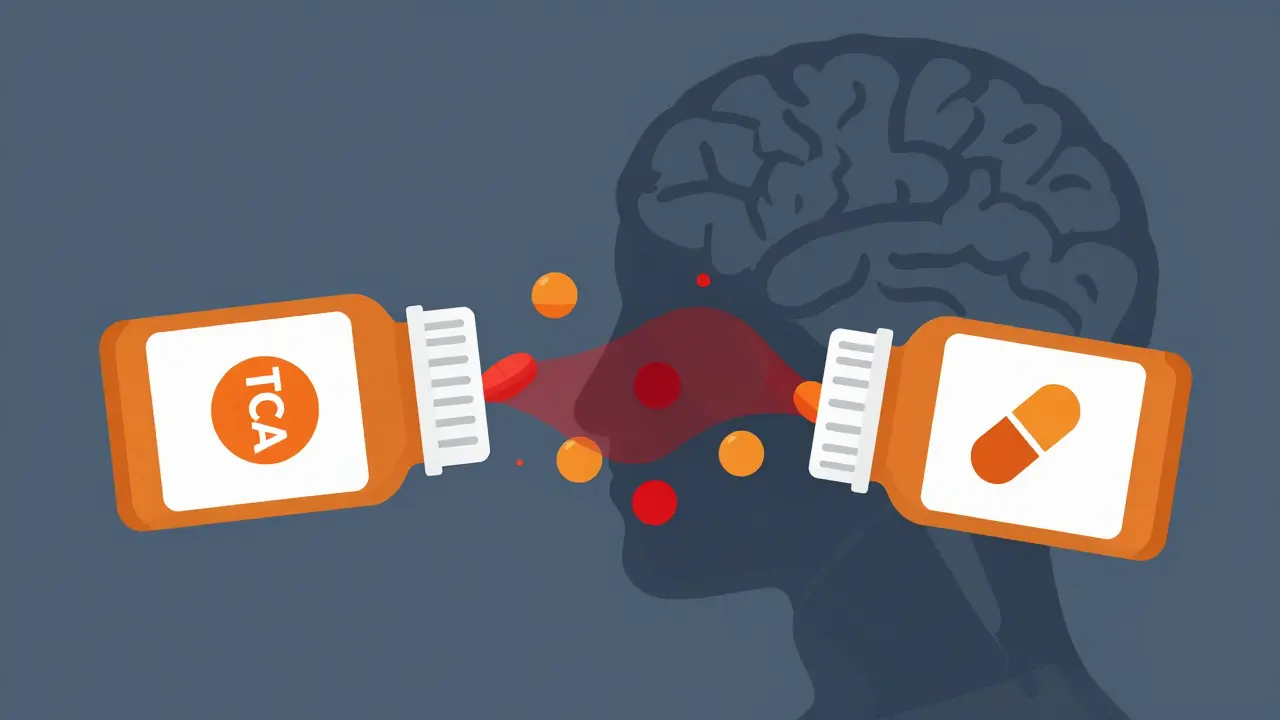
You might take amitriptyline for nerve pain or depression, and grab a bottle of Benadryl for an occasional allergy flare-up. On the surface, these seem like harmless, unrelated pills. One treats your mood or nerves; the other helps you sleep or stops the itching. But when you put them together in your body, they don't just sit next to each other-they collide.
This collision creates a dangerous condition known as anticholinergic overload, which is a state where multiple medications block acetylcholine receptors simultaneously, leading to severe cognitive and physical side effects. It’s not just about feeling a little groggy. We are talking about confusion, urinary retention, dangerous heart rhythm changes, and a significantly increased risk of long-term dementia. This interaction is one of the most common yet underrecognized causes of hospital admissions, especially among older adults.
How the Mechanism Works: Blocking the Brain's Messenger
To understand why this combination is so risky, you have to look at how these drugs work inside your brain. Both tricyclic antidepressants (TCAs), such as Elavil (amitriptyline) and Tofranil (imipramine), and first-generation antihistamines, like diphenhydramine (Benadryl), share a hidden trait: they are potent anticholinergics.
Your nervous system relies on a neurotransmitter called acetylcholine, which is a chemical messenger essential for memory, muscle control, and bladder function. Think of acetylcholine as the key that unlocks specific doors in your brain to keep things running smoothly. TCAs were developed in the 1950s, with imipramine introduced by Swiss psychiatrist Roland Kuhn in 1957. While their primary job is to regulate serotonin and norepinephrine, they also have a strong affinity for muscarinic receptors-the locks that acetylcholine uses. Amitriptyline, for instance, has a Ki value of 8.9 nM for the M1 muscarinic receptor, meaning it binds tightly and blocks the signal.
Diphenhydramine, developed in the 1940s, was designed to block histamine to stop allergies. However, it also blocks those same muscarinic receptors, albeit less tightly (Ki value of 1,000 nM). Because people typically take higher doses of Benadryl (25-50mg) compared to the lower starting doses of some TCAs, the cumulative effect is massive. When you take both, you aren't just blocking the door slightly; you're jamming the lock shut. Your body’s cholinergic system gets overwhelmed, leading to what clinicians call "anticholinergic toxicity."
The Cumulative Burden: Why More Is Not Better
In pharmacology, we use tools to measure this risk. The Anticholinergic Cognitive Burden (ACB) scale is a clinical tool used to quantify the total anticholinergic potential of all medications a patient is taking. This scale assigns scores from 0 to 3 based on how strongly a drug blocks acetylcholine.
- Amitriptyline: Scores a 3 (highest burden).
- Diphenhydramine: Scores a 2 (high burden).
When you combine them, your cumulative score hits 5. Research shows that reaching this threshold doubles the risk of dementia. It’s not just about the individual drugs; it’s about the stack. A 2020 study published in Elsevier documented over 6,800 high-risk drug interaction alerts in more than 3,300 patients. Many of these involved combinations that seemed minor individually but became dangerous when stacked. Dr. David Mischoulon, Director of the Depression Clinical and Research Program at Massachusetts General Hospital, noted in 2022 that this specific combination is a leading cause of anticholinergic delirium in the elderly.
| Medication Class | Example Drugs | ACB Score | Risk Level |
|---|---|---|---|
| Tricyclic Antidepressants (TCAs) | Amitriptyline, Clomipramine | 3 | High |
| First-Generation Antihistamines | Diphenhydramine, Hydroxyzine | 2 | Moderate to High |
| Second-Generation Antihistamines | Loratadine, Cetirizine | 0 | Low/Negligible |
| SSRIs | Sertraline, Fluoxetine | 0-1 | Low |
Who Is Most at Risk?
While anyone can experience side effects, certain groups are in the danger zone. The primary concern is for elderly patients, who are individuals over the age of 65 whose bodies metabolize drugs more slowly and have reduced cognitive reserve. As we age, our liver and kidney function decline, meaning drugs stay in our system longer. Furthermore, the aging brain has fewer acetylcholine receptors to begin with. Adding a blocker on top of that deficit can tip the scales quickly.
Another critical factor is genetics. Some people are "poor metabolizers" due to variations in the CYP2D6 enzyme, which is a liver enzyme responsible for breaking down many medications, including TCAs. According to 2022 research in *Clinical Pharmacology & Therapeutics*, patients with CYP2D6 poor metabolizer status are 3.2 times more likely to suffer from anticholinergic toxicity when taking TCAs alongside other centrally acting drugs. For these individuals, even a standard dose of amitriptyline combined with a single pill of Benadryl can lead to overdose-level symptoms.
Recognizing the Symptoms of Toxicity
Anticholinergic overload doesn't always look like a typical allergic reaction or depression relapse. It presents with a distinct set of symptoms, often remembered by the medical mnemonic: "Dry as a bone, blind as a bat, mad as a hatter, red as a beet, hot as a hare."
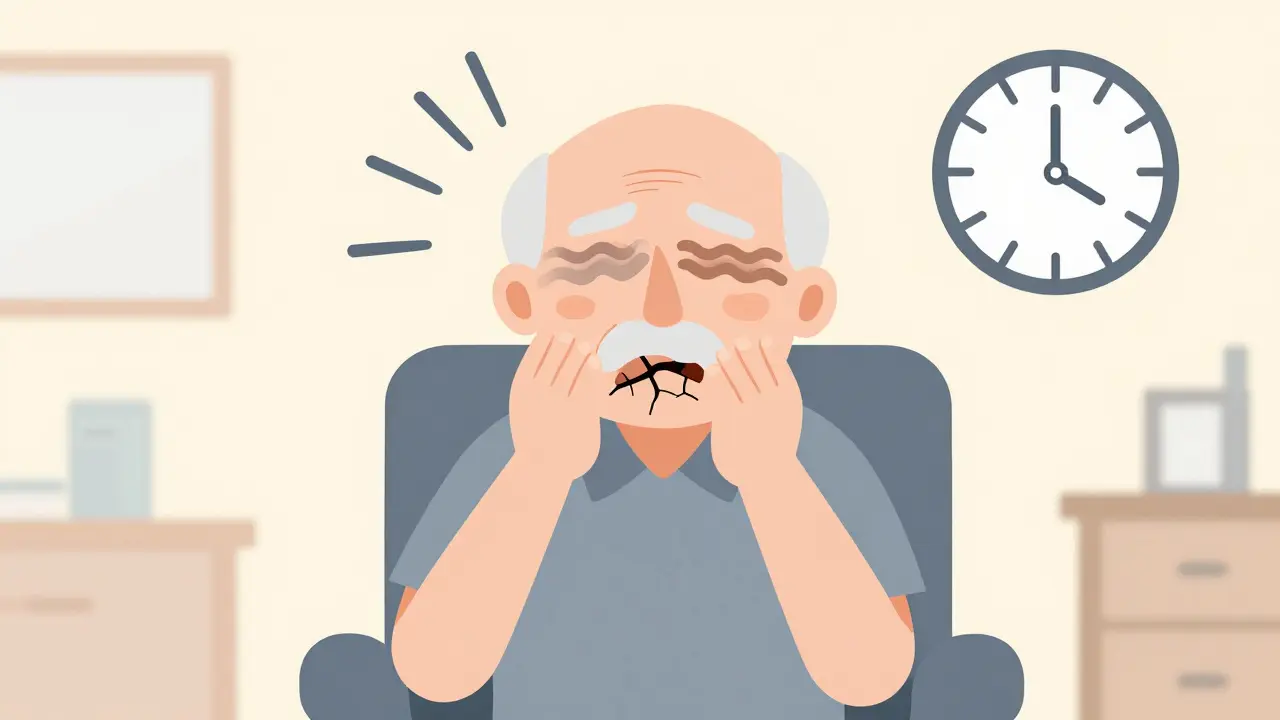
- Cognitive Confusion: Sudden onset of delirium, memory loss, or disorientation. This is often mistaken for early-stage dementia or Alzheimer's.
- Physical Retention: Inability to urinate (urinary retention) or severe constipation. The smooth muscles controlling the bladder and gut rely on acetylcholine to contract.
- Vision Changes: Blurred vision or dilated pupils because the muscles controlling the iris cannot constrict properly.
- Cardiovascular Issues: Rapid heart rate (tachycardia) and dry mouth/skin. In severe cases, this can lead to dangerous arrhythmias, especially since TCAs have a narrow therapeutic index.
Real-world accounts highlight the severity. On Psych Forums, a user reported ending up in the emergency room with urinary retention and severe confusion after their doctor added Benadryl to their existing amitriptyline regimen. They described being diagnosed with anticholinergic toxicity. These aren't rare anomalies; a 2021 survey by the American Geriatrics Society found that 37% of pharmacists encounter anticholinergic overload cases monthly.

Safer Alternatives and Management Strategies
If you are prescribed a TCA, you do not have to accept anticholinergic side effects as inevitable. The goal is to maintain therapeutic benefits while minimizing the anticholinergic burden. Here are practical steps to discuss with your healthcare provider.
Switching Antihistamines
The easiest swap is moving from first-generation to second-generation antihistamines. Drugs like loratadine (Claritin) and cetirizine (Zyrtec) have an ACB score of 0. They effectively treat allergies without crossing the blood-brain barrier significantly or blocking muscarinic receptors. If you need help sleeping, consider non-drug approaches or supplements like melatonin (0.5-5mg), which carries no anticholinergic risk.
Choosing Lower-Risk Antidepressants
Not all antidepressants carry the same weight. Within the TCA class, nortriptyline and desipramine have lower anticholinergic burdens compared to amitriptyline or clomipramine. They act primarily as noradrenaline reuptake inhibitors (NRIs) with less affinity for muscarinic receptors. If neuropathic pain or depression requires treatment, switching to a Selective Serotonin Reuptake Inhibitor (SSRI) like sertraline or escitalopram can drastically reduce the risk, as SSRIs generally have minimal anticholinergic activity.
Monitoring and Deprescribing
Regular monitoring is crucial. Clinicians should assess cognitive function using tools like the Mini-Mental State Examination (MMSE). A score below 24 may indicate anticholinergic delirium rather than natural cognitive decline. The American Geriatrics Society’s Beers Criteria explicitly advises avoiding first-generation antihistamines in older adults taking TCAs. Recent initiatives, like the "Anticholinergic Burden Audit," have shown that discontinuing inappropriate combinations can reverse cognitive decline. A 2023 study in the *Journal of the American Geriatrics Society* demonstrated that deprescribing these meds reduced cognitive decline by 34% over 18 months.
Frequently Asked Questions
Can I take Benadryl if I am on amitriptyline?
It is generally unsafe to combine diphenhydramine (Benadryl) with amitriptyline. Both drugs have strong anticholinergic properties. Combining them creates a cumulative burden that significantly increases the risk of confusion, urinary retention, sedation, and potentially life-threatening cardiac issues. You should consult your doctor for safer alternatives like loratadine.
What are the signs of anticholinergic toxicity?
Common signs include sudden confusion or delirium, blurred vision, dry mouth and skin, difficulty urinating, constipation, rapid heart rate, and excessive drowsiness. In severe cases, it can lead to hallucinations, seizures, or irregular heartbeat.
Are all antidepressants risky when mixed with antihistamines?
No. Tricyclic antidepressants (TCAs) like amitriptyline and clomipramine have high anticholinergic risks. However, newer classes like SSRIs (e.g., sertraline, fluoxetine) and SNRIs (e.g., venlafaxine) have much lower or negligible anticholinergic activity, making them safer to combine with antihistamines, though caution is still advised.
Does anticholinergic overload cause permanent brain damage?
Chronic exposure to high anticholinergic burden is linked to an increased risk of dementia and long-term cognitive decline. A 2015 JAMA Internal Medicine study showed a 54% increased risk of dementia with chronic use. While acute toxicity symptoms often resolve when the drugs are stopped, prolonged accumulation may contribute to irreversible neural changes.
What is a safe alternative to Benadryl for someone on a TCA?
Second-generation antihistamines such as loratadine (Claritin), cetirizine (Zyrtec), or fexofenadine (Allegra) are considered safe alternatives. They have an Anticholinergic Cognitive Burden (ACB) score of 0, meaning they do not significantly block acetylcholine receptors in the brain.
How does age affect the risk of this interaction?
Elderly patients are at significantly higher risk because their bodies metabolize drugs more slowly and their brains have fewer acetylcholine reserves. The American Geriatrics Society recommends avoiding first-generation antihistamines entirely in older adults taking TCAs due to the additive anticholinergic effects.