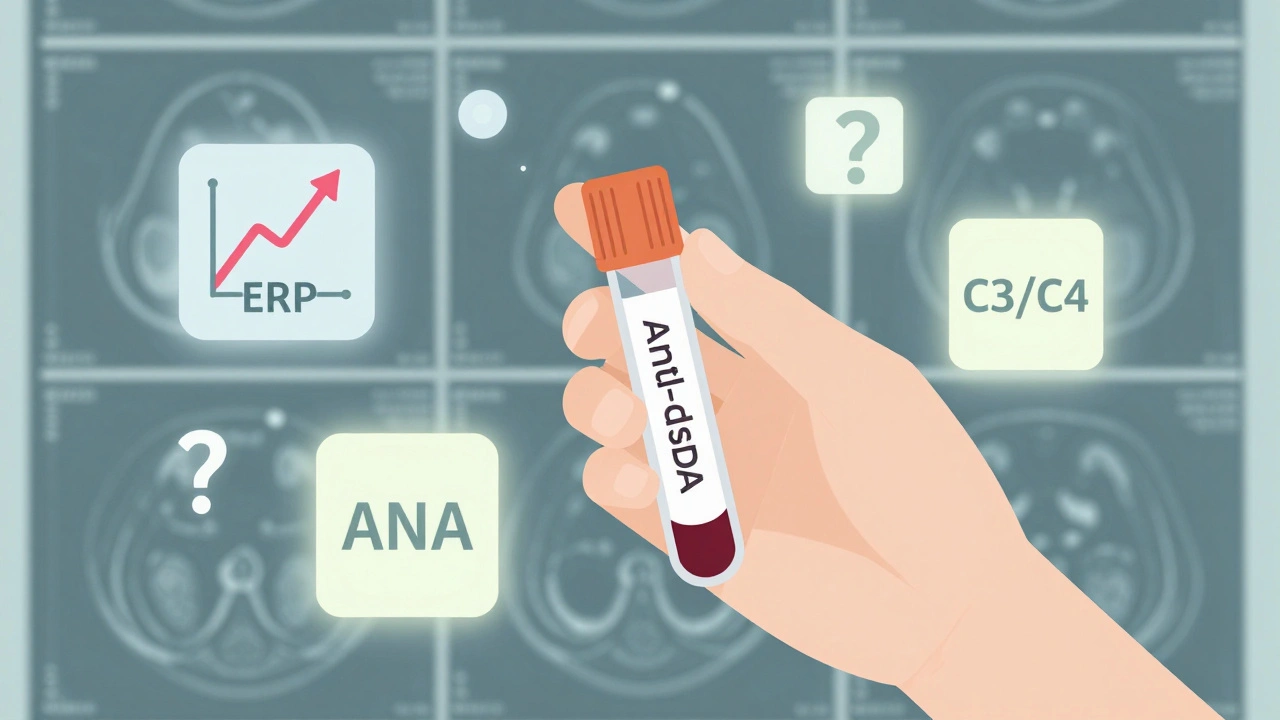
Why Monitoring Autoimmune Diseases Isn’t Just About Blood Tests
When you’re living with an autoimmune disease, a single blood test won’t tell you how your body is really doing. You might have normal CRP levels but still feel like you’re dragging through the day. Or your ANA test stays positive even when you’re in remission - which doesn’t mean the disease is active, but it sure makes you worry. That’s why monitoring autoimmune conditions isn’t just about checking boxes on a lab form. It’s about putting together pieces: what your body shows in blood, what scans reveal under the skin, and what you tell your doctor during a quiet office visit.
Lab Markers: What the Numbers Really Mean
Lab tests are the backbone of autoimmune monitoring, but they’re not infallible. The most common ones - CRP and ESR - measure inflammation. CRP above 3.0 mg/L signals active inflammation. ESR over 20 mm/hr in women or 15 mm/hr in men suggests the same. These are useful, but they’re blunt tools. A high CRP could mean a flare, or it could mean you caught a cold. A normal CRP doesn’t guarantee you’re out of the woods.
The ANA test is often the first step. It’s positive in 95% of people with systemic lupus, but here’s the catch: up to 20% of healthy people also test positive. That’s why a positive ANA isn’t a diagnosis - it’s a signal to dig deeper. Reflex testing follows: if ANA is positive, labs check for specific antibodies like SS-A, SS-B, Scl-70, and Jo-1. SS-A shows up in over 80% of Sjögren’s cases. Scl-70 is a red flag for systemic sclerosis. Jo-1 points to polymyositis. These aren’t just random markers - they help pinpoint which disease you’re dealing with.
For lupus patients, anti-dsDNA is critical. It’s 95% specific to lupus, meaning if it’s high, you’re likely having a flare - especially if you’re at risk for kidney damage. But here’s the twist: it’s only positive in 60-70% of lupus cases. So if your anti-dsDNA is normal, don’t assume everything’s fine. Complement levels (C3 and C4) drop during active lupus. That’s often more telling than ANA, which stays stubbornly positive even when you’re stable.
Imaging: Seeing What Blood Can’t
Lab tests show what’s happening inside your blood. Imaging shows what’s happening inside your joints, organs, and tissues. MRI is the go-to for spotting early inflammation before you even feel pain. Newer contrast agents using nanotechnology are safer than old gadolinium ones, which carried risks of kidney damage and brain deposits.
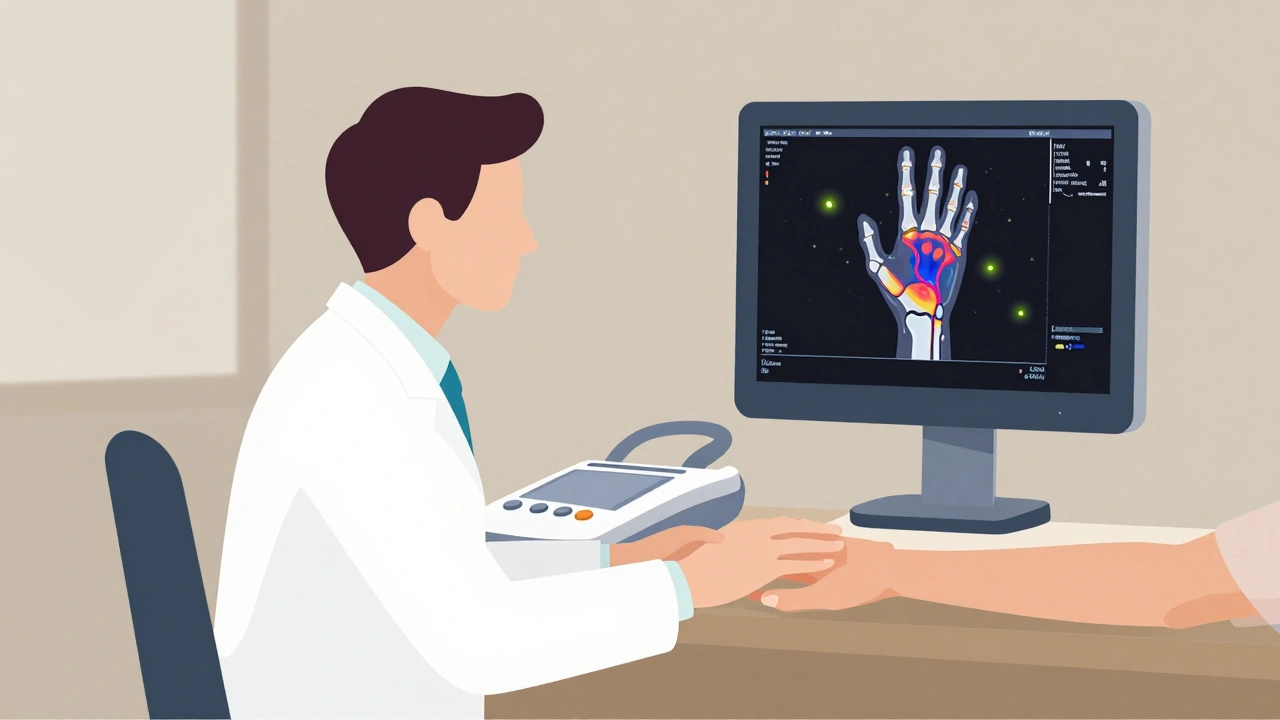
Ultrasound with microbubble contrast is changing how rheumatologists track arthritis. It measures blood flow in inflamed joints with 85% accuracy - better than physical exams alone. You can actually see swelling, fluid buildup, and new blood vessels forming in real time. That’s huge for catching damage before it’s permanent.
PET scans use radioactive tracers to track immune cells. Recent studies are labeling T-cells with tracers to see where they’re congregating - like finding hidden fire zones in your body. SPECT scans do something similar, using peptides that stick to inflammation sites. These aren’t routine yet, but for complex cases - like unexplained fatigue with normal labs - they can reveal what nothing else can.
CT scans are less common for monitoring, but they’re essential when organ damage is suspected - like lung scarring in scleroderma or joint erosion in advanced rheumatoid arthritis. The key? Don’t wait for symptoms to show up. Imaging finds damage early, when treatment can still reverse it.
Clinical Visits: The Most Important Piece
Doctors don’t just look at your labs and scans. They watch how you move. They ask how you slept. They check if you can button your shirt or climb stairs without stopping. These aren’t small details - they’re the most accurate indicators of your real-world function.
Guidelines from the American College of Rheumatology say you need at least two full assessments a year. But that’s the bare minimum. When you’re newly diagnosed or your treatment changes, visits every 4-6 weeks are standard. Once you’re stable, every 3-4 months is typical. High-risk patients - those with kidney, lung, or heart involvement - need quarterly checks, including imaging.
Tools like DAS28 for rheumatoid arthritis and SLEDAI for lupus turn subjective symptoms into numbers. A DAS28 above 5.1 means active disease. Below 2.6? You’re in remission. These scores help decide whether to up your meds, switch drugs, or take a break.
And here’s what most people don’t realize: serial ANA testing is useless for tracking flares. It doesn’t go down when you improve. It stays high. So if your doctor keeps ordering it every month, they’re wasting time and money. Focus on anti-dsDNA, complement levels, CRP, ESR, and your own symptoms. Those are the real signals.
The Hidden Gap: Access and Cost
Not everyone gets the monitoring they need. In the U.S., 83% of people with private insurance get recommended scans and lab tests. Only 48% of Medicaid patients do. That gap isn’t just unfair - it’s dangerous. Delayed monitoring means more flares, more organ damage, and more hospital visits.
Insurance often denies PET or advanced ultrasound because they’re “not routine.” But when you’re dealing with a disease that can destroy your kidneys or lungs in months, what’s routine? The cost of monitoring is $12.7 billion a year globally - and it’s growing fast. But money shouldn’t decide who gets seen.
Some clinics now offer sliding-scale labs or partner with patient advocacy groups to cover imaging costs. If you’re struggling to afford tests, ask your rheumatologist. They often know about programs you didn’t even know existed.
What’s Next: Wearables and AI
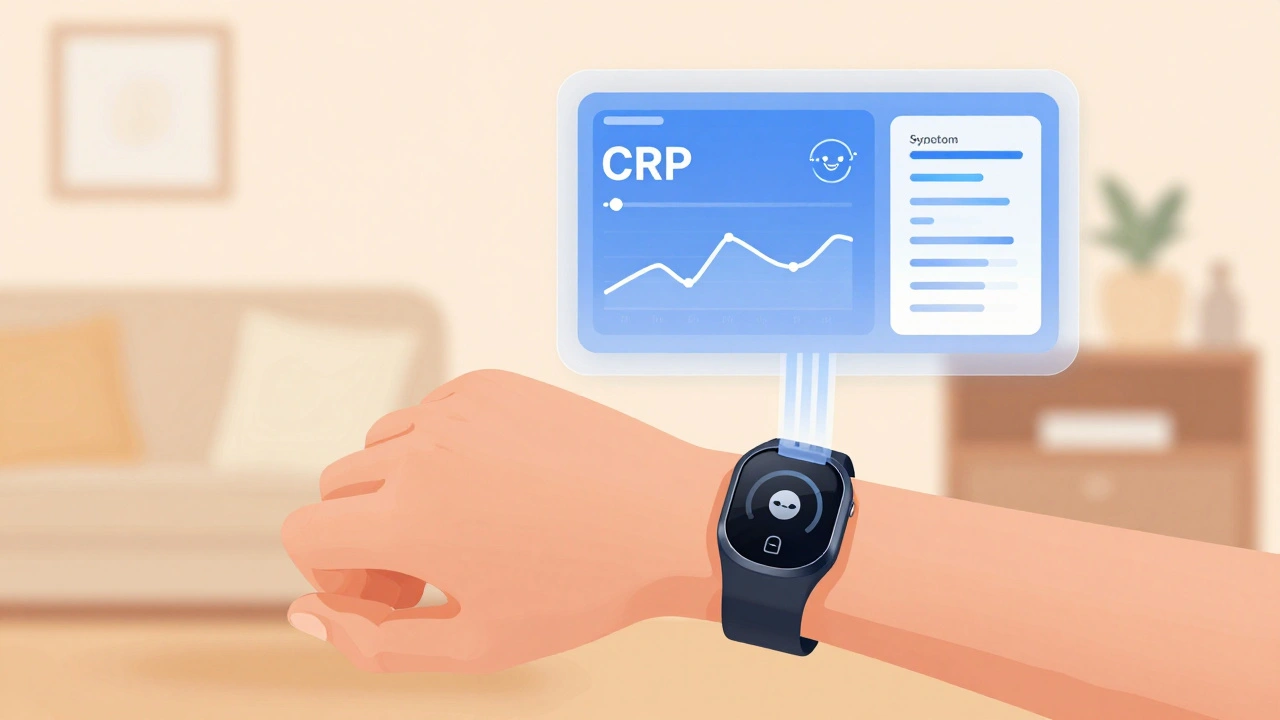
The future of monitoring isn’t just in labs or scanners - it’s on your wrist. New wearables are being tested to measure inflammatory markers through interstitial fluid. Early studies show they match traditional CRP tests 89% of the time. Imagine getting a notification that your inflammation is spiking - before you feel a single ache.
AI is stepping in too. Platforms like AutoimmuneTrack, approved by the FDA in mid-2023, combine your lab results, wearable data, symptom logs, and even sleep patterns. It predicts flares 14 days in advance with 76% accuracy. In a trial of over 2,300 patients, emergency visits dropped by 29%. That’s not science fiction - it’s happening now.
These tools don’t replace doctors. They give them better data. You still need someone to interpret what the numbers mean in the context of your life - your job, your kids, your pain tolerance, your mental health.
How to Get the Most Out of Your Monitoring
- Keep a symptom journal - note fatigue, joint pain, rashes, fever, and brain fog. Date every entry.
- Ask for copies of your lab results. Don’t wait for your doctor to explain them later.
- Know which tests matter: CRP, ESR, anti-dsDNA, C3/C4. Ignore serial ANA.
- Insist on imaging if you have unexplained symptoms and normal labs.
- Bring your symptom journal to every visit. It’s more valuable than any test.
- Ask: “What’s the goal of this visit? Are we checking for flares, side effects, or organ damage?”
Autoimmune diseases don’t follow a script. One person’s lupus flares every six months. Another’s stays quiet for years. Your monitoring plan should be as unique as your body. Don’t accept a one-size-fits-all schedule. Push for what you need.
What to Do If You’re Not Getting Enough Care
If you’re being told your labs are “fine” but you still feel awful, trust yourself. Symptoms are real. Ask for a referral to a specialist if you’re not seeing one. Bring research - print out the ACR or EULAR guidelines on monitoring. Most rheumatologists will listen if you come prepared.
Don’t let cost stop you. Contact patient advocacy groups like the Autoimmune Association. They help with test vouchers, transportation, and even legal help if insurance denies care.
And remember: monitoring isn’t about being “perfect.” It’s about catching problems early. Every scan, every blood draw, every honest conversation with your doctor is a step toward staying in control - not just surviving, but living well.
Is the ANA test useful for tracking autoimmune disease flares?
No. The ANA test is a screening tool, not a monitoring tool. Once it’s positive, it usually stays positive - even when the disease is in remission. Relying on ANA to track flares gives false information. Instead, focus on anti-dsDNA, complement levels (C3 and C4), CRP, ESR, and your symptoms. These are the real indicators of disease activity.
How often should I have lab tests and imaging for my autoimmune disease?
It depends on your disease and how stable you are. When newly diagnosed or adjusting treatment, expect visits every 4-6 weeks. Once stable, every 3-4 months is standard. High-risk patients (with organ involvement) need quarterly checks, including imaging. Stable, low-risk patients may only need comprehensive assessments every 6-12 months. Always follow your rheumatologist’s plan - but don’t hesitate to ask why a test is being ordered.
Can imaging detect autoimmune disease before symptoms appear?
Yes. MRI and ultrasound can spot inflammation in joints, tendons, and organs before you feel pain or swelling. For example, in rheumatoid arthritis, ultrasound can detect early joint damage that X-rays miss. In lupus, MRI can show brain or kidney inflammation before lab tests change. Early detection means earlier treatment - and less permanent damage.
Why do some people need PET or SPECT scans for autoimmune monitoring?
These scans are used when standard tests don’t explain symptoms. PET scans track immune cells using radioactive tracers, showing where inflammation is hiding. SPECT scans use peptides that bind to inflammation sites, giving a molecular view. They’re not routine, but for complex cases - like unexplained fatigue, organ dysfunction, or treatment resistance - they reveal what blood tests and MRIs can’t.
Are wearable devices reliable for tracking autoimmune flares?
Early wearable tech that measures inflammatory markers through skin fluid is showing strong results - 89% correlation with traditional CRP tests. While not yet standard, they’re promising. They can alert you to rising inflammation before you feel it. But they’re not replacements for labs or doctor visits. Think of them as early warning systems that help you and your doctor make smarter decisions faster.
What should I do if my insurance denies a recommended test?
Ask your doctor to write a letter of medical necessity. Reference guidelines from the American College of Rheumatology or EULAR. If that doesn’t work, contact patient advocacy groups like the Autoimmune Association - they help with appeals, test vouchers, and even financial aid. Don’t give up. Delayed monitoring can lead to irreversible damage.
14 Comments
Write a comment