Post-Marketing Safety Simulator
Adjust the parameters below to see how sample size impacts the detection of rare adverse events. Default settings reflect typical clinical trial conditions.
Simulation Results
Enter values and click "Run Simulation" to analyze safety detection capabilities.
Imagine taking a new medication that passed every clinical trial with flying colors. The doctors say it’s safe. The regulators approved it. You start your treatment, feeling confident. Then, months later, you experience a rare but serious reaction. How did this happen? And more importantly, how do we know if others are facing the same issue?
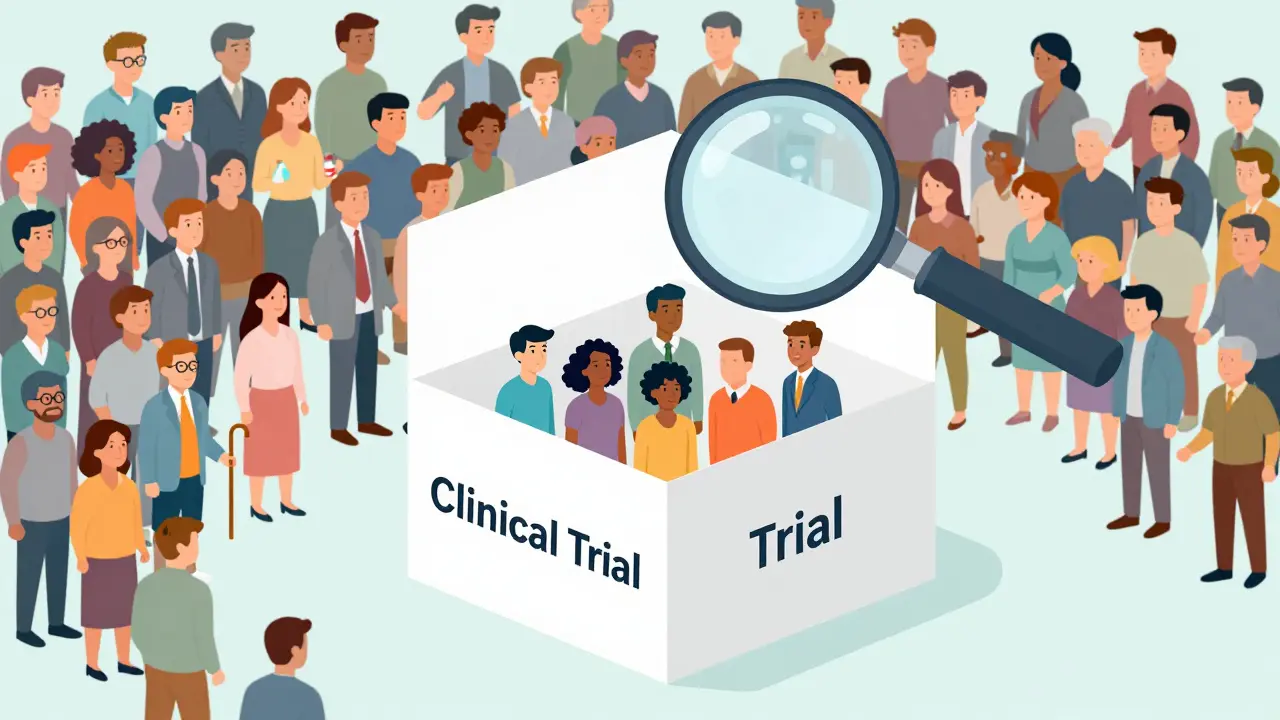
This is where post-marketing pharmacovigilance comes in. It is the ongoing safety net that catches problems clinical trials missed. Clinical trials are rigorous, but they are limited. They usually involve 1,000 to 5,000 participants who are carefully selected. They don’t represent the messy reality of real life-where people take multiple medications, have various health conditions, and come from diverse genetic backgrounds.
Post-marketing pharmacovigilance (PMPV) is the systematic science of monitoring drug safety after approval. It detects, assesses, and prevents adverse drug reactions (ADRs) that only appear when millions of people use a drug. Without it, dangerous side effects could hide in plain sight for years.
The Limits of Clinical Trials
Clinical trials are essential for proving a drug works, but they have blind spots. Researchers control the environment tightly. They exclude pregnant women, the elderly, or people with liver disease to keep data clean. This means rare side effects-those occurring in 1 in 10,000 patients-often slip through. A study by the Medicines and Healthcare products Regulatory Agency (MHRA) noted that controlled environments cannot replicate the complexity of general population usage.
Consider the case of Vioxx (rofecoxib). Approved in 1999 based on trials with 5,000 patients, it seemed like a breakthrough painkiller. But once over 80 million people used it, post-marketing surveillance revealed a nearly two-fold increased risk of heart attacks. Merck withdrew the drug in 2004. This tragedy highlighted why PMPV isn’t just paperwork-it’s a lifesaver.
How Signals Are Detected
Finding these hidden risks requires a mix of passive reporting and active hunting. Here’s how the system works:
- Spontaneous Reporting Systems: Doctors, pharmacists, and patients report side effects voluntarily. In the U.S., the FDA’s MedWatch program receives about 1.2 million reports annually. In Europe, the EMA’s EudraVigilance database processed 28.5 million individual case safety reports as of late 2022. These systems rely on human vigilance.
- Electronic Health Record Mining: Instead of waiting for reports, regulators dig into existing data. The FDA’s Sentinel Initiative, launched in 2008, accesses records from over 300 million patients. It uses algorithms to spot unusual patterns, like a spike in liver issues among users of a specific statin.
- Patient Registries: For high-risk drugs, companies track specific groups long-term. If a cancer drug affects bone density, a registry follows those patients for years to see trends.
- Record Linkage: Countries like the UK link hospital data, prescription records, and death registries. The Clinical Practice Research Datalink covers 45 million patients, allowing researchers to compare drug users against non-users.
These methods create a web of detection. When a signal appears-a cluster of similar reports or an unexpected trend in big data-regulators investigate. Is it a true safety risk, or just noise?
Global Approaches to Safety Monitoring
Not all countries monitor drug safety the same way. Differences in infrastructure and regulation shape how quickly risks are identified.
| Region/Country | Key System | Annual Reports/Data Points | Unique Feature |
|---|---|---|---|
| United States | MedWatch & Sentinel | 1.2 million reports; 300M patient records | Active surveillance via AI-driven Sentinel System |
| European Union | EudraVigilance | 2.4 million reports (2022) | Harmonized Good Pharmacovigilance Practices (GVP) across 27 nations |
| United Kingdom | Yellow Card Scheme | 87,000 reports (2022) | World’s first PV program (est. 1964); strong mobile app adoption |
| Japan | Post-Marketing Surveillance (PMS) | 150,000 reports | Mandatory 4-10 year reexamination periods for new drugs |
The U.S. leans heavily on its massive Sentinel database, which can run complex queries in days. The EU focuses on standardization, ensuring every member state follows the same rules. Japan takes a precautionary approach, requiring extended scrutiny for new molecules. Each system has strengths, but underreporting remains a global challenge. Harvard research estimates only 1-10% of adverse events ever reach MedWatch.

The Role of Technology and AI
Technology is transforming pharmacovigilance from a reactive process to a predictive one. In 2023, the FDA launched Sentinel System 3.0, using natural language processing to scan medical notes and claims data. It identifies potential signals 73% faster than older methods.
Artificial intelligence also mines social media. IBM Watson Health achieved 87.4% accuracy in predicting adverse drug reactions from online discussions. Imagine catching a trend before it hits official databases. Meanwhile, blockchain pilots by Novartis and Roche ensure data integrity, creating tamper-proof records of safety reports.
Wearables add another layer. Apple’s partnership with Pfizer allows real-time heart rate monitoring during trials and post-market use. If a drug causes arrhythmias, smartwatches detect them instantly. This shift toward real-world evidence means regulators can act sooner, protecting patients before widespread harm occurs.
Challenges in Reporting and Compliance
Despite advanced tools, human factors slow down the system. Doctors are busy. A 2022 AMA survey found 68% of physicians find MedWatch cumbersome, taking 22 minutes per report. Many simply don’t report unless required. Patients fare worse: only 12% know about MedWatch, though 83% would report if given easy digital tools.
Regulatory compliance varies too. While top pharmaceutical companies have dedicated teams, small biotechs struggle. Citeline data shows small firms average just 3.2 staff for PMPV versus 58.7 at major pharma giants. Deloitte reported only 43% of small biotechs meet full compliance standards. This gap leaves some newer drugs with thinner safety nets.
Data quality is another hurdle. The FDA found 37% of FAERS reports lack complete dosage information. Without knowing how much drug a patient took, it’s hard to judge causality. Standardizing data entry and improving user interfaces for reporters are critical next steps.

What Happens After a Signal Is Found?
Detecting a problem is only half the battle. Regulators must decide what to do. The European Medicines Agency’s Pharmacovigilance Risk Assessment Committee (PRAC) confirmed 287 new risks in 2022, leading to regulatory actions. Outcomes range from updated warning labels to market withdrawals.
Companies submit Periodic Safety Update Reports (PSURs) regularly-quarterly for the first two years, then annually. They also implement Risk Management Plans (RMPs). For high-risk drugs like thalidomide derivatives, this includes restricted distribution programs and patient alert cards. In 2021, 92% of new FDA-approved drugs required at least one risk minimization measure.
If a drug poses unacceptable danger, regulators pull it. The Vioxx withdrawal saved countless lives. More commonly, labels change to warn about interactions or contraindications. This dynamic process ensures drug safety evolves with new evidence.
The Future of Drug Safety
By 2030, real-world evidence from pharmacovigilance will influence 65% of regulatory decisions, up from 28% in 2022. The WHO aims to boost global reporting rates by 50% and cut signal detection time by 75%. Integrated systems promise to reduce drug withdrawal risks by 41%.
For patients, this means safer medicines. For healthcare providers, it means better tools to spot issues early. The key is participation. Every report, every wearable data point, every doctor’s note adds to the collective knowledge. Post-marketing pharmacovigilance isn’t just a regulatory box to check-it’s a continuous conversation between science, society, and safety.
Why can't clinical trials catch all side effects?
Clinical trials typically involve 1,000 to 5,000 healthy volunteers in controlled settings. They exclude people with other diseases or those taking multiple medications. Rare side effects (e.g., 1 in 10,000) often don't appear in such small groups. Real-world usage involves diverse populations, revealing risks trials missed.
How do I report a side effect?
In the U.S., use the FDA's MedWatch program online or by phone. In the UK, use the Yellow Card Scheme app or website. In Europe, contact your national health authority. Provide details about the drug, dose, timing, and symptoms. Your report helps protect others.
What is the difference between passive and active surveillance?
Passive surveillance relies on voluntary reports from doctors and patients (like MedWatch). Active surveillance proactively searches large databases (like the FDA's Sentinel System) for patterns without waiting for reports. Active methods are faster and less prone to underreporting.
How long does post-marketing monitoring last?
It lasts for the entire lifecycle of the drug. In Japan, mandatory reexamination periods last 4-10 years. Globally, companies submit safety updates quarterly initially, then annually. Monitoring continues until the drug is withdrawn or discontinued.
Can AI really predict drug side effects?
Yes, emerging AI tools show promise. IBM Watson Health achieved 87.4% accuracy in predicting adverse reactions from social media data. The FDA's Sentinel 3.0 uses AI to analyze electronic health records 73% faster. However, AI assists humans; final decisions require expert review.