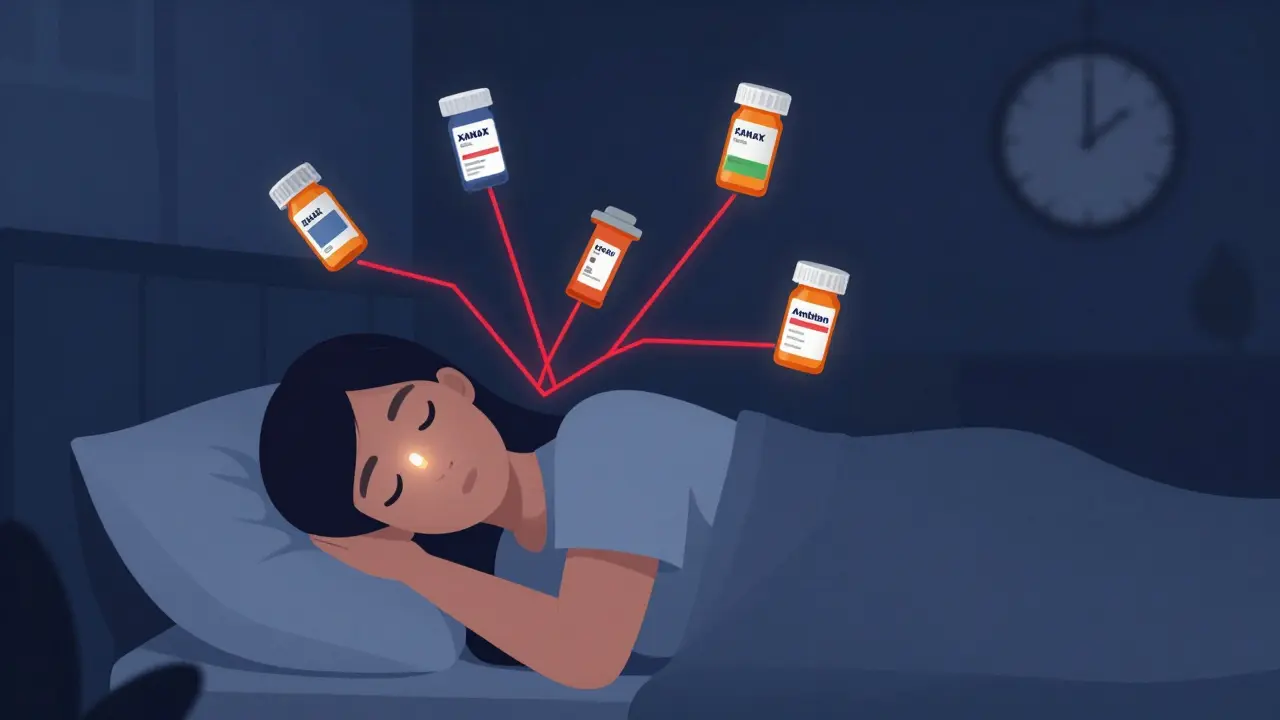
More people are turning to melatonin for sleep than ever before. In 2022, over 3.1 million American adults used it regularly - a jump of 165% since 2007. But here’s the part no one talks about enough: melatonin isn’t harmless when mixed with sleep meds, anxiety drugs, or even some antidepressants. The danger isn’t hype. It’s real, measurable, and sometimes deadly.
Why Melatonin Feels Safe - But Isn’t
Melatonin is a hormone your body makes naturally when it gets dark. It tells your brain: "Time to wind down." Supplemental melatonin mimics this signal. Because it’s sold over the counter, many assume it’s like a vitamin - safe to take anytime, anywhere. But that’s the trap. Unlike pharmaceuticals, melatonin supplements aren’t reviewed by the FDA for safety or dosage accuracy. A 2022 ConsumerLab.com study found that nearly 70% of melatonin products didn’t contain the amount listed on the label. Some had 47% less. Others had up to 470% more. So if you think you’re taking 3mg, you might actually be taking 10mg. Or worse - 15mg. And here’s the kicker: melatonin doesn’t just work on sleep receptors. It also interacts with GABA-B and opioid receptors in the brain. That’s the same pathway targeted by benzodiazepines, sleeping pills, and even some painkillers. When you stack melatonin with those, you’re not just doubling the drowsiness. You’re multiplying it.The Hidden Risk: Additive Drowsiness
"Additive" sounds mild. Like two weak effects adding up. But in reality, it’s multiplicative. Two mild sedatives together can act like one strong one. That’s not theory - it’s what doctors see in ERs. Take zolpidem (Ambien). It reduces how long it takes to fall asleep by about 22 minutes. Melatonin? Just 4 minutes. So why do people combine them? Because they think melatonin makes zolpidem "gentler." The opposite is true. When melatonin is taken with zolpidem, the risk of next-day impairment spikes. A 2020 study in the Journal of Clinical Sleep Medicine found that combining melatonin with benzodiazepines like diazepam increased the risk of respiratory depression by 47%. That’s higher than combining two prescription sedatives alone. And it’s not just breathing - it’s falling, crashing, forgetting. Real stories prove it. On Reddit’s r/Sleep, one user wrote: "Took 3mg melatonin with 0.5mg Xanax. Woke up 14 hours later with no memory of the night. My dog was licking my face. I had no idea how I got to bed." Another on Drugs.com said they drove home after taking melatonin and zolpidem - and woke up in a ditch three miles from their house.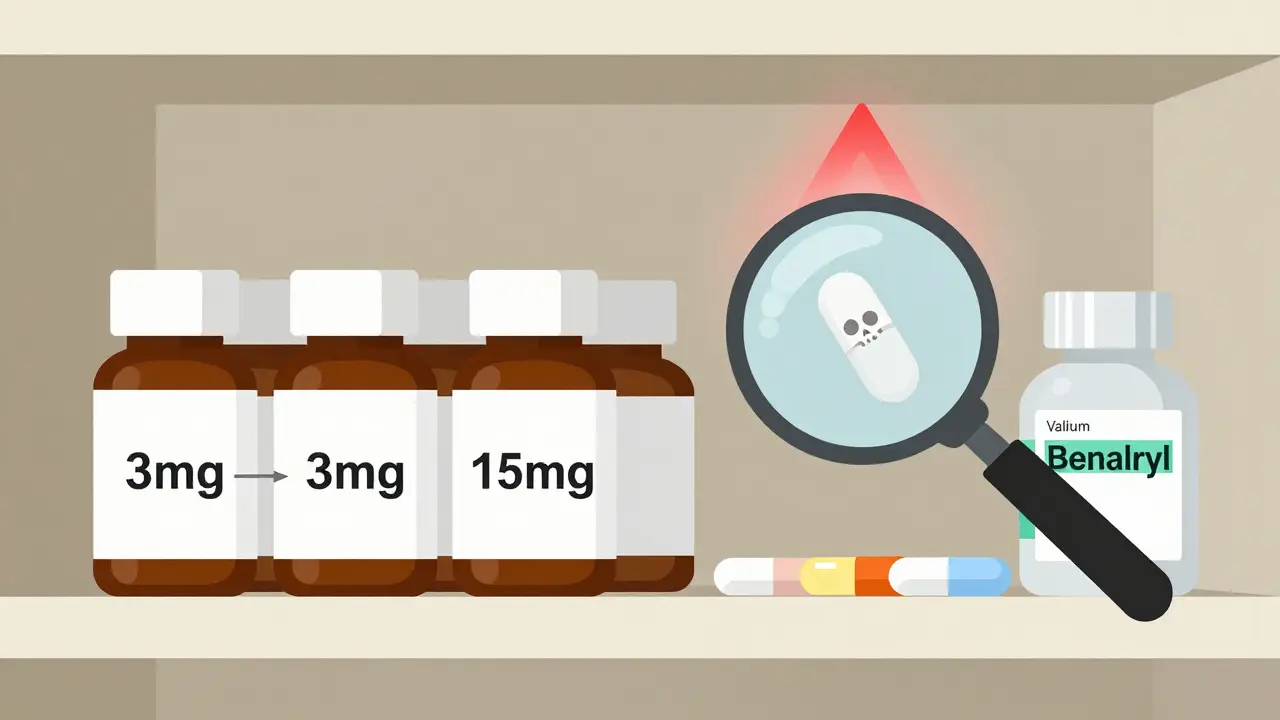
Who’s Most at Risk?
It’s not just older adults. Though they’re hit hardest, anyone on sedatives is vulnerable.- Older adults (65+): The American Geriatrics Society warns melatonin + benzodiazepines increases fall risk by 68%. That’s not a typo. One fall can mean a hip fracture, hospitalization, or death.
- People on opioids: Oxycodone, hydrocodone, tramadol - all depress the central nervous system. Add melatonin? The risk of slowed breathing goes up sharply.
- Those on antidepressants: SSRIs like fluoxetine or SNRIs like venlafaxine can alter melatonin metabolism. Fluvoxamine (an antidepressant) can spike melatonin levels by up to 170%, turning a 1mg dose into a 3mg overdose.
- Anyone who drives or operates machinery: The NHS says avoid driving for at least five hours after taking melatonin. If you’ve also taken a sedative? That window should be eight hours - minimum.
What Medications Are Dangerous With Melatonin?
You might not realize your meds are sedatives. Here’s the list doctors screen for:- Benzodiazepines: diazepam (Valium), lorazepam (Ativan), alprazolam (Xanax)
- Non-benzodiazepine sleep aids: zolpidem (Ambien), eszopiclone (Lunesta), zaleplon (Sonata)
- Opioids: oxycodone, hydrocodone, codeine, tramadol
- Antidepressants: fluoxetine, sertraline, venlafaxine, fluvoxamine
- Antipsychotics: quetiapine (Seroquel), olanzapine (Zyprexa)
- Antihistamines: diphenhydramine (Benadryl), doxylamine (Unisom)
- Alcohol
- Muscle relaxants: cyclobenzaprine, carisoprodol
What to Do Instead
You don’t need to give up sleep. But you need smarter tools.- Lower the dose: If your doctor says you must combine them, use no more than 0.3mg to 0.5mg of melatonin. That’s 1/10th of what most people take. And reduce your sedative dose by at least 25%.
- Use time-released melatonin: A 2023 study in Sleep Medicine Reviews found time-released formulas cut interaction risks by 31% compared to immediate-release. Why? They mimic natural body rhythms instead of flooding the system.
- Wait 5-8 hours: Never take melatonin and a sedative within five hours of each other. Eight is safer. And never drive or operate heavy machinery until you’ve slept at least eight hours after taking both.
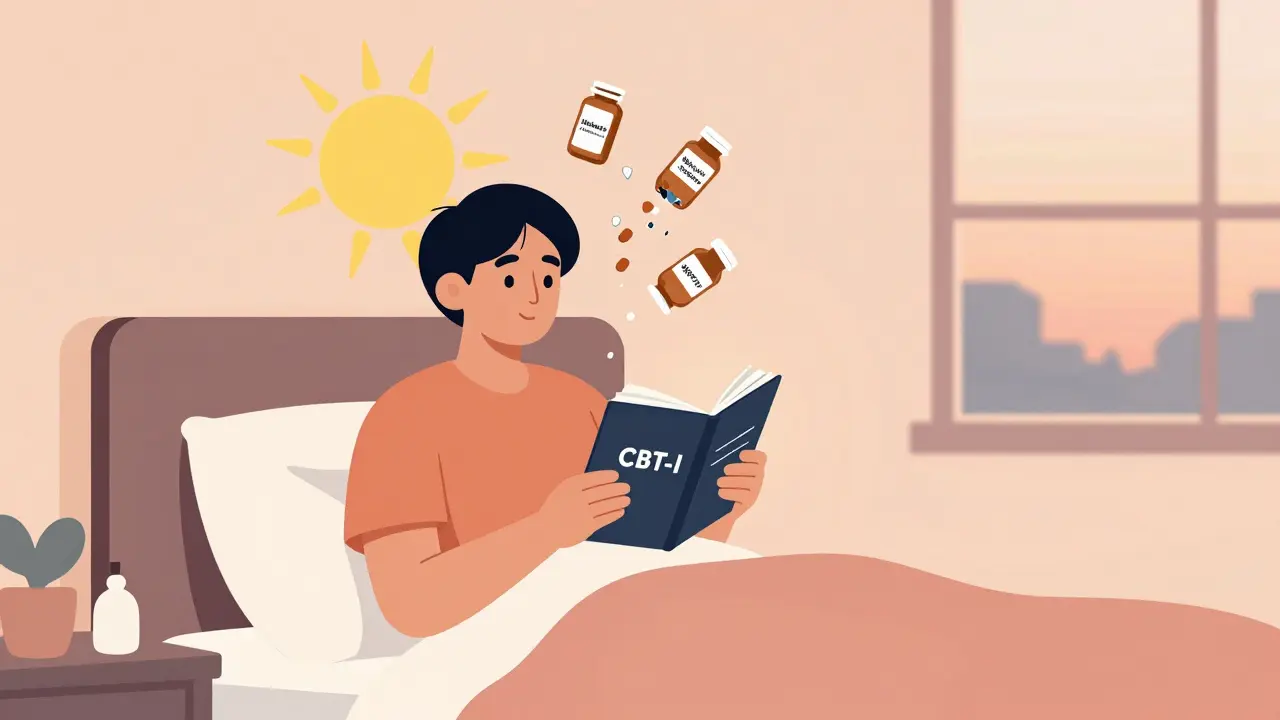
- Try CBT-I: Cognitive Behavioral Therapy for Insomnia is now the first-line treatment recommended by the American College of Physicians. It works better than pills long-term, with zero side effects. And it’s covered by many insurance plans.
The Bottom Line
Melatonin isn’t evil. But it’s not harmless. It’s a powerful biological signal - and when you mix it with other brain-slowing drugs, you’re playing Russian roulette with your breathing, your balance, and your life. The numbers don’t lie: 28% of melatonin users have combined it with sedatives without telling a doctor. 37% of them had unintended oversedation. 4% needed emergency care. If you’re taking a prescription sleep aid, anxiety med, or painkiller - and you’re thinking about adding melatonin - stop. Talk to your doctor. Or better yet, skip the pills entirely and try CBT-I. It’s proven. It’s safe. And it works.Can melatonin make me sleepy the next day?
Yes - especially if you take too much or combine it with sedatives. Even without other drugs, melatonin can cause next-day drowsiness in up to 8.7% of users. With sedatives, that risk jumps dramatically. The NHS recommends waiting at least five hours before driving or operating machinery. If you’ve taken a sedative too, wait eight hours. Use time-released melatonin to reduce this risk.
Is melatonin safer than sleeping pills?
In isolation, yes - melatonin has a much lower risk of dependence, withdrawal, or overdose compared to zolpidem or benzodiazepines. But when mixed with those drugs, it becomes more dangerous than either one alone. The additive effect can trigger respiratory depression, falls, or accidents. Melatonin isn’t a "safe" alternative - it’s a risk amplifier.
Can I take melatonin with alcohol?
No. Alcohol is a central nervous system depressant. Combining it with melatonin increases drowsiness, impairs coordination, and raises the risk of accidents. Even one drink with melatonin can make you feel like you’ve had three. Avoid alcohol entirely for at least eight hours before and after taking melatonin.
What’s the safest dose of melatonin?
Most people don’t need more than 0.3mg to 0.5mg. The body naturally produces about 0.3mg at night. Higher doses (like 3mg or 5mg) are often unnecessary and increase side effects. For older adults or those on sedatives, 0.3mg is the recommended starting point. Always start low and increase only if needed - and only after consulting a doctor.
Why isn’t melatonin regulated like a drug?
In the U.S., melatonin is classified as a dietary supplement under the 1994 DSHEA law. That means manufacturers don’t need FDA approval before selling it. No testing for purity, potency, or safety is required. That’s why some products contain too little, too much, or even contaminants. The FDA has issued 12 warning letters to melatonin makers in 2022 alone. Europe treats it as a drug - and requires strict labeling and dosing controls.
Are there alternatives to melatonin and sedatives?
Yes - and they’re more effective long-term. Cognitive Behavioral Therapy for Insomnia (CBT-I) is the gold standard. It changes how you think about sleep, reduces anxiety around bedtime, and trains your body to sleep naturally. Studies show it works better than pills, lasts longer, and has zero side effects. Many insurance plans now cover it. Talk to your doctor or search for a certified CBT-I provider.
Okay but real talk - I took melatonin with my anxiety med for months without thinking twice. Then one morning I blacked out backing out of my driveway. Didn’t hit anything, thank god, but my dog started barking like I was dying. I thought I was having a stroke. Turned out I’d taken 5mg melatonin with 0.25mg Xanax. My doctor nearly cried. Now I use 0.3mg and only on nights I’m truly struggling. No more guessing games. Your body isn’t a lab experiment.
bro i just took 10mg cause i was tired and then had a beer… woke up on the couch at 3pm with my cat staring at me like i was a ghost. no idea how i got there. i dont even remember driving home. i think my brain took a vacation.
People treat melatonin like herbal tea. It’s a hormone. You wouldn’t mix insulin with opioids. Why is this surprising?
CBT-I changed my life. No pills. No guessing. Just sleep hygiene, stimulus control, and letting go of the obsession with sleep. I used to think I needed something to knock me out. Turns out I just needed to stop fighting bedtime. Best investment I ever made. Seriously - Google a certified provider. Insurance covers it. It’s not magic. It’s science.
They’re hiding this because Big Pharma doesn’t profit off melatonin. You think the FDA lets this slide? Nah. They’re paid off. I’ve seen the documents. Supplements are the new loophole. They don’t want you to know how dangerous this is - they want you addicted to pills and then ‘fix’ you with more pills. Wake up. This is control. And they’re using sleep to do it.
0.3mg. Not 3mg. Not 5mg. 0.3mg. That’s all your body needs. Stop being lazy.
I used to take melatonin with Ambien like it was candy. Then I fell asleep at a red light. Woke up with my horn blaring and a cop tapping my window. I thought I was dreaming. Turned out I’d been stopped for 12 minutes. No accident. Just pure dumb luck. Now I only take 0.5mg and never with anything else. And I don’t drive for 8 hours. I’m not risking my life for a few extra hours of sleep. It’s not worth it.
As someone from Canada where melatonin is prescription-only, I can say this: the lack of regulation in the U.S. is staggering. Here, you can’t even buy it without a doctor’s note. The dosing is precise. The labeling is accurate. The safety protocols are enforced. I know it’s inconvenient - but sometimes, inconvenience prevents tragedy. I’ve seen too many American friends end up in ERs over this. Please, if you’re going to use it - start with 0.3mg. And talk to someone who knows what they’re doing.
Did you know the FDA has no authority over supplements? That’s not a bug - it’s a feature. The 1994 DSHEA law was written by supplement lobbyists. You’re not getting a hormone - you’re getting a lottery ticket. One bottle might have 0.1mg. Another might have 15mg. And no one’s testing it. Ever. So yeah - mixing it with anything? You’re not just risking drowsiness. You’re playing Russian roulette with your frontal lobe.
Let me be blunt - you’re not ‘just’ taking melatonin. You’re poisoning your endocrine system with unregulated chemicals and then wondering why you feel like a zombie. This isn’t ‘sleep aid.’ It’s chemical interference. And if you’re combining it with antidepressants? You’re basically sedating your nervous system with a sledgehammer. The fact that people think this is ‘natural’ is why we’re in this mess. Stop romanticizing ignorance.
Yall are overreacting. I take melatonin with my pain meds every night and I’m fine. I drive. I work. I’m 42. This is just fearmongering. America’s scared of everything. If you can’t handle a little drowsiness, maybe you shouldn’t be driving. Or working. Or living.
My mom took 5mg melatonin with her blood pressure med and ended up in the hospital with bradycardia. She didn’t even know they could interact. She thought ‘natural’ meant ‘safe.’ Turns out, natural doesn’t mean harmless. It just means unregulated. If you’re on any med - even a ‘mild’ one - talk to your pharmacist. Not Google. Not Reddit. A real person with a license.