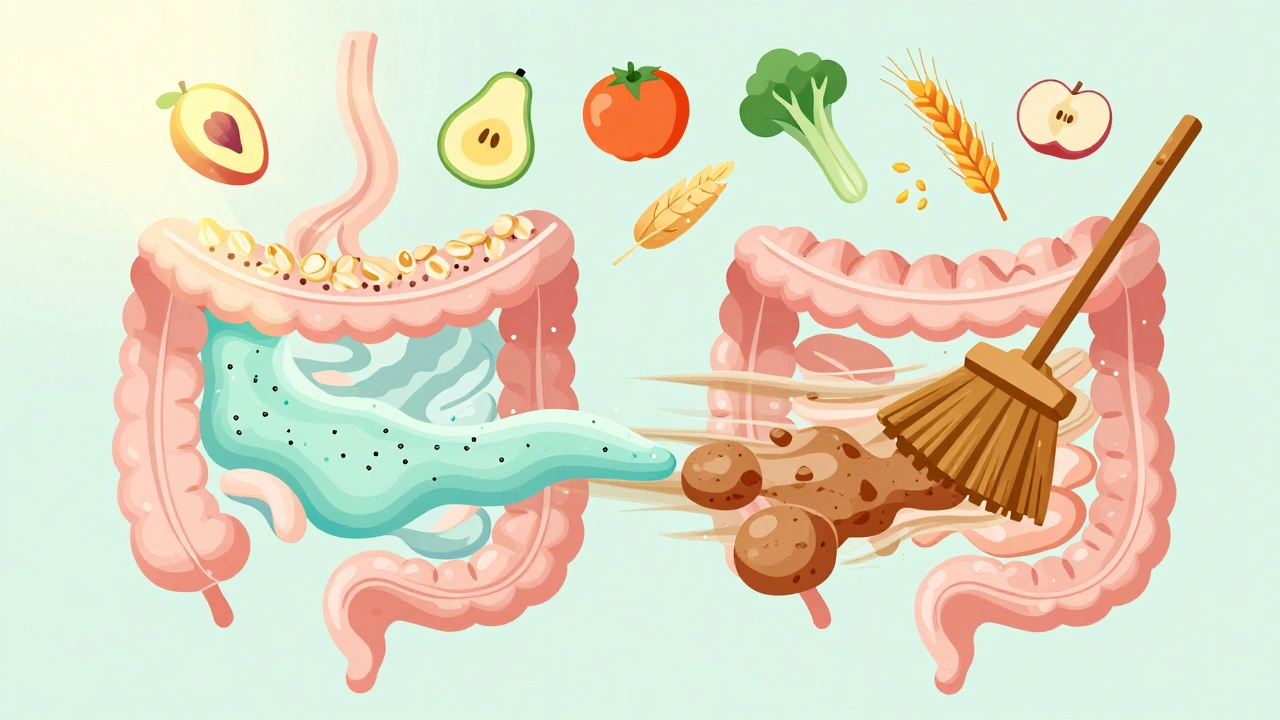
Most people know fiber is good for you-but few know how it actually works in your gut. And that’s where things get messy. If you’ve ever had bloating after eating bran cereal, or felt relief from diarrhea after adding oats to your breakfast, you’ve already experienced the difference between soluble and insoluble fiber. They’re not the same. They don’t do the same thing. And choosing the right one can make all the difference for your digestion, your blood sugar, and even your mood.
What Exactly Is Fiber?
Fiber is the part of plant foods your body can’t digest. It passes through your stomach and small intestine mostly unchanged, then hits your colon where things really start to happen. There are two main types: soluble and insoluble. Both come from whole plants-fruits, vegetables, beans, nuts, seeds, and whole grains-but they behave totally differently once they hit your digestive tract.Think of soluble fiber like a sponge that soaks up water. It turns into a thick, gel-like substance that slows digestion. Insoluble fiber is more like a broom-it sweeps things along, adding bulk and helping everything move faster. You need both. But if you’re dealing with constipation, IBS, or diabetes, knowing which one to lean on matters.
Soluble Fiber: The Calm Regulator
Soluble fiber dissolves in water. That’s why foods like oats, chia seeds, apples, and beans feel slimy when soaked or cooked. This gel does three big things:- Slows down how fast sugar enters your bloodstream, cutting post-meal spikes by 20-30%
- Feeds the good bacteria in your gut, which then produce short-chain fatty acids like butyrate-these reduce inflammation and may even improve brain function
- Helps lower LDL (bad) cholesterol by 5-10% when you eat 5-10 grams daily
That’s why people with type 2 diabetes or prediabetes often feel better when they start eating more soluble fiber. A 2024 review in PMC found that consistent intake improved insulin sensitivity by 15-20%. It’s also the go-to for IBS sufferers who bounce between constipation and diarrhea. The gel helps firm up loose stools and softens hard ones. Psyllium husk, for example, is a common supplement because it’s almost pure soluble fiber-and works well for both ends of the spectrum.
Good sources? Oats (1-2 grams per 100g), lentils (2-3g per 100g), chia seeds (5.6g per 30g), apples (1.4g per medium fruit), and flaxseeds. The key is consistency. One bowl of oatmeal won’t fix your gut. You need it daily.
Insoluble Fiber: The Fast Lane
Insoluble fiber doesn’t dissolve. It stays rough and rigid as it moves through your system. Its job? Add bulk and speed things up. It absorbs water like a sponge, swelling up to 2-3 times its size. That’s why it’s so effective for constipation-it increases stool weight by 30-50% and cuts transit time by 24-48 hours.It’s also linked to lower risk of diverticular disease. Long-term studies show people who eat more insoluble fiber cut their risk by 40%. That’s why whole wheat, bran, nuts, and vegetable skins are so important. Wheat bran? 12 grams per 100g. Kiwi skin? 2.5 grams per fruit. Even the skin on potatoes counts.
But here’s the catch: insoluble fiber can make things worse if you have active Crohn’s or ulcerative colitis. During flare-ups, it can irritate inflamed tissue. Experts recommend keeping insoluble fiber under 10-15 grams per day during flares, then slowly increasing as symptoms improve. If you’re not sure, start with peeled vegetables and cooked fruits instead of raw skins and seeds.

Why You Need Both (And Why Supplements Fall Short)
You might think, “I’ll just take a fiber pill.” But here’s the truth: supplements can’t replicate what whole foods do. A 2024 review in PMC made it clear-fiber doesn’t work alone. It’s part of a team. The phytonutrients, antioxidants, vitamins, and minerals in whole plants work together with fiber to reduce inflammation, support immune function, and balance gut bacteria.That’s why the Mediterranean Diet is the gold standard. It’s not just high in fiber-it’s rich in diverse sources: legumes, whole grains, nuts, olives, vegetables, and fruits. People on this diet get 30-50 grams of fiber daily. Compare that to the average American intake: just 15 grams. That’s less than half the recommended amount.
And it’s not just about digestion. The short-chain fatty acids made from fermenting soluble fiber trigger hormones like GLP-1 and peptide YY. These tell your brain you’re full-boosting satiety by 20-25%. That’s one reason people who eat more fiber often lose weight without trying.
How Much Do You Really Need?
The Institute of Medicine recommends:- 25 grams per day for women under 50
- 38 grams per day for men under 50
After 50, those numbers drop slightly-21g and 30g respectively. But most people fall way short. And if you suddenly go from 10g to 30g overnight? You’ll pay for it. Bloating, gas, cramps-it’s common. That’s why experts say: increase slowly. Add 5 grams per week. Give your gut time to adjust.
And don’t forget water. Every 25 grams of fiber needs at least 1.5-2 liters of water. Otherwise, insoluble fiber can turn into a brick instead of a broom. That’s when constipation gets worse.
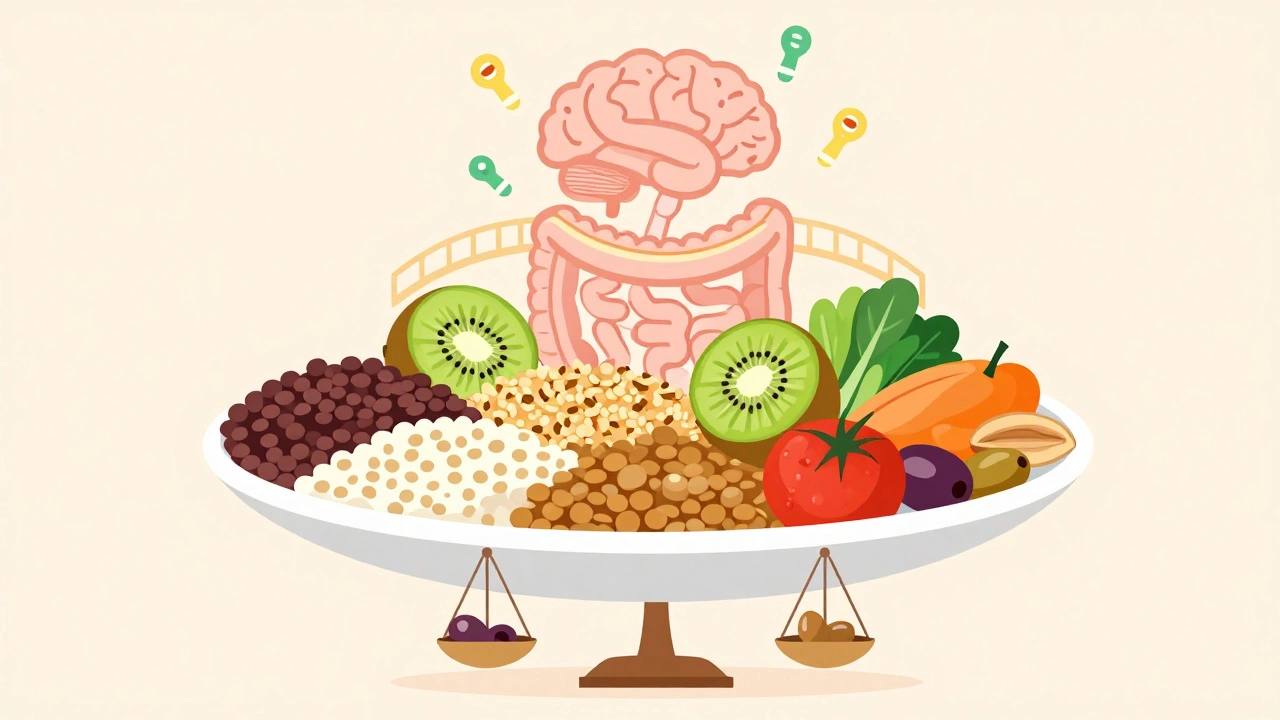
What to Eat Based on Your Needs
- For constipation: Focus on insoluble fiber-whole grains, wheat bran, nuts, seeds, and raw veggies. Add 1-2 tablespoons of ground flaxseed daily.
- For diarrhea or IBS: Lean on soluble fiber-oats, bananas, applesauce, psyllium, chia seeds soaked in water. Avoid raw broccoli, cabbage, and bran until symptoms stabilize.
- For blood sugar control: Prioritize soluble fiber at every meal. Start with oatmeal, add lentils to soups, snack on apples with peanut butter.
- For inflammation or IBD flare-ups: Stick to cooked, peeled, low-residue foods. Avoid nuts, seeds, and raw skins. Slowly reintroduce insoluble fiber as you heal.
There’s no one-size-fits-all. Your gut is unique. If you’ve tried high-fiber diets before and felt worse, it’s not that fiber doesn’t work-it’s that you might’ve picked the wrong kind.
Real People, Real Results
A 2023 Reddit thread with 147 people who had IBS showed that 68% saw improvement in both constipation and diarrhea within two weeks of adding soluble fiber like oats and psyllium. But 32% with IBD said insoluble fiber made flare-ups worse-exactly what doctors warn about.Another group on the Mayo Clinic forum reported that 45% of people who ramped up fiber too fast ended up bloated. Those who went slow-5g per week-had zero issues after six weeks.
And here’s the surprise: 78% of people who ate beans or soaked chia seeds daily for eight weeks said their mood improved. That’s not coincidence. Your gut and brain talk to each other. And fiber is one of their main languages.
Bottom Line: Start Simple
You don’t need fancy supplements or expensive powders. Just eat more plants. Add one extra serving of vegetables to lunch. Swap white rice for brown. Have an apple instead of a cookie. Sprinkle chia seeds on yogurt. Choose whole grain bread over white.Track your intake for a week. Use a free app like Cronometer if you want to see where you stand. Then, adjust. If you’re bloated? Cut back on insoluble fiber. If you’re constipated? Add more bran or nuts. If your blood sugar spikes after meals? Load up on soluble fiber.
Your gut isn’t broken. It just needs the right fuel. And once you start giving it the right kind of fiber-slowly, consistently, with plenty of water-you’ll feel it. Not just in your bowels. In your energy. Your focus. Your mood.
Can soluble fiber help with IBS?
Yes. Soluble fiber forms a gel that regulates stool consistency, making it ideal for IBS sufferers who experience alternating constipation and diarrhea. Foods like oats, bananas, and psyllium husk are often well-tolerated and can reduce symptoms within 1-2 weeks of daily use.
Is insoluble fiber bad for IBD?
During active flare-ups of Crohn’s disease or ulcerative colitis, insoluble fiber can irritate inflamed tissue and worsen symptoms. Experts recommend limiting it to 10-15 grams per day during flares. Once symptoms improve, slowly reintroduce it under medical guidance.
How much water should I drink with fiber?
For every 25 grams of fiber you consume daily, aim for at least 1.5 to 2 liters of water. Without enough fluid, insoluble fiber can harden and cause blockages or worsen constipation. Water helps fiber move smoothly through your system.
Can fiber supplements replace whole foods?
No. While supplements like psyllium or methylcellulose can help in the short term, they lack the vitamins, minerals, and phytonutrients found in whole foods. A 2024 review confirmed that isolated fiber can’t replicate the health benefits of fiber consumed naturally in fruits, vegetables, legumes, and whole grains.
Why does fiber improve mood?
Soluble fiber feeds gut bacteria that produce short-chain fatty acids like butyrate. These compounds reduce inflammation and stimulate the release of mood-regulating hormones like serotonin and GLP-1. Studies show people eating more fiber report better mental clarity and reduced anxiety after 6-8 weeks.
How fast should I increase my fiber intake?
Add no more than 5 grams of fiber per week. Going too fast causes bloating, gas, and cramping. If you’re currently eating 10 grams a day, aim for 15 in week one, 20 in week two, and so on. Most people reach their goal in 4-6 weeks without discomfort.
If you’re not sure where to start, pick one change: swap white bread for whole grain. Add a banana to breakfast. Eat beans twice a week. Small steps, done consistently, change your gut-and your whole health-faster than you think.

ps: oats are for peasants.