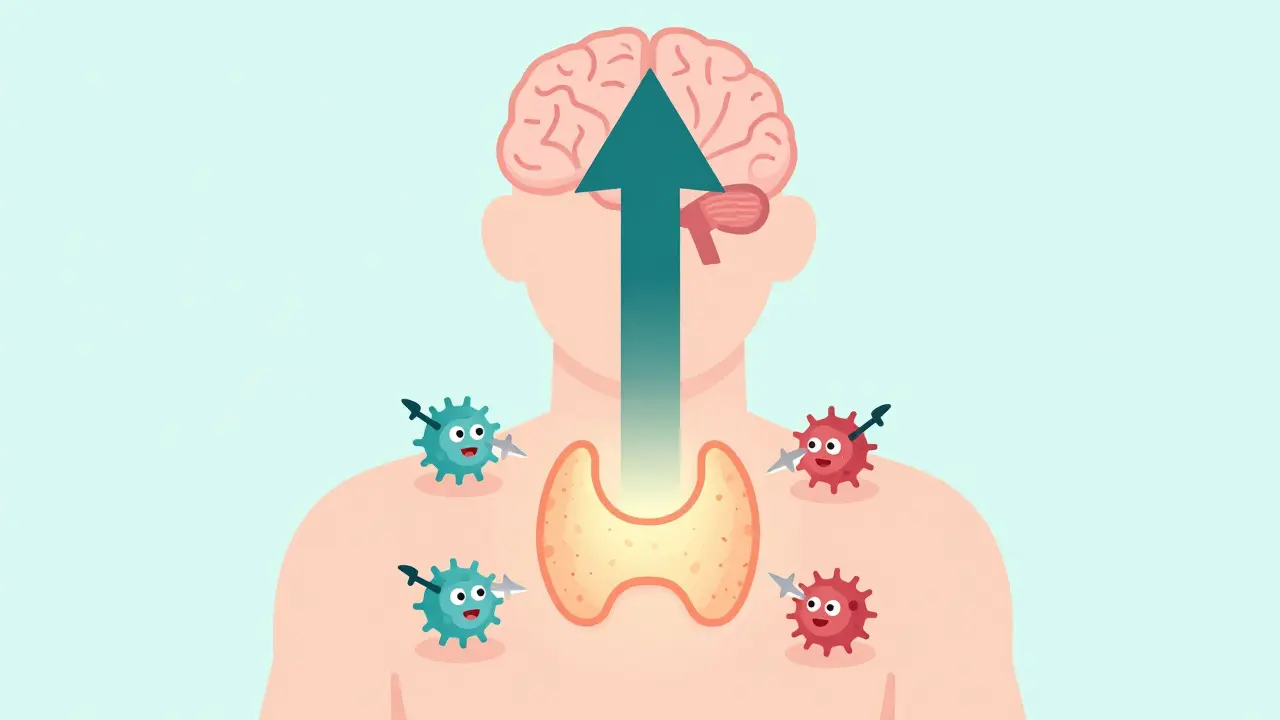
Hashimoto’s thyroiditis is the most common cause of hypothyroidism in countries where people get enough iodine in their diet. It’s not just a simple thyroid problem-it’s an autoimmune condition where your body’s own immune system mistakenly attacks your thyroid gland. Over time, this attack damages the gland until it can’t produce enough thyroid hormone. That’s when symptoms like fatigue, weight gain, cold intolerance, and brain fog start showing up. If you’ve been told you have Hashimoto’s, you’re not alone. About 4% of adults in the U.S. have it, and women are far more likely to be affected-up to 10 times more than men. But here’s the thing: knowing you have Hashimoto’s is only the first step. The real key to feeling better is understanding how to monitor and manage it properly, and that starts with one simple blood test: TSH.
What TSH Really Tells You
TSH stands for thyroid-stimulating hormone. It’s made by your pituitary gland, and its job is to tell your thyroid, "Make more hormone." When your thyroid isn’t working well, TSH rises because the pituitary is trying harder to get it to respond. That’s why TSH is the first test doctors order when they suspect hypothyroidism. A TSH level above 4.5 mIU/L usually triggers more testing. If your free T4 is low or low-normal, and your thyroid antibodies (TPOAb) are high, that’s the classic signature of Hashimoto’s.
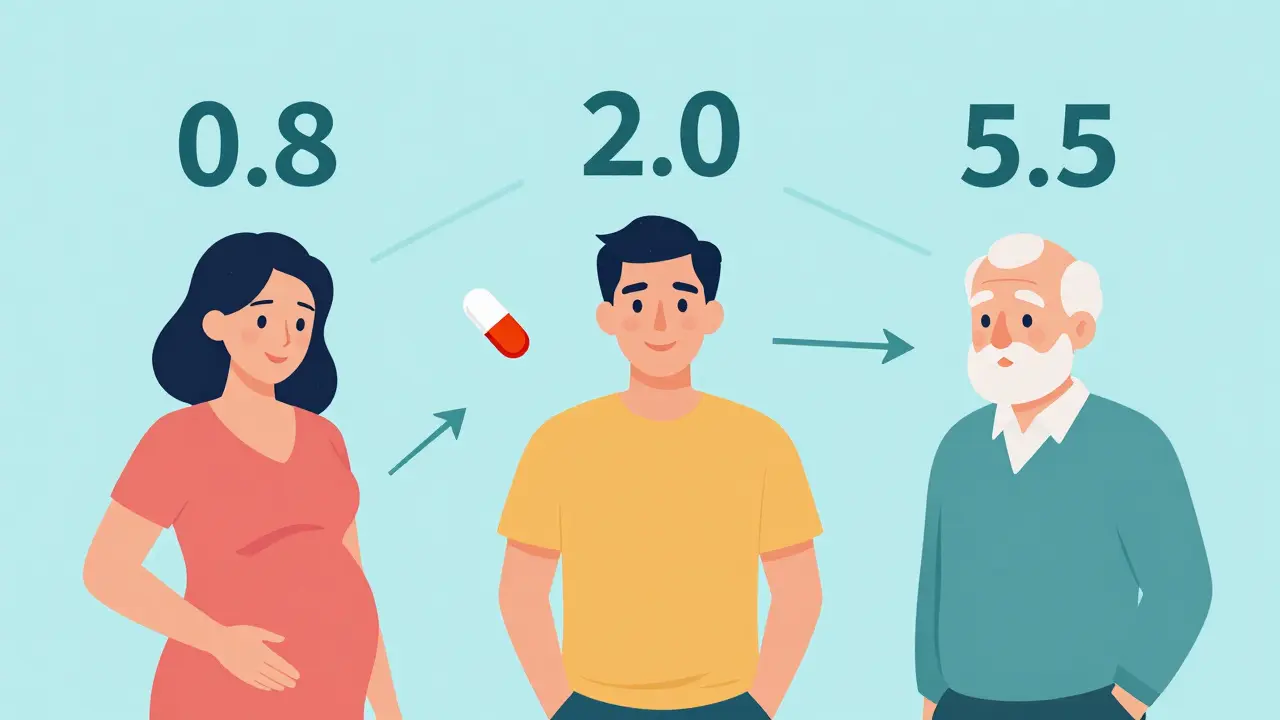
But here’s where things get tricky. Many people think a "normal" TSH means everything’s fine. That’s not true. Normal lab ranges are based on population averages-not what’s best for you. The American Thyroid Association says the goal of treatment isn’t just to get your TSH into the normal range (0.4-4.0 mIU/L). It’s to get you feeling well. For most adults, that means aiming for a TSH between 0.5 and 2.5 mIU/L. Some people need to be even lower, especially if they’re still tired or gaining weight despite being "in range."
How Levothyroxine Works-and Why Timing Matters
The standard treatment for Hashimoto’s is levothyroxine, a synthetic version of the thyroid hormone T4. It’s taken once a day, usually on an empty stomach, and it’s designed to replace what your thyroid can’t make anymore. But getting the dose right isn’t a one-time thing. Most people need several adjustments before they find their sweet spot.
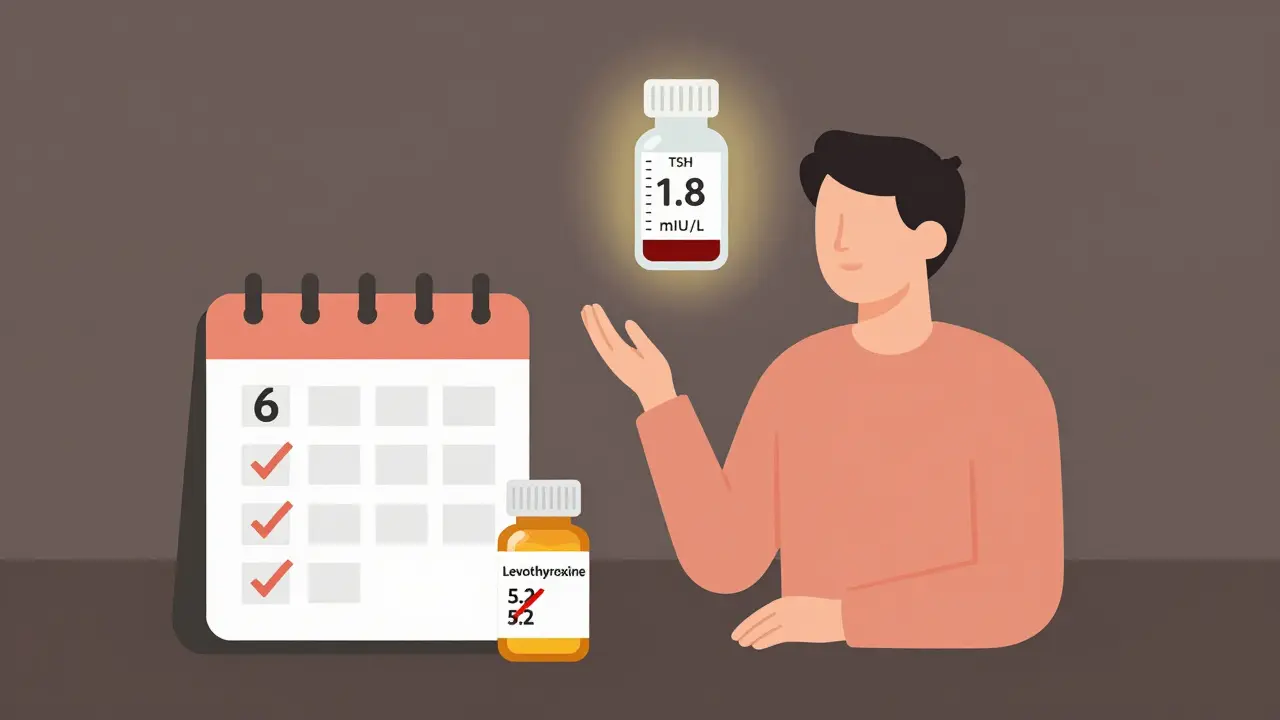
Why? Because your body doesn’t respond instantly. Levothyroxine has a long half-life-it takes about six to eight weeks for your TSH to fully stabilize after a dose change. That’s why doctors don’t adjust your dose every few weeks. If you feel worse after a dose increase, it doesn’t mean the new dose is too high. It might just mean your body hasn’t caught up yet. Rushing adjustments can lead to overshooting, which causes anxiety, heart palpitations, or trouble sleeping.
Typical starting doses range from 25 to 50 mcg per day, depending on age, weight, and heart health. For someone in their 30s with no heart issues, a starting dose of 1.6 mcg per kg of body weight is common. So if you weigh 70 kg (about 154 lbs), you’d start around 110 mcg. But older adults or those with heart disease often start lower-sometimes as low as 25 mcg-to avoid putting stress on the heart.
When and How Often to Test TSH
After starting levothyroxine, the first follow-up test should be 6 to 8 weeks later. That’s not arbitrary. It’s based on how long it takes for your pituitary gland to sense the new hormone levels and adjust TSH output. The American Association of Clinical Endocrinologists, the Mayo Clinic, and the American Academy of Family Physicians all agree on this timeline.
Once your TSH is stable and you’re feeling better, most guidelines recommend testing once a year. But there are exceptions. If you gain or lose more than 10% of your body weight, start or stop taking iron, calcium, or estrogen, or begin a new medication like a proton pump inhibitor (PPI), your dose may need adjusting. These substances can interfere with how well your body absorbs levothyroxine.
Pregnancy changes everything. If you’re planning to get pregnant-or already are-your TSH target drops. The American Thyroid Association recommends keeping TSH below 2.5 mIU/L during the first trimester. That’s because your baby relies on your thyroid hormone in the early weeks, before its own thyroid kicks in. Without proper control, there’s a higher risk of miscarriage, preterm birth, or developmental issues. Testing every 4 weeks during the first half of pregnancy is standard.
Why Antibody Tests Don’t Guide Treatment
You might have heard that high thyroid antibodies mean your Hashimoto’s is "active" or "worse." That’s not how it works. TPOAb levels can be sky-high one year and drop the next, or stay high for decades. But they don’t correlate with symptoms or how well your thyroid is functioning. The American Thyroid Association says clearly: "Repeating and monitoring your thyroid antibody levels is not needed."
Why? Because antibodies are a sign of the immune system’s history-not its current behavior. You can have very high antibodies and feel great on the right dose of levothyroxine. Or you can have low antibodies and still feel awful because your dose is off. The only thing that matters for treatment is your TSH, your symptoms, and how you’re feeling day to day.
What About T3 or Natural Thyroid?
Some people swear by natural desiccated thyroid (NDT) or combination T4/T3 therapy. These products contain both hormones, unlike levothyroxine, which is just T4. But the evidence doesn’t support them as better. A 2022 Cochrane Review looked at 12 studies involving over 700 patients and found no clear benefit of T3 combination therapy over levothyroxine alone. The same review found no consistent improvement in quality of life, mood, or energy.
There are exceptions. A small group of people with a genetic variation in the DIO2 gene-responsible for converting T4 to T3-may feel better with slightly lower TSH targets (0.4-2.0 mIU/L). A 2023 JAMA Internal Medicine study of over 12,000 people found this group had fewer symptoms when their TSH was kept in the lower half of normal. But even then, they were still on levothyroxine. No one needs T3 unless they’re not converting T4 properly, and even that’s rare.
Real-Life Challenges with Monitoring
Many people with Hashimoto’s feel frustrated. They’ll say things like, "My TSH is normal, but I still feel awful." Or, "I waited 8 weeks for my blood test and I was miserable the whole time."
Here’s the reality: TSH is the best tool we have, but it’s not perfect. Symptoms like fatigue, weight gain, and brain fog can have many causes-sleep, stress, diet, other hormones. A normal TSH doesn’t rule out other problems. But if your TSH is high, and you’re symptomatic, your dose is likely too low. If your TSH is low and you’re jittery or having heart palpitations, your dose is too high.
Don’t rely on online forums for dosing advice. Reddit threads and Facebook groups are full of conflicting stories. What works for one person may not work for you. Your doctor should use your TSH, your symptoms, and your history-not anecdotal advice-to guide changes.
What’s New in 2026?
There’s growing interest in personalized TSH targets. Research now suggests that age, genetics, and even body weight can influence what TSH level feels best for you. For example, people over 65 often do fine with a slightly higher TSH-up to 6.0 mIU/L-because their bodies naturally adjust to slower metabolism. Meanwhile, younger adults may need to aim lower to feel their best.
Home TSH testing devices are now FDA-approved, like ThyroChek. But most doctors still recommend lab testing. Why? Because home tests aren’t as accurate at very low TSH levels, and they can’t measure free T4 or antibodies. For now, they’re useful for tracking trends between visits-but not for making dose decisions.
The bottom line? Hashimoto’s isn’t curable, but it’s manageable. You don’t need to chase antibodies. You don’t need fancy supplements or restrictive diets (though some people find them helpful). You need consistent levothyroxine, regular TSH checks, and a doctor who listens to your symptoms. Most people find their balance within a few months. And once they do, they feel like themselves again.
Is Hashimoto’s thyroiditis the same as hypothyroidism?
No, but they’re closely linked. Hashimoto’s is the autoimmune disease that causes most cases of hypothyroidism. Think of it this way: Hashimoto’s is the reason your thyroid stops working. Hypothyroidism is the result-the state of not having enough thyroid hormone. You can have Hashimoto’s without hypothyroidism (called subclinical Hashimoto’s), but if left untreated, it almost always leads to hypothyroidism.
Can I stop taking levothyroxine if my TSH is normal?
No. Once your thyroid has been damaged by Hashimoto’s, it won’t recover. Levothyroxine isn’t a cure-it’s a replacement. Stopping it will cause your TSH to rise again, and symptoms will return. Most people need to take it for life. That doesn’t mean it’s a burden. For most, it’s a simple, once-daily pill that restores energy, mood, and overall health.
Why do some people need higher TSH targets than others?
Everyone’s body responds differently. Older adults often have slower metabolism and may feel better with a slightly higher TSH (up to 6.0 mIU/L). People with heart disease may need to avoid very low TSH levels to prevent arrhythmias. Pregnant women need tighter control to protect the baby. And some individuals with certain genetic variations respond better to lower TSH targets. The goal isn’t to hit a number-it’s to match your dose to how you feel and your life stage.
Does diet or supplements affect Hashimoto’s management?
Yes, but not in the way many believe. Gluten-free or dairy-free diets don’t cure Hashimoto’s, though some people report fewer symptoms-possibly because they reduce inflammation or improve gut health. What matters more for treatment is timing. Iron, calcium, and antacids can block levothyroxine absorption if taken too close to your pill. Take your thyroid medication on an empty stomach, at least 30-60 minutes before food or supplements. Consistency matters more than any special diet.
Can stress make Hashimoto’s worse?
Stress doesn’t cause Hashimoto’s, but it can make symptoms feel worse. Chronic stress affects your adrenal glands, gut, and immune system-all of which interact with thyroid function. If you’re under constant stress and your TSH is normal but you still feel exhausted, stress may be contributing. Managing stress through sleep, movement, or therapy won’t fix your thyroid, but it can help you feel more like yourself while your medication does its job.
What to Do Next
If you’ve been diagnosed with Hashimoto’s, here’s your simple plan:
- Take your levothyroxine the same time every day, on an empty stomach.
- Wait 6-8 weeks after starting or changing your dose before getting your TSH tested.
- Report symptoms-not just numbers. Tell your doctor if you’re tired, gaining weight, anxious, or having trouble sleeping.
- Don’t test antibodies unless it’s for diagnosis. They won’t help you adjust your dose.
- Get tested annually, or more often if your weight changes, you start new meds, or you’re pregnant.
- Don’t compare your dose or TSH target to someone else’s. Your body is unique.
Hashimoto’s doesn’t have to control your life. With the right dose and consistent monitoring, most people return to normal energy, mood, and function. It takes patience. But it’s absolutely possible.
I’ve been on levothyroxine for five years now, and honestly? The biggest shift was realizing TSH isn’t a magic number-it’s a starting point. I was told 2.8 was fine, but I was still exhausted, gaining weight, and couldn’t think straight. My doc finally listened and dropped me to 1.2. It wasn’t a miracle, but I started sleeping through the night and actually remembered people’s names. It’s not about the range. It’s about how you feel.
For anyone new to this: take your pill at the same time every day. No exceptions. I used to take it after coffee and wonder why I felt off. Turns out coffee blocks absorption. Now I take it with water at 6 a.m., wait an hour, then eat. Life changed. Also, don’t stress about antibodies. They’re just background noise. TSH + symptoms = your real guide.
My TSH was 3.1. I felt fine. But my doctor insisted on lowering it. I didn’t want to. Then I started having panic attacks. Turned out the new dose was too high. I went back to 3.1, and I’ve been stable for two years. Not everyone needs to be at 0.5. Your body knows more than the lab report.
So I read this whole thing and I’m like… why are we all so obsessed with numbers? I’ve got a friend who’s on NDT and swears she’s 10x better. Meanwhile, I’m on levo and feel great. Maybe the real answer is stop chasing perfect TSH and start listening to your body. Also, stress? Yeah it sucks. I started walking every day and my brain fog lifted. Not because of meds. Because I moved.
They say antibodies don’t matter but what if they’re linked to other autoimmune stuff? I’ve got lupus and my TPOAb was 1000. My endo said ignore it. But I looked up studies. There’s a pattern. They’re hiding something. I stopped gluten and dairy. My TSH dropped. Coincidence? I think not.
There’s a quiet grief in being told you’re normal when you don’t feel normal. I’ve had Hashimoto’s for 12 years. I’ve been told my TSH is fine. I’ve been told to eat less sugar. I’ve been told to meditate. I’ve been told I’m lucky it’s not cancer. But no one says: "I see you. Your fatigue is real. Your brain fog isn’t laziness." The science is solid. But the humanity? That’s what’s missing.
For those feeling stuck: you’re not alone. I was in the same spot. Took me three dose changes and two years to find my sweet spot. But I did. And now? I hike, I cook, I sleep. It’s not about perfection. It’s about consistency. Take your pill. Wait. Test. Talk. Repeat. You’ll get there. One step at a time.
From India-where we don’t have access to TSH tests every 6 weeks. We wait 6 months. We adjust by symptoms. I’ve been on 75 mcg for 4 years. No testing. Just feeling. If I’m tired, I add 12.5. If I’m jittery, I drop it. No doctor. No lab. Just me and my body. Maybe we don’t need all the tech. Maybe we just need patience.