You might assume that if a brand-name drug is expensive, a cheaper version made by the same company would be readily available. After all, why wouldn't a manufacturer want to capture more market share with a lower price? The reality is far more complex. Authorized generics are pharmaceutical products approved as brand-name drugs but marketed without the brand-name or trademark, sold at generic prices. They are identical to the brand-name product in formulation and manufacturing but carry a different label and a lower price tag. Yet, despite their potential to lower costs for consumers, they remain a rare sight on pharmacy shelves.
As of late 2019, there were only 1,215 authorized generics listed in the United States. This number sounds large until you consider the tens of thousands of prescription drugs on the market. The vast majority of medications do not have an authorized generic counterpart. Why? Because authorized generics are not primarily about helping patients save money-they are strategic weapons used by brand manufacturers to control the competitive landscape.
The Mechanics of an Authorized Generic
To understand why these drugs are limited, you first need to understand how they bypass the usual regulatory hurdles. Traditional generic drugs must go through a rigorous approval process called the Abbreviated New Drug Application (ANDA). This process requires the generic manufacturer to prove bioequivalence-that their drug works just as well as the original brand-name drug. This testing takes time, often three to four years, and involves significant legal and financial risk.
Authorized generics skip this entire step. They are manufactured under the brand company's existing New Drug Application (NDA). Since the FDA has already approved the safety and efficacy of the brand-name drug, the authorized generic can enter the market immediately. It is literally the same pill, made in the same facility, using the same ingredients, but packaged differently and sold at a discount. For example, when Teva launched an authorized generic version of its own brand Protonix in 2010, it priced the generic at roughly 35% below the brand name. Mylan did something similar with EpiPen in 2016, launching a lower-cost version while the patent was still active.
This speed is the key advantage for the brand owner. While traditional generic competitors are stuck in regulatory limbo or fighting patent lawsuits, the brand company can flood the market with a 'generic' version of its own drug, capturing revenue from price-sensitive patients and insurers without waiting for patent expiration.
The 180-Day Exclusivity Trap
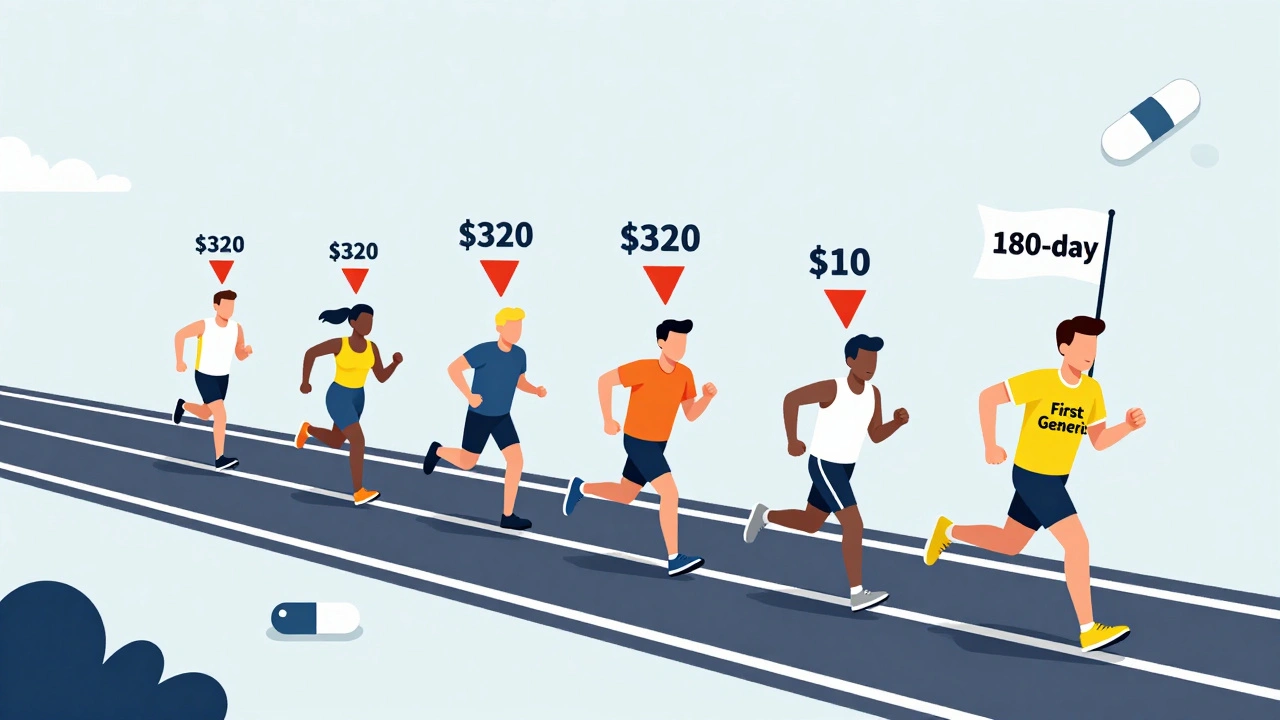
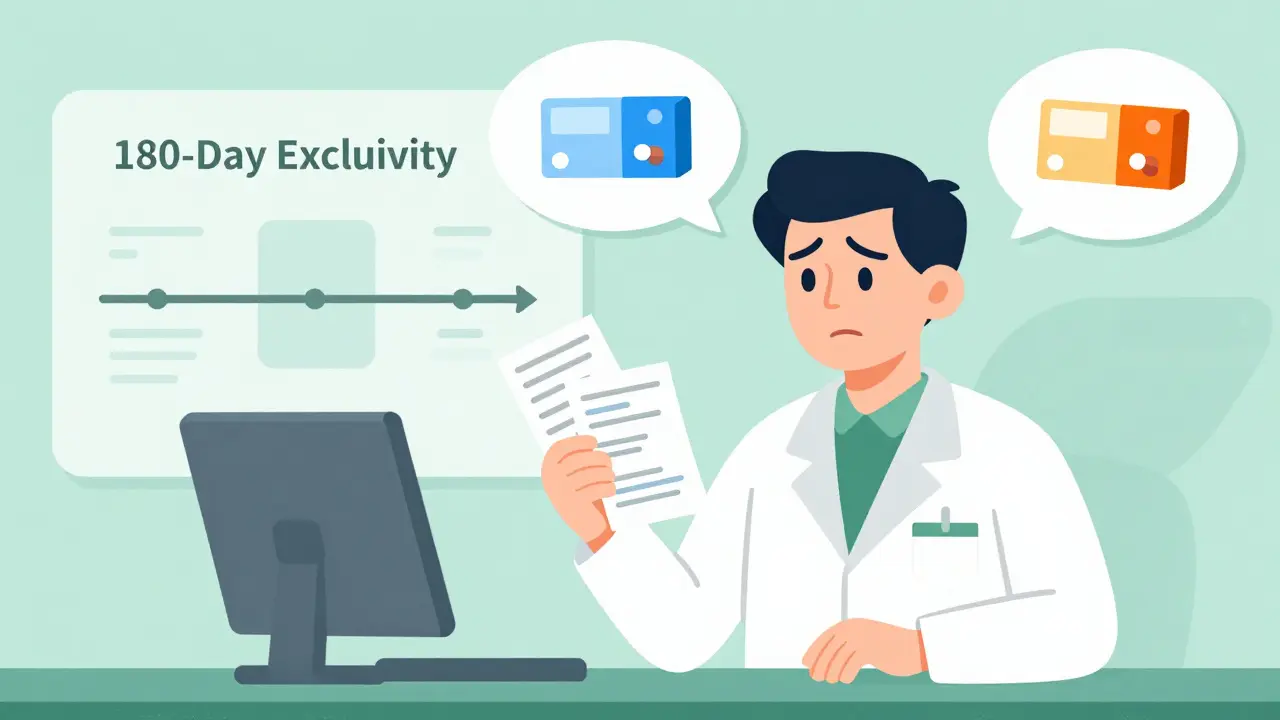
The primary reason authorized generics are selective lies in the Hatch-Waxman Act of 1984. This legislation created a system to encourage generic competition by offering the first generic applicant a period of 180-day exclusivity. During these six months, no other generic competitor can enter the market. This exclusivity is incredibly valuable-often worth hundreds of millions of dollars-to the first generic filer.
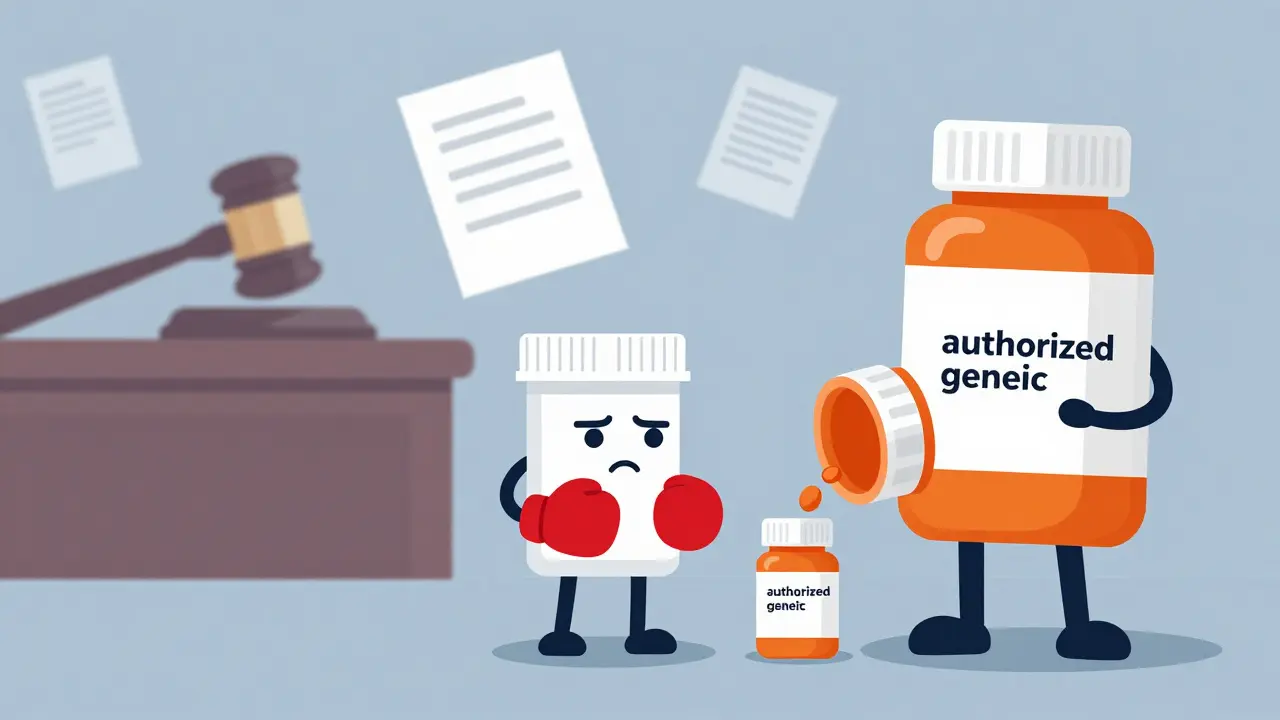
Brand manufacturers use authorized generics to disrupt this incentive structure. If a brand company launches an authorized generic during that 180-day window, it competes directly with the exclusive generic filer. According to the Federal Trade Commission (FTC), this competition can reduce the first-filer's revenues by 40% to 52% during the exclusivity period. In the subsequent 30 months, those losses can grow to 53% to 62%.
This creates a chilling effect. Generic companies are less likely to challenge a brand's patent if they know the brand will simply launch an authorized generic to undercut them. Legal scholar Aaron Kesselheim of Harvard Medical School noted in a 2022 Health Affairs study that while authorized generics offer short-term savings, they "may hinder generic competition in the long run" by reducing the financial incentive for other companies to develop true generic alternatives.
| Feature | Authorized Generic | Traditional Generic |
|---|---|---|
| Regulatory Pathway | Uses existing Brand NDA | Requires new ANDA submission |
| Time to Market | Immediate (weeks) | 3-4 years (average) |
| Bioequivalence Testing | Not required | Mandatory |
| Pricing Strategy | Set by brand owner (strategic) | Market-driven (competitive) |
| Impact on Competition | Can deter other generics | Increases market competition |
Who Gets an Authorized Generic?
If authorized generics are such powerful tools, why don't we see them for every expensive drug? The answer is economics. Authorized generics are disproportionately concentrated in high-stakes markets. Data shows that 68% of documented authorized generics are for drugs with annual brand sales exceeding $500 million. Only 22% of manufacturers with drugs selling below $100 million annually utilize this strategy.
Big pharma companies like Pfizer use authorized generics as part of a broader patent defense strategy. Between 2015 and 2020, Pfizer deployed authorized generics for seven of its top ten drugs facing patent expiration. These are blockbusters where the potential loss of revenue is massive, justifying the strategic maneuvering. Smaller companies with niche drugs simply do not have the resources or the market leverage to make authorized generics worthwhile.
Furthermore, authorized generics are most common in therapeutic areas with high litigation risk. Nearly half (42%) of authorized generics are for central nervous system drugs, followed by gastrointestinal (28%) and cardiovascular (19%) medications. These are categories where patent battles are frequent and fierce, making the threat of an authorized generic a potent deterrent against challengers.
The Consumer Confusion Factor
While brand manufacturers view authorized generics as smart business, healthcare providers and patients often find them confusing. Pharmacists report increased errors when handling drugs that have both brand and authorized generic versions. A study published in U.S. Pharmacist found a 27% increase in prescription processing errors for drugs with dual labeling. Walgreens staff specifically noted challenges in distinguishing between the two.
Patients are equally baffled. An AMA survey of 1,200 physicians revealed that 63% felt the proliferation of authorized generics complicated therapeutic substitution decisions. Patients on Medicare Part D reported confusion when their 'generic' medication suddenly appeared in different packaging, even though the active ingredient remained the same. While an AARP analysis showed patients saved an average of $18.75 per prescription when authorized generics were available, the lack of clarity undermines trust in the system.
Regulatory Pushback and Future Trends
The controversy surrounding authorized generics has led to ongoing legislative efforts. The Generic Pharmaceutical Association (now the Association for Accessible Medicines) has long argued that authorized generics violate the spirit of the Hatch-Waxman Act. They support bills like the Preserve Access to Affordable Generics Act, which seeks to ban authorized generics during the 180-day exclusivity period.
In recent years, the trend has shifted toward settlement agreements. Stanford Law School's Drug Pricing Lab found that 78% of patent settlements between 2018 and 2022 included 'no-AG' clauses, where brand companies promised not to launch authorized generics in exchange for delayed generic entry. This is up from 62% in the previous five-year period. Essentially, generic companies are paying brand owners to stay out of the authorized generic market.
Looking ahead, the role of authorized generics may diminish. Goldman Sachs predicted a 15-20% decline in authorized generic usage over the next decade as biosimilars become more prevalent. Biosimilars, which are similar to biologics rather than small-molecule drugs, operate under different regulatory frameworks that limit the use of authorized versions. Additionally, the FTC continues to scrutinize authorized generics as an enforcement priority, citing their potential to undermine competitive generic entry.
Conclusion: A Tool for Control, Not Just Savings
Authorized generics exist, but they are not a universal solution to high drug prices. They are a strategic tool used by large pharmaceutical companies to protect their market share during critical patent transition periods. For the consumer, they offer occasional savings, but often at the cost of clarity and long-term competition. Understanding this dynamic helps explain why your local pharmacy doesn't stock an authorized generic for every brand-name drug-it's not about availability; it's about corporate strategy.
Are authorized generics safer than traditional generics?
Yes, authorized generics are considered just as safe as brand-name drugs because they are manufactured using the exact same formulation, processes, and quality controls under the original New Drug Application (NDA). Unlike traditional generics, which must prove bioequivalence, authorized generics bypass this testing because they are essentially the brand-name product sold under a different label.
Why don't all brand-name drugs have authorized generics?
Authorized generics are primarily used for high-revenue drugs (over $500 million annually) where brand manufacturers want to compete with generic entrants during the 180-day exclusivity period. They are a strategic business decision rather than a standard practice, so smaller drugs or those with low litigation risk rarely receive an authorized generic version.
How much cheaper are authorized generics compared to brand names?
Pricing varies significantly based on strategy. Some authorized generics are priced 35% below the brand name, while others may only offer a 4-8% reduction in retail prices during the exclusivity period. The goal is often to undercut competing generics rather than maximize discounts for consumers.
Do authorized generics hurt generic competition?
Many experts argue yes. By entering the market early, authorized generics can reduce the revenues of the first generic filer by up to 52% during their exclusivity period. This discourages other companies from challenging patents, potentially delaying the arrival of truly competitive traditional generics in the long run.
Will authorized generics be banned in the future?
There are ongoing legislative efforts, such as the Preserve Access to Affordable Generics Act, to restrict authorized generics during the 180-day exclusivity period. However, as of 2026, they remain legal. The trend is shifting toward settlement agreements where brands agree not to launch authorized generics, suggesting a gradual decline in their use rather than an outright ban.