
Every year, millions of people reach for antihistamines to fight sneezing, itchy eyes, or a runny nose. But not all antihistamines are the same. Some knock you out. Others let you drive, work, or pick up your kids without a second thought. If you’ve ever taken Benadryl and felt like you’d been hit by a truck, you’re not alone. The good news? You don’t have to choose between relief and being functional.
What Are Antihistamines and How Do They Work?
Antihistamines block histamine, a chemical your body releases during an allergic reaction. When pollen, dust, or pet dander triggers your immune system, histamine floods your tissues. That’s what causes the runny nose, watery eyes, and itchy skin. Antihistamines stop histamine from binding to receptors, which calms those symptoms.
There are two main types: H1 and H2. H1 antihistamines are what you take for allergies. H2 antihistamines, like ranitidine, are for stomach acid and ulcers - not allergies. So when you’re shopping OTC, you’re looking at H1 blockers. These come in two big groups: first-generation and second/third-generation.
First-Generation Antihistamines: Fast But Foggy
These are the old-school options: diphenhydramine (Benadryl), chlorpheniramine (Chlor-Trimeton), and doxylamine (Unisom). They work fast - sometimes in 15 to 30 minutes. That’s why they’re still used for sudden reactions like hives or bug bites.
But here’s the catch: they cross into your brain. That’s why 50% of users feel drowsy. A 2018 study found they impair driving as much as a 0.10% blood alcohol level - that’s legally drunk in most places. If you’re a truck driver, a nurse, or even just someone who needs to stay sharp at work, these aren’t the right choice for daily use.
People still use them for sleep because they make you tired. But that’s not safe long-term. The American Academy of Pediatrics warns against giving them to kids under 6. Older adults are especially at risk for confusion, falls, and urinary retention.
Second- and Third-Generation Antihistamines: Relief Without the Sleep
This is where things get better. Cetirizine (Zyrtec), loratadine (Claritin), and fexofenadine (Allegra) are all non-sedating. They were designed to stay out of your brain. That means they work just as well for allergies - but you won’t feel like a zombie.
Here’s how they stack up:
- Fexofenadine (Allegra): Least likely to cause drowsiness. Only 6% of users report feeling sleepy. It’s the go-to for people who need to be alert - surgeons, pilots, teachers. It starts working in 1-2 hours and lasts 24 hours.
- Loratadine (Claritin): Very low sedation risk. 82% of Amazon reviewers say it doesn’t make them tired. Works in about an hour. Great for daily use.
- Cetirizine (Zyrtec): Stronger relief for some people, but 14% report drowsiness. That’s higher than Claritin and Allegra. If you’re sensitive to meds, it might knock you out by afternoon.
- Levocetirizine (Xyzal): A more potent form of Zyrtec. Works faster - in about an hour - but still carries a higher drowsiness risk than Allegra. Not recommended for adults over 65 without talking to a doctor.
All of these are FDA-approved for OTC use. That means they’ve been tested for safety and effectiveness in real people over years. You don’t need a prescription to get them.
Which One Should You Choose?
There’s no single best antihistamine. It’s personal. About 30% of people need to try two or three before finding the one that works for them.
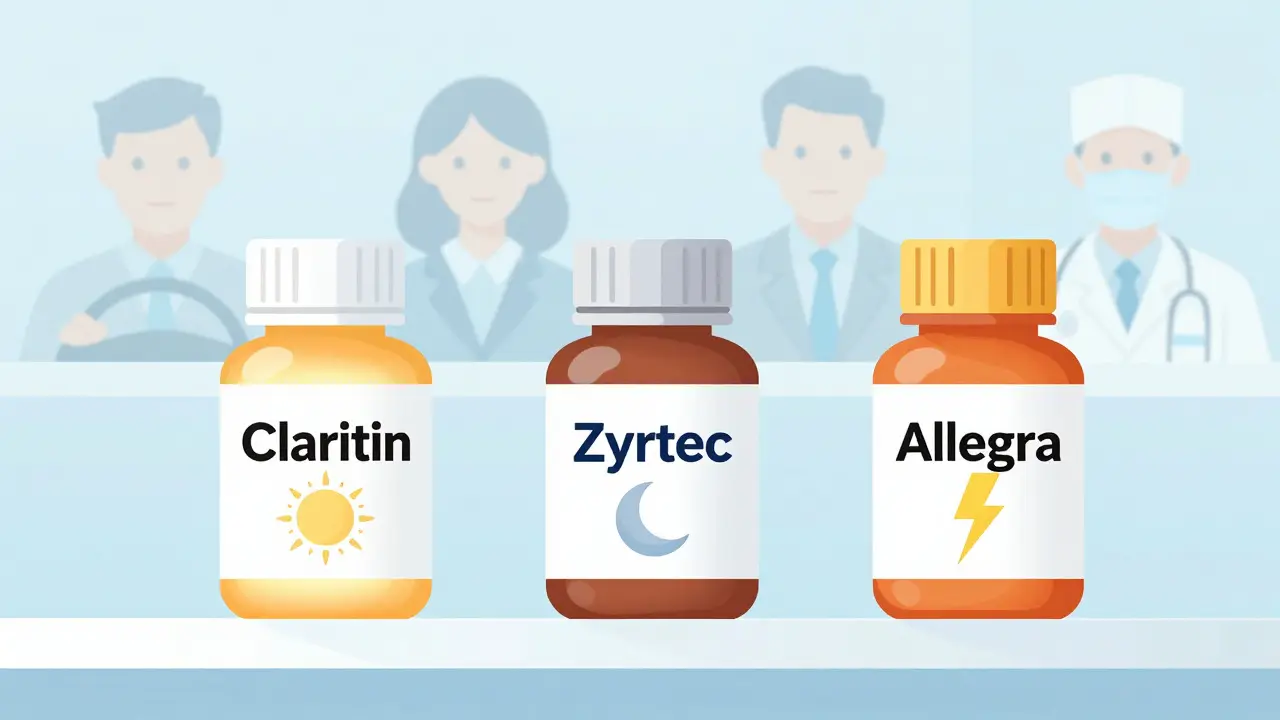
Start with this simple rule: if you need to be alert, pick fexofenadine (Allegra). It’s the safest bet for daily use. If you’re okay with a slight chance of drowsiness and want maximum relief, try cetirizine (Zyrtec). If you want a balance of safety and effectiveness, loratadine (Claritin) is the most popular for a reason.
Real users on Reddit and Amazon say it plainly: Allegra = no sleepiness. Zyrtec = works great but makes me tired. Claritin = reliable and quiet. Benadryl = I took it for a sneeze and woke up 8 hours later.
When and How to Take Them
Don’t wait until you’re sneezing nonstop. Experts at the Mayo Clinic say to start taking second-generation antihistamines 1-2 weeks before allergy season begins. That gives your body time to block histamine before it overwhelms you.
Dosing is simple: one pill a day. No need to take more unless your doctor says so. Don’t double up on Zyrtec and Xyzal - they’re too similar. Stick to one. And never mix OTC antihistamines with prescription ones unless you’ve talked to a professional.
Also, avoid grapefruit juice with fexofenadine. It can raise blood levels by up to 37%, increasing side effects. It’s not a big risk for most people, but why take it?
Who Should Avoid Antihistamines?
Most adults can use second-generation antihistamines safely. But there are exceptions:
- People over 65: Your body processes drugs slower. Xyzal’s OTC label doesn’t even list adult doses for this group. Talk to your doctor before using Zyrtec or Xyzal.
- Pregnant or breastfeeding women: Loratadine and cetirizine are generally considered low-risk, but always check with your provider.
- People with kidney or liver disease: These meds are cleared by your liver or kidneys. If those organs aren’t working well, the drug can build up. Talk to your doctor about dosing.
- Children under 6: First-generation antihistamines are not safe. Even second-gen options should only be used under a doctor’s guidance.
Long-Term Use: Safe or Risky?
Can you take antihistamines every day for months or years? Yes - for most people. Second-generation options have been used daily for over 20 years with no major safety red flags. The American College of Allergy, Asthma, and Immunology says they’re the cornerstone of allergy treatment for a reason.
But there’s one concern: dementia. A 2022 JAMA study looked at long-term use of first-generation antihistamines in people over 75. It found a small link to higher dementia risk - but only with those old-school sedating ones. No such link was found with Claritin, Zyrtec, or Allegra.
Bottom line: if you’re using Zyrtec or Allegra daily, you’re not increasing your dementia risk. If you’re still taking Benadryl every night? That’s a conversation you need to have with your doctor.

What’s New in 2026?
The market is evolving. In 2023, the FDA approved a new version of Allegra-D - it combines fexofenadine with a 12-hour decongestant. That’s helpful if you have nasal congestion along with sneezing.
Sanofi is also preparing to launch a nasal spray version of rupatadine in 2024. That could be a game-changer for people who don’t like pills.
But the biggest trend? People are ditching sedating antihistamines. In 2023, 78% of OTC allergy sales were for non-sedating options. That’s up from 55% just five years ago. Awareness is growing. People want relief - not a nap.
What to Do If It Doesn’t Work
Antihistamines help with sneezing, itching, and runny nose. But they don’t fix nasal congestion. If your nose is stuffed up, you might need a decongestant like pseudoephedrine - or a nasal spray like fluticasone.
If you’ve tried three different antihistamines and nothing helps, your symptoms might not be allergies. Sinus infections, asthma, or even acid reflux can mimic allergy symptoms. See a doctor if you’re not improving after 2-3 weeks.
There are free resources too. The American College of Allergy, Asthma, and Immunology runs a helpline (1-800-842-7777). They answer over 12,000 questions a year. Their free “Allergy Relief Finder” app lets you compare meds based on your symptoms, age, and lifestyle.
And remember: the best time to start is before symptoms hit. Don’t wait until you’re miserable.
Are all antihistamines the same?
No. First-generation antihistamines like Benadryl cause drowsiness because they enter the brain. Second- and third-generation ones like Zyrtec, Claritin, and Allegra are designed to stay out of the brain, so they don’t make you sleepy. They work just as well for allergies - without the fog.
Which OTC antihistamine is least likely to cause drowsiness?
Fexofenadine (Allegra) has the lowest risk. Studies show only 6% of users report drowsiness, compared to 14% for Zyrtec and 18% for first-generation options. It’s the top choice for people who need to stay alert - drivers, healthcare workers, or anyone who can’t afford to feel tired.
Can I take antihistamines every day?
Yes, for second- and third-generation types like Claritin, Zyrtec, and Allegra. They’re approved for daily use and have been used safely for over 20 years. First-generation ones like Benadryl should not be taken daily - they can cause confusion, dry mouth, and urinary issues, especially in older adults.
Why does Zyrtec make me sleepy but Claritin doesn’t?
Cetirizine (Zyrtec) has a slightly higher chance of crossing into the brain than loratadine (Claritin). While both are non-sedating, Zyrtec affects about 14% of users with drowsiness, while Claritin affects only about 8%. It’s not a big difference, but for sensitive people, it’s noticeable.
Should I avoid grapefruit juice with antihistamines?
Only with fexofenadine (Allegra). Grapefruit juice can increase its blood levels by up to 37%, which might raise side effects. Other antihistamines like Claritin and Zyrtec aren’t affected. Still, it’s a good habit to check labels - some medications interact with grapefruit.
Are antihistamines safe for kids?
Second-generation antihistamines like Claritin and Zyrtec are approved for children as young as 2, but only in child-friendly doses. First-generation ones like Benadryl are not recommended for kids under 6 because of risks of agitation, seizures, or breathing problems. Always check the label or ask a pharmacist.
Can antihistamines cause dementia?
Only first-generation antihistamines like Benadryl have been linked to a small increased risk of dementia in people over 75 who take them daily for years. Second- and third-generation antihistamines like Claritin, Zyrtec, and Allegra show no such link. The risk is tied to brain penetration - which these newer drugs avoid.
Next Steps: What to Do Today
If you’re still using Benadryl for daily allergies, switch to Allegra or Claritin. Keep a symptom diary for a week - note what you took, when, and how you felt. That’ll help you see what works.
If you’re not sure which one to try, start with Claritin. It’s the most forgiving for beginners. If you need stronger relief and don’t mind a small chance of drowsiness, try Zyrtec. If you need zero drowsiness, go with Allegra.
And if you’re still struggling after 2-3 weeks? Don’t just keep taking more pills. See a doctor. Your allergies might need something else - a nasal spray, immunotherapy, or a different diagnosis.
Antihistamines are powerful tools. But they’re not magic. Use them wisely - and you’ll spend less time sneezing and more time living.



13 Comments
Write a comment