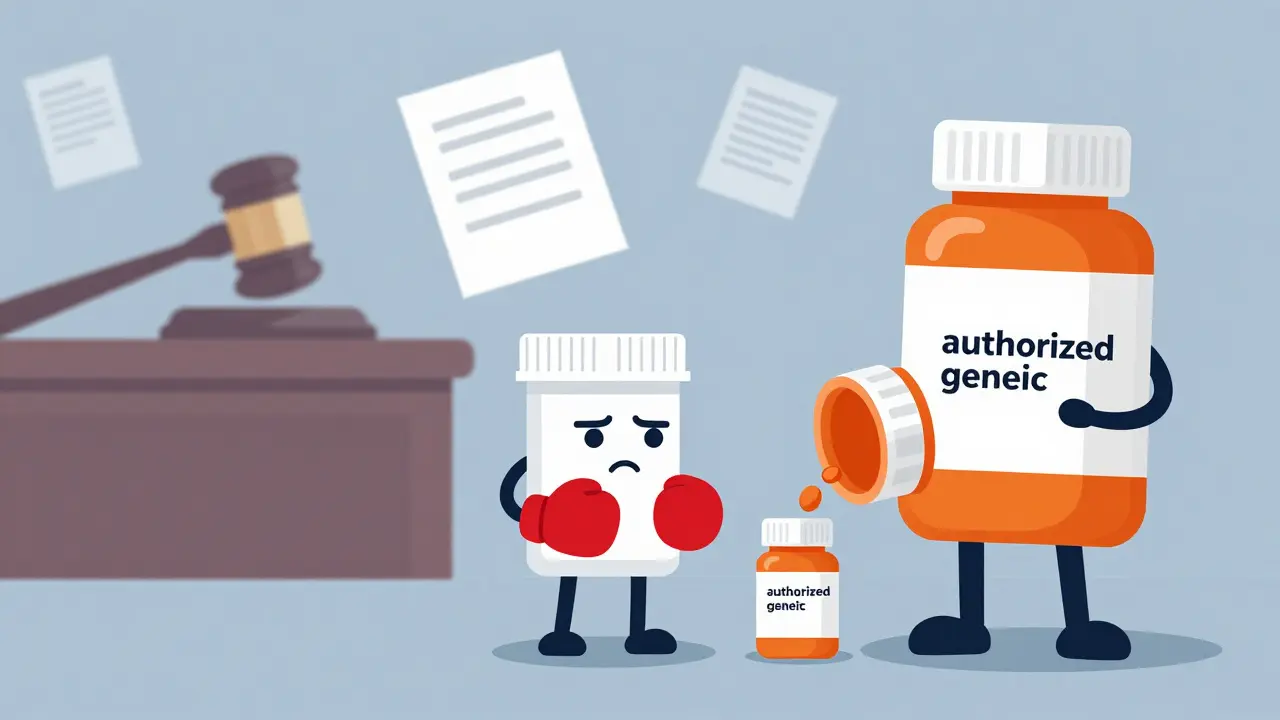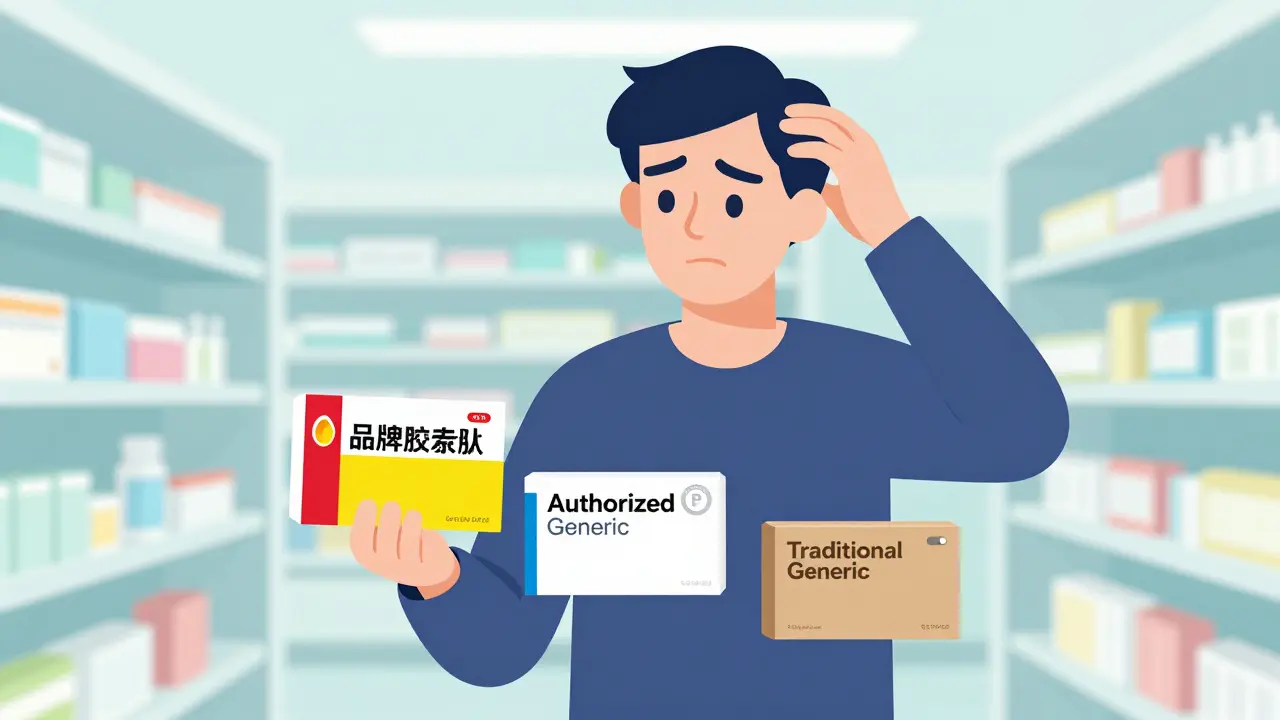
Imagine you’ve been taking a specific medication for years. You know exactly how it looks, how it feels, and how your body reacts to it. Then, one day, your pharmacy hands you a box that says “generic.” It’s cheaper, but is it really the same? Now, imagine there’s a third option: an authorized generic, which is a drug manufactured by the original brand company but sold under a different, usually lower-cost label without the brand name. It’s chemically identical to the brand-name version, yet it lacks the fancy packaging and marketing budget. So, here is the real question: Do patients actually choose these authorized generics when given the chance?
The short answer is complicated. Most patients don’t actively choose between authorized generics, traditional generics, or brand-name drugs. Instead, their choices are heavily influenced by insurance formularies, pharmacy benefit managers (PBMs), and the subtle psychology of trust. While data suggests patients tolerate authorized generics better than traditional ones due to identical formulations, price eventually wins out in the long run.
What Exactly Is an Authorized Generic?
To understand why patients might-or might not-choose them, we first need to clear up what they are. An authorized generic isn’t a knock-off. It is the exact same product as the brand-name drug, produced in the same facility, using the same ingredients, active and inactive. The only difference is the label.
Unlike traditional generics, which must go through the Abbreviated New Drug Application (ANDA) process to prove they are bioequivalent to the brand, authorized generics launch under the brand manufacturer’s existing New Drug Application (NDA). This means they bypass the usual regulatory hurdles for new entrants. According to the Federal Trade Commission (FTC), this allows brand companies to offer a "lower-cost, generic-label version" of their own product immediately upon patent expiration or even before, depending on strategic timing.
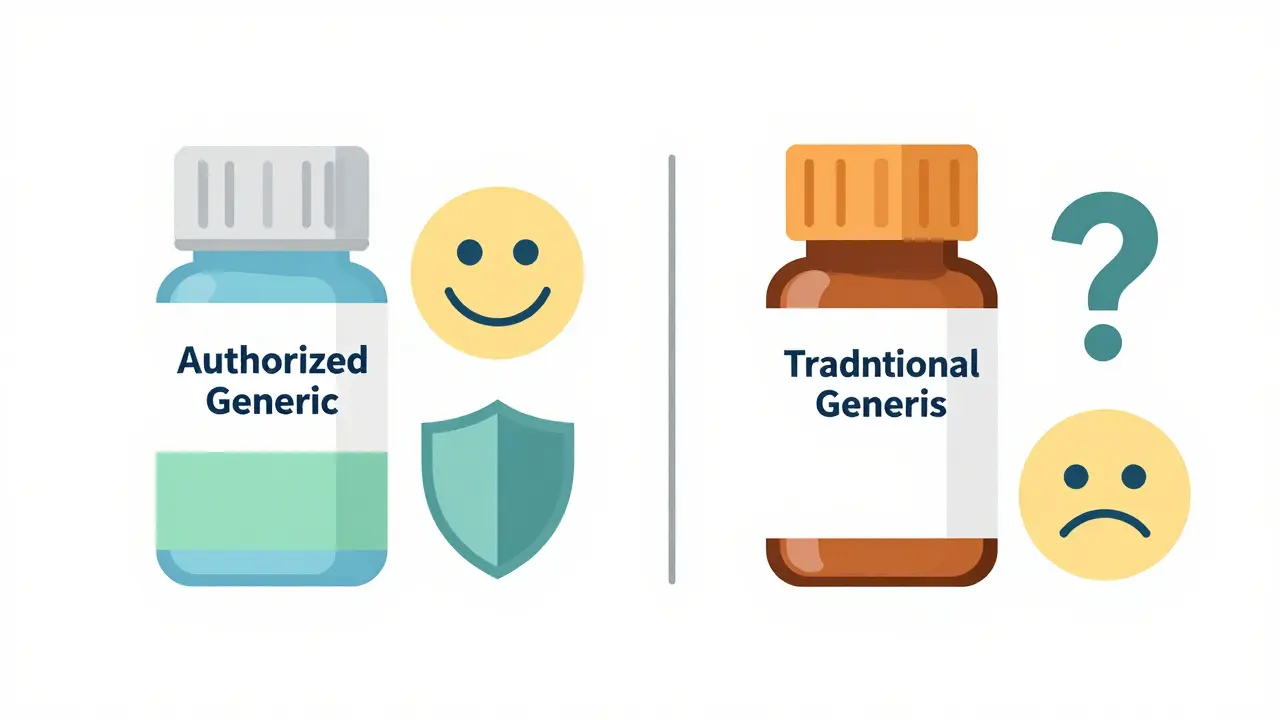
This distinction matters because it affects perception. When you buy a traditional generic, you’re trusting a different manufacturer to replicate the formula. With an authorized generic, you’re trusting the original creator, just without the brand premium. For many patients, that psychological safety net is significant.
The Psychology of Switching: Why Patients Hesitate
Let’s talk about the human element. Medicine is personal. When a patient switches from a brand-name drug to a generic, there’s often anxiety. Will it work the same? Will I have different side effects? This fear drives what researchers call "switchback rates"-the percentage of patients who return to the brand-name drug after trying a generic.
Data paints a clear picture here. A landmark 2018 study published in the *BMJ*, sponsored by the FDA, tracked 210,000 patients. They found that patients switching from a brand to an authorized generic had a switchback rate of 22.3%. In contrast, those switching to traditional generics had a higher switchback rate of 28.7%. That 6.4% difference is statistically significant (p<0.01).
Why does this happen? It likely comes down to consistency. Traditional generics can contain different inactive ingredients-fillers, dyes, binders-that sometimes affect how a patient tolerates the drug. Since authorized generics use the exact same formulation as the brand, patients experience fewer unexpected reactions. If you ask a patient if they prefer the authorized generic over the traditional one, many will say yes, simply because it feels more familiar.
The Price Factor: Where Real Choices Are Made
But preference doesn’t always equal purchase. In the world of pharmaceuticals, cost is king. Here is where the dynamic shifts dramatically.
In the first 180 days after a patent expires, authorized generics play a crucial role in lowering prices. The FTC’s 2011 report noted that during this window, authorized generics reduce retail prices by 4-8% and wholesale prices by 7-14% compared to markets without them. More recent analysis from 2022 showed even sharper drops, with some Medicaid data showing price reductions of 8.4-10.3%.
However, once that initial exclusivity period ends, traditional generics flood the market. These competitors drive prices down further, typically achieving 15-25% lower prices than authorized generics. According to AmerisourceBergen’s 2022 market analysis, after the dust settles, traditional generics capture 65-75% of the market share. Why? Because patients and insurers care more about saving money than maintaining the illusion of brand continuity.
If a patient has a choice between paying $50 for an authorized generic and $35 for a traditional generic, most will pick the cheaper option, assuming both are effective. The psychological comfort of the authorized generic rarely outweighs the financial relief of the traditional one.
| Feature | Brand-Name Drug | Authorized Generic | Traditional Generic |
|---|---|---|---|
| Manufacturer | Original Brand Company | Original Brand Company | Different Third-Party Manufacturer |
| Formulation | Original Formula | Identical to Brand | Bioequivalent; may differ in inactive ingredients |
| Regulatory Pathway | New Drug Application (NDA) | Under Existing NDA | Abbreviated New Drug Application (ANDA) |
| Price Impact (Initial 180 Days) | High (No Discount) | Moderate Reduction (4-8% Retail) | Significant Reduction |
| Patient Switchback Rate | N/A | Lower (22.3%) | Higher (28.7%) |
| Long-Term Market Share | Declines Sharply | Moderate (Captures ~35-40% initially) | Dominant (65-75% after exclusivity) |
Who Really Decides? The Role of Insurance and PBMs
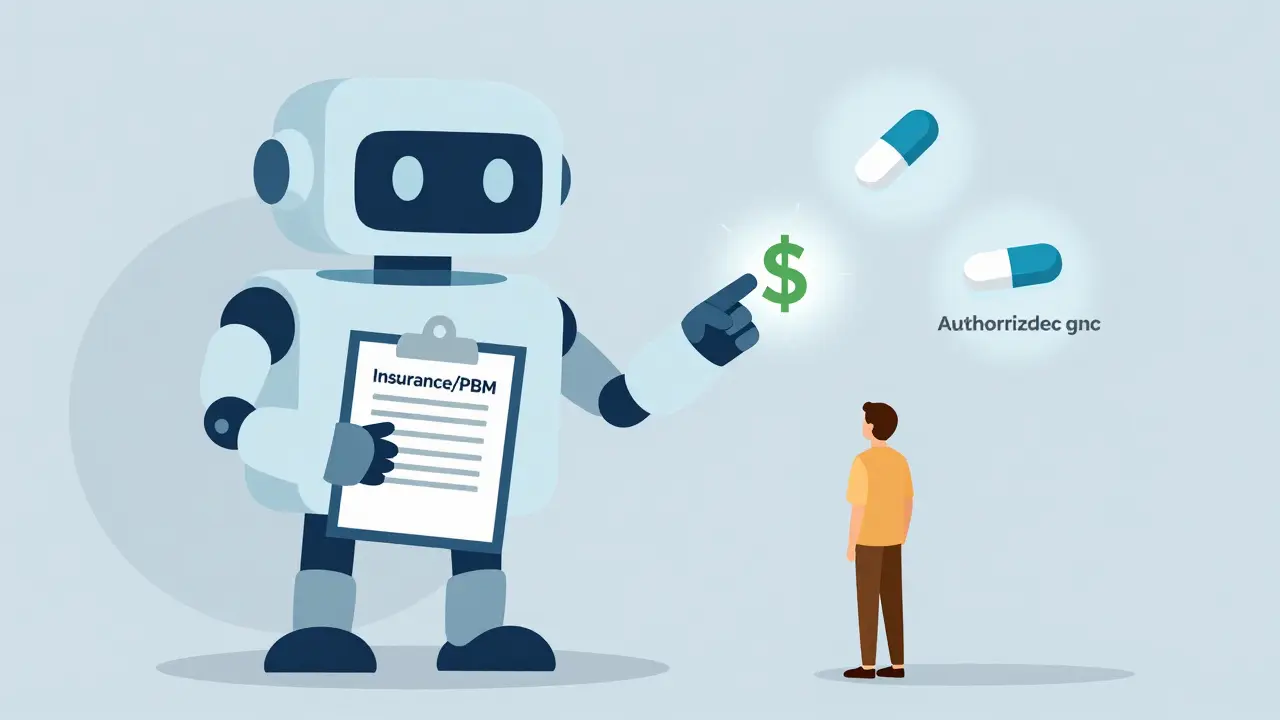
Here is the uncomfortable truth: most patients don’t get to choose. Their decision is made for them by insurance companies and Pharmacy Benefit Managers (PBMs).
A 2022 analysis by KFF found that 82% of commercial insurance plans automatically substitute generics for brand-name drugs when available. Only 12% allow patients or physicians to request the brand without prior authorization. This means that whether you receive an authorized generic or a traditional one depends largely on your insurer’s formulary and your pharmacy’s inventory.
Pharmacists also play a key role. They must identify which generic is being dispensed. Authorized generics appear in the FDA’s Orange Book as "products with no applicant," which can be confusing. The American Pharmacists Association’s 2022 guidelines note that pharmacists often need to provide extra counseling to explain why the pill looks slightly different or why the manufacturer name on the bottle matches the brand company, even though the label says "generic."
If your insurance prefers a traditional generic due to lower rebates from manufacturers, you’ll likely get that one, regardless of your personal preference for the authorized version. Patient agency in this space is limited.
Are Authorized Generics Anti-Competitive?
This is where things get controversial. Critics argue that authorized generics are a loophole used by big pharma to stifle true competition. The FTC has long monitored this practice. In 2011, FTC Chairman Jon Leibowitz stated that brand companies might use the threat of launching an authorized generic to induce generic companies to delay entry into the market.
Essentially, if a potential generic competitor knows the brand company is ready to drop its own low-cost version, they might decide it’s not worth the risk and investment to challenge the patent. This can lead to "pay-for-delay" settlements, where generic makers are paid to stay away. The FTC identified 23 such settlements involving authorized generics in their 2021-2022 monitoring report.
However, proponents argue that authorized generics provide immediate price relief during the critical transition period. Without them, patients might face a gap in affordable options while traditional generics navigate the lengthy ANDA approval process, which can take 18-24 months. As Karen Berger, PharmD, noted, authorized generics give brands a "jump start on the competition," but they also give consumers access to lower prices sooner.
Real-World Patient Experiences
What do patients actually think? Online communities offer a glimpse into real-world sentiment. On Reddit’s r/pharmacy community, a 2022 thread discussing authorized vs. regular generics received 87 comments. Interestingly, 63% of respondents reported they didn’t notice any difference between the authorized generic and the brand product. Another 28% said their experience with traditional generics was similarly unremarkable.
A Consumer Reports survey of 1,200 prescription users in Q3 2022 added depth to this. When presented with unlabeled samples, 78% of respondents couldn’t distinguish between the authorized generic and the brand-name drug. Compare that to only 52% who could distinguish traditional generics from brands. This suggests that while patients claim to prefer brands, they often can’t tell the difference when blinded-and authorized generics come closest to replicating the brand experience.
Yet, despite this high acceptance, patients still gravitate toward the cheapest option when forced to choose. If co-pays are tied to the lowest-tier generic, and traditional generics are priced lower, patients will accept the trade-off in familiarity for savings.
The Future of Authorized Generics
Looking ahead, authorized generics are becoming more common. IQVIA data from 2022 valued the U.S. authorized generic market at $8-10 billion annually, growing at 5-7% per year. Seven of the top 10 pharmaceutical companies, including Pfizer, Merck, and AbbVie, have launched authorized generics. Cardiovascular and central nervous system drugs make up 45% of these entries.
The FDA is working on improving transparency. A 2023 draft guidance aims to make it easier to identify authorized generics, addressing the confusion caused by their listing as "products with no applicant." Meanwhile, the Congressional Budget Office warned in 2023 that if brands continue to use authorized generics to delay full generic competition, it could cost Medicare Part D beneficiaries $1.2 billion annually by 2027.
By 2028, Evaluate Pharma predicts authorized generics will represent 15-18% of the generic market. They aren’t going anywhere. But will patients choose them? Only if their insurance allows it, and only if the price difference isn’t too stark against traditional generics. For now, they remain a strategic tool for manufacturers and a convenient, albeit invisible, option for patients.
Is an authorized generic safer than a traditional generic?
Both authorized and traditional generics are required to meet strict FDA safety and efficacy standards. However, authorized generics are chemically identical to the brand-name drug, including inactive ingredients like fillers and dyes. Traditional generics must demonstrate bioequivalence but may use different inactive ingredients, which can occasionally cause sensitivity issues for some patients. Therefore, authorized generics may be preferable for patients who have experienced side effects from traditional generics due to formulation differences.
Can my doctor prescribe an authorized generic specifically?
Technically, yes, but practically, it’s difficult. Most prescriptions are written for the drug’s chemical name, allowing the pharmacist to substitute any approved generic. Since authorized generics are listed differently in regulatory databases (often as "no applicant"), pharmacists may not always stock them unless specifically ordered. Additionally, insurance formularies often prioritize the lowest-cost generic, which is frequently the traditional generic rather than the authorized one.
Why do authorized generics exist if they hurt generic competition?
Brand manufacturers use authorized generics to maintain market share and revenue after patent expiration. By offering a lower-priced version of their own drug, they can undercut traditional generic competitors during the initial 180-day exclusivity period. While critics argue this delays full market competition, supporters note it provides immediate price reductions for consumers and fills gaps while traditional generics undergo lengthy regulatory review.
How can I tell if my medication is an authorized generic?
It can be tricky. Authorized generics look very similar to brand-name drugs but lack the brand logo. The manufacturer name on the bottle will match the original brand company. To confirm, you can check the FDA’s Orange Book or ask your pharmacist. They can verify if the product is listed under the brand’s NDA as an authorized generic rather than through a separate ANDA application.
Are authorized generics covered by insurance?
Yes, authorized generics are typically covered by insurance plans that cover generics. However, reimbursement rates vary. Some plans may treat authorized generics similarly to brand-name drugs if they are not explicitly categorized as generics in the formulary, potentially leading to higher co-pays. Always check with your insurer or PBM to understand how your specific plan handles authorized generics versus traditional generics.