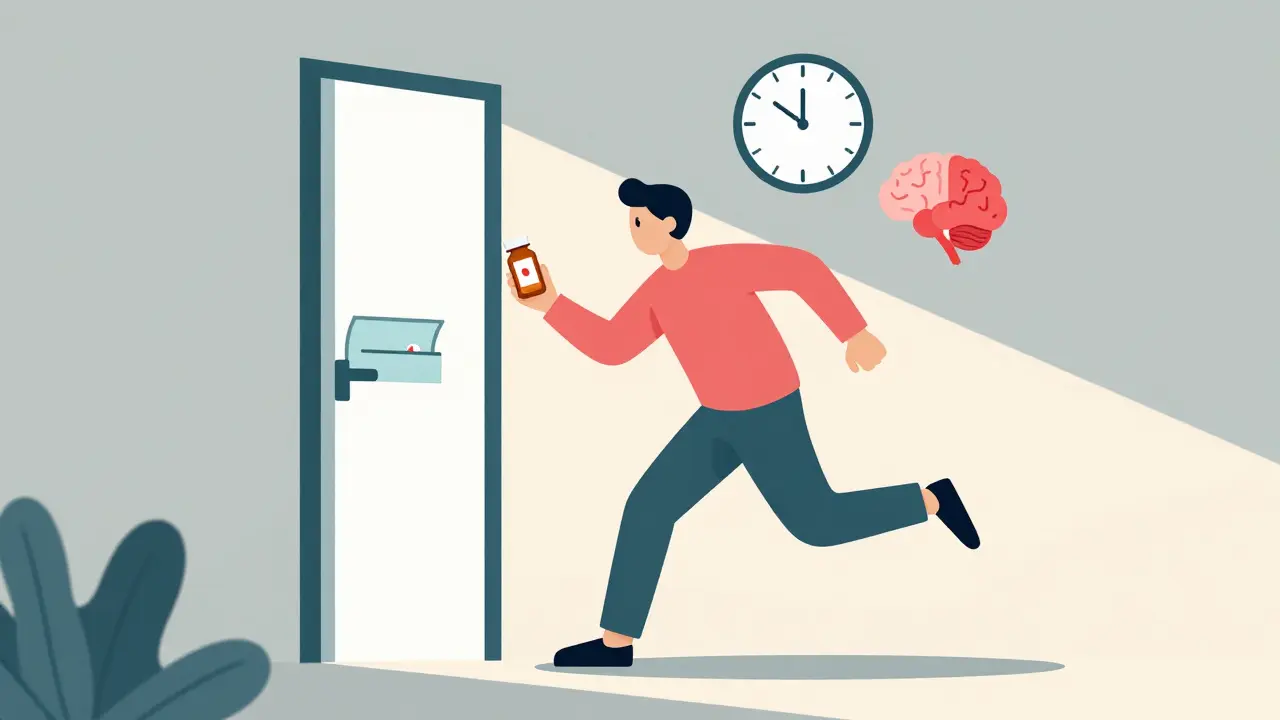
Blood Thinner Missed Dose Calculator
This tool helps you determine the correct action when you miss a dose of your blood thinner medication. Based on your medication type and how long ago you missed the dose, it will provide specific guidance.
Select your blood thinner type
Missing a dose of your blood thinner might seem like a small mistake - maybe you were rushed in the morning, forgot because of a change in routine, or just felt fine and thought it didn’t matter. But for people taking anticoagulants, even one missed dose can be dangerous. Blood thinners aren’t optional daily pills. They’re life-preserving tools that keep dangerous clots from forming in your veins and arteries. Skip one, and your risk of stroke, pulmonary embolism, or internal bleeding goes up - fast.
What Happens When You Miss a Dose?
Blood thinners work by slowing down your body’s natural clotting process. That’s good when you have atrial fibrillation, a replaced heart valve, or a history of deep vein thrombosis. But it’s a tightrope walk. Too little medication, and clots form. Too much, and you bleed uncontrollably. Missing a dose throws off that balance.
For people with atrial fibrillation, skipping your daily pill can raise your stroke risk by up to 6.6% per year - and that risk builds quickly. Studies show that patients who miss more than 20% of their doses have a 57% higher chance of stroke compared to those who take every pill on time. It doesn’t take weeks of skipping. Just one missed dose can let a clot start forming, especially if you’re on a short-acting drug like apixaban (Eliquis), which leaves your system in under 15 hours.
Warfarin lasts longer - up to 60 hours - so missing one dose doesn’t always trigger an immediate crisis. But that doesn’t mean it’s safe. Over time, inconsistent dosing makes your INR levels swing wildly. If your INR drops below 2.0, clots become more likely. If it spikes above 3.5, you’re at risk of bleeding inside your brain, stomach, or other organs.
What to Do If You Miss a Dose
There’s no one-size-fits-all answer. What you do depends entirely on what kind of blood thinner you’re taking.
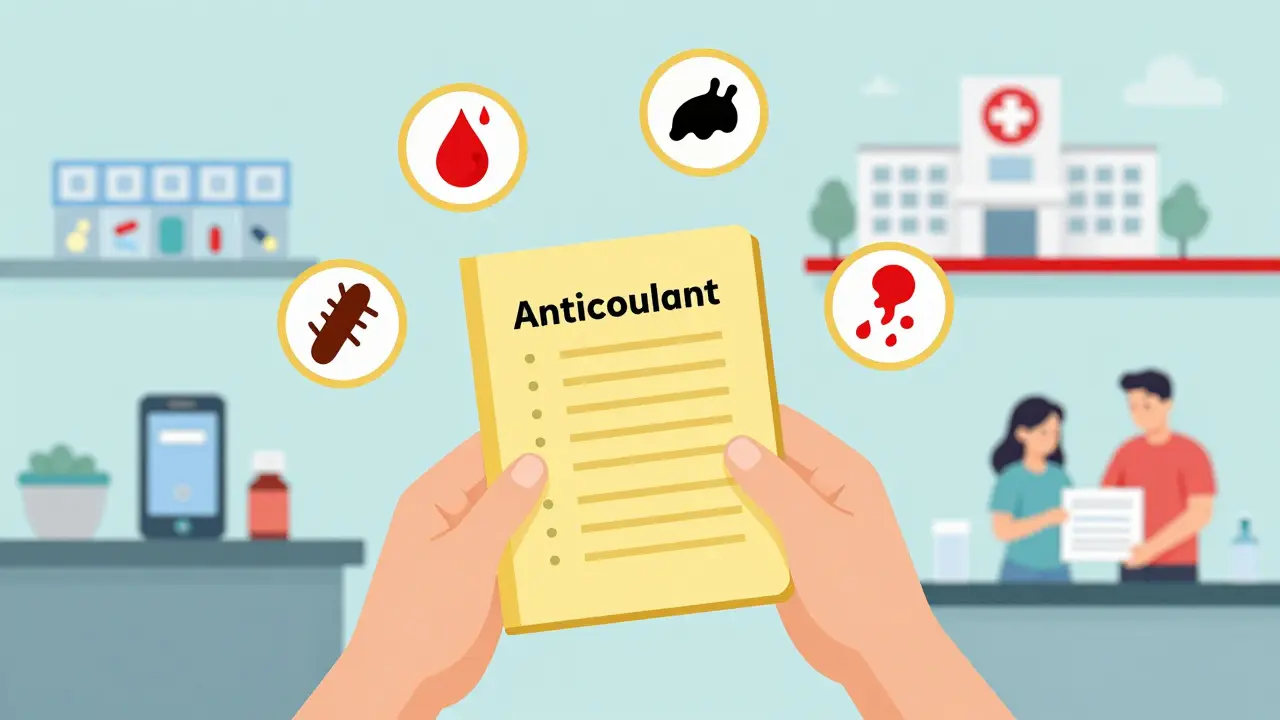
For warfarin (Coumadin, Jantoven): If you remember you missed your dose within 12 hours of when you were supposed to take it, take it right away. If it’s been more than 12 hours, skip it. Don’t double up. Take your next scheduled dose at the regular time. Many clinics recommend writing missed doses in your yellow anticoagulant record book - that way, your doctor can adjust your next INR test and dose accordingly.
For apixaban (Eliquis), rivaroxaban (Xarelto), or dabigatran (Pradaxa): These DOACs have shorter half-lives, so timing matters more. If you miss a dose and remember within 6 hours of the usual time, take it. If it’s been more than 6 hours, skip it. Again - never take two doses to make up for one. Taking double the amount raises your bleeding risk without improving protection against clots.
Some people take their pill twice a day. If you miss the morning dose and remember in the afternoon, take it then - as long as it’s not too close to your evening dose. If you’re unsure, it’s safer to skip it than to risk overdose.
Bottom line: Never take extra pills. Never “catch up” by doubling. That’s when emergencies happen.
When to Call Your Doctor
Call your doctor or anticoagulation clinic if:
- You missed more than one dose in a row
- You’re not sure what to do after missing a dose
- You’ve taken more than your prescribed amount by accident
- You’ve fallen hard, hit your head, or had a serious injury
Even if you feel fine after a fall, get checked. Blood thinners can cause internal bleeding without obvious signs. A small bump on the head could lead to a brain bleed hours later.
For warfarin users, always report missed doses at your next INR test. Your clinic uses that info to adjust your dose. If you’re on a DOAC, mention missed doses during your next appointment - even if you think it’s no big deal. Your doctor needs to know your adherence pattern to assess your risk.

Warning Signs You Need Emergency Help
Some symptoms mean you’re bleeding internally. Don’t wait. Don’t call your doctor tomorrow. Go to the emergency room or call for help right now if you have:
- Red, brown, or tea-colored urine
- Black, tarry, or bloody stools
- Unexplained bruising, especially large patches or bruises without injury
- Sudden, severe headache, dizziness, confusion, or vision changes
- Shortness of breath, chest pain, or rapid heartbeat
- Vomiting blood or material that looks like coffee grounds
These aren’t normal side effects. They’re red flags. A 2022 study found that 23% of patients who experienced serious complications from missed doses had one or more of these symptoms before being hospitalized.
If you’re on Eliquis and you accidentally take two pills in one day, call your provider or go to the ER. Bring your pill bottle and your anticoagulant record (if you have one). Emergency teams need to know exactly what you took and when.
How to Prevent Missed Doses
The best way to handle a missed dose? Avoid it altogether.
- Use a pill organizer with separate compartments for morning and night. Fill it weekly.
- Set phone alarms - two if you take it twice daily. Label them clearly: “Eliquis AM,” “Warfarin PM.”
- Link your dose to a daily habit: brush your teeth, eat breakfast, or turn off the lights.
- Refill your prescription before you run out. Don’t wait until day 28 of a 30-day supply.
- Keep your yellow book (for warfarin) or a written log. Note every dose you take - and every one you miss.
- Ask a family member to remind you. Many patients say this simple step cut their missed doses in half.
Don’t rely on memory. Even people who are otherwise careful forget. A 2021 study found that over 12% of anticoagulant users miss at least one dose per month. The rate is higher for warfarin users - about 15% - because they need to take it at the same time every day, and their dosing changes often.
Why You Should Never Stop Without Talking to Your Doctor
Some people stop taking their blood thinner because they feel fine. Or because they’re scared of bleeding. Or because they think they don’t need it anymore.
That’s dangerous. Stopping blood thinners without medical supervision increases stroke risk by up to five times. Your doctor didn’t prescribe it because you’re “a little at risk.” They prescribed it because you’re at high risk - and stopping it is like removing a fire alarm from a house that’s already on fire.
Even if your doctor says you can stop in the future, it’s a decision made together, based on tests and your medical history. Never decide on your own.
Final Thought: Your Dose Is a Lifeline
Missing a blood thinner dose isn’t like forgetting to take a vitamin. It’s like skipping your seatbelt on a highway. You might get lucky - but the cost of one mistake is too high.
Keep your pills on schedule. Know what to do if you miss one. Recognize the warning signs. And never hesitate to call your clinic if you’re unsure. Your life depends on consistency - not perfection. But consistency matters more than you think.
What should I do if I miss a dose of warfarin?
If you remember within 12 hours of your usual time, take the missed dose. If it’s been more than 12 hours, skip it. Never double up. Write the missed dose in your yellow anticoagulant record book and mention it at your next INR test.
Can I take two doses of Eliquis to make up for a missed one?
No. Never take two doses at once. If you miss a dose of Eliquis and remember within 6 hours, take it. If it’s been longer, skip it and take your next dose at the regular time. Taking extra increases your risk of serious bleeding without lowering your stroke risk.
How soon after missing a dose could I have a stroke?
It can happen within hours - especially if you’re on a short-acting drug like apixaban. Clots can begin forming as soon as the drug leaves your system. For people with atrial fibrillation, the risk rises significantly after just one missed dose. Don’t wait for symptoms to appear.
What are the signs of internal bleeding from blood thinners?
Watch for red or brown urine, black or tarry stools, unexplained large bruises, sudden severe headaches, dizziness, confusion, shortness of breath, or vomiting blood. These are signs of serious bleeding and require emergency care immediately.
Should I stop taking my blood thinner if I’m worried about bleeding?
No. Never stop without talking to your doctor. Stopping blood thinners increases your risk of stroke by up to five times. Your doctor will help you balance bleeding and clotting risks - but only they can safely adjust or stop your medication.
Do I need blood tests if I’m on Eliquis or Xarelto?
No routine blood tests are needed for DOACs like Eliquis or Xarelto, unlike warfarin, which requires regular INR checks. But your doctor may still order occasional blood tests to check kidney or liver function, especially if you’re older or have other health conditions.
How can I remember to take my blood thinner every day?
Use a pill organizer, set phone alarms, link your dose to a daily habit like brushing your teeth, refill prescriptions early, and ask someone to remind you. Keeping a written log of doses taken and missed also helps you stay on track and gives your doctor useful info.
Is it safe to drink alcohol while on blood thinners?
Moderate alcohol use (one drink per day for women, two for men) is usually fine, but heavy drinking increases bleeding risk and can interfere with how warfarin works. Always check with your doctor - especially if you’re on warfarin, as alcohol can cause your INR to spike unpredictably.
Just took my Eliquis at 8 AM like clockwork 🙌 I used to forget all the time until I got one of those pill boxes and set two alarms - one labeled "Eliquis AM" and another that just says "DON'T BE A STATISTIC" 😅 Seriously though, this post saved my life. My dad had a stroke last year because he thought "I feel fine" meant he could skip. Don't be my dad.
Let me be perfectly clear: missing a single dose of an anticoagulant is not a "mistake"-it is a reckless, potentially lethal act of negligence. You are not "busy"; you are not "stressed"; you are not "feeling fine"-you are playing Russian roulette with your cerebral vasculature. And if you think a phone alarm is sufficient, you are deluding yourself. You need a signed affidavit from your spouse, a GPS-tracked pill dispenser, and a weekly review with your cardiologist. Anything less is not adherence-it is apathy with a pulse.
Y’all are acting like this is some kind of sacred ritual. I missed my warfarin for three days last month because my pharmacy lost my script. Guess what? I didn’t die. I didn’t even feel different. The whole system is just fear-mongering to sell more blood tests and keep you dependent. They don’t want you to know that 80% of clots happen in people who take their meds religiously too. Coincidence? I think not.
missed dose = clot risk up. but what if u just dont take it at all? maybe body dont need it? maybe pharma lying? maybe blood dont clot that easy? maybe we overmedicate? 🤔
Okay but real talk-how many of us have stared at our pill bottle at 11 PM thinking "eh, I’ll just take it tomorrow"? I’ve done it. Twice. And now I keep a sticky note on my mirror that says: "You’re not a vampire. You don’t get to skip the blood thinner. You’re just lazy." 😂 It works. Also, I use a glitter pill organizer. Because if it’s sparkly, I’m more likely to care. Priorities.
This is an exceptionally well-researched and clinically accurate overview of anticoagulant adherence. The distinction between DOACs and warfarin is particularly vital, and the emphasis on not doubling doses is critical. I would encourage all patients to maintain a digital log synced with their EHR, and to utilize pharmacy reminder services, which are often free. Consistency is not optional-it is the cornerstone of preventive cardiovascular care.
It is both a moral and a public health imperative that individuals on anticoagulant therapy be held accountable for their non-adherence. The financial burden of stroke care exceeds $50 billion annually in the United States alone. When citizens negligently fail to comply with life-preserving regimens, they impose an unjustifiable fiscal and emotional cost on society. This is not a personal choice-it is a societal failure.
MY COUSIN’S NEPHEW’S BEST FRIEND TOOK HIS WARFARIN AND THEN ATE A BUNCH OF KALE AND ENDED UP IN THE ICU FOR THREE WEEKS!! THEY SAID IT WAS THE BROCCOLI!! I SWEAR ON MY MAMA’S GRAVE THIS IS TRUE!! PEOPLE, BE CAREFUL!! THE DOCTORS ARE HIDING THE TRUTH!!
Big respect to the OP for writing this. I’m a nurse in Sydney and I see this every week-people thinking they’re fine, skipping doses, then showing up with a brain bleed. One guy took his Eliquis at 8am, missed the 8pm, then took both at 9am the next day. Ended up in ER with a GI bleed. He was fine, but scared straight. Use the alarms. Use the pillbox. Ask for help. You’re not alone in this.
I’ve been on Xarelto for five years. I keep a small notebook in my wallet. Every time I take it, I write the date and time. If I miss one, I write "missed" and why. My doctor said it’s the most accurate log she’s ever seen. It’s not about being perfect-it’s about being honest. With yourself. And with your care team.
My mom takes warfarin and we do a weekly check-in over FaceTime. She shows me her yellow book and I make sure she’s got her next refill. We even got her a little bell that rings at 7pm. She hates it, but she says it’s the only thing that keeps her alive. I’m just glad she’s still here to complain about it.