Tacrolimus Neurotoxicity Risk Assessment
Your Tacrolimus Risk Assessment
This tool helps you understand your individual risk of neurotoxicity based on multiple factors. Remember, blood levels alone don't tell the whole story.
How This Works
Neurotoxicity risk depends on multiple factors beyond just blood levels. Our assessment considers:
- Your specific blood level compared to organ-specific targets
- Electrolyte status (sodium, magnesium)
- Concurrent medications
- Time since transplant
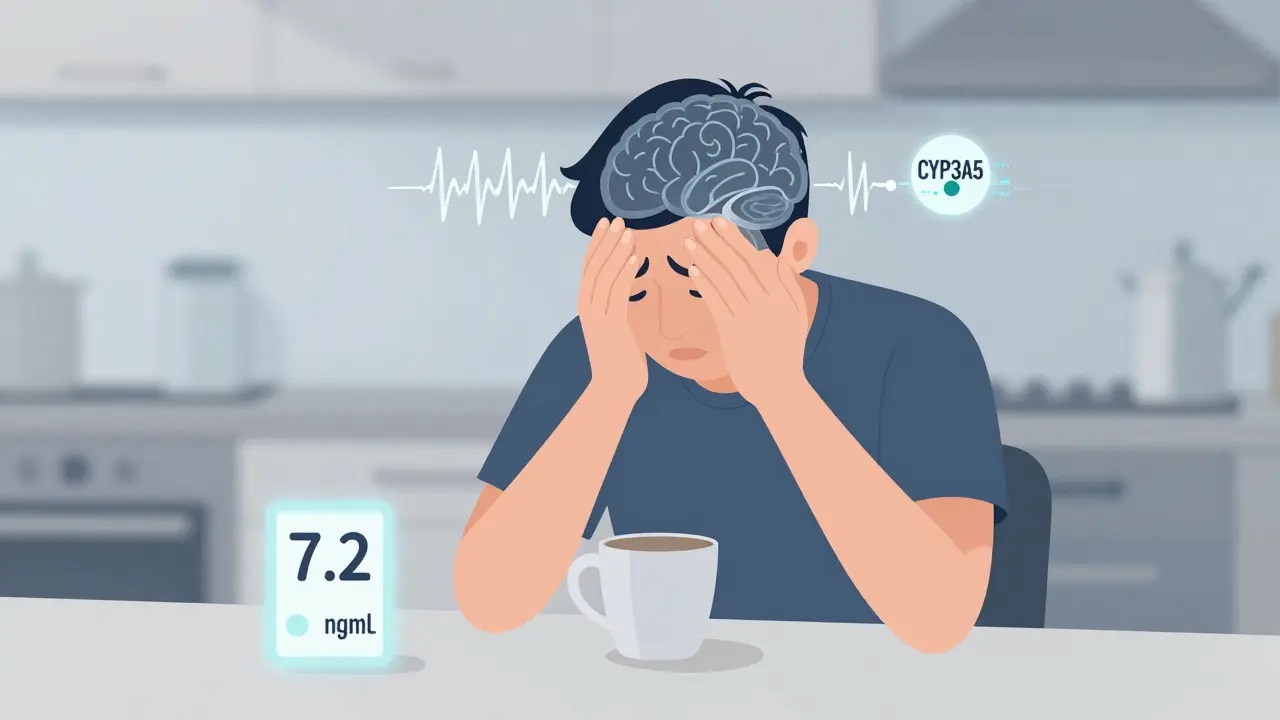
- Genetic factors (CYP3A5 enzyme variations)
Risk Assessment Result
Low Risk
Your risk of neurotoxicity appears to be low based on current information. Continue monitoring symptoms and report any new issues to your transplant team.
When you get a new organ, the body doesn’t just accept it. It fights. That’s why drugs like tacrolimus are critical - they stop your immune system from attacking the transplant. But for many patients, this lifesaving drug comes with a hidden cost: neurological side effects. Tremor. Headache. Confusion. For some, these symptoms start within days. For others, they creep in slowly. And here’s the hard truth: they can happen even when your blood level is "in range." Tacrolimus is the most common immunosuppressant used after kidney, liver, heart, and lung transplants. It’s effective - better than older drugs like cyclosporine at preventing rejection. But about 1 in 3 transplant recipients experience some form of neurotoxicity. And it’s not rare. It’s common enough that every transplant team should be watching for it - not just reacting when it gets severe. Tremor is the most frequent sign. Studies show 65% to 75% of patients with neurotoxicity have it. Not just a slight shake. Some describe it as hands that won’t hold a cup, fingers that fumble buttons, or a voice that quivers when they speak. One patient on a transplant forum wrote: "I couldn’t write my name without it looking like a child’s scribble." This isn’t just annoying - it’s disabling. It affects sleep, work, even basic self-care. Headache comes next. Around half of those affected report it. Not a typical tension headache. These are often described as crushing, constant, and unresponsive to painkillers. Patients on Reddit and patient forums say they’ve tried everything - ibuprofen, acetaminophen, even triptans - and nothing helped. One liver transplant recipient said: "It felt like someone was tightening a steel band around my skull. Only when they switched me to cyclosporine did it vanish." But here’s the twist: you can’t just blame high blood levels. Most doctors check tacrolimus levels and assume if it’s between 5 and 15 ng/mL, you’re safe. For kidney patients, that’s the standard target. For liver and heart patients, it’s 5-10 ng/mL. But multiple studies - including one from Annals of Transplantation in 2023 - show no clear link between average blood levels and whether someone develops neurotoxicity. Some patients with levels at 7.2 ng/mL have severe tremors. Others at 14 ng/mL feel fine. Why? The answer lies in individual biology. Not everyone absorbs, breaks down, or transports tacrolimus the same way. Some people have a genetic variation in the CYP3A5 enzyme that makes them process the drug slower. Others have a more permeable blood-brain barrier, letting more drug reach the brain. A 2021 study from the University of Toronto found that testing for CYP3A5 genotype could reduce neurotoxicity risk by 27%. Yet, almost no clinics do this routinely. Why? Cost. Insurance. Lack of awareness. Even electrolytes matter. Low sodium (below 135 mmol/L) is a known risk factor. One study found correcting hyponatremia alone resolved mild neurotoxicity in nearly 30% of cases - without changing the tacrolimus dose at all. That’s something every transplant nurse should check before assuming the drug is the culprit. And it’s not just tremor and headache. More serious signs exist. Weakness. Trouble walking. Slurred speech. Seizures. In rare cases, patients develop PRES - Posterior Reversible Encephalopathy Syndrome - a condition visible on MRI as swelling in the back of the brain. It’s reversible if caught early. But if missed, it can lead to permanent damage. The scary part? Delayed recognition. A survey of transplant patients found 55% waited 2 to 3 weeks before their doctors connected the dots between their symptoms and tacrolimus. That’s too long. By then, the damage can be harder to undo. So what do you do when symptoms show up? First, don’t panic. But don’t ignore it either. Track the symptoms: when did they start? What makes them worse? Did you start a new antibiotic? Change your diet? Get dehydrated? Many drugs - like carbapenems, linezolid, or even sedatives like midazolam - can pile on top of tacrolimus and trigger neurological issues. Even a simple UTI or fever can raise your risk. The standard fix? Reduce the dose. Or switch. About 42% of patients with neurotoxicity are switched to cyclosporine. But that trade-off is real: cyclosporine has a higher chance of rejection. About 15-20% more. So it’s not a simple swap. Some patients get a lower tacrolimus dose and add another drug like sirolimus to make up the difference. Others try magnesium supplements - some clinics use IV magnesium to stabilize nerve function. One patient on the National Kidney Foundation forum shared: "I dropped my dose from 0.1 mg/kg to 0.07. My tremor was gone in 72 hours. My levels were still therapeutic. I didn’t lose my kidney." That’s the goal: balance. Keep the organ alive. Keep the brain clear. New tools are coming. The TACTIC trial (Tacrolimus Adjustment for Cerebral Toxicity In Care), which started in 2023, is testing a new algorithm that uses CYP3A5 genetics, magnesium levels, and blood pressure control to personalize dosing. If it works, we might stop guessing and start predicting. Meanwhile, the future of immunosuppression may lie beyond tacrolimus. A new drug called LTV-1, designed to barely cross the blood-brain barrier, is in phase 2 trials. If approved by 2027, it could replace tacrolimus for many. But for now, it’s still the best tool we have - flaws and all. The bottom line? If you’re on tacrolimus and you feel off - shaky, headachy, confused - speak up. Don’t wait. Don’t assume it’s stress or fatigue. Your transplant team needs to know. Because neurotoxicity isn’t a sign you’re doing something wrong. It’s a sign the system needs to adjust. And it’s fixable - if caught early.
What Are the Real Blood Level Targets?
There’s no single "safe" level for everyone. The targets vary by organ and timing:- Kidney transplant: 5-15 ng/mL (usually lower after the first 3-6 months)
- Liver transplant: 5-10 ng/mL (higher early on, then lowered to reduce toxicity)
- Heart transplant: 5-10 ng/mL
- Lung transplant: 5-10 ng/mL
When Should You Worry?
Neurotoxicity risk is highest in the first 30 days after transplant. That’s when levels are being fine-tuned, infections are common, and the body is under maximum stress. But it can happen anytime - even years later. Watch for:- New or worsening tremor (especially in hands or head)
- Headache that doesn’t respond to usual meds
- Difficulty walking, stumbling, or loss of balance
- Confusion, memory lapses, or trouble speaking
- Visual changes - double vision, blurring
- Seizures or loss of consciousness (emergency!)
What Else Can Make It Worse?
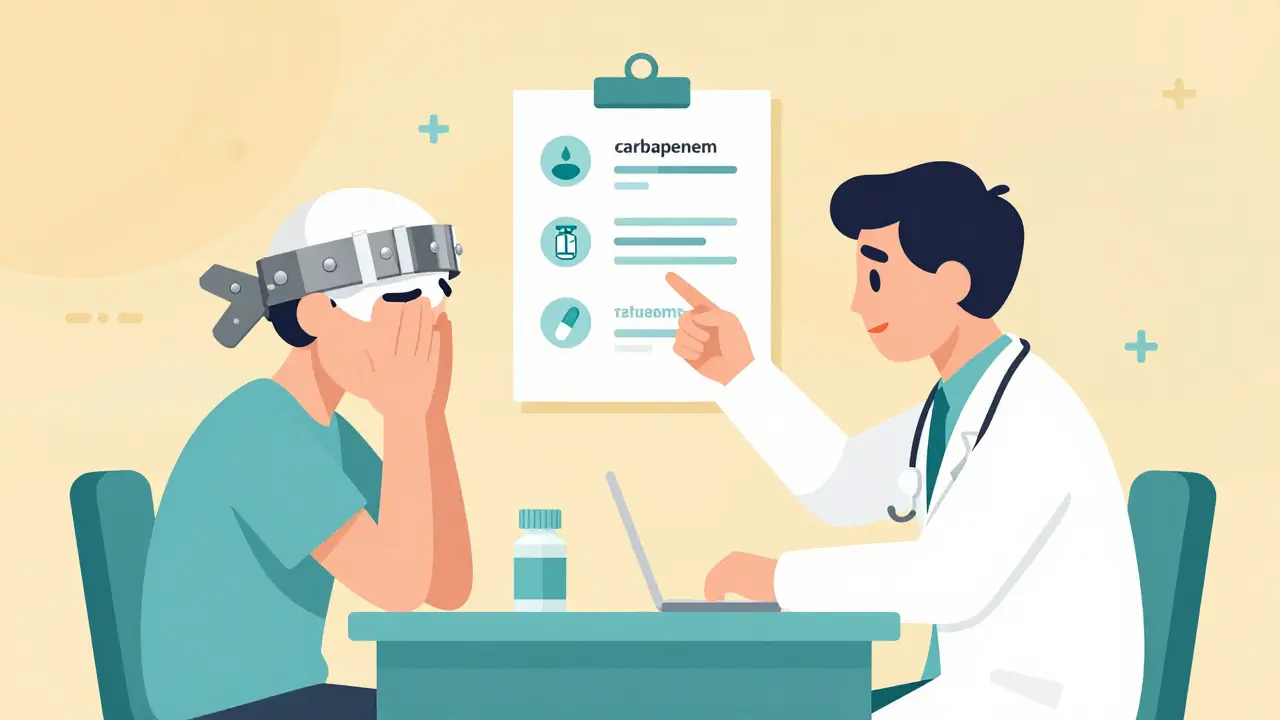
Tacrolimus doesn’t work alone. Other drugs and conditions can push it over the edge:- Antibiotics: Carbapenems (meropenem, imipenem), linezolid
- Sedatives: Midazolam, propofol, lorazepam
- Antipsychotics: Haloperidol, risperidone, olanzapine
- Electrolyte imbalances: Low sodium, low magnesium
- Infections: Fever, sepsis, UTIs
- Dehydration: Reduces kidney clearance, raises blood levels
What Happens If You Switch Drugs?
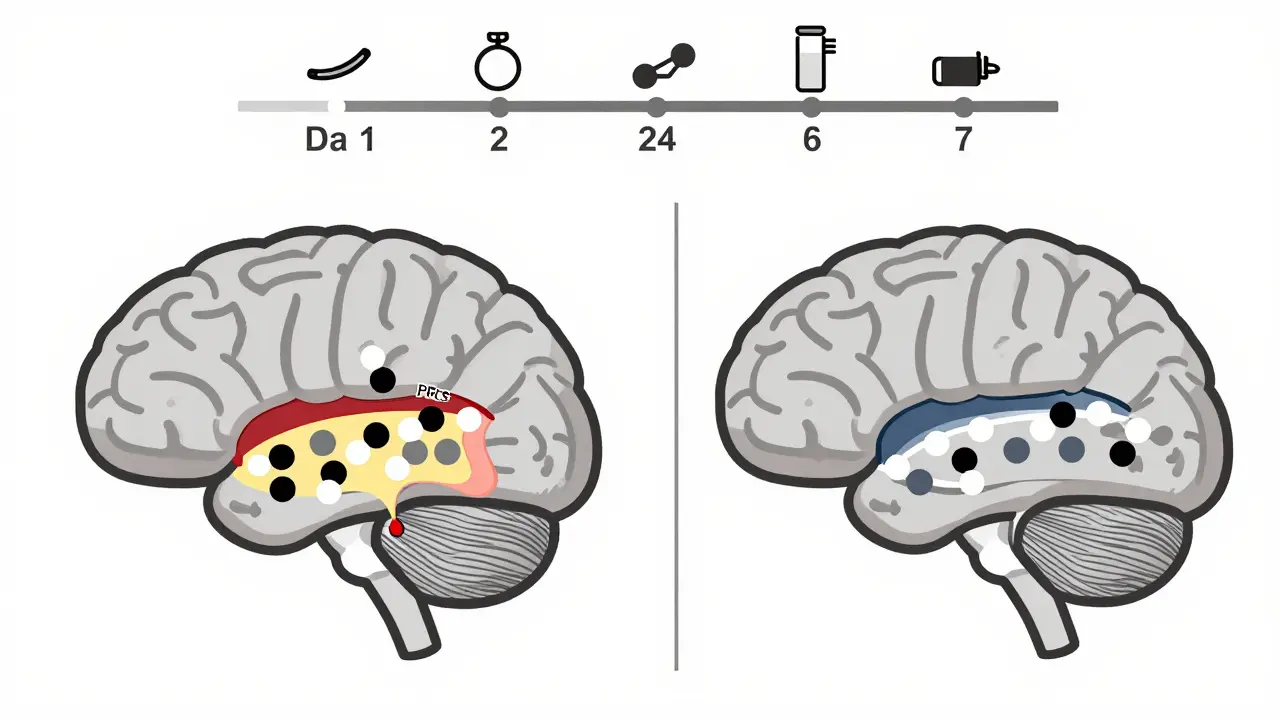
Switching from tacrolimus to cyclosporine is common. But it’s not a clean swap.- Pros: Lower neurotoxicity risk (15-20% less than tacrolimus)
- Cons: Higher rejection rates (15-20% increase), more gum overgrowth, more hair growth, higher blood pressure
Can You Prevent It?
Prevention starts with awareness. If you’re a transplant patient:- Know the early signs - tremor, headache, confusion
- Keep a symptom journal - note when they start, what you ate, what meds you took
- Stay hydrated. Monitor your sodium and magnesium levels
- Ask if your clinic checks CYP3A5 genotype - even if it’s not standard, it might help you
- Don’t tolerate symptoms. Push for evaluation. Your brain matters as much as your new organ.
Can tacrolimus neurotoxicity be reversed?
Yes, in most cases. If caught early, reducing the dose or switching medications leads to full recovery in 3 to 7 days. Symptoms like tremor and headache often fade quickly. More severe cases, like PRES, may take weeks to resolve, but with prompt treatment, brain swelling usually reverses without lasting damage. Delayed treatment increases the risk of permanent neurological changes.
Is tremor always a sign of tacrolimus toxicity?
Not always, but in transplant patients, it’s the most common cause. Other possibilities include low blood sugar, thyroid issues, or essential tremor. But if tremor starts after starting tacrolimus - especially within the first few weeks - it’s highly likely to be drug-related. Doctors often test by lowering the dose to see if symptoms improve.
Why do some patients get neurotoxicity at "normal" blood levels?
Because blood levels don’t tell the whole story. Some people have genetic differences that let more drug enter the brain. Others have a leakier blood-brain barrier due to inflammation or infection. A 2021 study showed patients with a certain CYP3A5 gene variant were 27% more likely to develop neurotoxicity, even at the same blood level. It’s not about the number - it’s about how your body handles it.
Can electrolytes affect tacrolimus neurotoxicity?
Yes. Low sodium (hyponatremia) is a major risk factor. Studies show correcting sodium levels alone resolved mild neurotoxicity in nearly 30% of patients without changing the tacrolimus dose. Low magnesium can also worsen tremors and seizures. Regular blood tests for sodium and magnesium are just as important as checking tacrolimus levels.
What are the long-term risks of staying on tacrolimus with neurotoxicity?
Chronic, untreated neurotoxicity can lead to persistent tremor, cognitive decline, and reduced quality of life. Some patients develop chronic nerve damage or movement disorders. More importantly, persistent symptoms often lead to non-adherence - patients stop taking their meds because they feel awful. This increases the risk of late organ rejection. Managing symptoms isn’t just about comfort - it’s about survival.
OMG YES. I had the tremors for 3 weeks after my kidney transplant. Thought I was going crazy. My doc said "it's just stress" 😑. Then I found this post. Finally someone gets it. I started tracking sodium + magnesium like a madwoman. Cut my tacrolimus by 0.02 mg/kg. Tremors gone in 48 hours. My hands could hold coffee again. 🥹☕
You are NOT alone. Seriously. I was terrified when my fingers started shaking like I’d had too much espresso. But guess what? You’re not broken. Your body’s just reacting. And you’re doing everything right by speaking up. Keep going. You’ve got this. 💪❤️
So I’m a liver transplant guy. Had the headache thing for months. Thought it was migraines. Tried everything. Then I read somewhere that low sodium = worse neurotox. Got my labs checked. Sodium was 132. Put on salt tabs. Headache vanished in 4 days. Doc was like ‘huh’. I’m just saying… check your electrolytes. It’s free.
It’s wild how we still treat tacrolimus like a one-size-fits-all drug. We test levels like they’re the whole story. But your body’s chemistry? That’s the real map. I’ve seen people with levels at 14 feel fine and others at 6 in agony. Genetics, hydration, even your gut microbiome-it all plays in. We need to stop being lazy and start personalizing. It’s not rocket science. Just science.
Most patients are just lazy. If you can’t handle a little tremor, maybe you shouldn’t have gotten the transplant. It’s not a spa retreat. Get over it.
Everyone’s missing the point. It’s not the drug. It’s the hospitals. They don’t test CYP3A5 because they’re too cheap. And the FDA? They don’t care. Big Pharma doesn’t want you to know you can avoid this. They want you dependent. I read a study in 2019 that said 89% of neurotoxicity cases were preventable with genetic screening. But no one talks about it. Why? Because money.
They’re poisoning us. Tacrolimus isn’t medicine-it’s a chemical weapon. They know it causes brain damage. That’s why they don’t test genotypes. They don’t want to prove it. And the ‘switch to cyclosporine’? That’s just swapping one poison for another. I’ve seen people lose their kidneys because they were forced into it. The system is designed to keep you sick. Wake up.
Why are we letting foreigners tell us how to treat our own people? This CYP3A5 nonsense? We’ve been doing transplants for 50 years without it. We don’t need some fancy study to tell us to reduce the dose. Just do it. Americans don’t need genetic testing to survive. We’re tougher than that.
Typical. Another post full of data. Where’s the emotional impact? Where’s the story? I had a patient who couldn’t hug her daughter because her hands shook. She cried. That’s the real cost. Not the numbers. The silence. The shame. That’s what gets left out.
India has been managing transplant neurotoxicity for decades without genetic testing. We use lower doses, monitor closely, and avoid antibiotics like carbapenems. Why are Americans so dependent on labs and tests? Simplicity works. We don’t need a PhD to know when to reduce tacrolimus. Just listen to the patient.
It’s funny how we treat organs like they’re separate from the person. You get a new kidney but your brain still has to suffer? That’s not medicine. That’s compartmentalized trauma. What if we stopped seeing patients as organs + side effects and started seeing them as whole humans? Maybe then we’d stop treating symptoms and start healing the system. I think we forget: healing isn’t just biological. It’s emotional. It’s dignity. And sometimes… it’s just lowering the dose.
Here’s the truth no one wants to say: we’re not treating neurotoxicity because we’re not invested in quality of life. We’re invested in survival. And that’s a moral failure. A transplant isn’t a victory if you’re too shaky to hold your child’s hand. If you’re too exhausted to laugh. If your brain is a battlefield and your doctors just hand you a pill and say ‘it’s in range.’ That’s not care. That’s surrender. And we’re all complicit.