Have you ever taken a cheap headache pill and felt like it barely worked, only to take an expensive one later that seemed to melt the pain away instantly? If so, you aren't imagining things. But here is the twist: the pills were likely identical. This strange phenomenon, where higher-priced medications are perceived as more effective than lower-cost alternatives despite having the exact same chemical makeup, is a well-documented psychological quirk with massive implications for our health and wallets.
This isn't just about being snobby about brands. It is a deep-seated cognitive shortcut your brain uses to judge quality. When we face uncertainty-like whether a medicine will actually work-we look for cues. Price is one of the loudest cues we have. The result? We literally feel better when we think we paid more. Understanding this mechanism is crucial because it affects everything from how often you take your meds to billions of dollars in healthcare spending.
The Psychology Behind the Price Tag
At the heart of this issue is what psychologists call the price-quality heuristic. It is a mental rule of thumb: if something costs more, it must be better. In most cases, this logic holds up. A $500 laptop usually outperforms a $100 one. But when it comes to pharmaceuticals, especially generics, this heuristic leads us astray.
A pivotal study published in 2023 by M Díaz-Lago shed light on exactly how this works. Researchers gathered 60 volunteers for a contingency learning task. They programmed the scenario so that 72% of simulated 'patients' healed regardless of which drug they took. Half the participants were told the drug was expensive; the other half were told it was inexpensive. The results were stark. Those who believed they were using the expensive drug rated its efficacy significantly higher than those who thought it was cheap. The active ingredient didn't change. Only the price tag did.
This suggests that our brains don't just evaluate the physical sensation of relief; they evaluate the context. If you believe you bought premium care, your brain expects premium results. When you buy budget care, your brain lowers its expectations, making even real relief feel underwhelming.
Placebo Power and Pain Perception
The connection between price and perception goes deeper than simple ratings. It physically alters how we experience symptoms through the placebo effect. Expectations modulate biological responses. If you expect a drug to work wonders, your body may release endorphins or reduce inflammation simply because of that belief.
Consider a University of Auckland study led by SLE Colgan. Participants alternated between branded and generic ibuprofen for consecutive headaches. Here is the kicker: both versions were placebos. No active painkiller was present. Yet, when participants thought they were taking the generic version, they reported significantly less pain relief and more lingering symptoms compared to when they thought they were taking the brand name. The p-values (p < .03 for pain relief) confirmed this wasn't random noise. The expectation of inferiority made the placebo fail.
This demonstrates that the "efficacy" of a drug is partly constructed in the mind before it even touches the bloodstream. If you doubt the power of a cheaper pill, you are actively working against its potential benefits. Your skepticism becomes a self-fulfilling prophecy.
The Visual Bias: Pills Aren't Created Equal
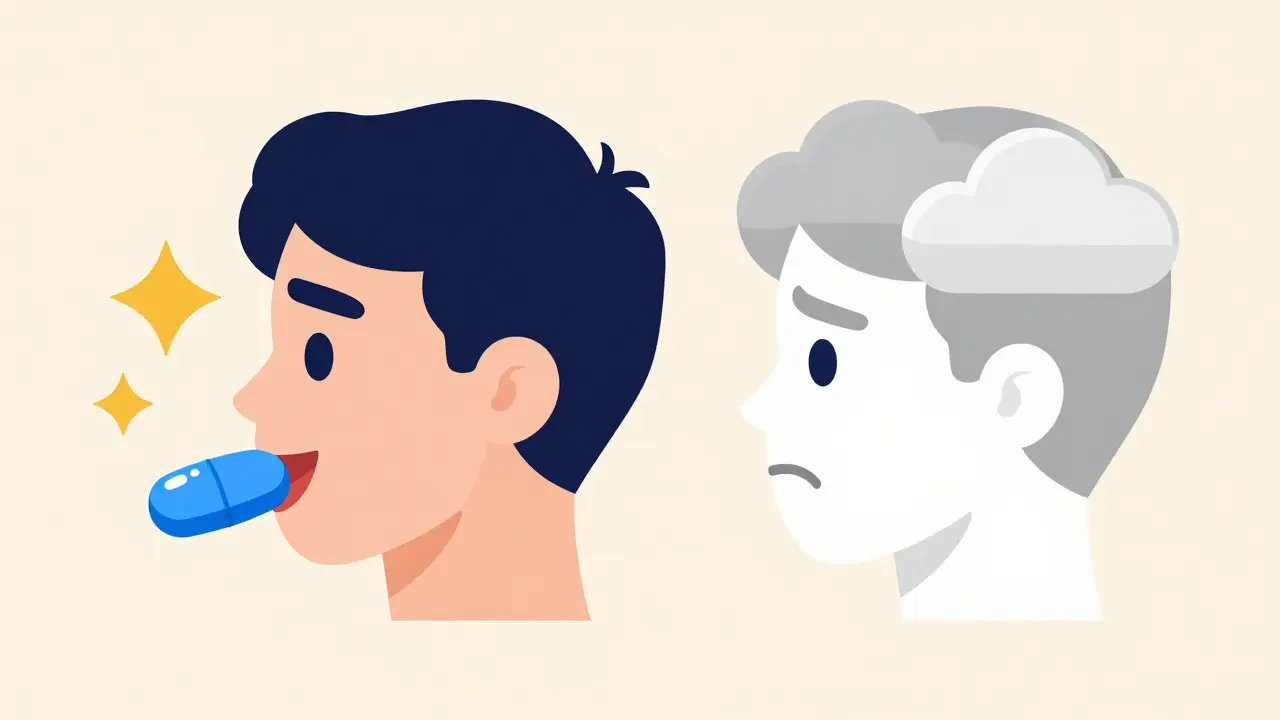
It is not just the price on the receipt that tricks us; it is the pill itself. Generic drugs often look, taste, and smell different from their brand-name counterparts. While regulatory bodies like the FDA require generics to contain identical active ingredients, they allow differences in inactive components like dyes, binders, and coatings.
Pharmacists at UCSF, Lynch and Tsourounis, note that many people view generics as inferior because of these observable differences. Imagine a brand-name tablet with a shiny coating that tastes neutral and slides down easily. Now imagine the generic equivalent: a chalky white pill with a bitter aftertaste. Even if the chemistry is bioequivalent, the sensory experience screams "cheap."
- Brand Name: Often sleek, coated, pleasant-tasting, distinct shape.
- Generic: Often plain, chalky, potentially bitter, standard shape.
These perceptual differences trigger immediate psychological resistance. You swallow the chalky pill thinking, "This feels wrong," and then you judge its effectiveness based on that initial negative impression. The packaging matters too. Sleek branding signals trust; plain white bottles signal utility. Our brains are wired to associate aesthetics with performance, even when performance is chemically blind.
What Patients Really Believe
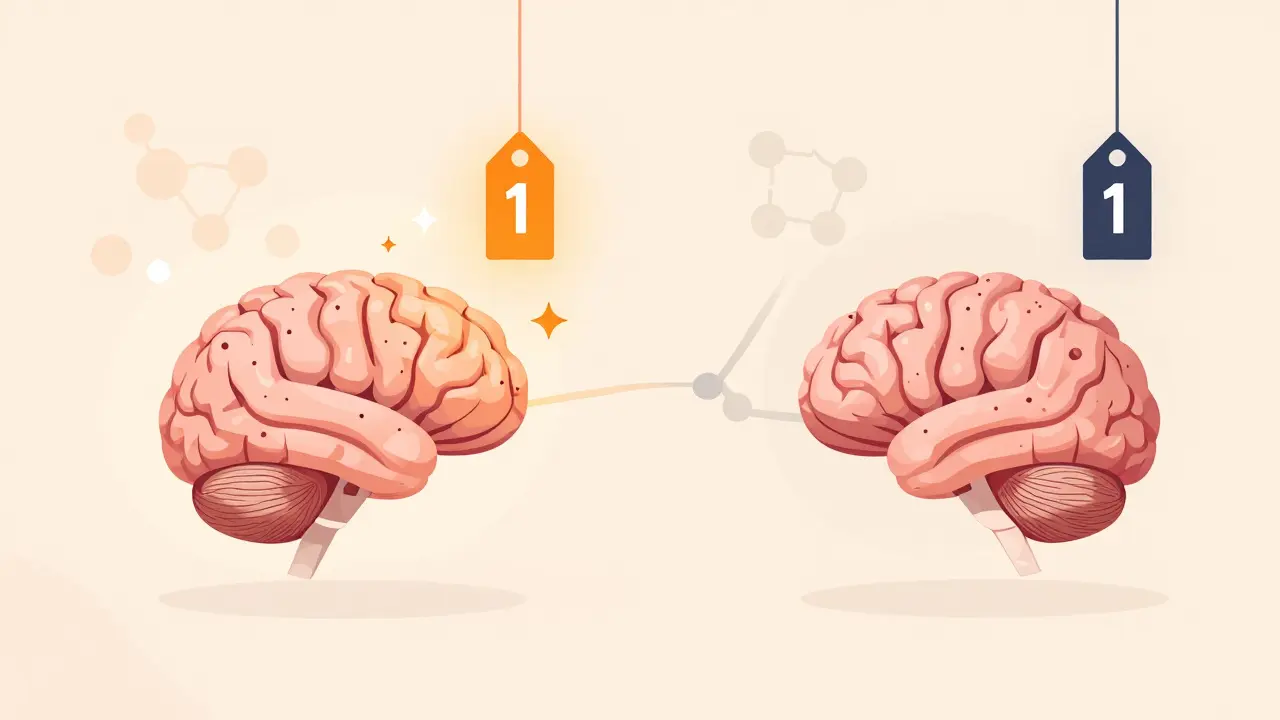
Despite decades of education, skepticism toward lower-cost alternatives remains stubbornly high. A national survey cited in US Pharmacist revealed that while 37.6% of American patients preferred generics, 25% believed they were less effective, and 20% thought they were less safe. Another 20-40% were simply unsure about equivalence.
Focus group research by the CDC (Sewell, 2012) captured the raw sentiment behind these stats. Participants didn't just say generics were "different." They used loaded language. One said, "Not as good as the real medicine." Another claimed, "Generic medicine is less potent... other medicine is stronger." To them, the brand name held power; the generic was a watered-down imitation. This isn't just ignorance; it is a deeply held belief system reinforced by marketing and social cues.
This disconnect creates a barrier to care. When patients distrust their medication, they are less likely to adhere to treatment plans. Research by A Omojasola found that respondents who agreed that "Generic prescription drugs are as effective as brand name prescription drugs" were three times as likely to utilize generic drug discount programs. Belief drives behavior. If you don't believe it works, you won't use it-or you'll skip doses, hoping the brand name will do the heavy lifting next time.
The Economic Reality Check
While our brains debate efficacy, the economy tells a different story. Generic drugs account for approximately 90% of all prescriptions filled in the United States but represent only 23% of total drug spending. That gap generates roughly $37 billion in annual savings. These savings keep insurance premiums lower and make healthcare accessible to millions.
| Metric | Current Status | Risk if Skepticism Grows |
|---|---|---|
| Prescription Volume | 90% are generics | Shift to expensive brands increases costs |
| Drug Spending Share | 23% of total spend | Spiking due to brand preference |
| Annual Savings | $37 Billion | Eroded by non-adherence and switching |
| Patient Adherence | Variable | Drops if patients distrust efficacy |
If patient skepticism reduces utilization rates, those savings vanish. Insurance companies would have to cover pricier brand names, leading to higher deductibles and copays for everyone. The individual choice to demand a brand name because it "feels stronger" has collective consequences. It raises the floor for healthcare costs across the board.
Can Education Fix the Problem?
You might think the solution is simple: educate patients. Show them the science. Prove that bioequivalence means the drugs are the same. And to an extent, it works. Colgan's study showed that educational interventions successfully improved participants' understanding of generic medicines and increased their preference for treating serious illnesses with generics. However, there was a catch. These improved perceptions did not translate into better reported efficacy experiences when they actually took the medication. Knowing the facts didn't override the feeling.
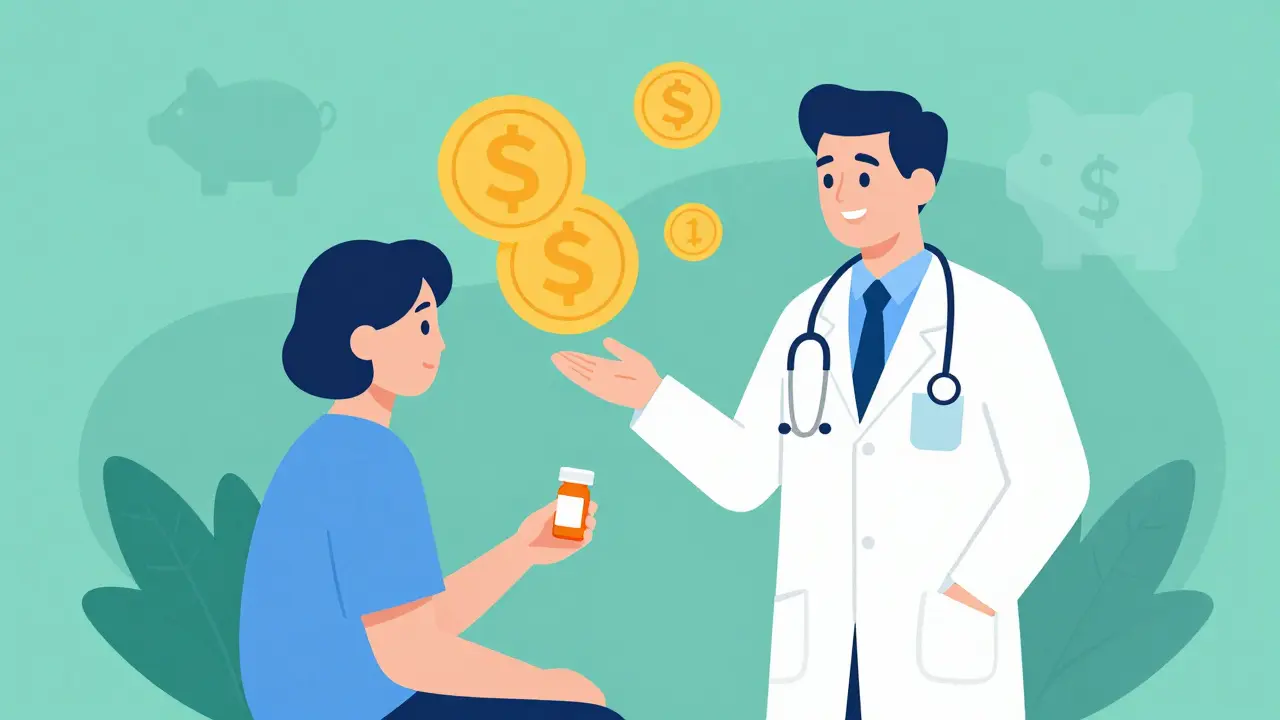
This highlights a limitation of pure information campaigns. You can tell someone a generic is just as good, but if their brain is wired to associate low cost with low quality, the cognitive dissonance remains. The feeling of inferiority persists despite the knowledge of equivalence. This is why healthcare providers play such a crucial mediating role. Research by Shrank and colleagues found that generic medication use was most significantly associated with direct communication from healthcare providers. A doctor saying, "I prescribe this generic because I trust it works as well as the brand," carries more weight than a pamphlet.
Navigating the Choice: What Should You Do?
So, how do you handle this when you are standing in the pharmacy aisle or looking at your prescription app? First, recognize the bias. Acknowledge that your brain is trying to help you by using price as a proxy for quality, but in this specific case, it is misleading you.
Second, talk to your pharmacist or doctor. Ask them directly: "Is there a generic option for this?" Most pharmacists are happy to explain the bioequivalence standards. The FDA mandates that generics demonstrate bioequivalence within an 80-125% confidence interval for area under the curve and maximum concentration compared to the reference product. In practical terms, this means the amount of drug reaching your bloodstream is statistically indistinguishable from the brand name.
Third, manage your expectations. If you switch to a generic, remind yourself that any difference in taste or appearance does not equal a difference in power. Give it a fair trial. Don't judge the first dose harshly because the pill looked chalky. Let the clinical outcome speak for itself.
Finally, consider the bigger picture. Choosing generics supports a sustainable healthcare system. It keeps money in your pocket and resources available for others. By overcoming the psychological hurdle of price-based efficacy, you aren't just saving cash; you are rejecting a cognitive trap that has been set by marketing and human intuition alike.
Are generic drugs really the same as brand name drugs?
Yes, in terms of active ingredients and therapeutic effect. Regulatory agencies like the FDA require generics to be bioequivalent to brand-name drugs, meaning they deliver the same amount of active ingredient into your bloodstream over the same period. Differences may exist in inactive ingredients like dyes or fillers, which can affect appearance or taste, but not efficacy.
Why do I feel like my cheap medication doesn't work as well?
This is likely due to the price-quality heuristic and the placebo effect. Psychological studies show that when people believe a drug is expensive, they rate its efficacy higher. Conversely, believing a drug is cheap can lower expectations and reduce the perceived benefit, even if the chemical composition is identical. Your brain's expectation influences your physical experience.
Does the appearance of a pill affect how well it works?
Indirectly, yes. While the look of a pill doesn't change its chemistry, it changes your perception. Studies indicate that pills with sleek coatings and pleasant tastes are often judged as more effective than chalky or bitter ones. This aesthetic bias can influence your satisfaction and adherence, making you feel like the medication is less potent.
How much money can be saved by choosing generics?
Generics generate significant savings. In the United States, generic drugs account for 90% of prescriptions but only 23% of drug spending, resulting in approximately $37 billion in annual savings. For individuals, generics can cost 80-85% less than brand-name equivalents, making long-term treatments much more affordable.
Can doctors help overcome skepticism about generic drugs?
Absolutely. Research shows that direct communication from healthcare providers is the strongest factor in encouraging generic use. When a doctor or pharmacist explicitly validates the efficacy of a generic and explains the science behind it, patient trust increases, leading to better adherence and reduced skepticism.