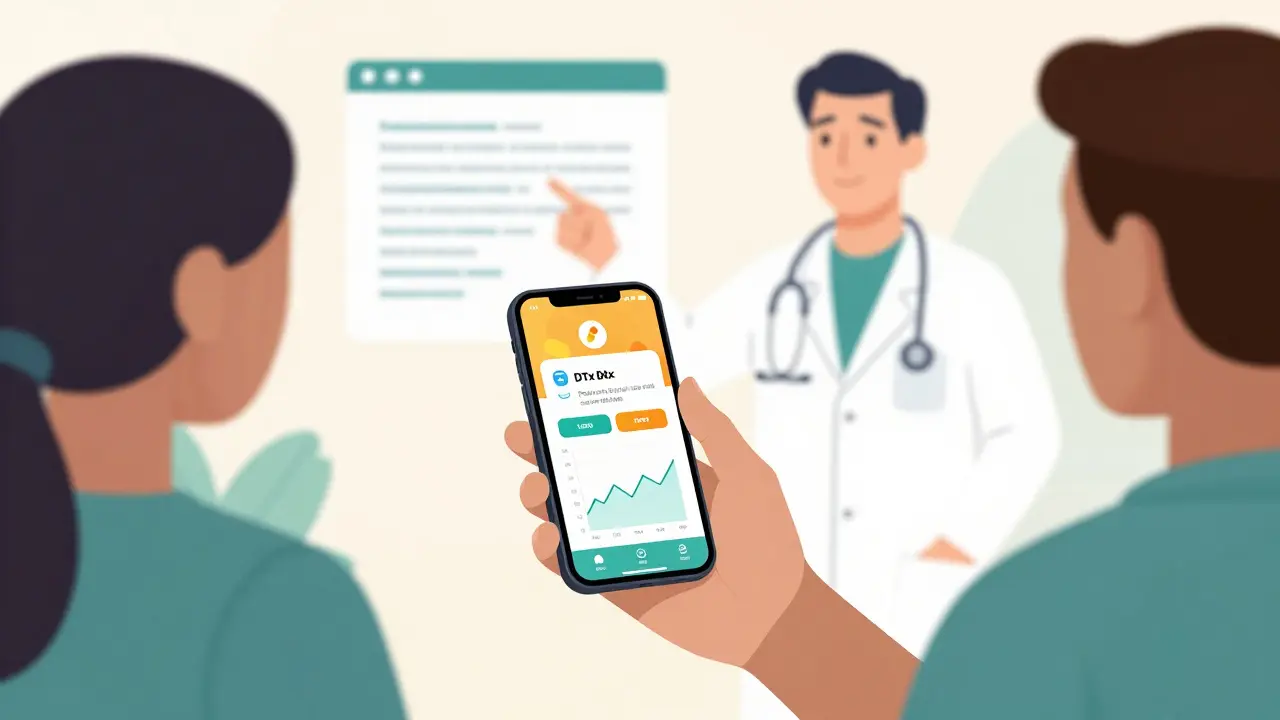
Imagine taking your blood pressure medication every day - but your doctor never knows if you actually did. Now imagine an app that notices you skipped your dose, sends you a personalized message about why it matters, and even connects you to a free pill sampler because you mentioned cost was an issue. That’s not science fiction. It’s digital therapeutics - and it’s changing how drugs work in real life.
What Exactly Are Digital Therapeutics?
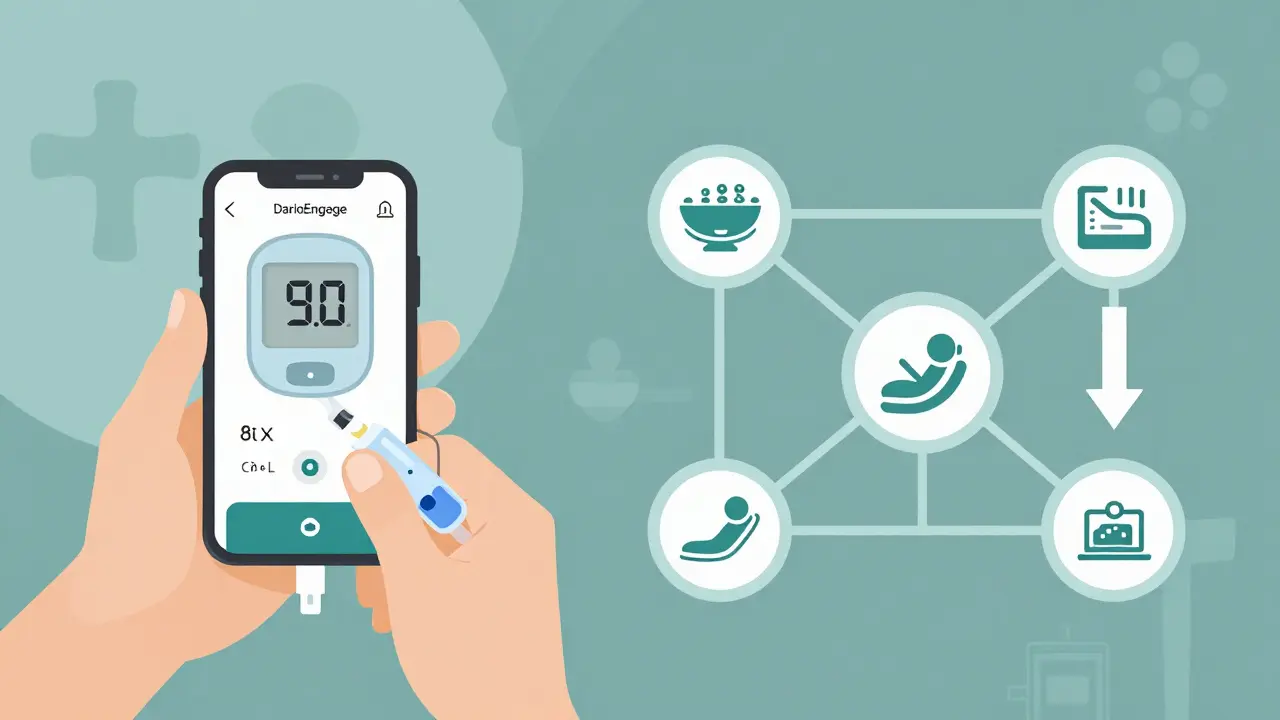
Digital therapeutics (DTx) aren’t apps that remind you to drink water or track your steps. They’re FDA-cleared medical treatments. Think of them as software prescriptions. When the FDA approved reSET in 2018 for substance use disorder, it opened the door. Since then, over 60 prescription DTx have cleared regulatory hurdles. The latest, DaylightRx, got clearance on September 4, 2024, for generalized anxiety disorder in adults. It’s not a chatbot. It’s a 90-day, clinically proven cognitive behavioral therapy program delivered through an app - and it’s meant to replace or boost traditional meds.DTx don’t just monitor. They intervene. A diabetes DTx like DarioEngage doesn’t just log your glucose levels. It uses algorithms to suggest insulin dose changes based on your meals, activity, and sleep patterns - and it does it in real time. Studies show users of this kind of DTx saw HbA1c drops of 1.2% more than those on medication alone over six months. That’s the difference between a risky A1c of 8.5% and a safer 7.3%.
How DTx Improve Medication Adherence - And Why It Matters
One in three prescriptions are never filled. Even when filled, half of people with chronic conditions like asthma or COPD miss doses regularly. That’s not laziness. It’s complexity. Fear of side effects. Confusion over timing. Financial stress. Traditional pharmacy calls? They improve first-fill rates by maybe 15%. DTx? They boost adherence by up to 25%.Medisafe, a leading digital drug companion, tracks not just whether you took your pill, but how you feel when you do. If you report dizziness after taking warfarin, the app flags it. It doesn’t just say, “Take your pill.” It asks, “Did you eat leafy greens today? That can affect your INR.” It links to your pharmacy’s refill system. It finds coupons. It even connects you to a nurse if you’re overwhelmed.
For antiretrovirals, missing one dose can lead to drug resistance. For insulin, it can mean a trip to the ER. DTx cut those risks. In opioid use disorder, one study showed a DTx used with buprenorphine led to a 16.3% greater reduction in illicit drug use than the drug alone. That’s not a small win. It’s life-changing.
The Hidden Risks: When Software Interferes With Medicine
DTx aren’t harmless. They’re medicine. And medicine can interact.EndeavorRx, an FDA-cleared game for ADHD in kids, caused headaches, dizziness, or nausea in 7% of users - twice the rate of the control group. These aren’t bugs. They’re side effects. And they can compound with stimulant meds like Adderall. One parent on Reddit reported her 10-year-old became “overstimulated and crying after gaming sessions” - a reaction her pediatrician hadn’t warned her about.
Psychiatric DTx raise even bigger concerns. A 2023 Psychiatry Advisor piece noted that clinicians worry about “the gamification of psychiatry.” If a patient is on sertraline and uses a mood-tracking app that pushes them to “push through anxiety,” what happens when the app’s advice clashes with their therapist’s guidance? One user on r/mentalhealth said DaylightRx’s CBT modules felt “too generic” to address her specific side effects from her antidepressant. That mismatch can erode trust - in the app, the doctor, or both.
And then there’s data. Many DTx collect sensitive info: mood logs, voice patterns, location, even keystroke dynamics. SAMHSA warns that mental health DTx often lack strong security. If a platform gets hacked, your private thoughts about suicidal ideation could end up on the dark web. There’s no HIPAA guarantee for every app labeled “therapy.” Only FDA-cleared ones are held to medical standards.
Who Benefits - And Who Gets Left Behind
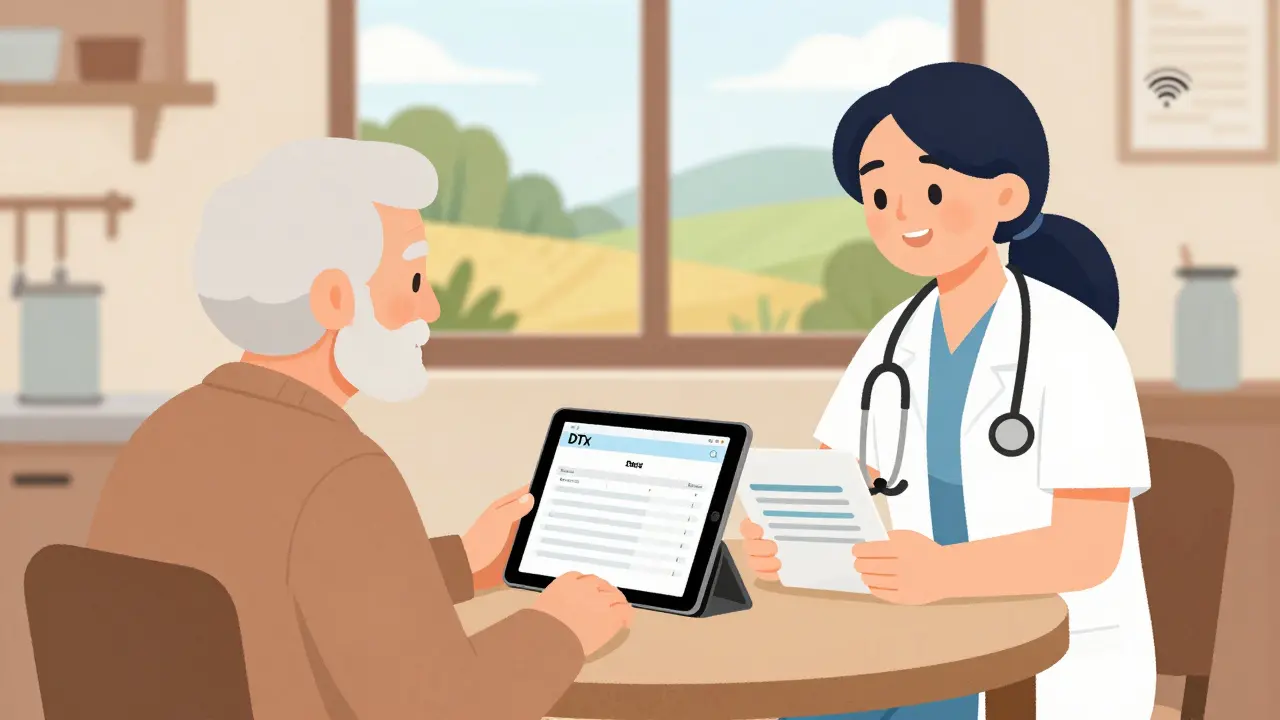
DTx shine for chronic conditions: diabetes, heart disease, mental health, COPD. They help people who need daily, complex routines. But they struggle with acute care - like treating a sudden asthma attack. And they fail miserably without support.JMCP research found 45% of patients over 65 quit DTx within weeks if they didn’t get in-person onboarding. For those over 70, 38% dropped out in 30 days without a tech helper. This isn’t about being “tech-savvy.” It’s about access. If you’re low-income, visually impaired, or live in a rural area with poor internet, DTx can feel like another barrier, not a bridge.
Providers are struggling too. A McKinsey survey showed 67% of clinicians don’t know how to bill for DTx. EHR systems often can’t pull data from DTx apps. One doctor told me her patient used a DTx for hypertension, but the app’s readings didn’t show up in her EMR. She had to ask the patient to manually email screenshots. That’s not care. That’s paperwork.
The Future: Real-Time Dosing and Personalized Medicine
The next leap isn’t just tracking. It’s adjusting.ASCPT predicts DTx will become part of “model-based drug development.” Imagine this: your insulin pump talks to your DTx app, which reads your sleep, stress, and carb intake. It sends a signal to your endocrinologist’s system: “Patient’s overnight glucose variability increased. Consider lowering basal rate by 0.1 units.” That’s not fantasy. It’s already being tested in pilot programs.
By 2027, Medisafe predicts 65% of specialty pharmacy prescriptions will require a DTx companion to qualify for insurance coverage. That’s huge. It means DTx won’t be optional - they’ll be standard.
The FDA is preparing new guidance for combination therapy studies - meaning future DTx will need to prove how they work with specific drugs, not just alone. That’s a big step toward safety.
What You Should Do Right Now
If you’re on chronic meds - especially for diabetes, mental health, or heart disease - ask your doctor: “Is there an FDA-cleared DTx that works with my treatment?” Don’t settle for wellness apps. Look for the FDA clearance number on the app’s website. Ask if it connects to your pharmacy or EHR. If it doesn’t, it’s not a DTx - it’s a reminder tool.If you’re a provider, start mapping which DTx your patients use. Don’t assume they’re working. Ask: “What does the app tell you when you skip a dose?” “Has it ever suggested a change to your meds?” “Did you share that with anyone?”
And if you’re a caregiver for an older adult? Don’t hand them a phone and walk away. Schedule a 45-minute onboarding session. Use a family member, a pharmacist, or a community health worker. DTx only work if someone’s there to help them work.
The future of medicine isn’t just pills. It’s software that knows when you’re struggling - and helps you through it. But only if we use it wisely.
Are digital therapeutics the same as health apps like MyFitnessPal or Headspace?
No. Health and wellness apps like MyFitnessPal or Headspace are designed for general well-being and aren’t regulated as medical devices. Digital therapeutics (DTx) are FDA-cleared treatments for specific diseases - like DaylightRx for anxiety or DarioEngage for diabetes. They require clinical proof of effectiveness and are prescribed by doctors. If it doesn’t have an FDA clearance number, it’s not a DTx.
Can digital therapeutics replace my medication?
Sometimes - but not usually. Most DTx are designed as adjuncts to medication, not replacements. DaylightRx is one of the few cleared as a standalone treatment for anxiety. For conditions like diabetes or hypertension, DTx help you take your meds better and adjust dosing based on real-time data, but they don’t eliminate the need for drugs. Always consult your doctor before changing your treatment plan.
Do DTx interact with my current medications?
Yes - indirectly. DTx themselves don’t contain chemicals, but their effects can interact with drugs. For example, a DTx that increases stress or sleep disruption might worsen side effects from antidepressants. A DTx that encourages exercise might lower blood pressure too much if you’re on beta-blockers. The real risk is when the app’s advice conflicts with your doctor’s instructions. Always tell your provider what DTx you’re using.
Why don’t my doctors know about DTx?
Many doctors haven’t been trained on digital therapeutics. Medical schools still focus on pills and procedures. Plus, DTx integration into electronic health records is patchy. If your doctor doesn’t see data from your DTx app, they might not realize it’s being used. Bring printed summaries or screenshots to your appointments. Ask if your DTx has a clinician portal - many do.
Is my data safe in a DTx app?
It depends. FDA-cleared DTx must follow strict privacy rules, similar to HIPAA. But many apps labeled “digital health” aren’t regulated. Check if the app is listed on the FDA’s database of cleared digital therapeutics. Look for encryption, no data sharing with advertisers, and clear privacy policies. If the app asks for access to your contacts or location for no medical reason, that’s a red flag.
Will insurance cover digital therapeutics?
More are, but not all. Medicare and private insurers are starting to cover FDA-cleared DTx for conditions like ADHD, diabetes, and substance use disorder - especially if prescribed by a doctor. But coverage varies by plan. Ask your insurer for the CPT code for your DTx. If your provider says “no,” ask them to appeal. Some DTx companies offer patient assistance programs to cover costs.
so u mean the government and big pharma are teaming up to turn our meds into apps that spy on us lol
man i tried one of these apps for my diabetes and it actually saved my life. i was skipping doses cause i was scared of low blood sugar but the app talked me through it and even found me free test strips. no joke, it’s like having a nurse in your pocket
Let’s be real-this isn’t innovation, it’s corporate surveillance repackaged as healthcare. These ‘FDA-cleared’ apps are just glorified data harvesters with a white coat. If your insulin pump is talking to an app that’s owned by a venture-backed startup with zero medical pedigree, you’re not being treated-you’re being monetized. And don’t get me started on the EHR integration mess. Half these companies can’t even export a CSV properly. Pathetic.
DTx is the future but only if we fix the infrastructure. Clinicians need training, EHRs need APIs, and patients need onboarding-not just a link sent via email. I’ve seen too many seniors quit after one failed attempt because no one showed them how to turn on notifications. It’s not the tech that fails. It’s the rollout.
Interesting how Western nations embrace digital therapeutics while ignoring the fundamental flaw: data sovereignty. When a US-based company collects your mood logs, voice patterns, and keystroke dynamics, who owns that data? The FDA clearance does not guarantee protection from foreign intelligence agencies or data brokers. This is digital colonialism disguised as medical advancement.
Wow. So you’re telling me a 72-year-old with arthritis and no Wi-Fi at home is supposed to use an app that tracks her insulin doses… while her doctor can’t even see the data? And we’re calling this progress? I’m sorry, but if your solution requires a smartphone, a stable internet connection, and a PhD in tech literacy, you’re not helping-you’re excluding.
I’ve worked with patients using DaylightRx and DarioEngage. The ones who stuck with it? They had someone-family, nurse, community worker-sitting with them for 45 minutes the first week. Not a video tutorial. Not a chatbot. A human. The tech works, but only when it’s anchored in care, not convenience. Let’s stop pretending apps replace human connection. They don’t. They amplify it-if we design them right.
ok but like… i used this app for my anxiety and it kept telling me to ‘push through’ when i was having panic attacks?? and i was on zoloft?? i was like… why is an app telling me to suffer more?? i almost deleted it. also the notifications were like 17 per day and i swear my phone started vibrating in my sleep??
DTx: when your medication becomes a subscription service with a side of existential dread. The irony? We’re trying to fix human fragility with algorithms built by engineers who’ve never held a dying person’s hand. Maybe the real problem isn’t adherence-it’s that we’ve outsourced empathy to code.