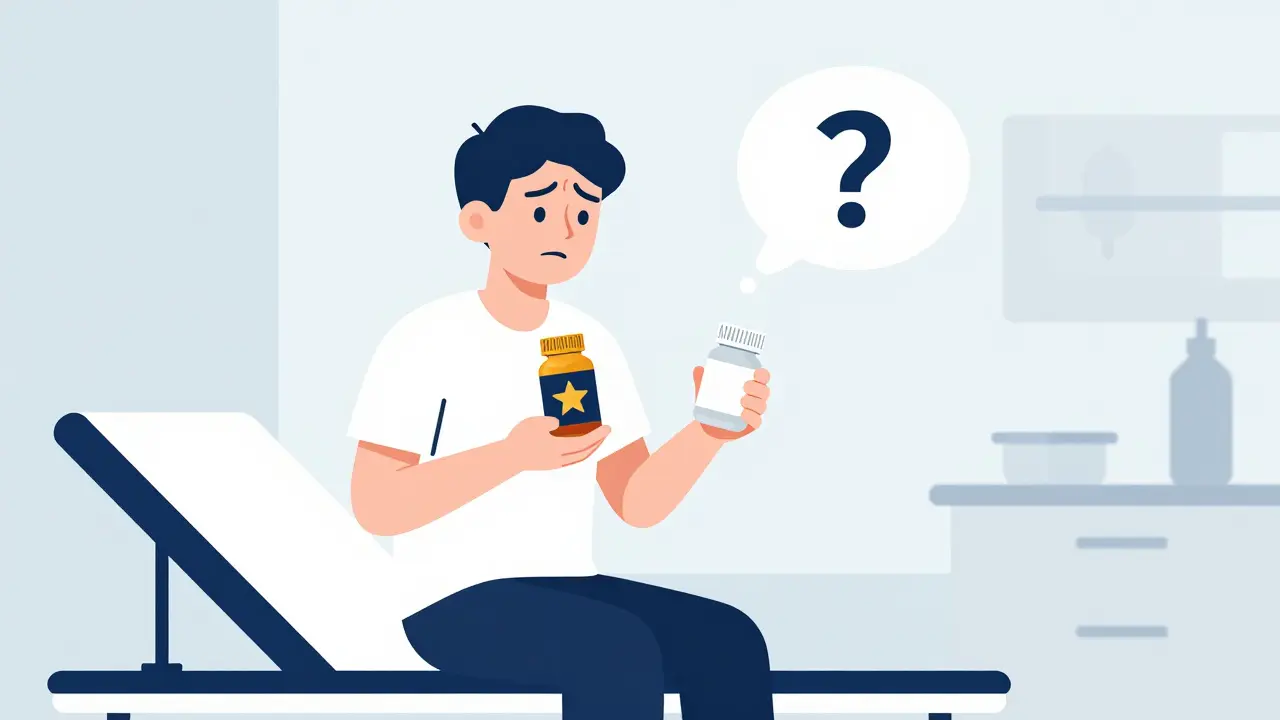
Imagine you’ve been taking a specific blood pressure medication for years. It works. You feel stable. Then, your doctor switches you to the generic version. The active ingredient is identical. The price is a fraction of what you paid before. But suddenly, you start worrying. Did the switch cause that headache? Is it working as well? This hesitation isn’t just in your head-it’s a documented psychological phenomenon known as risk perception, which refers to the subjective judgment people make about the characteristics and severity of a risk. In healthcare, this perception often diverges sharply from scientific reality, creating a gap between what doctors prescribe and what patients actually take.
The core issue isn’t usually about the chemistry of the pill. It’s about trust. When patients assess generic safety, they aren’t looking at bioequivalence data sheets. They are relying on cues like packaging, price, and past experiences. Understanding how these assessments happen is critical because it directly impacts medication adherence. If you don’t believe a drug is safe or effective, you’re less likely to take it consistently. That non-adherence costs the U.S. healthcare system billions annually and leads to preventable hospitalizations.
The Psychology Behind Brand Loyalty
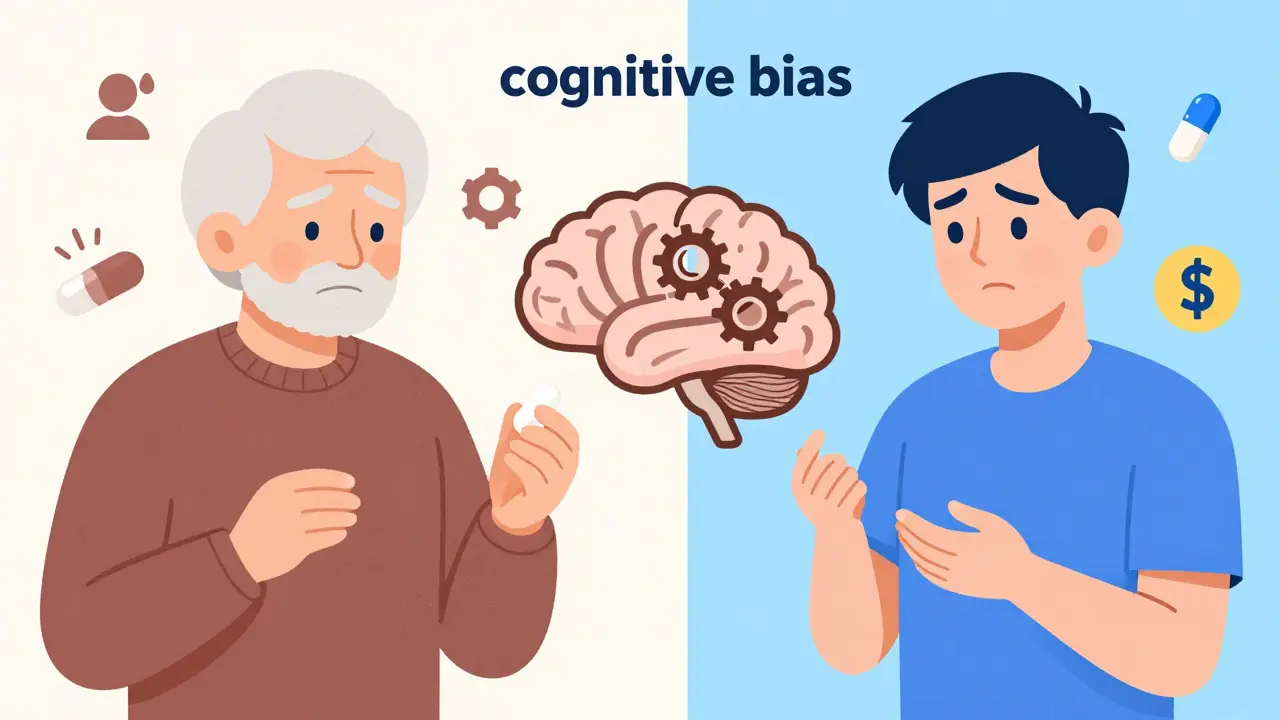
Why do we trust the expensive box more than the plain one? It comes down to cognitive biases. Dr. Aaron S. Kesselheim, an Associate Professor of Medicine at Harvard Medical School, has pointed out that the word “generic” itself can trigger a subconscious association with lesser quality. We see this in other areas of life too-people often assume higher cost equals better performance, whether it’s coffee, cars, or clothing. In medicine, this bias is amplified by the stakes involved.
This phenomenon is sometimes called the “brand effect.” Even when a placebo is labeled as a brand-name drug versus a generic, studies have shown patients report greater relief with the branded version. This suggests that part of the treatment efficacy is psychological. For patients assessing generic safety, the lack of flashy marketing and the presence of a simple chemical name on the bottle can signal “cheap” rather than “cost-effective.” This signaling effect overrides logical understanding of regulatory standards.
Furthermore, there is a concept known as loss aversion. People fear losing their current state of health more than they desire gaining a financial benefit. Switching to a generic feels like a potential loss of control or efficacy, while staying on the brand feels like maintaining the status quo. This emotional weighting makes the perceived risk of switching much higher than the actual statistical risk.
Demographics and Who Worries Most
Risk perception isn’t uniform across all patients. Research shows significant variations based on age, education, and socioeconomic status. A 2024 study published in Frontiers in Drug Safety and Regulation used machine learning to analyze patient attitudes and found that age plays a surprising role. Participants over 60 showed heightened concern about side effects compared to younger groups. This might seem counterintuitive, as older adults are often more cost-conscious, but it highlights a deep-seated caution regarding bodily changes in later life.
Educational attainment also strongly influences how patients interpret safety information. Lower-educated participants were found to be 1.73 times more likely to perceive generic drugs as different from branded medications. This doesn’t mean they are less intelligent; it means they may lack the specific health literacy needed to understand concepts like bioequivalence. Without that framework, they rely on heuristics-mental shortcuts-that often favor the familiar brand.
Socioeconomic factors add another layer. Interestingly, unemployed and retired participants sometimes showed more positive attitudes toward generics, likely driven by immediate financial necessity. However, those with lower education levels still perceived generic use as potentially dangerous, with an odds ratio of 1.948 indicating a strong correlation between low education and high perceived risk. This creates a difficult intersection where those who need generics most financially are also those who trust them least psychologically.
| Factor | Influence on Perception | Key Insight |
|---|---|---|
| Age (>60) | Higher concern | More focused on side effects and stability |
| Education Level | Inversely proportional | Lower education correlates with higher skepticism |
| Health Literacy | Critical determinant | Low literacy leads to 50% believing generics are less safe |
| Rural Location | Unique misconceptions | Belief that generics require higher doses due to lower potency |
The Role of Health Literacy and Misinformation
Health literacy is the ability to obtain, read, and understand basic health information. When this skill is lacking, risk assessment becomes guesswork. A 2015 study by Iosifescu et al. found that among patients with inadequate health literacy, approximately 50% believed generics were less effective and less safe. Compare that to the general population, where only 25% and 20% held those beliefs respectively. This gap is massive.
Misinformation spreads easily in this vacuum. The FDA has identified four primary misconceptions driving safety concerns: that generics are less effective, take longer to start working, are not safe, and are manufactured in substandard facilities. None of these are true for FDA-approved generics, but they persist because they are intuitive. If a pill looks different-different color, shape, or size-patients assume the contents are different too.
Rural populations demonstrate unique risk assessment patterns. A CDC study found that rural patients frequently believed generics required higher doses due to lower potency. They incorrectly associated this perceived lower potency with increased side effects if they took the same dose. This contrasts with urban populations, where concerns focused more on manufacturing quality. These distinct misconceptions require tailored educational approaches, as a one-size-fits-all brochure won’t address the specific fears of different communities.
Anecdotes vs. Data: The Power of Experience
Data tells us that generic drugs must demonstrate bioequivalence, meaning their pharmacokinetic parameters fall within 80-125% of the brand-name drug. Yet, individual experiences often override this statistical reality. Online forums like Reddit and PatientsLikeMe are filled with stories of patients who switched to generics and experienced adverse effects. One user noted, “I switched to generic sertraline and had terrible withdrawal symptoms my doctor couldn’t explain.”
These anecdotes are powerful. They create what psychologists call availability heuristic-where we judge the probability of an event by how easily examples come to mind. If you hear three friends complain about their generic blood pressure meds, you’ll assume the risk is high, even if millions take them without issue. The FDA issued a safety communication in 2012 regarding bupropion XL after reports of reduced effectiveness with certain generic versions, which validated these fears for many patients, even though such cases are rare.
However, contradictory experiences exist. A 2021 survey by the National Community Pharmacists Association found that 68% of patients who had switched to generics reported no difference in effectiveness or side effects. The disconnect lies in visibility. Negative experiences are shared loudly; positive experiences (i.e., nothing happening) are rarely discussed. This imbalance skews public perception, making the risks of generics seem far more prevalent than they are.
The Physician-Patient Communication Gap
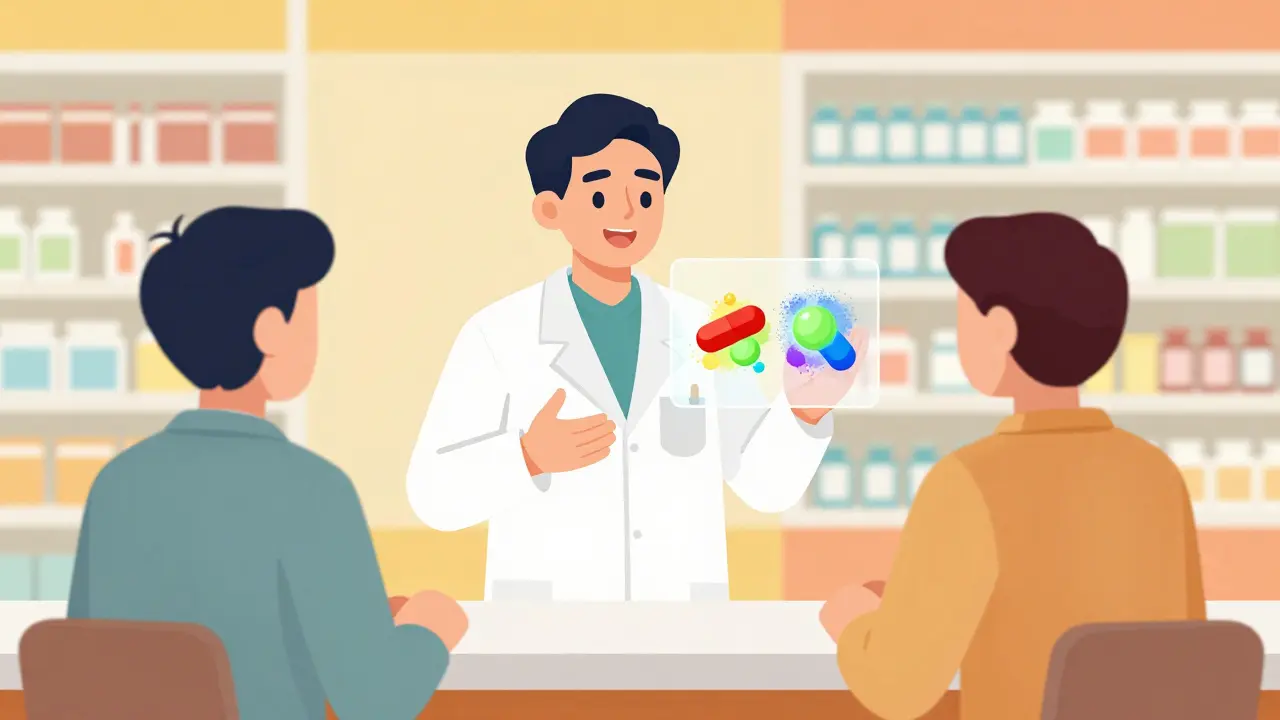
If data and anecdotes clash, who bridges the gap? The physician. Dr. William Shrank’s meta-analysis published in JAMA Internal Medicine identified physician communication as the strongest predictor of generic acceptance. Patients who received explanations about bioequivalence from their providers were 3.2 times more likely to accept generics. This statistic is staggering because it places the burden of trust-building squarely on the medical provider.
Yet, time constraints make this difficult. The average pharmacist-patient consultation lasts only 47 seconds for generic substitutions. In that brief window, explaining complex regulatory standards is nearly impossible. Instead, providers often use shorthand assurances like “It’s the same thing,” which fails to address the patient’s underlying anxiety. Dr. Karen E. Lasser noted that patients do not transfer perceptions about the safety of older medications to generics, highlighting a specific cognitive gap that requires explicit explanation.
Effective communication needs to be proactive. Research published in Medical Care in 2015 showed that patients who received explanations about generic safety at the point of prescribing were 2.8 times more likely to accept generics. Waiting until the pharmacy counter is too late. The conversation needs to happen when the prescription is written, framing the generic choice as a deliberate, safe decision by the doctor, not just a cost-cutting measure by the insurance company.
Economic Implications and Systemic Costs
The stakes of this risk perception extend beyond individual health. The generic drug market accounted for 90% of prescriptions but only 23% of U.S. drug spending in 2022. This efficiency saves the healthcare system $370 billion annually. However, patient safety concerns contribute to “brand loyalty” that costs the system approximately $8 billion annually in unnecessary brand-name prescriptions.
Insurance design plays a role here. Medicare Part D plans that implemented $0 generic copays saw 18% higher generic utilization than plans with tiered copay structures. Financial incentives help, but they don’t fully solve the trust issue. If a patient believes a drug is unsafe, removing the cost barrier doesn’t necessarily increase adherence. They might simply skip doses or stop taking the medication altogether, leading to worse health outcomes and higher long-term costs.
The Congressional Budget Office projects that closing the generic utilization gap by addressing safety perceptions could save $185 billion over the next decade. This frames risk perception not just as a clinical curiosity, but as a critical economic imperative. Every dollar spent on unnecessary brand-name drugs is a dollar removed from other healthcare services, research, or coverage expansion.
Strategies for Building Trust
So, how do we fix this? Educational interventions specifically designed for low-health-literacy patients reduced safety concerns by 42% compared to standard information. This suggests that generic brochures aren’t enough. Materials need to be simplified, visual, and relatable. The AARP’s “Understanding Generic Drugs” guide scored significantly higher in clarity ratings than official FDA resources, showing that tone and accessibility matter.
Community pharmacists are also key players. Patients who received counseling from pharmacists about generic safety showed 37% higher adherence rates. Pharmacists are often the most accessible healthcare professionals. Training them to spend an extra minute explaining *why* a generic is safe-using simple analogies like “same engine, different paint job”-can yield significant results.
Finally, transparency helps. Acknowledging that minor differences in inactive ingredients (like dyes or fillers) exist can actually build trust. Patients appreciate honesty. Telling them, “The active medicine is identical, but the filler is different, which is why the pill looks different,” validates their observation while reassuring them about the core efficacy. Denying any difference can backfire if a patient notices the physical change, making them question everything else.
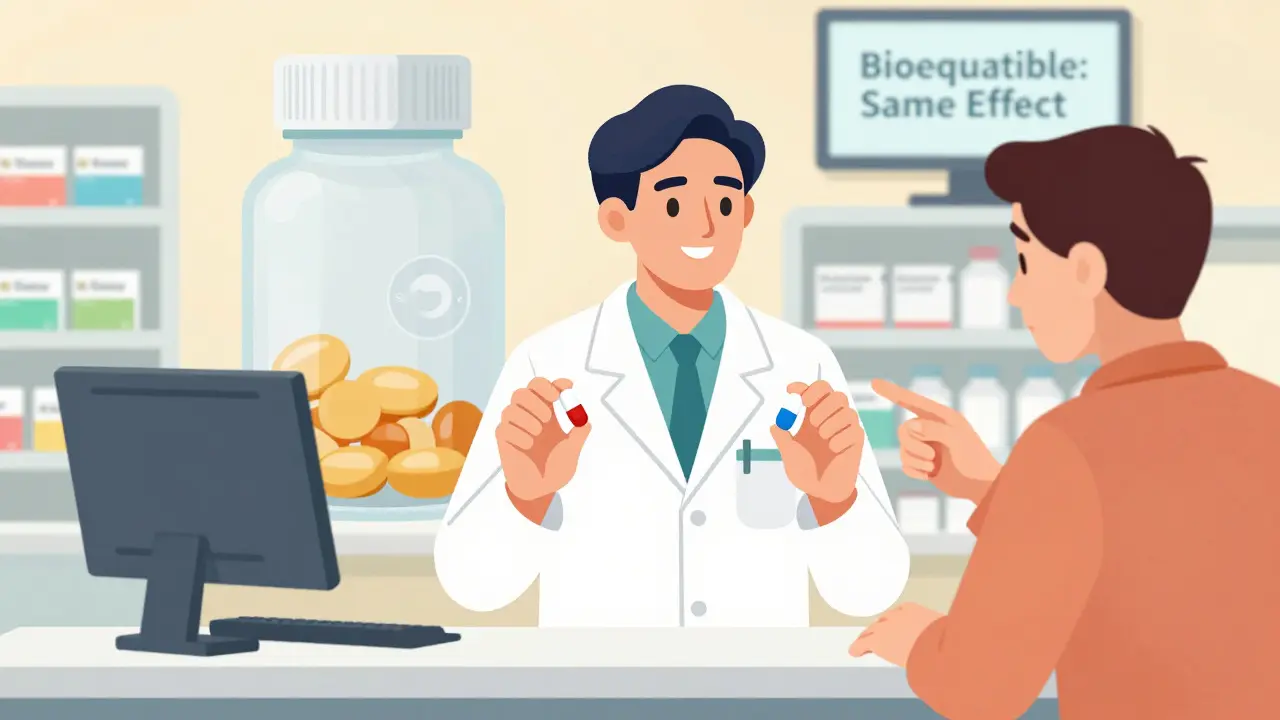
Are generic drugs really as safe as brand-name drugs?
Yes. The FDA requires generic drugs to demonstrate bioequivalence, meaning they deliver the same amount of active ingredient into the bloodstream over the same period as the brand-name drug. They must meet the same strict standards for quality, strength, purity, and stability. While inactive ingredients may differ, causing changes in appearance, the therapeutic effect is scientifically proven to be equivalent.
Why do some patients feel worse after switching to a generic?
This can be due to the nocebo effect, where negative expectations lead to negative outcomes. Additionally, slight variations in inactive ingredients (fillers or binders) can affect how quickly the drug dissolves in sensitive individuals, though this is rare. In most cases, reported differences are anecdotal and not supported by large-scale clinical data, but individual reactions should always be monitored by a healthcare provider.
How does health literacy impact generic drug acceptance?
How does health literacy impact generic drug acceptance?
Patients with lower health literacy are significantly more likely to perceive generics as less safe or effective. They may struggle to understand concepts like bioequivalence and rely instead on visual cues (pill appearance) or price as indicators of quality. Tailored, simple educational materials are crucial for this demographic to bridge the knowledge gap.
Can doctors do anything to improve patient trust in generics?
Absolutely. Proactive communication is the most effective tool. Doctors should explain the safety and equivalence of generics at the time of prescribing, not just at the pharmacy. Using clear, non-jargon language and validating patient concerns while providing factual reassurance can increase acceptance rates by over three times.
What is the economic impact of preferring brand-name drugs?
Preferring brand-name drugs over generics costs the U.S. healthcare system approximately $8 billion annually in unnecessary expenses. Closing the utilization gap by addressing safety perceptions could save up to $185 billion over the next decade, freeing up resources for other critical healthcare needs.

They want you to believe the generic is safe because it saves them money! It’s all about control. The big pharma companies are being squeezed by the government and they’re dumping inferior products on us under the guise of 'bioequivalence'. I’ve read the reports, the fillers in these generics contain trace amounts of heavy metals that aren’t even disclosed properly. They’re testing our loyalty while poisoning our bodies slowly. Don’t let them tell you it’s the same thing when the packaging looks like garbage from a discount bin!
Oh, look at this masterpiece of corporate gaslighting! 😏
‘It’s just psychology!’ they say. As if my headache isn’t real because a spreadsheet says so. I switched to the generic statin and suddenly I’m exhausted, moody, and my skin feels like sandpaper. Is it the nocebo effect? Or is it the fact that the manufacturing plant was built by someone who clearly didn’t care about quality control? Who knows! But please, keep telling me it’s all in my head while you save your billions. 🙄
i dont get why people are so uptight about this stuff its literally the same chemical compound bro. the FDA checks it out before it hits the shelves so stop making up problems. if u feel different its probably just ur imagination or maybe u ate something weird. science is science it doesnt care about ur feelings or the color of the pill. get over it already.
It is absolutely pathetic how easily the masses can be manipulated by mere aesthetics! The article states that lower education correlates with higher skepticism, which is frankly insulting to those of us who understand the nuance of pharmacokinetics. If you cannot grasp the concept of bioequivalence, perhaps you should not be making medical decisions at all. It is a failure of critical thinking on a societal level. We must demand better standards for our own safety, not rely on the whims of cost-cutting measures dictated by bureaucrats who do not understand the human body!
In India, we have a long history of producing high-quality generic medicines that are trusted globally. The stigma attached to generics in the West is often rooted in cultural biases rather than scientific reality. When I see patients here worry about the price difference, I remind them that the active ingredient is what matters, not the brand logo. Trust is built through consistent results and transparency, not marketing budgets. We must bridge this gap with education and empathy.
The notion that one might simply ‘trust’ a generic drug without scrutinizing the supply chain is laughably naive. One does not merely accept a substance into one’s body based on a regulatory stamp; one demands excellence. The fact that rural populations believe generics require higher doses due to perceived lower potency highlights a profound lack of intellectual rigor. We must elevate our discourse beyond such simplistic misconceptions. Quality is not negotiable, regardless of the label.
There’s a strange poetry in how we cling to brands like talismans against chaos. The pill becomes a symbol of stability in an unpredictable world. When the packaging changes, it’s not just the medicine that shifts-it’s our sense of control. We’re not just buying a drug; we’re buying peace of mind. And honestly, isn’t that worth the extra cost sometimes? The placebo effect is real, but so is the anxiety of feeling like you’ve been downgraded.
just take the meds and move on with life!! stop overthinking it. if it works it works. i switched to generics years ago and saved so much cash. use that money for something fun instead of worrying about fillers. live your best life!
Hey team, let’s unpack this together. While the statistical data supports bioequivalence, we can’t ignore the psychological weight of these transitions. For many, the switch feels like a loss of agency. As healthcare providers, we need to leverage our communication skills to validate these concerns without dismissing them. Let’s create a supportive environment where patients feel heard. By addressing the emotional aspect of medication adherence, we can improve outcomes and build stronger therapeutic alliances. Who else thinks proactive counseling is key?