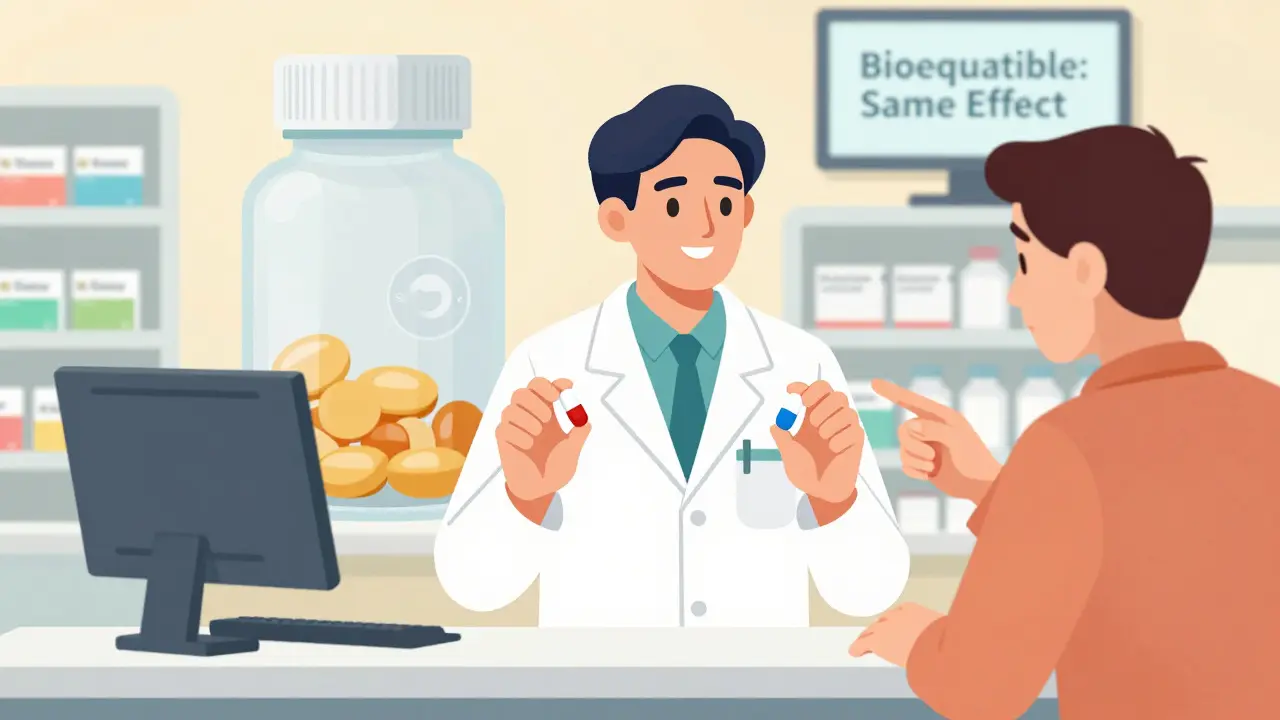
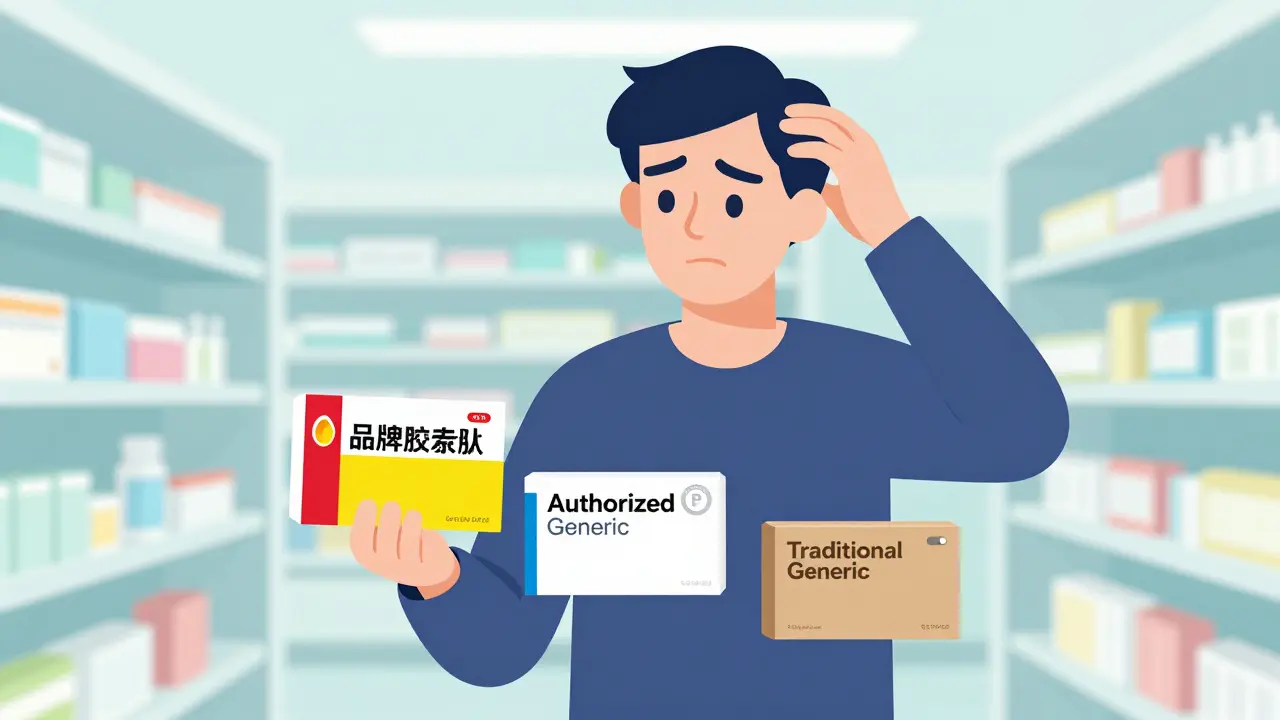
When a patient picks up a prescription and sees that the pills look different-smaller, a different color, or with unfamiliar markings-they might think something went wrong. Maybe they got the wrong medicine. Maybe the generic isn’t as strong. These fears aren’t irrational. They’re common. And they’re exactly why generic medication counseling isn’t just a box to check-it’s a lifeline for patient safety and adherence.
In the U.S., 90.7% of all prescriptions filled are for generic drugs. Yet, nearly half of patients still believe generics are less effective. A 2023 Consumer Reports survey found that 43% of people think generics work slower, and 37% worry they cause more side effects. That’s not misinformation-it’s a gap in communication. And pharmacists are the ones who can close it.
Why Generic Counseling Isn’t Optional
Federal law under OBRA ’90 made patient counseling mandatory for all new prescriptions. But when it comes to generics, the stakes are higher. The law doesn’t just say pharmacists must offer counseling-it requires them to explain why a generic was substituted, how it’s the same, and what might look different.
It’s not just about compliance. It’s about outcomes. A study published in PMC10748552 in 2024 found that patients who received detailed counseling on generic substitution were 68% more likely to say they trusted their medication than those who got a generic without explanation. Meanwhile, patients who stopped taking their blood pressure pills because the pills looked different? That’s not a rare story. It’s one of the most common reasons for treatment failure in chronic conditions like hypertension and diabetes.
Pharmacists don’t just hand out pills. They’re the last line of defense before a patient decides whether to take their medicine-or skip it altogether.
The Five Essentials of Generic Counseling
There’s no one-size-fits-all script. But every effective conversation includes these five elements:
- Confirm the patient’s identity. Don’t assume. Ask for their name, date of birth, and confirm the prescription matches their condition. This builds trust and avoids errors.
- Explain why the generic was dispensed. Say it clearly: "Your doctor prescribed [brand name], but we’re giving you [generic name]. It’s the exact same active ingredient, approved by the FDA, and just as effective." Mention that substitution is legal in 49 states and often required by insurance to cut costs.
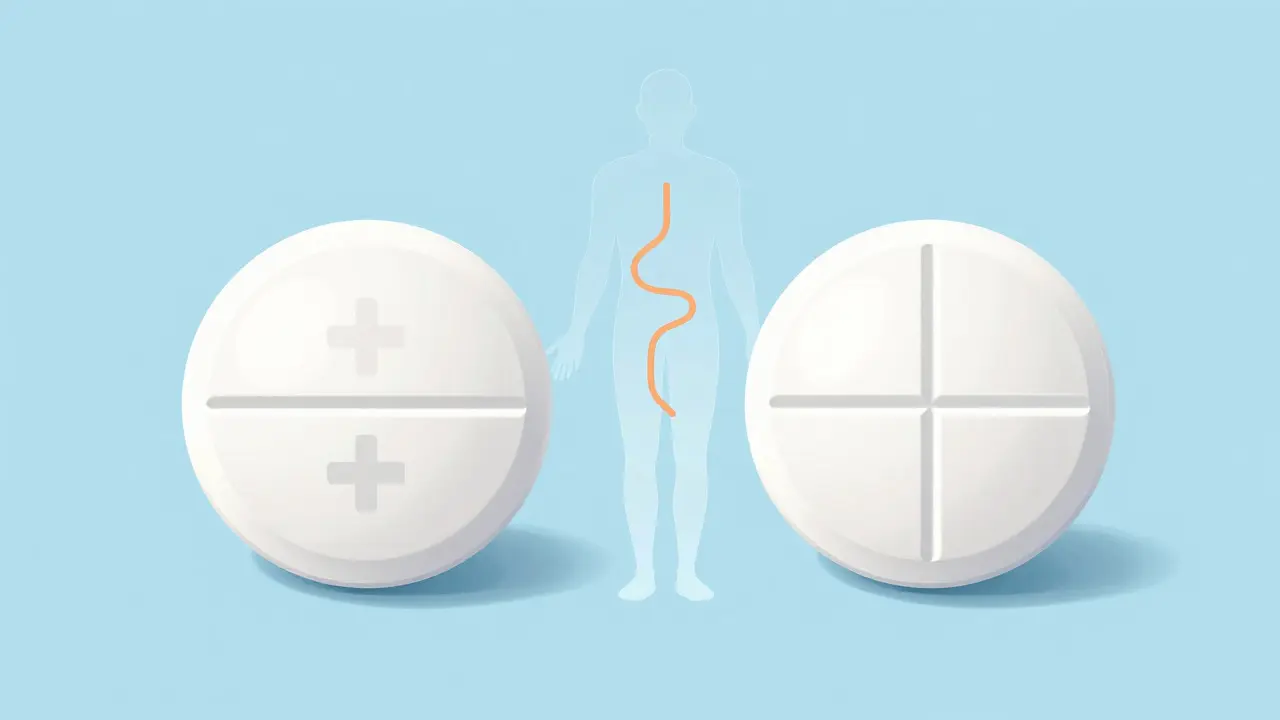
- Describe the physical differences. Show them. Hold up the brand and generic side by side. Say: "The shape, color, and markings are different because of inactive ingredients-like dyes or fillers. But the medicine inside? Identical."
Many patients don’t know that generics can’t copy brand appearance exactly. If they’ve never seen this before, they’ll assume it’s a mistake. A photo or printed comparison-available in most pharmacy systems now-can prevent panic.
- Reaffirm bioequivalence. Use simple language: "The FDA requires generics to deliver the same amount of medicine into your bloodstream within the same time frame as the brand. If it didn’t, it wouldn’t be approved. This isn’t a cheaper version-it’s the same treatment, just without the brand name cost."
Don’t say "it’s the same." Say "it’s proven to be the same." Evidence matters.
- Verify understanding with teach-back. Ask: "Can you tell me how you’ll take this?" or "What would you do if you noticed the pills changed again?" This isn’t a quiz-it’s a safety net. If they say, "I’ll stop if it looks different," you’ve caught a potential dropout before it happens.
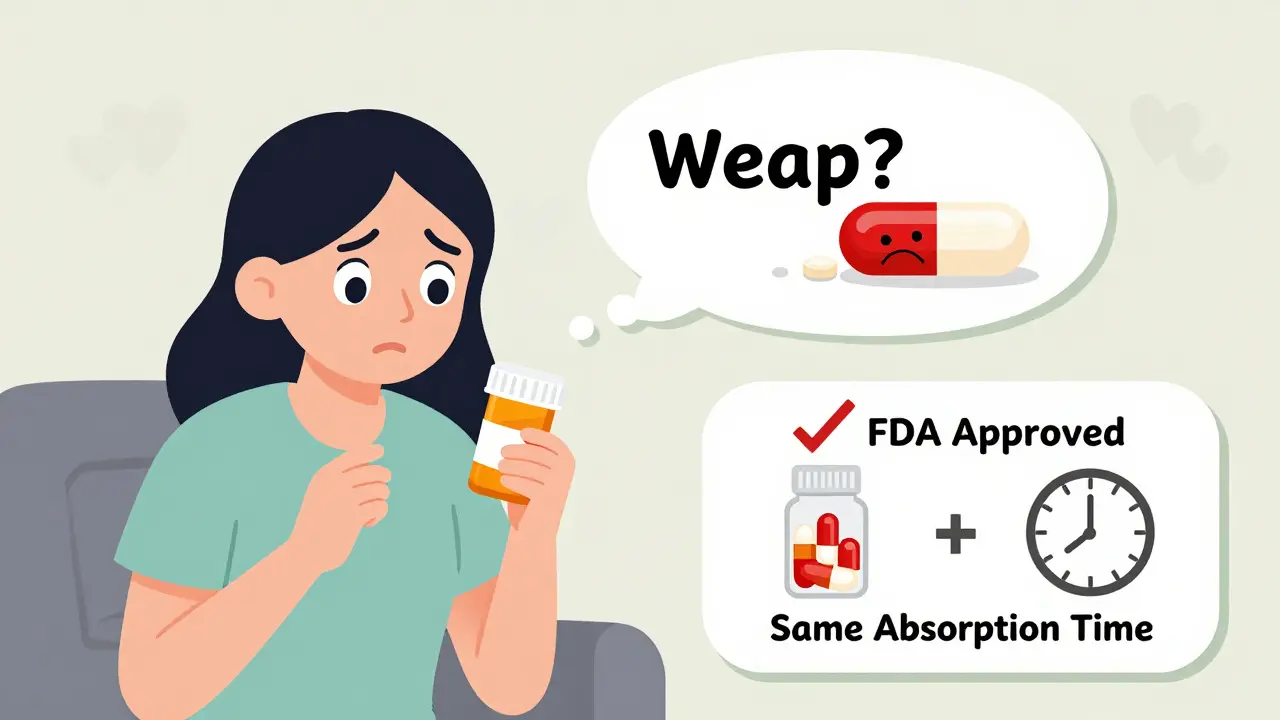
What Patients Are Afraid Of (And How to Fix It)
Patients don’t distrust generics because they’re irrational. They distrust them because they’ve been left in the dark.
- "It’s cheaper, so it’s worse." Address this head-on. Say: "The reason it’s cheaper is because we don’t pay for ads or fancy packaging. The science behind it? The same."
One patient on Reddit shared: "I thought my generic antidepressant was weak because it didn’t work like the brand. I didn’t know it took weeks to build up-same as the brand. My pharmacist showed me the studies. I felt stupid for doubting it."
- "I had side effects last time. Will I get them again?" Explain that side effects come from the active ingredient, not the filler. If a patient had nausea on one generic, they might get it on another-because the medicine is the same. But if the new pill has a different coating, it might reduce stomach upset. That’s worth noting.
- "My doctor didn’t say anything. Is this okay?" Reassure them: "Your doctor approved this substitution. We’re following the law. This isn’t a shortcut-it’s standard care."
Many patients think substitution happens without their prescriber’s knowledge. It doesn’t. And they need to know that.
Time Is Short. But You Can Still Do It Right
Pharmacists average 1.2 minutes per counseling session. That’s not enough to explain bioequivalence, side effects, and teach-back. But you don’t need more time-you need better structure.
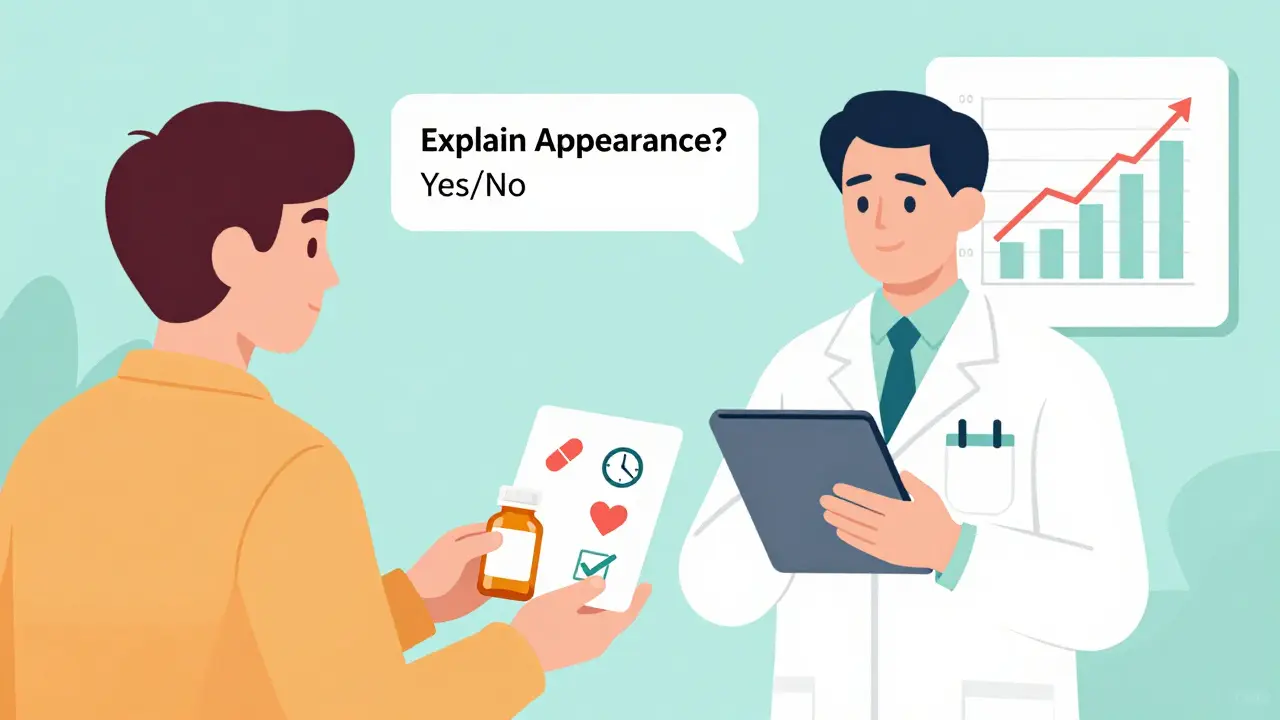
Most pharmacies now use electronic prompts that pop up when a generic is dispensed. These remind pharmacists to cover key points. Use them. Don’t skip them. If the system asks, "Did you explain appearance differences?"-answer yes. Even if it takes 30 seconds.
Some pharmacies use laminated cards with icons: a pill bottle, a clock, a heart, a checkmark. Show them. Point. Say: "This is your medicine. This is how you take it. This is why it looks different. This is why it works the same."
And if the patient is in a rush? Say: "I’ll send you a quick text with this info. You can read it later. But I need to make sure you’re not worried before you leave."
Documentation Isn’t Busywork-It’s Protection
CMS updated its rules in February 2024: you can’t just say "counseling provided." You must document what you discussed. Did you explain bioequivalence? Did you describe appearance? Did you use teach-back?
States are catching up. California now requires checkboxes for each key point. Texas lets pharmacists write a note. Either way, if you don’t document it, it didn’t happen-legally.
And here’s the truth: if a patient has an adverse reaction or stops their medication because they didn’t understand the switch, the first place investigators look is the pharmacy record. Proper documentation isn’t bureaucracy. It’s your shield.
The Bigger Picture: Counseling Saves Money and Lives
Generics save the U.S. healthcare system $300 billion a year. But those savings mean nothing if patients don’t take their meds.
When patients stop because they think the generic is weaker, they end up in the ER. They need hospitalization. They miss work. Their condition worsens. That costs more than the pill ever did.
Every minute you spend explaining a generic isn’t lost time. It’s an investment in adherence, fewer hospital visits, and better health outcomes. The 2024 Medicare Part D proposal even links bonus payments to pharmacies that prove they counsel effectively on generics. The system is starting to reward good counseling-not just fill prescriptions.
The future? AI tools will soon flag patients with a history of stopping generics. They’ll suggest tailored messages: "You switched from Brand X to Generic Y last year. We noticed you didn’t refill. Want to talk about why?"
But no algorithm replaces a pharmacist who looks a patient in the eye and says: "I know this looks different. Let me show you why it’s just as good."
Do pharmacists have to counsel on generics every time a prescription is filled?
Yes. Under OBRA ’90 and updated ASHP guidelines, pharmacists must offer counseling every time a prescription is dispensed or refilled. This includes generics. While technicians can inform patients that counseling is available, only a licensed pharmacist can provide the required information. Some states, like California and New York, require documentation of each counseling session, even if the patient declines.
Can a pharmacist substitute a generic without telling the patient?
In 17 states, pharmacists can substitute a generic without notifying the patient unless they specifically ask. But in 32 states, including New York, Texas, and Florida, pharmacists must inform patients when substitution occurs. Even in states where notification isn’t required, ethical guidelines and CMS standards encourage full disclosure. Best practice is to always explain the substitution-it builds trust and prevents confusion.
Are generics really as effective as brand-name drugs?
Yes. The FDA requires generics to have the same active ingredient, strength, dosage form, and route of administration as the brand. They must also prove bioequivalence-meaning they deliver the same amount of medicine into the bloodstream at the same rate. Over 90% of generics are as effective as their brand-name counterparts. The only differences are in inactive ingredients (like dyes or fillers), which don’t affect how the drug works.
What should a pharmacist do if a patient refuses to take a generic?
Respect their choice. If a patient refuses a generic, the pharmacist should document the refusal, explain that the brand version is available (usually at higher cost), and confirm whether they want to contact their prescriber. In some cases, the prescriber may have written "Do Not Substitute" on the prescription. If not, the patient may still choose the brand-but they’ll pay more. The pharmacist’s role is to inform, not pressure.
How can pharmacists overcome time constraints during counseling?
Use technology. Electronic prompts, pre-printed handouts, and visual aids (like side-by-side pill images) cut counseling time by 40%. Train staff to prepare materials before the patient arrives. Prioritize high-risk patients-those on chronic meds, elderly patients, or those who’ve had refill gaps. Even 60 seconds of focused talk-"This looks different, but it’s the same medicine. Take it the same way."-can prevent discontinuation. Every second counts, but clarity matters more than length.
And yeah, I know the data. Doesn't change reality.