Did you know that roughly half of all patients with chronic illnesses stop taking their prescribed medications? It is a staggering number. The World Health Organization has flagged this as a major public health crisis since 2003. When people do not take their medicine as directed, treatments fail, conditions worsen, and preventable hospitalizations spike. In the United States alone, suboptimal medication adherence is linked to approximately 125,000 deaths annually. This is not just about forgetting a pill; it is about a complex mix of costs, confusion, and convenience that stands between patients and better health outcomes.
If you struggle to keep up with your prescription schedule, you are not alone. Whether you manage high blood pressure, diabetes, or heart failure, staying on track with your regimen is one of the most impactful steps you can take for your long-term well-being. But how do you bridge the gap between what the doctor prescribes and what actually happens at home? The answer lies in understanding why we miss doses and using practical, proven strategies to fix those gaps.
Understanding Why We Miss Doses
To solve the problem, we first need to look at the root causes. Research distinguishes between two main types of non-adherence: intentional and unintentional. Unintentional non-adherence happens when you want to take your medicine but face barriers. This includes simple forgetfulness, which affects 68% of patients according to recent surveys. It also includes financial strain, with over 60% of non-adherent patients citing cost as a primary obstacle. Complex regimens-where you have to take multiple pills at different times-are another huge hurdle.
Intentional non-adherence is different. Here, the patient consciously decides to skip doses or stop treatment entirely. This often stems from fear of side effects, a belief that the medication isn't working, or personal beliefs about pharmaceuticals. Addressing these requires honest conversations with healthcare providers rather than just setting more alarms. Understanding which type applies to you helps tailor the right solution. If it is memory, you need tools. If it is doubt, you need education.
The Power of Pill Organizers and Blister Packs
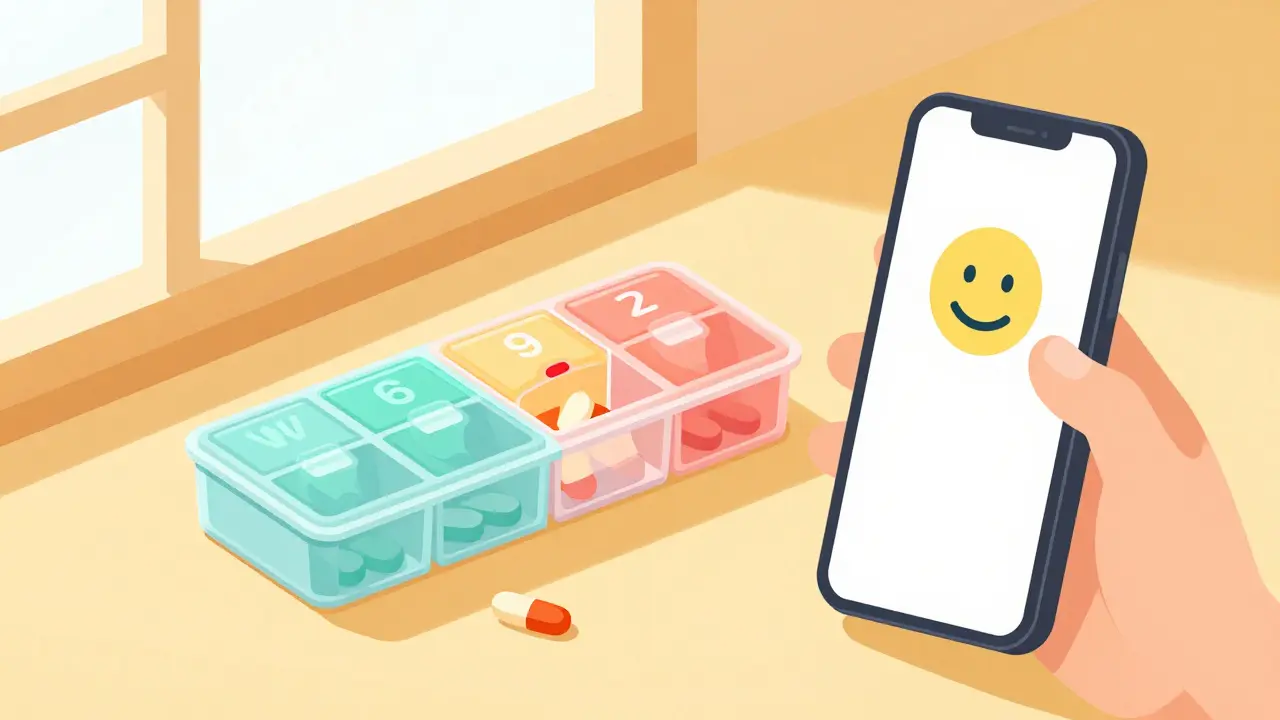
One of the simplest, most effective tools for improving adherence is physical organization. A pill organizer is a container with compartments for sorting medications by day and time. For many, especially those managing multiple chronic conditions, these boxes are lifesavers. They provide a visual cue: if a compartment is empty, you have taken your dose. If it is full, you haven't. Studies show that using weekly blister packs can significantly reduce errors because they remove the mental load of tracking daily intake.
Pharmacies often offer free or low-cost blister packing services. These pre-sorted packs group all your morning, afternoon, and evening doses into single units. This is particularly helpful for seniors or anyone with dexterity issues who might struggle with small bottle caps. By simplifying the physical act of taking medication, you remove a significant barrier to consistency. Make sure to refill your organizer every Sunday night or whenever you pick up new prescriptions to maintain the routine.
Leveraging Technology and Digital Reminders
In 2026, technology plays a massive role in health management. Mobile health apps have become a cornerstone of digital adherence solutions. Apps like Medisafe or Mango Health send timely notifications to your phone, reminding you exactly when to take each dose. These aren't just buzzers; they often include educational content about your specific drugs and allow family members to monitor your progress remotely. Data suggests that tailored mobile app interventions can improve adherence rates by 12-18% for conditions like diabetes.
For those who prefer hardware, smart pill bottles exist. These devices track when the cap is opened and log the data electronically. Some even sync with your electronic health record (EHR), allowing your doctor to see your actual usage patterns during visits. While not everyone needs a high-tech solution, integrating a simple calendar alert on your smartphone can be surprisingly effective. The key is choosing a tool that fits your lifestyle. If you find smartphone apps confusing, stick to a traditional alarm clock or a printed chart on the fridge.
Simplifying Your Regimen with Healthcare Providers
Complexity kills compliance. The American Medical Association notes that adherence drops by about 2% for every additional daily dose required. If you are taking four different medications three times a day, the odds are stacked against you. Talk to your doctor or pharmacist about simplifying your regimen. Ask if any medications can be combined into a single pill or switched to once-daily formulations.
This conversation should be shame-free. Doctors expect questions and struggles. Use the "teach-back" method: ask your provider to explain the plan, then repeat it back in your own words to ensure you understand. This technique increases patient understanding by 35%. Additionally, always carry an updated medication list. This helps prevent duplicate prescriptions and ensures every specialist knows exactly what you are taking, reducing the risk of dangerous interactions.

Addressing Cost and Access Barriers
You cannot adhere to a medication you cannot afford. Financial constraints are a leading cause of intentional non-adherence. If a prescription feels too expensive, speak up immediately. Pharmacists can often suggest generic alternatives that work identically but cost a fraction of the price. Many pharmaceutical companies also offer patient assistance programs that provide free or discounted drugs to eligible individuals.
Furthermore, explore mail-order pharmacy options. These services often deliver a 90-day supply directly to your door, saving you trips to the store and sometimes reducing out-of-pocket costs through bulk pricing. Insurance plans frequently incentivize mail-order for maintenance medications. Removing the friction of travel and payment makes it easier to stay consistent with your treatment plan.
| Strategy | Best For | Pros | Cons |
|---|---|---|---|
| Pill Organizers | Visual learners, multiple daily doses | Low cost, immediate visual feedback | Requires manual filling |
| Mobile Apps | Tech-savvy users, complex schedules | Customizable alerts, data tracking | Requires smartphone access |
| Blister Packs | Elderly patients, polypharmacy | Pre-sorted by pharmacy, reduces error | May incur extra fees |
| Regimen Simplification | All patients with 3+ medications | Reduces cognitive load long-term | Requires doctor approval |
Building a Support System
Medication adherence does not have to be a solo mission. Involve trusted friends, family members, or caregivers in your routine. Having someone check in on you can provide accountability and emotional support. For instance, a spouse might help set up the pill organizer, or a child might call to remind you of your evening dose. Team-based care models, where pharmacists and doctors collaborate closely with patients, have shown adherence rates jumping from 74% to 89% in some studies.
Joining support groups, either locally or online, can also help. Connecting with others who manage similar conditions provides practical tips and reduces feelings of isolation. Hearing how others overcome barriers can inspire you to persist when motivation wanes. Remember, asking for help is a sign of strength, not weakness.
What is considered good medication adherence?
According to the American Medical Association, a patient is considered adherent if they take 80% or more of their prescribed medication. Falling below this threshold can lead to treatment failure and worsened health outcomes.
How can I remember to take my medication if I don't use a smartphone?
You can link medication times to existing daily habits, such as brushing your teeth or eating breakfast. Using a traditional alarm clock, placing pills next to your coffee maker, or using a large wall calendar with stickers are also effective low-tech methods.
What should I do if I miss a dose?
Generally, if you remember shortly after the missed time, take the dose immediately. However, if it is close to the next scheduled dose, skip the missed one and resume your normal schedule. Never double up to make up for a missed dose unless specifically instructed by your doctor, as this can cause toxicity.
Why is medication adherence important for chronic diseases?
Chronic diseases like hypertension and diabetes require consistent management to prevent complications. Poor adherence leads to uncontrolled symptoms, increased hospital readmissions, and higher mortality rates. Consistent use keeps conditions stable and improves quality of life.
Can insurance cover the cost of pill organizers or apps?
Coverage varies widely. Some insurance plans may cover pharmacy-provided blister packing services. Most basic pill organizers are inexpensive and sold over-the-counter. Check with your specific insurer regarding reimbursement for digital health tools or durable medical equipment.