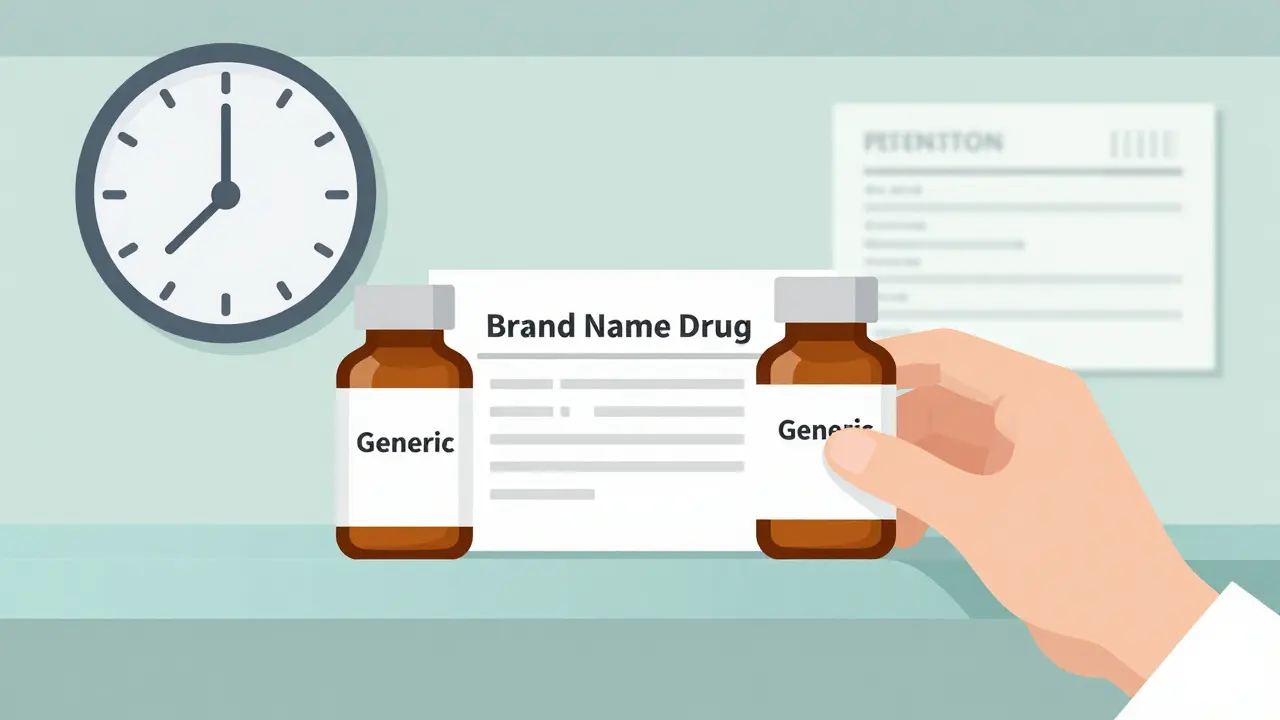
When a doctor writes a prescription for a brand-name drug, most people assume the pharmacist will fill it with the cheapest, equally effective option - a generic. That’s the whole point of state substitution laws. But in recent years, big drug companies have found ways to block that system from working. They don’t just wait for patents to expire. They actively sabotage it.
How Generic Substitution Is Supposed to Work
In the U.S., every state has laws that let pharmacists swap a brand-name drug for a generic version if it’s approved as bioequivalent by the FDA. These laws exist because generics cost 80% less on average. When a patent expires, the market should flip: generics flood in, prices drop, and patients save money. In states with strong substitution rules, generics often take over 80% of prescriptions within months. But that only works if the original brand drug is still available when the generic hits the market. If the brand disappears before generics arrive, the system breaks. And that’s exactly what some companies have started doing.Product Hopping: The Covert Strategy
The most common tactic is called product hopping. A company doesn’t just release a new version of its drug - it pulls the old one off the shelves. For example, in 2013, Actavis introduced Namenda XR, an extended-release version of the dementia drug Namenda. Thirty days before the patent on the original Namenda IR expired, they stopped selling it entirely. Why? Because pharmacists couldn’t substitute generics for Namenda XR. The new version had a different dosage form, so state substitution laws didn’t apply. Patients had to get a new prescription. Many didn’t bother. Doctors didn’t switch them back. And by the time generics for the original Namenda IR were ready, the market was already locked into the new version - with no generic competition in sight. The Second Circuit Court of Appeals called this out in 2016. They ruled that Actavis didn’t just innovate - they engineered a monopoly. The court said: “State substitution laws are the only cost-efficient means of competing available to generic manufacturers.” By removing the original drug, Actavis killed that path.More Than Just New Formulas
Product hopping isn’t limited to extended-release pills. Companies have used minor changes - chewable tablets, dissolvable films, new colors, or tiny chemical tweaks - to reset the clock on competition. Teva did this with Copaxone, a multiple sclerosis drug. They switched from a daily injection to a three-times-a-week version, then stopped selling the original. Consumers paid an extra $4.3 billion to $6.5 billion over two years before the new patent was invalidated. Even more troubling is how companies use FDA safety programs called REMS (Risk Evaluation and Mitigation Strategies) to block generic makers. REMS were meant to manage serious side effects - like with dangerous drugs such as thalidomide. But some brand companies abuse them by refusing to sell samples of their drugs to generic manufacturers. Without those samples, generics can’t prove they’re bioequivalent. And without bioequivalence, they can’t get FDA approval. A 2017 study found that over 100 generic companies couldn’t access needed samples. One analysis estimated this tactic alone costs the system more than $5 billion a year in lost savings.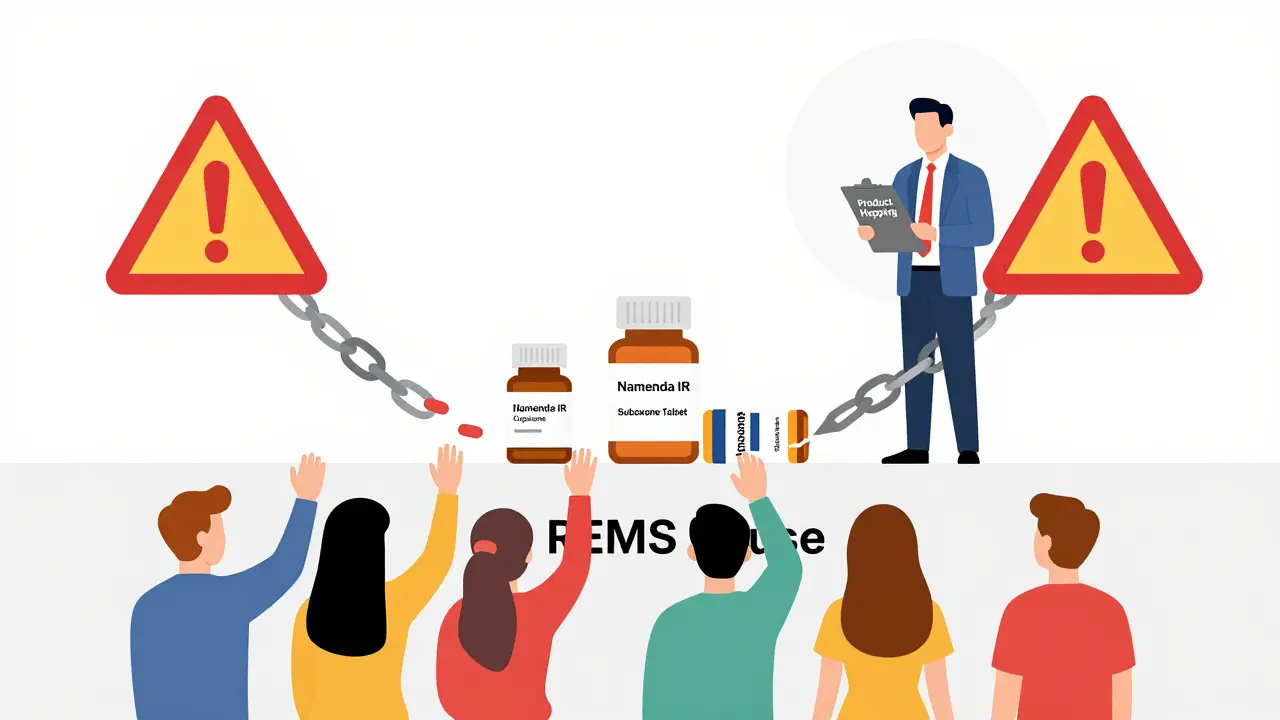
Why Courts Are Split
Not all product hopping cases end the same way. In 2009, a court dismissed a lawsuit against AstraZeneca for switching patients from Prilosec to Nexium. Why? Because Prilosec was still on the market. The court saw it as adding a new option - not blocking competition. But in the Namenda case, the court saw it differently. The original drug was gone. No choice. No substitution. That’s when courts start seeing antitrust violations. The FTC’s 2022 report called this a critical distinction: withdrawal versus addition. Another example is Suboxone, a drug for opioid addiction. Reckitt Benckiser replaced the tablet form with a film. Then they spread claims that the tablet was unsafe - even though there was no evidence. They threatened to pull the tablet from the market. The FTC found this was coercion. Patients and doctors were pressured into switching, not because the film was better, but because the tablet was being taken away. Reckitt settled with the FTC in 2019 and 2020 for millions.Who’s Fighting Back?
The FTC has been pushing hard since 2014. They got a court order forcing Actavis to keep selling Namenda IR for 30 days after generics entered - a rare win. They’ve also filed complaints against companies for REMS abuse and product hopping. In 2023, the FTC and DOJ held joint hearings focused on blocking generic competition. State attorneys general are stepping in too. New York sued Actavis in 2014 and won an injunction. Other states have followed suit. But the biggest wins aren’t always in court. The FTC has also pushed state legislatures to strengthen substitution laws. Some states now require manufacturers to notify pharmacies 90 days before pulling a drug. Others ban product hopping outright if the new version isn’t clinically superior. Meanwhile, the DOJ has gone after generic manufacturers too - but for different reasons. In 2023, Teva paid a $225 million criminal fine for price-fixing with other generic makers. Glenmark paid $30 million. These aren’t antitrust cases about blocking competition - they’re cases about colluding to raise prices. It’s a reminder that the problem isn’t just big brands. The whole system is fragile.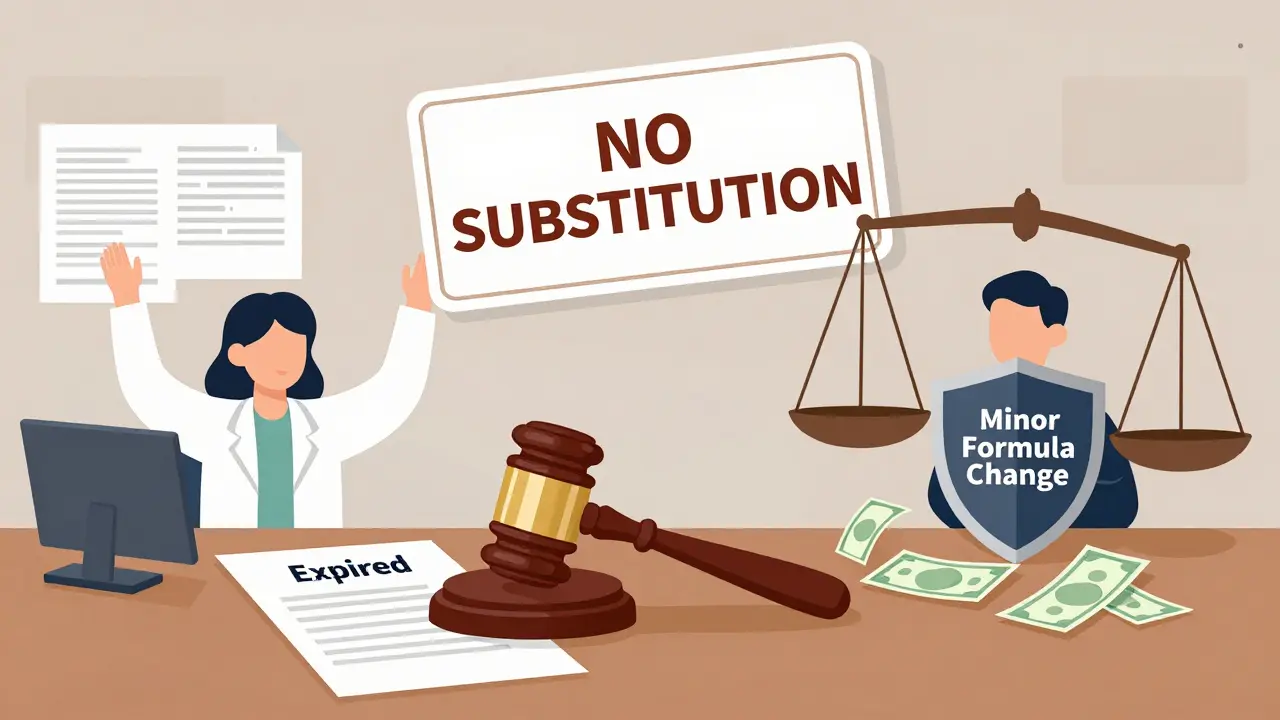
The Real Cost
The financial impact is staggering. According to the FTC, delayed generic entry due to product hopping and patent thickets has cost U.S. patients and taxpayers over $167 billion in just three drugs: Humira, Keytruda, and Revlimid. Revlimid’s price jumped from $6,000 to $24,000 per month over 20 years. That’s not innovation. That’s exploitation. In Europe, where product hopping is more tightly regulated, generics enter faster. Prices drop sooner. Patients pay less. In the U.S., we’re still stuck in a system where companies can legally game the rules - and patients pay the price.What’s Next?
There’s growing pressure for change. Congress is looking at legislation to ban product hopping outright. The FTC is pushing for clearer rules on REMS access. Some experts argue that if a new drug version doesn’t offer real clinical benefits, it shouldn’t reset patent protections. Until then, the system remains vulnerable. Pharmacists are still bound by laws that assume the original drug will be there. But too often, it’s not. And when it disappears, patients lose their only real chance at affordable care.How You Can Spot It
If you or a loved one has been prescribed a drug that suddenly switched from a pill to a film, or from a daily dose to a weekly one - and you’re being told the old version is no longer available - ask why. Check if a generic was expected. Look up the drug’s patent expiration date. If the brand drug vanished right before generics were supposed to arrive, it might not be coincidence. It’s not always illegal. But it’s often designed to be.What is product hopping in the pharmaceutical industry?
Product hopping is when a drug company stops selling an older version of a medication right before its patent expires and replaces it with a slightly modified version - like a new dosage form or delivery method - that doesn’t offer real medical benefits. This blocks pharmacists from substituting cheaper generics because state laws only allow substitution between identical drug forms. The goal is to keep patients on the new, brand-name version and delay generic competition.
How do REMS abuse and generic substitution connect?
REMS (Risk Evaluation and Mitigation Strategies) are FDA safety programs meant to manage serious drug risks. But some brand-name companies use them to refuse to sell samples of their drugs to generic manufacturers. Without those samples, generics can’t test and prove they’re bioequivalent - which is required for FDA approval. This delays or blocks generic entry, even after patents expire, effectively protecting the brand’s monopoly.
Why do courts sometimes allow product hopping and other times block it?
Courts look at whether the original drug was withdrawn. If the brand keeps selling the original version (like AstraZeneca did with Prilosec), courts often say adding a new version is just competition. But if the original is pulled before generics can enter (like Actavis did with Namenda IR), courts see it as anti-competitive sabotage - especially when state substitution laws are designed to rely on the original drug being available. The key is whether patients had any real choice.
What role do state pharmacy laws play in antitrust cases?
State substitution laws are the main engine of generic competition. They let pharmacists automatically swap brand drugs for generics without a new prescription. When a company removes the original drug before generics arrive, it disables this system. Courts that recognize this - like the Second Circuit in the Namenda case - see it as anticompetitive. Courts that ignore it treat product hopping as harmless innovation. That’s why legal outcomes vary so much.
Has the FTC taken any successful action against product hopping?
Yes. In 2016, the FTC helped secure a court order forcing Actavis to keep selling the original Namenda IR for 30 days after generics entered. In 2019 and 2020, the FTC reached settlements with Reckitt Benckiser over Suboxone, after finding the company used false safety claims to pressure patients off the tablet form. The FTC also published a 2022 report detailing over a dozen cases and is now pushing for legislative changes to ban the practice outright.
How much money do these tactics cost patients?
Experts estimate delayed generic entry due to product hopping and patent abuse has cost U.S. patients and taxpayers over $167 billion in just three drugs - Humira, Keytruda, and Revlimid. Revlimid’s price jumped over 300% in 20 years. In states where substitution works, generics cut costs by 80%. When product hopping blocks substitution, those savings vanish.
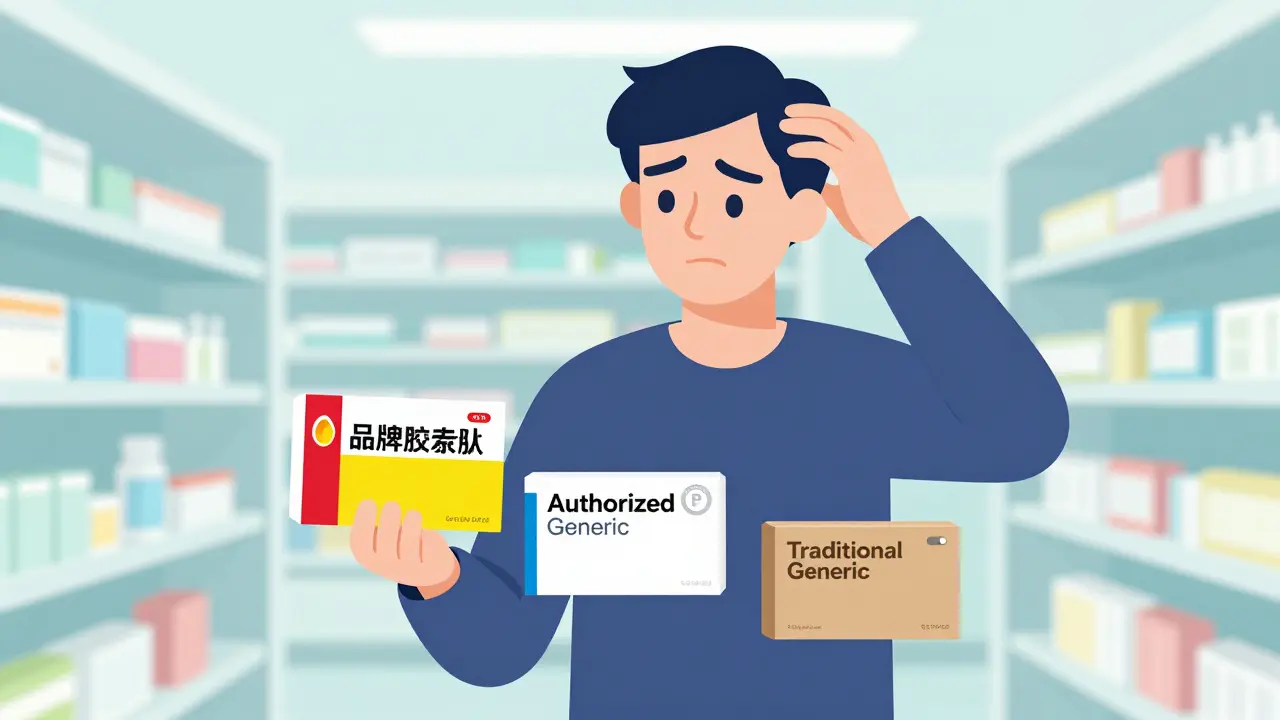

So let me get this straight - companies are literally pulling drugs off the shelf just to dodge generics? And we call this innovation? I mean, if I tried this with my car, they’d call it fraud. But in pharma? It’s just business. Sad.
And don’t even get me started on REMS abuse. It’s like they’re using safety as a weapon. Who approved this loophole?
This is why I stopped trusting big pharma. My grandma was on Namenda - when they switched it, she got confused, didn’t want to take the new form, and just stopped. No one explained it. No one asked. She just paid more and got worse care. This isn’t about science. It’s about profit. And it’s killing people quietly.
We need to fix this. Like, now.
One thing people miss: state substitution laws were never meant to be a loophole for pharma to exploit. They were designed to save money and increase access. When companies manipulate dosage forms just to bypass them, they’re not just gaming the system - they’re breaking the social contract.
The FTC’s 2022 report is a goldmine for this stuff. If you want to understand how deep this goes, read the section on ‘patent thickets’ - it’s worse than you think. And yeah, the $167 billion number? Probably low.
so like… if the drug changes from a pill to a film… but the active ingredient is the same… why cant the generic just make the film? oh wait… because the brand owns the patent on the fucking film. genius. absolute genius. also why is no one talking about how these companies pay off doctors to not switch patients back? #pharmabullshit
I’ve been a pharmacy tech for 12 years and I’ve seen this play out over and over. A patient comes in with a script for the brand, we call them to say the generic is available, and they say ‘oh, but my doctor switched me to the new version.’ But when we check the records, the doctor never changed it - the company just pulled the old one and the pharmacist had no choice. And then the patient gets stuck paying $400 a month because they didn’t know any better.
It’s not just product hopping. It’s psychological manipulation. They know most people won’t push back. They know doctors are busy. They know pharmacists are overworked. And they use that. It’s cold. And it’s everywhere.
And yeah, REMS abuse? That’s the quiet killer. Generic companies can’t even get a sample to test their drug. How is that legal? It’s not. It’s just… unchallenged.
My mom’s on a drug that did this exact thing. They pulled the old pill, pushed the new patch, said the old one was ‘less effective’ - no proof. Now she pays 3x and hates it. No one warned us. No one asked. Just… gone. I’m tired of this.
Let’s be crystal clear: this isn’t just unethical - it’s criminal. The Second Circuit didn’t just ‘rule’ - they called it ‘engineered monopoly.’ That’s not legal jargon. That’s a verdict. And yet, these companies keep doing it. Why? Because the penalties are laughable. A $50 million fine? That’s a tax write-off for a drug that makes $2 billion a year.
And don’t even get me started on the DOJ’s hypocrisy - they go after generic manufacturers for price-fixing while letting the brand giants run wild. This isn’t a broken system. It’s a rigged one.
In India, generics enter within weeks of patent expiry. No product hopping. No REMS abuse. Why? Because the government doesn’t let corporations write the rules. Here, the FDA and FTC are caught between lobbyists and law. The real question isn’t how they do it - it’s why we let them.
Capitalism without regulation is just exploitation with a business card. And the cost isn’t measured in dollars - it’s measured in lives delayed, treatments forgone, families bankrupted.
We need a system that values health over profit. Not just reform. Revolution.