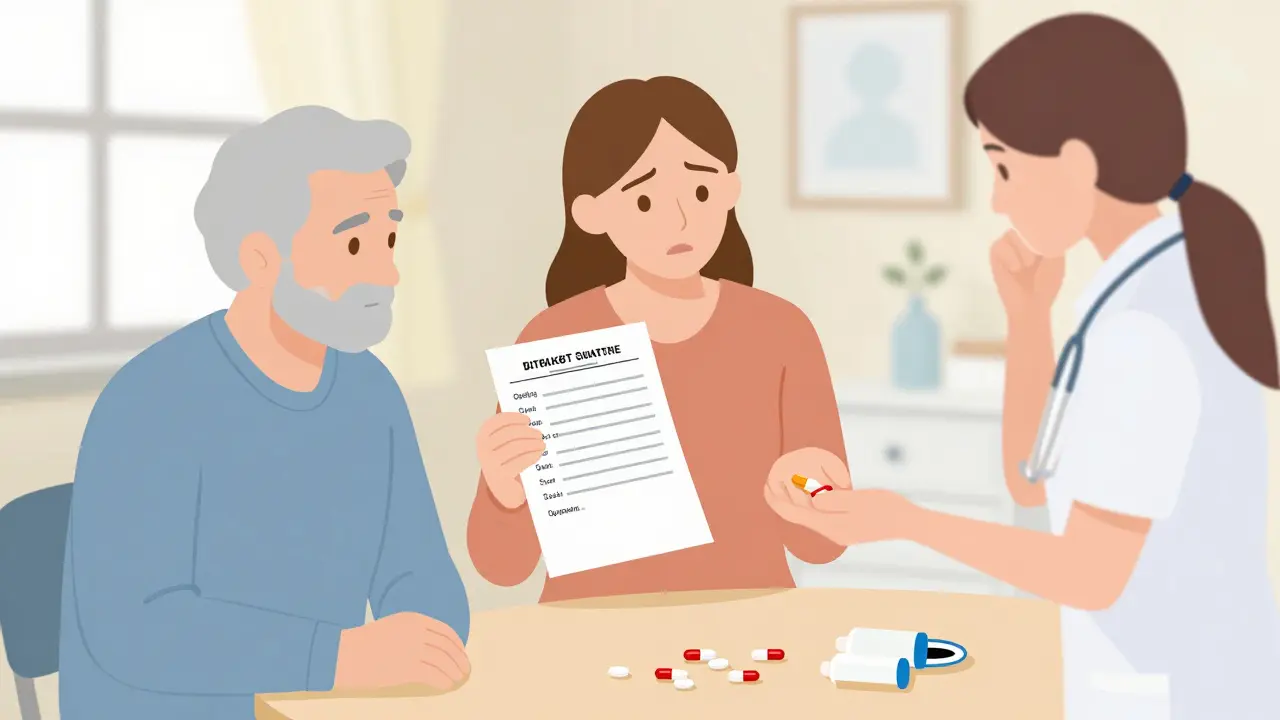
Every year, over 250,000 medication errors happen in U.S. nursing homes - and most go unreported. For older adults taking five, ten, or even fifteen different pills, a single mistake can mean a fall, a hospital trip, or worse. The problem isn’t just one nurse forgetting a dose. It’s systems failing: expired meds given out, double doses prescribed under different names, medications not checked before being handed over. And families often don’t know how to spot these errors - or what to do when they do.
What Counts as a Medication Mistake in Seniors?
A medication error isn’t always obvious. It’s not just giving the wrong pill. It’s giving the right pill at the wrong time. Or giving too much. Or not checking if the patient already took it. According to the Medication Error Quality Initiative, nearly half of all errors in elderly care involve dosage mistakes - too much or too little. Another quarter involve timing: meds given hours late, skipped entirely, or given too fast. Here are the most common types:- Wrong dosage (42.7%): Too much painkiller, too little blood pressure med.
- Wrong time (23.1%): Giving insulin after a meal instead of before.
- Wrong medication (15.8%): Giving aspirin instead of ibuprofen - or worse, giving acetaminophen when the patient is already on a painkiller that contains it.
- Wrong route (8.9%): Swallowed pills meant to be chewed, or patches applied incorrectly.
- Monitoring failure (27.4%): No check for dizziness after a new blood thinner, no lab test after starting a kidney-affecting drug.
And here’s the scary part: 43.8% of Medicare beneficiaries over 65 are prescribed at least one drug on the American Geriatrics Society’s Beers Criteria® - meaning it’s considered unsafe for seniors. Think sedatives like benzodiazepines, anticholinergics like diphenhydramine (Benadryl), or NSAIDs like ibuprofen for long-term use. These aren’t rare mistakes. They’re routine.
How to Spot a Medication Error - The Five Rights Check
You don’t need to be a nurse to catch a mistake. You just need to ask five simple questions every time a medication is given:- Right patient? Is this the right person’s name on the label? Sometimes, residents have similar names or room numbers get mixed up.
- Right drug? Does the pill match what the doctor prescribed? Check the bottle against the list you keep at home.
- Right dose? Is it 5 mg or 50 mg? A single digit can be deadly.
- Right route? Is it supposed to be swallowed, placed under the tongue, or applied to the skin?
- Right time? Is this the scheduled time? Some meds must be taken with food, others on an empty stomach.
Studies show that using this checklist reduces errors by 63%. If you’re visiting a loved one, watch the nurse or aide. Do they check the wristband? Do they open the pill bottle and compare it to the med list? If they don’t, ask. Politely but firmly.
What to Do When You Find a Mistake
Finding an error is only the first step. What happens next matters more. Immediate action: If someone has taken a dangerous overdose - like too much warfarin, insulin, or a sedative - call 911 or the National Response Center at 1-800-332-1088. Don’t wait. Next step: Tell the facility’s charge nurse or supervisor in person. Say: “I noticed my mother was given 10 mg of lisinopril at 10 a.m., but her chart says 5 mg. The bottle also says 10 mg. Can we check the medication record?” Document the time, what happened, and who you spoke to. Then, file a formal report. Most facilities have a Medication Error Reporting Form. Ask for it. Fill it out with specifics: date, time, drug, dose, who gave it, what happened after. Don’t say “they messed up.” Say “the patient received 10 mg instead of 5 mg of lisinopril at 10:15 a.m. on January 12, 2026.” Precision matters.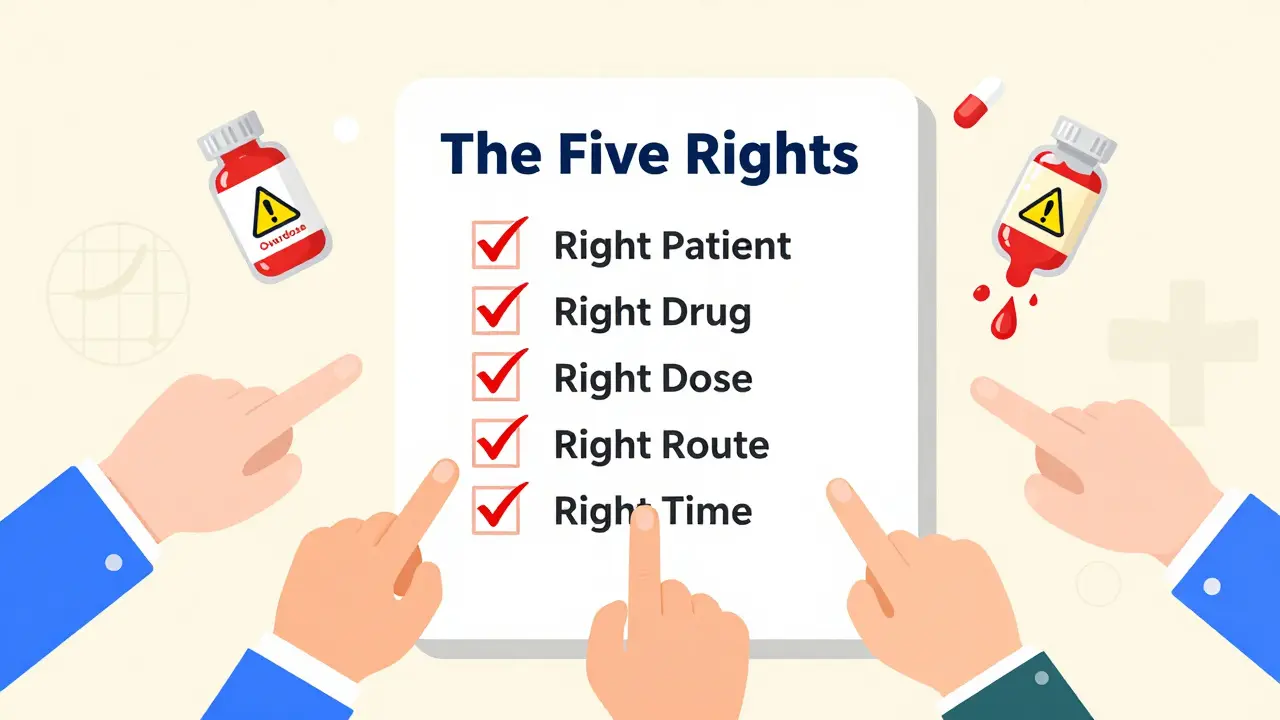
Where to Report - Beyond the Facility
Facilities often try to hide errors. That’s why you need to go outside the system.- State Long-Term Care Ombudsman Program - Call 1-800-677-1116. Ombudsmen are independent advocates. They investigate complaints and can demand records. Families who report to ombudsmen see 68.4% of issues resolved within 72 hours.
- FDA MedWatch - For serious adverse reactions or dangerous drugs. You don’t need to be a professional. Go to www.fda.gov/medwatch and file a report. This helps the FDA track dangerous patterns across the country.
- MedMARX - Run by the U.S. Pharmacopeia and ISMP, this is the largest voluntary reporting system in the U.S. It’s confidential, anonymous, and focuses on fixing systems - not blaming people. Over 2 million errors have been reported since 1999. Submitting one helps improve safety for everyone.
Don’t wait for a tragedy. If you see a pattern - expired meds, skipped doses, staff refusing to verify - report it. The 2022 GAO report found rural nursing homes report 63% fewer errors than urban ones - not because they’re safer, but because families there are less likely to speak up.
Why Facilities Resist Reporting - And How to Push Back
You’ll hear excuses:- “It was a one-time mistake.”
- “The resident was confused.”
- “We don’t have time to fill out forms.”
- “We’ll fix it internally.”
These are red flags. The 2023 Nursing Home Abuse Center review found that 83.6% of families were initially denied an error occurred. Staff blamed “confused residents” for administration mistakes in over half the cases.
Here’s what to say when they push back:
- “Under federal law, serious medication errors must be documented and reported. I’m asking for a copy of the incident report.”
- “I’m filing a complaint with the state ombudsman. I’d prefer to resolve this with you first.”
- “My mother’s medication list shows she shouldn’t be on this drug. Can you explain why it was given?”
One Reddit user, u/ElderCareAdvocate, shared: “When I caught the nurse giving my mother double doses of blood pressure medication, the facility initially refused to file an incident report until I threatened to contact the state ombudsman - this is why families need to know their rights.”
Technology Is Helping - But It’s Not Everywhere
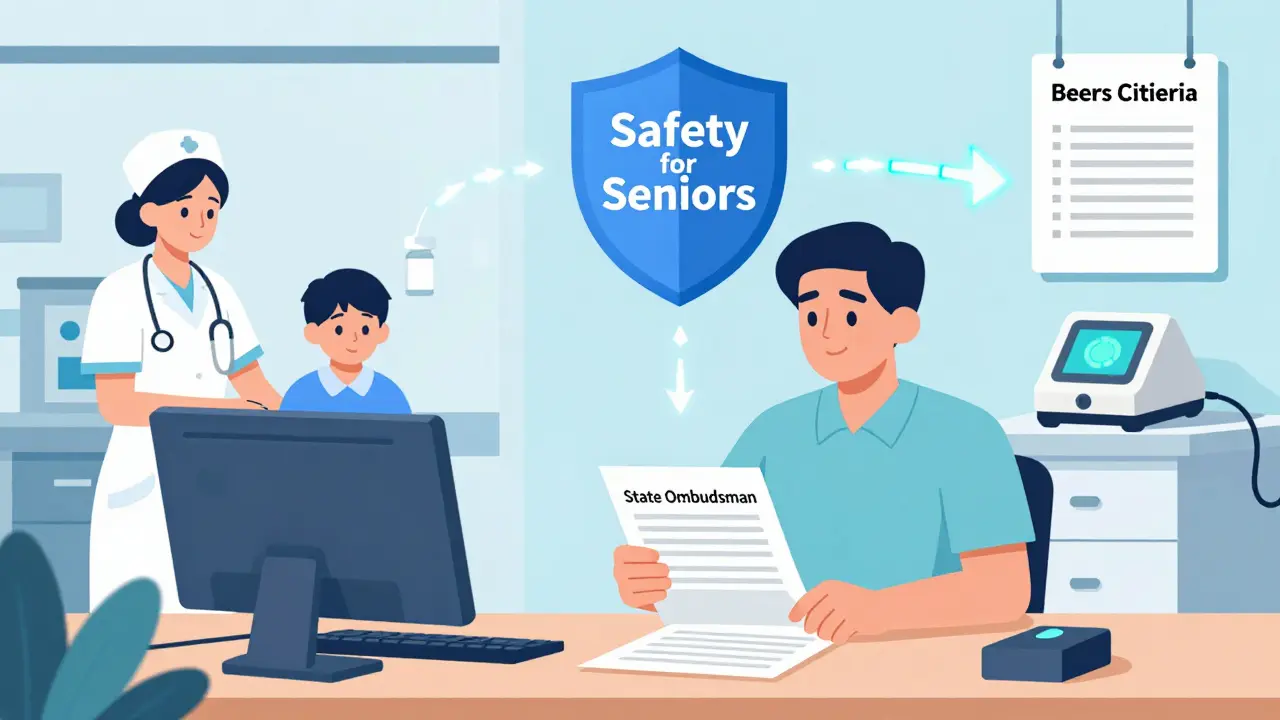
Hospitals use barcode scanners that cut administration errors by 86%. They use electronic systems that warn doctors when a new drug interacts with an old one. These tools reduce errors by up to 55%.But in nursing homes? Only 54.7% have barcode systems. Many still use paper charts. Staff are overworked - 2.1 nurses per 100 residents is the national average. That’s not enough to safely manage complex medication regimens.
That’s why your vigilance matters. Technology can’t replace human eyes. It can only support them.
What You Can Do Today
Start small. Start now.- Keep a written list of every medication your loved one takes - including over-the-counter pills, vitamins, and patches. Update it every time the doctor changes something.
- Ask for a medication reconciliation every time your loved one moves between hospital, rehab, or home. This is the single most effective way to prevent errors - it can stop 67% of adverse events in seniors on five or more drugs.
- Use the Five Rights checklist every time meds are given. Even if you’re not there, ask: “Did they check the wristband?”
- Know the Beers Criteria. Look up the list. If your loved one is on one of those 34 unsafe drugs, ask the doctor why.
- Report everything. Even if you think it’s small. Small mistakes become big ones.
The system isn’t perfect. But it doesn’t have to be. You don’t need to fix everything. You just need to notice. And speak up.
What are the most common medication mistakes in elderly patients?
The most common mistakes include wrong dosage (42.7%), giving medication at the wrong time (23.1%), administering the wrong drug (15.8%), and failing to monitor after giving a high-risk medication (27.4%). Many errors also come from prescribing drugs that are unsafe for seniors, like benzodiazepines or NSAIDs, which are listed in the American Geriatrics Society’s Beers Criteria®.
How can family members identify a medication error?
Use the Five Rights: right patient, right drug, right dose, right route, right time. Always compare the medication label to a written list you keep. Watch for changes in behavior - confusion, dizziness, falls - after a new drug is started. If a pill looks different or the dose has changed without explanation, ask questions.
Who should I report a medication error to?
First, notify the facility’s nurse or supervisor and request a written incident report. Then, contact your state’s Long-Term Care Ombudsman Program at 1-800-677-1116. For serious reactions or dangerous drugs, file a report with the FDA’s MedWatch program. For anonymous, system-focused reporting, use MEDMARX through the U.S. Pharmacopeia.
Why do nursing homes underreport medication errors?
Many fear blame, fines, or loss of funding. Staff are often overworked and undertrained. Facilities may blame the patient for being “confused” instead of admitting systemic failures. Mandatory reporting is rare in nursing homes, and voluntary systems like MEDMARX are underused because families don’t know about them.
Can technology prevent elderly medication errors?
Yes - barcode scanning reduces administration errors by 86%, and electronic prescribing cuts mistakes by 48%. Clinical decision support systems can prevent 55% of dangerous drug interactions. But only 55% of nursing homes use barcode systems, and many still rely on paper. Technology helps, but human oversight is still essential.
What should I do if I suspect a loved one is on a dangerous medication?
Check the American Geriatrics Society’s Beers Criteria® list. If a drug is on there - like diphenhydramine, chlorpromazine, or long-term NSAIDs - ask the doctor if it’s still necessary. Never stop a medication without medical advice. But do ask: “Is this still needed? Are there safer alternatives?” Many seniors can safely taper off these drugs with proper supervision.
What Comes Next
The goal isn’t to scare you. It’s to empower you. Medication errors in seniors aren’t inevitable. They’re preventable - but only if someone speaks up. You don’t need a medical degree. You just need to pay attention, ask questions, and refuse to accept “it’s just how things are.”By 2030, the federal government aims to cut preventable medication errors by 50%. That won’t happen unless families, caregivers, and advocates demand better. Your voice is the most powerful tool you have.
15 Comments
Write a comment