Medication Swelling Risk Checker
This tool helps you assess if your hand or foot swelling might be medication-related and whether you should contact your doctor. Remember: not all swelling is serious, but some signs require immediate attention.
1. What medications are you taking?
2. What symptoms are you experiencing?
3. How long have you had these symptoms?
Results
Swelling in your hands or feet might seem like a minor annoyance-maybe you wore tight shoes, ate too much salt, or sat too long. But if it’s new, sudden, or getting worse, it could be your body signaling a reaction to a medication you’re taking. This isn’t just a nuisance. Left unchecked, medication-induced swelling can hide serious problems like heart failure, blood clots, or nerve damage from chemotherapy.
What Does Medication-Induced Swelling Look Like?
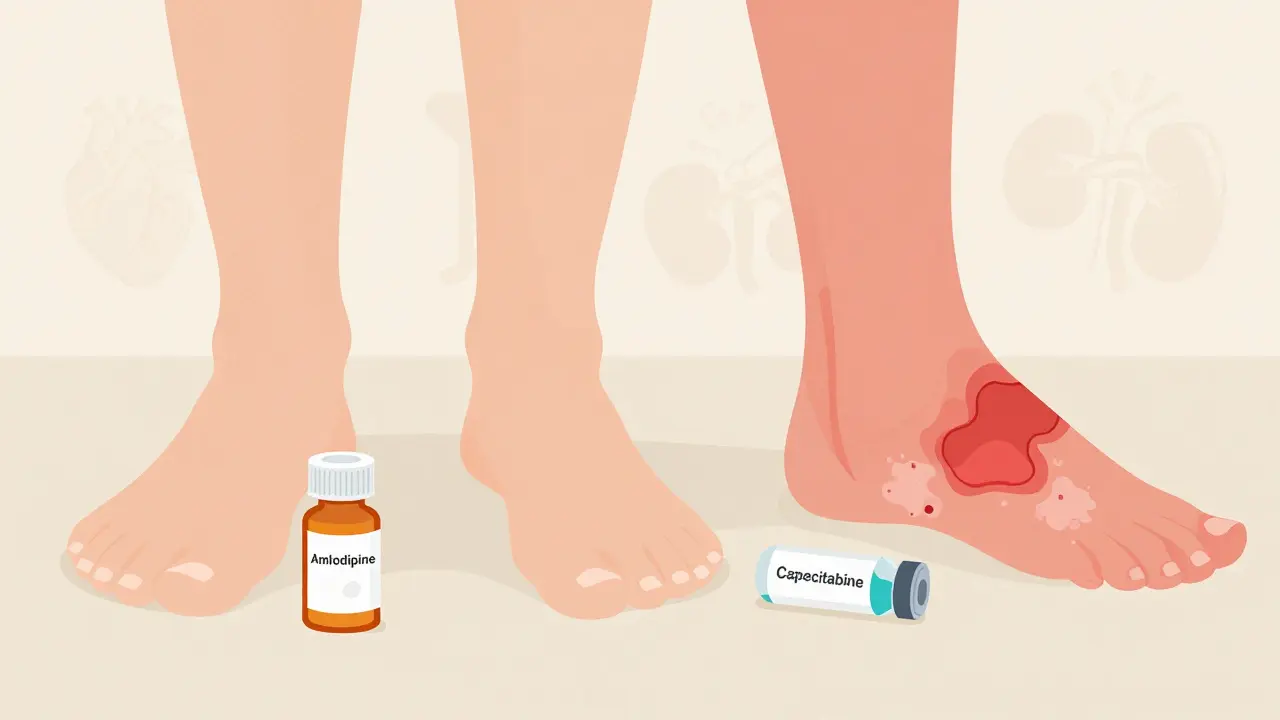
There are two main types of swelling tied to drugs, and they look very different. One is pedal edema-fluid buildup in the ankles and feet. The other is hand-foot syndrome (also called palmar-plantar erythrodysesthesia), which affects the palms and soles with redness, tingling, numbness, and sometimes blisters.Edema from medications like amlodipine (a common blood pressure drug) usually shows up as puffiness in both ankles that gets worse by evening and improves after lying down. You might notice your socks leaving deep marks that last all day, or struggle to fit into shoes you wore just a week ago. About 15% of people taking 10mg of amlodipine daily develop this kind of swelling, according to FDA data.
Hand-foot syndrome is different. It’s most common with chemo drugs like capecitabine. Symptoms start with a burning sensation or tingling, then progress to redness, peeling skin, and swelling. In severe cases, you can’t hold a toothbrush or turn a doorknob. Up to 60% of patients on capecitabine experience this, and it’s graded from mild (Grade 1) to life-threatening (Grade 4).
Which Medications Cause This?
Not all drugs cause swelling-but some are notorious for it. Here’s a breakdown:- Calcium channel blockers (amlodipine, nifedipine): Cause fluid buildup in 5-15% of users. The higher the dose, the more likely it is.
- NSAIDs (ibuprofen, naproxen): Reduce kidney function slightly, leading to sodium and water retention. About 1-3% of long-term users develop noticeable swelling.
- Corticosteroids (prednisone): Trigger fluid retention and weight gain, often with puffy hands and feet.
- Thiazolidinediones (pioglitazone): Used for diabetes, these can cause swelling in 4-7% of users within weeks of starting.
- Gabapentin and pregabalin: Often prescribed for nerve pain, these cause swelling in up to 10% of users-many report “sock marks that last all day.”
- Chemotherapy agents (capecitabine, fluorouracil): Hand-foot syndrome is so common it’s considered an expected side effect, not a rare reaction.
If you started a new medication in the last 72 hours and now your feet feel tight, there’s a 78% chance it’s drug-related, based on NIH data.
When to Call Your Doctor Right Away
Swelling isn’t always an emergency-but some signs mean you need help now. Don’t wait. Don’t assume it’ll go away. Call your doctor immediately if you have:- Unilateral swelling (only one foot or hand): Could be a blood clot (deep vein thrombosis). Untreated, it can lead to a life-threatening pulmonary embolism.
- Chest pain or shortness of breath with swelling: Could mean heart failure. Fluid is backing up in your lungs.
- Rapid weight gain (more than 2 pounds in 24 hours or 5 pounds in a week): A clear sign of fluid overload.
- Skin breakdown, blisters, or open sores on palms or soles: Especially with chemo drugs. This is Grade 3 hand-foot syndrome-medical intervention is urgent.
- Fever with swelling: Could signal infection or a severe drug reaction.
- Reduced urine output (less than 500 mL per day): Your kidneys may be struggling to clear fluid.
The American Heart Association says sudden, bilateral ankle swelling in someone on blood pressure meds is often just a side effect-but if that same person also has high blood pressure, diabetes, or heart disease, it could be heart failure. That’s why doctors don’t just look at the swelling-they look at the whole picture.
What Happens When You Call Your Doctor?
Your doctor won’t just tell you to “elevate your feet.” They’ll want to know:- Which meds you’re on, and when you started each one
- Whether the swelling is symmetric or one-sided
- If you’ve gained weight or feel short of breath
- Whether you have a history of heart, kidney, or liver disease
Based on that, they’ll decide the next step:
- For calcium channel blocker edema: They may lower your dose (e.g., from 10mg to 5mg of amlodipine), switch you to a different blood pressure med like losartan (which rarely causes swelling), or add a low-dose ACE inhibitor like lisinopril. Studies show 85% of patients improve within two weeks of switching meds.
- For hand-foot syndrome: If it’s mild, they might recommend urea cream or cold packs. If it’s moderate to severe (Grade 2 or 3), they’ll reduce your chemo dose or delay your next cycle. Pyridoxine (vitamin B6) is often tried, but studies show it doesn’t reliably help.
- For NSAID or steroid swelling: They may suggest switching to acetaminophen or reducing the steroid dose. Diuretics are rarely used unless there’s true fluid overload.
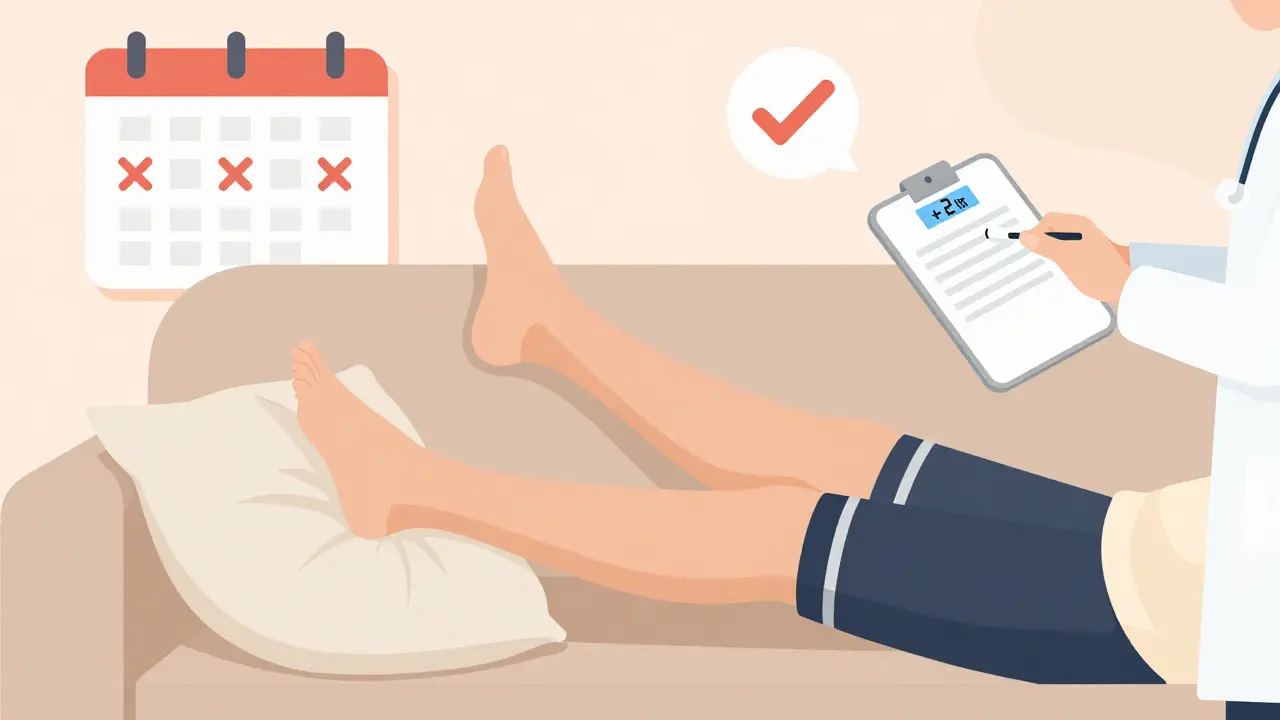
Compression stockings (20-30 mmHg) help about 40% of people with leg swelling. Elevating your legs above heart level for 30 minutes, three times a day, reduces fluid volume by 15% in just 48 hours. And cutting sodium to under 2,300 mg per day can reduce swelling by 20-25%.
What Doesn’t Work (And Why)
There are a lot of home remedies floating around. Some help a little. Others are just noise.- Vitamin B6 for hand-foot syndrome: Many people swear by it. But a 2022 Cochrane review of eight studies found no real benefit. The relative risk of improvement was 0.87-meaning it’s barely better than placebo.
- Arnica gel: One small 2023 study showed a 28% reduction in symptoms. But it’s not in any official guidelines. It might help some, but it’s not proven.
- Topical urea cream: Some studies say it reduces HFS by 32%. Others say there’s not enough evidence. MD Anderson recommends it for prevention, but ASCO doesn’t endorse it as standard care.
Bottom line: Don’t waste time on unproven fixes. Focus on what works: medication changes, sodium control, leg elevation, and medical supervision.
Real People, Real Stories
On patient forums, the stories are raw and real:- A woman on amlodipine said she couldn’t wear her favorite sneakers anymore. She delayed calling her doctor for three weeks because she thought it was just “aging.” By then, her swelling had spread to her knees.
- A man on pregabalin posted on Reddit: “I couldn’t sleep because my feet felt like they were on fire. I thought it was just nerves. Turns out, it was the meds.”
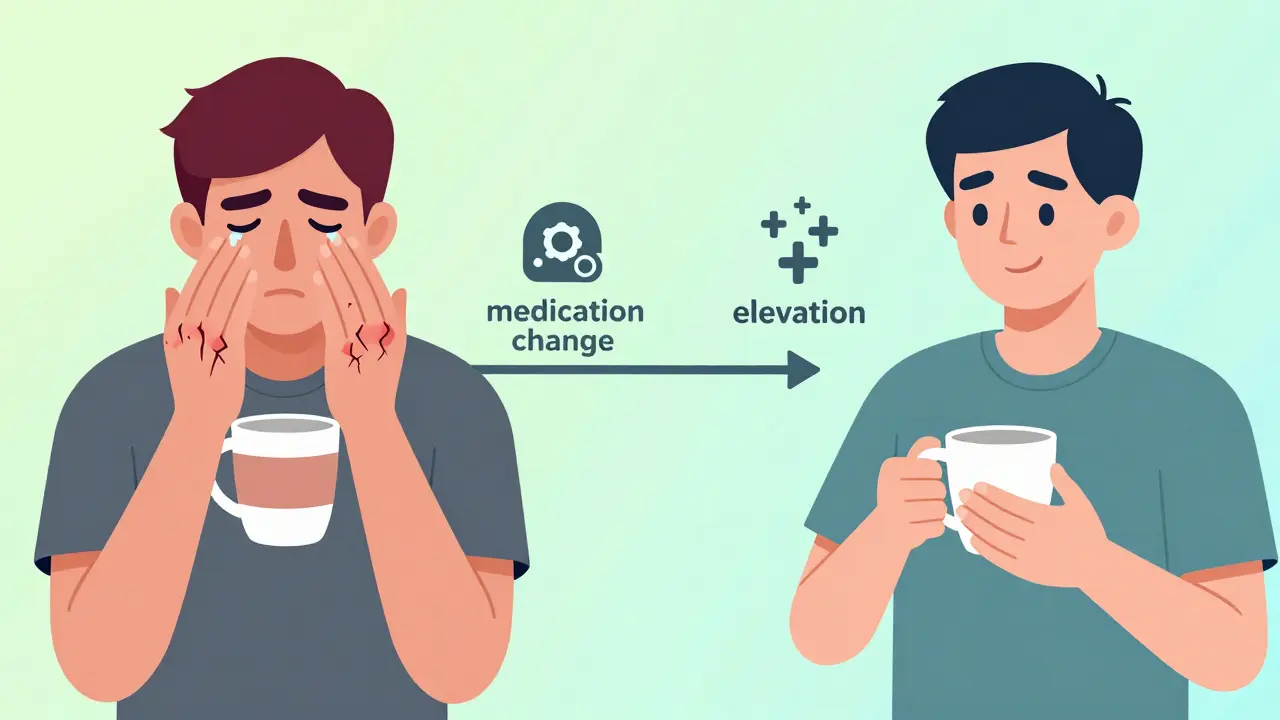
- A cancer patient described Grade 3 hand-foot syndrome: “I couldn’t hold a coffee cup. My palms cracked open. I cried because I couldn’t hug my kid.”
But there are good outcomes too. One GoodRx user switched from amlodipine to losartan and had complete ankle swelling resolution in five days-without losing blood pressure control.
Why People Wait Too Long
A 2023 survey by the National Edema Foundation found that 55% of people with medication-induced swelling waited to call their doctor. Why? They thought it was “normal,” “not serious,” or “just part of getting older.”That delay is dangerous. FDA data shows 37% of serious complications from drug-induced swelling happened because people waited too long. The average delay? Over eight days.
And here’s the kicker: Only 58% of adults even know that swelling from meds can be a warning sign. Most assume it’s just water retention-like what happens after a salty meal. But when it’s caused by a drug, it’s not temporary. It’s a signal.
What You Can Do Now
If you’re on any of the meds listed above and notice swelling:- Track it. Note when it started, which body parts are affected, and whether it’s worse at night.
- Check your weight. Weigh yourself daily at the same time. A 2-pound gain in a day is a red flag.
- Reduce sodium. Avoid processed foods, canned soups, and salty snacks. Aim for under 2,300 mg per day.
- Elevate your feet. Put them up on a pillow for 30 minutes, three times a day.
- Call your doctor. Don’t wait for it to get worse. Even mild swelling should be discussed at your next appointment.
And if you’re starting a new medication? Ask your doctor upfront: “Could this cause swelling? What should I watch for?”
What Happens If It’s Not Treated?
Most cases resolve within four weeks once the cause is addressed. But if ignored:- Chronic swelling can damage skin and lead to ulcers.
- Fluid overload can worsen heart or kidney disease.
- Hand-foot syndrome can become so painful you stop chemotherapy, reducing your cancer treatment’s effectiveness.
- Up to 11% of long-term cases develop permanent lymphedema, requiring lifelong management.
Swelling from meds isn’t inevitable. It’s manageable. But only if you act.
Can over-the-counter diuretics help with medication-induced swelling?
No. Over-the-counter diuretics like pamabrom or herbal supplements (dandelion, parsley) are not safe or effective for drug-induced swelling. They can cause dehydration, electrolyte imbalances, or worsen kidney function-especially if you’re already on blood pressure or heart meds. Always talk to your doctor before using any diuretic.
Is swelling in my hands and feet always from medication?
No. Swelling can also come from heart failure, kidney disease, liver cirrhosis, or a blood clot. But if you started a new medication within the last few days and swelling appeared soon after, there’s a 78% chance it’s drug-related. Your doctor will check for other causes, but medication side effects are one of the most common reasons.
Will I have to stop my medication permanently?
Not always. For many people, lowering the dose or switching to a different drug resolves the swelling. For example, switching from amlodipine to losartan fixes swelling in most cases while still controlling blood pressure. But for some-especially with chemotherapy-dose reduction or breaks are needed. Permanent discontinuation happens in about 45% of cases where swelling doesn’t improve with other steps.
Can I prevent hand-foot syndrome if I’m on chemotherapy?
Yes, to some extent. MD Anderson recommends applying urea 10% cream to palms and soles twice daily, avoiding hot water, wearing loose-fitting shoes, and using cold packs during chemo infusions. Patients who get early education on symptoms are 3.2 times more likely to report issues early, which helps doctors adjust treatment before it becomes severe.
How long does it take for swelling to go away after stopping the drug?
Most people see improvement within one to two weeks after stopping or changing the medication. For calcium channel blocker edema, swelling often drops noticeably in 5-7 days. Hand-foot syndrome may take longer-up to 3-4 weeks-especially if the skin was damaged. Complete resolution happens in 89% of cases with proper management.
11 Comments
Write a comment