Every year, Americans fill over 4 billion prescriptions for generic drugs. That’s 9 out of every 10 prescriptions. These medications save billions in healthcare costs. But once a generic drug hits the market, how do we know it’s still safe? The answer isn’t simple. The FDA doesn’t just approve generics and walk away. It runs a quiet, complex, and constantly evolving safety net that catches problems most people never hear about.
Approval isn’t the finish line
Before a generic drug can be sold, it must prove it works the same as the brand-name version. That means matching the active ingredient, dose, and how fast it gets into the bloodstream. These tests are done in small groups of healthy volunteers-usually 24 to 36 people. That’s not enough to catch every possible side effect. Rare reactions, long-term risks, or problems that only show up in older adults, pregnant women, or people with kidney disease? Those don’t show up in early trials.The FDA knows this. That’s why approval is just the beginning. As the agency says, "It is impossible to have complete information about the safety of a drug at the time of approval." The real safety picture only emerges after thousands, even millions, of people have taken the drug over months and years.
The system behind the scenes
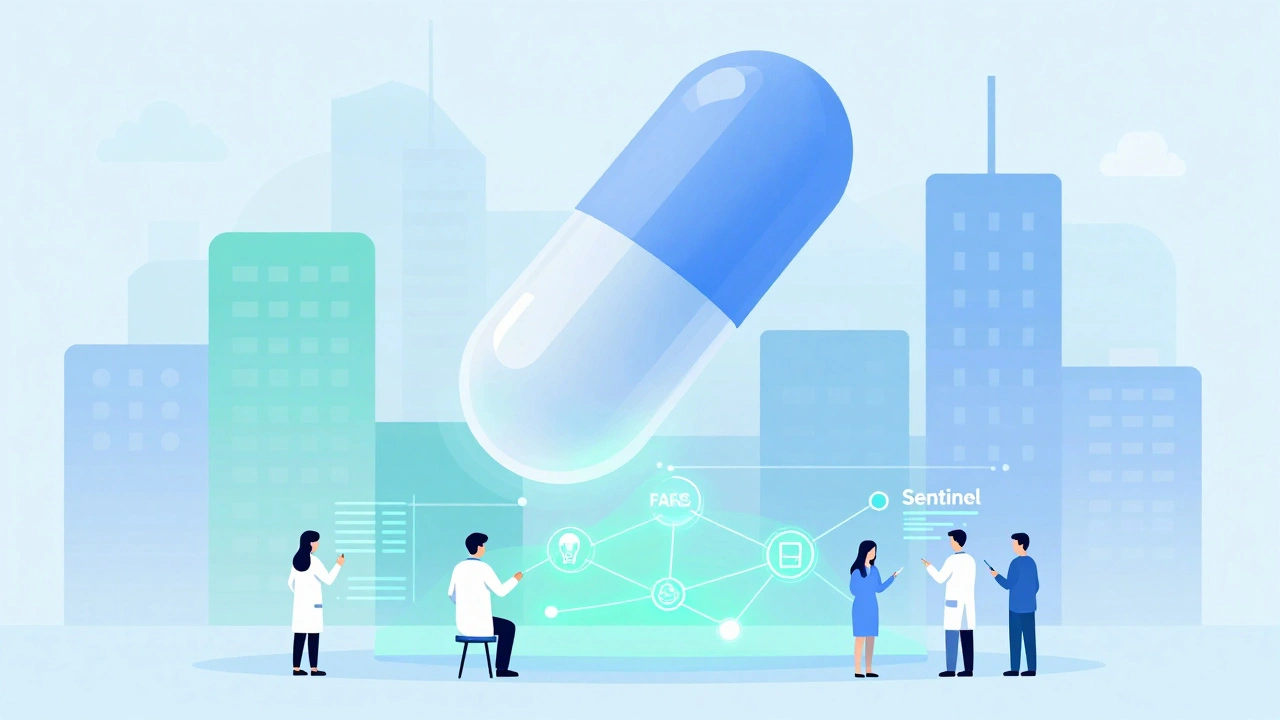
The FDA doesn’t rely on guesswork. It uses a network of tools and teams working nonstop. At the center is the FDA Adverse Event Reporting System (FAERS). This is a massive database that collects reports of side effects from doctors, pharmacists, patients, and drug companies. In 2022 alone, FAERS processed over 2 million reports. Not all are about generics-but the system flags any generic drug showing unusual patterns.Behind FAERS is a team of scientists, pharmacologists, and epidemiologists in the Office of Generic Drugs (OGD). They don’t just wait for reports. They actively dig through the data, looking for signals that something’s off. If a certain generic version of a blood pressure drug suddenly shows a spike in dizziness reports among elderly patients, they investigate. They compare it to the brand version. They check if it’s the same manufacturer or a different one. They look at the ingredients-even the inactive ones.
What’s in the pill matters
Generics must have the same active ingredient. But they can use different fillers, dyes, or coatings. These are called "inactive ingredients." Most of the time, they’re harmless. But sometimes, they cause problems. A patient allergic to a dye in one generic version might have a reaction, while another version with a different dye doesn’t. These aren’t always obvious. A patient might switch generics and suddenly feel worse. They don’t know why. The doctor might not either.The Office of Pharmaceutical Quality (OPQ) watches for this. They review the chemical makeup of every generic drug, especially impurities-tiny amounts of unwanted substances that can form during manufacturing. Even if a generic meets bioequivalence standards, a new impurity might appear. The FDA requires manufacturers to test for these and prove they’re safe. If levels go above the safety threshold, the FDA can demand changes or pull the product.
Real-world data, real-time alerts
The biggest leap in recent years is the Sentinel Initiative (a real-time monitoring system using electronic health records). Launched in 2008 and expanded under the 21st Century Cures Act, Sentinel pulls data from over 100 million patient records across hospitals, clinics, and insurers. It doesn’t wait for someone to file a report. It scans for patterns automatically.For example, if a new generic version of a cholesterol drug shows a sudden increase in liver enzyme spikes among patients in a particular region, Sentinel flags it within weeks-not months. The FDA then investigates. Did the manufacturer change the process? Is there a batch issue? Is it just a coincidence? This system turned the FDA from a reactive agency into a proactive one.
Inspections don’t stop after approval
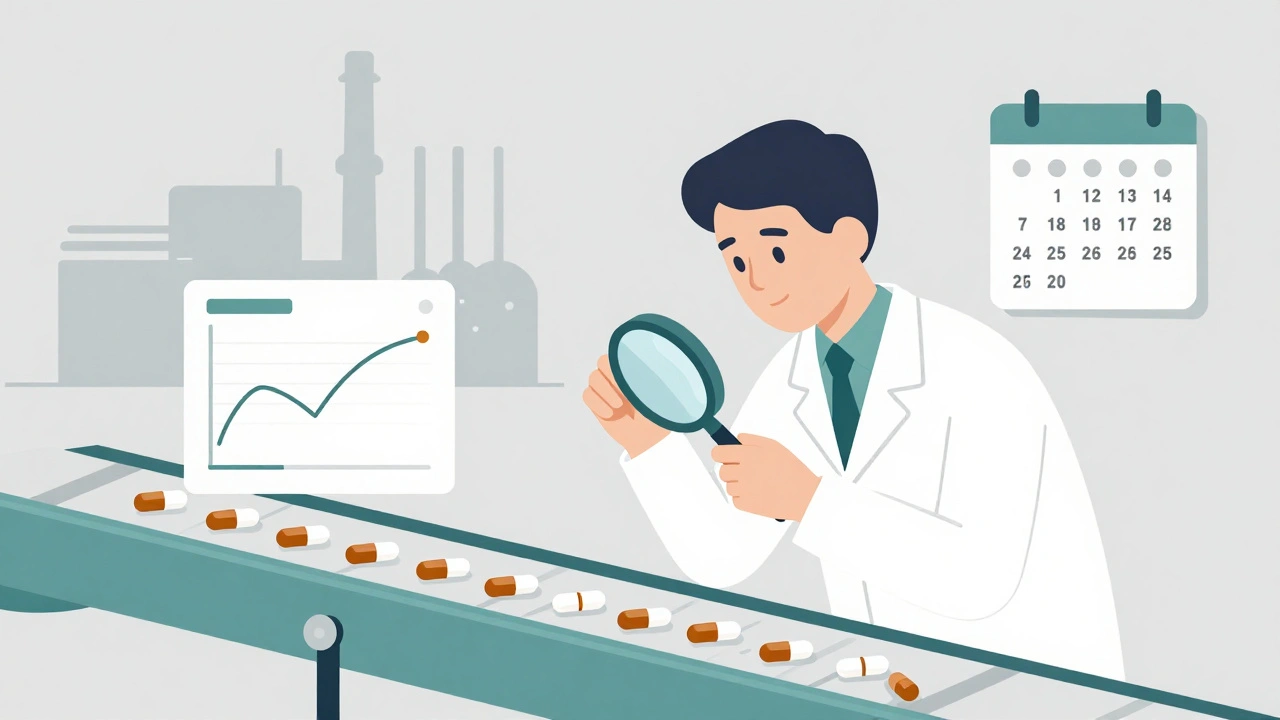
A drug isn’t safe just because it’s made correctly once. It has to be made correctly every time. That’s why the FDA conducts about 1,200 inspections of U.S. factories and 600 inspections of foreign facilities each year. These aren’t scheduled visits. Many are unannounced. Inspectors check everything: how raw materials are stored, how machines are cleaned between batches, whether quality control tests are done properly.One manufacturer might be producing 10 million pills a day. If their temperature control fails for just a few hours, the whole batch could be compromised. The FDA’s inspections catch those kinds of failures before they reach patients.
What happens when something goes wrong?
When the FDA finds a safety issue, it doesn’t wait. Actions can include:- Updating the drug’s label to warn doctors and patients about new risks
- Issuing a "Dear Healthcare Provider" letter to alert prescribers
- Requiring the manufacturer to change the formula or manufacturing process
- Ordering a voluntary recall of the affected batch
- In rare cases, removing the drug from the market entirely
One recent example involved a generic version of a seizure medication. After multiple reports of breakthrough seizures in patients who had been stable on the brand version, the FDA investigated. The issue wasn’t the active ingredient-it was a change in the tablet’s coating that affected how fast the drug dissolved. The manufacturer was required to reformulate the product. Within months, reports dropped back to normal.
Challenges and blind spots
Despite all this, the system isn’t perfect. One big problem: underreporting. Studies estimate only 1% to 10% of adverse events are ever reported to the FDA. A patient might feel nauseous after switching generics and just blame it on stress. A doctor might not connect it to the drug. Without reports, the system can’t act.Another issue: complex generics. Inhalers, injectables, and topical creams are harder to copy exactly. Small differences in how they’re made can affect how the drug is absorbed. The FDA has been working to improve monitoring for these since 2022, but it’s still a work in progress.
And then there’s the scale. In 2023, the FDA approved over 1,000 new generic drugs. That’s more than three per day. Keeping up with safety data for that many products requires advanced data tools, skilled staff, and steady funding. That’s where the Generic Drug User Fee Amendments (GDUFA) (a system where manufacturers pay fees to fund FDA oversight) comes in. Since 2012, these fees have brought in about $65 million a year to support inspections, reviews, and surveillance.
Why this matters to you
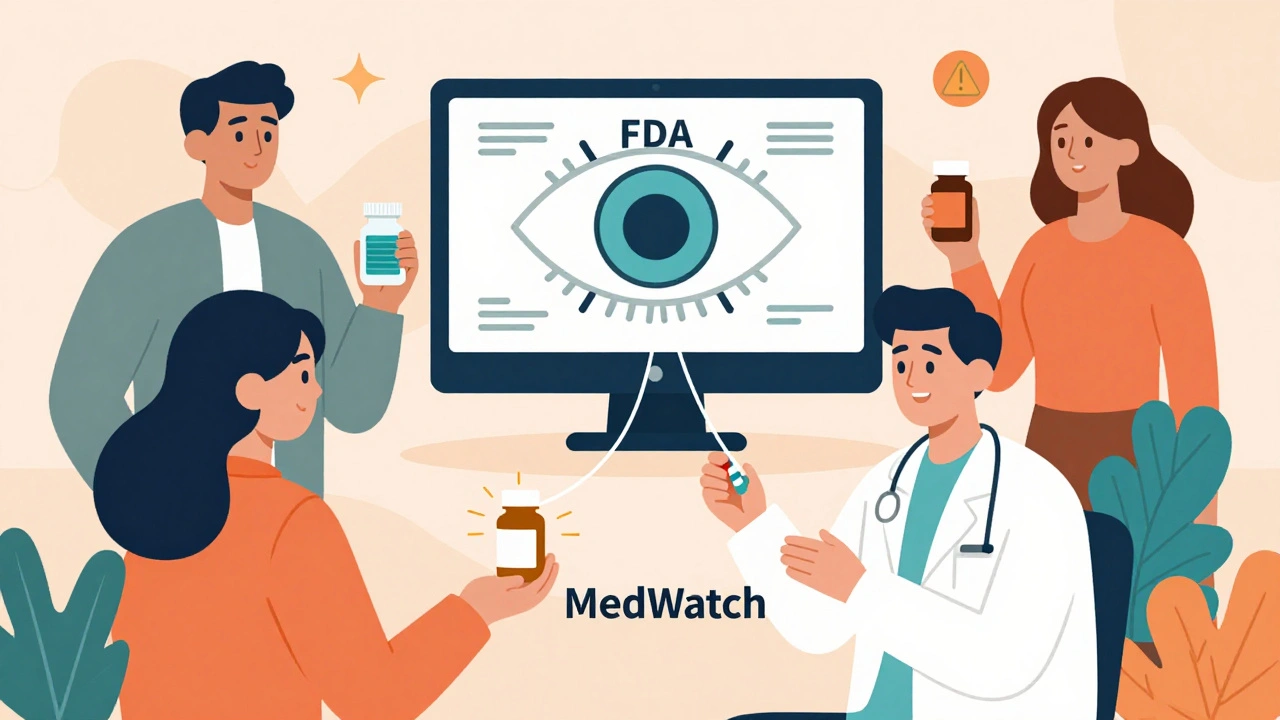
If you take a generic drug, you’re part of this system. Your reports matter. If you notice a new side effect after switching to a different generic version-especially if it’s worse than before-tell your doctor. Ask them to file a report with MedWatch. You can also report directly at fda.gov/medwatch.Generic drugs are safe. The vast majority are. But safety isn’t a one-time check. It’s an ongoing conversation between patients, doctors, manufacturers, and regulators. The FDA doesn’t have a crystal ball. But with FAERS, Sentinel, inspections, and thousands of reports from real people, it’s doing everything it can to keep you protected.
Are generic drugs as safe as brand-name drugs?
Yes, generic drugs are required by the FDA to meet the same strict standards for quality, strength, purity, and performance as brand-name drugs. The active ingredient is identical, and bioequivalence studies ensure it works the same way in the body. Post-approval monitoring ensures safety continues after the drug is on the market. While rare differences in inactive ingredients can cause issues for some patients, the overall safety profile of generics is comparable to brand-name drugs.
How does the FDA find problems with generics after they’re approved?
The FDA uses multiple tools: the FAERS database for adverse event reports, the Sentinel Initiative to scan electronic health records in real time, routine and unannounced factory inspections, and active data mining of reports. Teams in the Office of Generic Drugs and Office of Pharmaceutical Quality review these signals daily, comparing generic versions to brand-name drugs and checking for unexpected patterns in side effects or manufacturing issues.
Can I report a side effect from a generic drug?
Yes. Anyone-patients, caregivers, or healthcare providers-can report side effects to the FDA through MedWatch, either online at fda.gov/medwatch or by calling 1-800-FDA-1088. Your report helps the FDA detect safety signals early. Even if you’re not sure the drug caused the problem, report it. The more data the FDA has, the better it can protect the public.
Why do some people feel different on a different generic version?
Even though generics must be bioequivalent, they can have different inactive ingredients like fillers, dyes, or coatings. For most people, this doesn’t matter. But for those with allergies, sensitivities, or conditions like epilepsy or thyroid disease, small changes in how the drug dissolves or is absorbed can make a difference. If you notice a change after switching generics, talk to your doctor. You may need to stick with one manufacturer’s version.
How often does the FDA pull a generic drug off the market?
Very rarely. Most issues are fixed with label changes, manufacturing adjustments, or recalls of specific batches. Full market withdrawal happens only when a drug poses a serious, widespread risk that can’t be managed otherwise. Since 2010, fewer than 10 generic drugs have been withdrawn for safety reasons, compared to dozens of brand-name drugs. The FDA’s post-market system is designed to catch problems before they reach that point.
Man, I had no idea the FDA was this deep in the weeds with generics. I switched to a cheaper version of my blood pressure med last year and felt like a zombie for two weeks. Turns out the new filler was messing with my absorption. Took me forever to figure it out. Glad someone’s actually watching the store.
Let me guess - Big Pharma paid off the FDA to let these knockoffs slide so they can charge $500 for the same pill under a different name. The ‘inactive ingredients’? That’s the poison they add to make you dependent. You think the coating change in that seizure med was an accident? Nah. It’s a feature. Keeps you coming back for more. Wake up, sheeple.
This is actually one of the most reassuring things I’ve read all year. People act like generics are some shady back-alley deal, but the truth? The FDA is out here running a full-on sci-fi surveillance system. Sentinel, unannounced inspections, real-time EHR scanning - they’re basically the Avengers of drug safety. We should be screaming this from the rooftops.
so like… if u switch generics and feel weird? tell ur doc. and if they dont listen? go to fda.gov/medwatch. its free. takes 5 mins. u might save someone else from the same headache. i did it last year after my thyroid med went haywire. turned out the dye was the issue. no one told me that. now i tell everyone. <3
Thank you for writing this. 🙏 I’ve been too scared to say anything because I didn’t want to sound crazy… but I *did* feel different on the new generic version of my antidepressant. I thought it was just stress. Turns out the coating changed and it was absorbing slower. My doctor didn’t even know that could happen. Now I stick with the same brand. Small things matter more than we think.
1,200 inspections? Please. The FDA’s got 800 people working on this while China pumps out 80% of our APIs. They’re not inspecting factories - they’re doing PowerPoint reviews. The real story? The GDUFA fees? That’s just a slush fund for bureaucrats. The system’s rigged. You think they care about your dizziness? Nah. They care about the $65M. Wake up. This ain’t science - it’s corporate theater.
Interesting read. In India, we rely heavily on generics. But our regulatory system is not as robust. The FDA’s approach is impressive - especially the real-time monitoring. I hope other countries adopt similar systems. Safety should not be a privilege of wealth.
The real innovation here isn’t the tech - it’s the paradigm shift. Moving from reactive pharmacovigilance to predictive surveillance via Sentinel is a quantum leap. The integration of EHR data with FAERS creates a feedback loop that’s unprecedented in public health. The challenge now is scaling this to global supply chains and ensuring data interoperability across borders. This isn’t just about pills - it’s about systemic resilience.