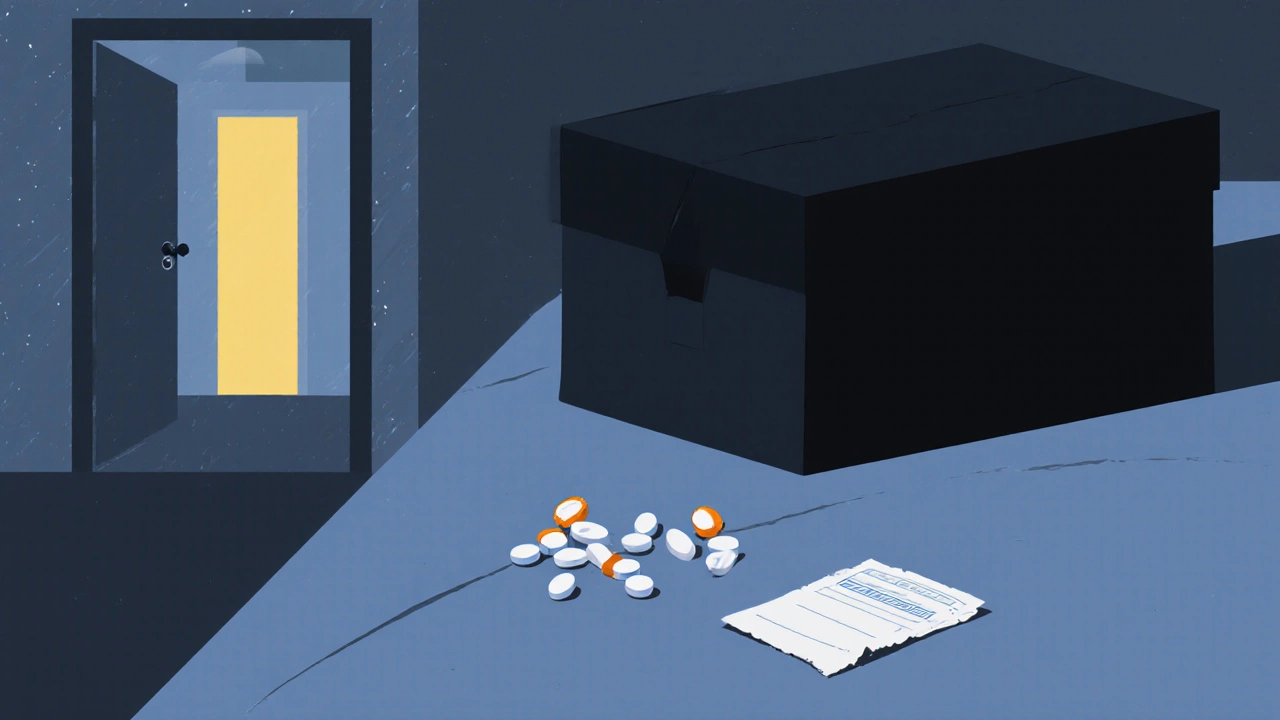
When the FDA slapped a black box warning on antidepressants for children and teens in 2005, the goal was simple: protect young lives. The message was clear - these drugs might increase suicidal thoughts in kids. But what happened after that warning? The number of prescriptions dropped sharply. And then, something unexpected occurred: suicide attempts and deaths among teens started rising.
The Warning That Changed Everything
The FDA’s black box warning is the strongest safety alert they can give. It’s not just a footnote - it’s bold, black-bordered text at the top of every antidepressant’s packaging, telling doctors and families: ‘Antidepressants increase the risk of suicidal thinking and behavior in children and adolescents.’ This warning was based on a review of 24 clinical trials involving over 4,400 young patients. The data showed a 2% higher chance of suicidal thoughts or behaviors in those taking antidepressants compared to those on placebo. No actual suicides were reported in those trials, but the risk was real enough to trigger a national policy shift.
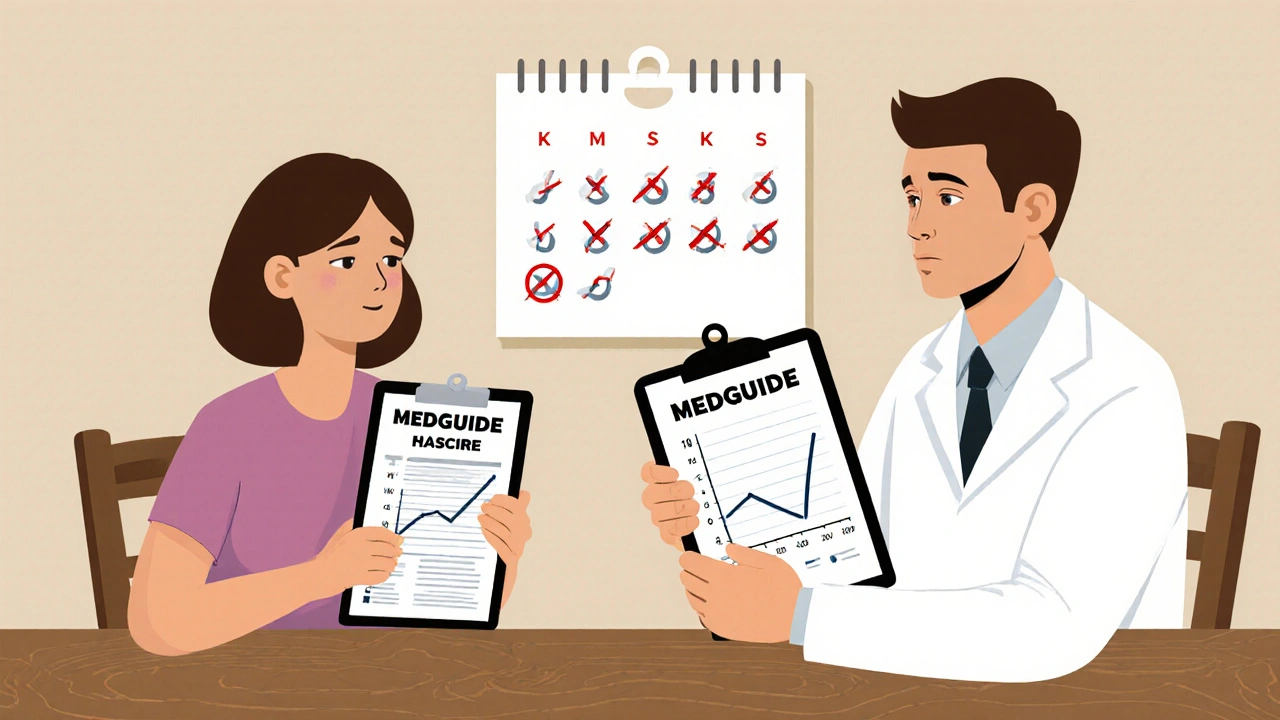
The warning didn’t just apply to one drug. It covered every antidepressant on the market - SSRIs like Prozac and Zoloft, SNRIs, and others. In 2007, it was expanded to include young adults up to age 24. Pharmacists were required to hand out MedGuides with every prescription. Parents were told to watch for agitation, panic, or sudden mood swings. Clinicians were expected to check in weekly during the first month of treatment.
What Happened When Prescriptions Dropped
Doctors started prescribing antidepressants less often. Parents, scared by the warning, refused them. A 2023 study in Health Affairs found that in the two years after the 2005 warning, antidepressant prescriptions for 10- to 19-year-olds fell by 31%. That’s over a million fewer prescriptions a year. Meanwhile, diagnoses of depression in teens were actually going up - by 14% during the same period.
The unintended consequences were brutal. In the same timeframe, suicide rates among 10- to 19-year-olds jumped 75%, from 2.0 to 3.5 per 100,000. Psychiatric drug poisonings - a strong indicator of suicide attempts - rose by 21.7% in teens and 33.7% in young adults aged 20-24. These weren’t small blips. They were sharp, sustained spikes that matched the timing of the warning exactly.
Here’s the troubling part: adults over 25, who were never targeted by the warning, didn’t show the same rise in suicide attempts. That suggests the drop in treatment, not some broader societal trend, was the driver.
The Doctors Are Caught in the Middle
Child psychiatrists didn’t want to stop prescribing. A 2019 survey by the American Academy of Child and Adolescent Psychiatry found that 87% of them struggled to prescribe antidepressants after the warning. Why? Parents were terrified. One parent told a clinician, “I’d rather see my child suffer than risk killing them with medicine.”
Doctors had to spend extra time - on average, 14 more minutes per visit - explaining the warning, filling out extra consent forms, and reassuring families. Ninety-four percent of psychiatrists said they now had to document the warning discussion in writing. But even then, only 37% of teens actually got the recommended weekly check-ins. In rural areas, that number dropped to 22%.
“We knew the risks,” said one pediatric psychiatrist in a 2018 interview. “But we also knew that untreated depression kills. The warning didn’t help us treat - it just made it harder.”
Real Stories, Real Consequences
On Reddit’s r/mentalhealth, a thread from late 2022 asking, “Should I be worried about the black box warning?” got nearly 300 comments. Two-thirds of responders said they’d refused medication for their kids. One wrote: “My daughter was suicidal. We waited six months to start meds because of the warning. By then, she’d been hospitalized twice.”
But not everyone followed the fear. A 2021 survey by NAMI found that among families who chose to use antidepressants despite the warning, 67% reported improvement. Many said the warning actually helped them stay alert - noticing early signs of worsening mood and calling the doctor sooner.
One mother in Ohio shared: “The warning made us check in every day. We saw the first signs of agitation right away. We called the doctor, and they lowered the dose. My son’s mood stabilized within weeks.”
What Other Countries Did - And What Happened
The U.S. isn’t the only country dealing with this. Canada has a similar warning, but with added language emphasizing the need to weigh risks and benefits. Europe? They never issued one.
And here’s the kicker: European countries didn’t see the same spike in youth suicides after 2005. In Sweden, researchers tracked 845 teen suicides between 1992 and 2010. After the U.S. warning, Swedish suicide rates kept falling - even as antidepressant use stayed steady. The researchers concluded: “The warning may have increased young suicides by leaving suicidal youth without treatment.”
That’s not a coincidence. It’s a pattern.
The Push to Reconsider
By 2022, the American College of Neuropsychopharmacology called for a full review of the warning. In September 2023, the FDA held a public meeting to examine the data - again. No decision has been made yet. But the evidence is piling up.
Harvard researchers found that the warning’s harms - reduced treatment, increased suicide attempts - outweighed its benefits. The original clinical trials showed a small increase in suicidal thoughts, but no increase in actual deaths. The real-world data shows the opposite: fewer meds, more deaths.
Pharmaceutical companies like Eli Lilly and Pfizer have petitioned the FDA to change the wording. They’re not arguing the risk doesn’t exist. They’re saying the warning, as written, scares people away from treatment - and that’s killing more kids than it’s saving.
Meanwhile, the National Institute of Mental Health is working on a better solution: risk-stratified guidance. Imagine a tool that tells doctors: “This teen has a 12% risk of suicidal ideation on medication - monitor closely. This one has a 2% risk - standard follow-up is enough.” That’s the future. Not a blanket warning for every child.
What Parents and Teens Need to Know Now
If your child is being considered for antidepressants, here’s what you need to do:
- Don’t refuse treatment out of fear. Untreated depression is dangerous. The risk of suicide without treatment is far higher than the risk from medication.
- Ask for a full risk-benefit discussion. Ask: “What’s the chance this helps? What’s the chance it makes things worse? What are the signs to watch for?”
- Insist on close monitoring. The first month is critical. Weekly check-ins with the doctor aren’t optional - they’re life-saving.
- Watch for changes, not just sadness. Look for agitation, insomnia, rage, or withdrawal. These are red flags - not just suicidal thoughts.
- Don’t stop medication suddenly. Stopping antidepressants abruptly can trigger withdrawal symptoms that mimic worsening depression.
The black box warning was meant to save lives. But the data shows it may have done the opposite. That doesn’t mean antidepressants are dangerous. It means we need smarter warnings - not louder ones.
Where Do We Go From Here?
The FDA hasn’t removed the warning. But the scientific community is no longer silent. The warning is under review. And the most compelling evidence says: a one-size-fits-all alarm doesn’t work for mental health.
What’s needed now isn’t fear. It’s balance. It’s trust - between doctors, families, and patients. It’s better tools to identify who’s at real risk, and who’s not. It’s recognizing that for many teens, antidepressants aren’t the problem - the lack of treatment is.
The warning was a reaction. The next step has to be a response - grounded in real-world outcomes, not just clinical trials.
The FDA's black box warning was a statistically significant intervention based on controlled clinical trial data. The 2% increase in suicidal ideation, while not resulting in fatalities in trials, is a non-trivial effect size in pediatric psychopharmacology. The ecological fallacy in attributing population-level suicide rate increases solely to reduced prescribing ignores confounding variables: social media exposure, academic pressure, economic instability, and pandemic-related isolation all surged during the same period. Causal inference requires more than temporal correlation.
Moreover, the 2023 Health Affairs study fails to control for diagnostic inflation - increased depression diagnoses may reflect heightened awareness and screening, not increased incidence. The assertion that ‘fewer meds = more deaths’ is reductionist. Mental health outcomes are multivariate. To reduce complex human behavior to a single pharmacological variable is scientifically unsound.
Furthermore, the claim that European nations saw no spike ignores their robust public mental health infrastructure: universal access, school-based counseling, and early intervention programs absent in the U.S. The real issue isn't the warning - it's the lack of complementary support systems.
i realllyyyy didnt know the warning made people stop meds so much… my cousin was on zoloft and my aunt just quit it after the warning, like, full stop. no weep, no doc visit. now she’s in a worse place. i just… i didnt think it would be this bad. sorry for the typos, typing on my phone with one hand while holding my baby.
Oh please. You’re all acting like this is some deep philosophical dilemma. It’s not. The FDA is a bunch of bureaucrats who panicked and made a knee-jerk move that’s costing kids their lives. And now you’re all over here debating ‘confounding variables’ like you’re at a TED Talk? 🙄
Real talk: if your kid is crying every night, refusing to leave their room, and talking about not wanting to be alive - you don’t need a 14-minute lecture on risk-benefit analysis. You need a prescription. And if your doctor won’t give it to you because of some black box that scares you more than the depression itself - find a new doctor. Or a new country.
Also, I’m tired of people pretending they ‘understand’ mental health while refusing to actually treat it. Your fear isn’t compassion. It’s cowardice.
There’s something hauntingly poetic about how a well-intentioned safety measure - meant to shield the vulnerable - ended up becoming a silent architect of their suffering. The warning was crafted in the language of science, but its impact was felt in the silence of bedrooms where teens no longer dared to ask for help.
I’ve read every study cited here, and what strikes me isn’t the numbers - it’s the texture of the loss. The mother in Ohio who caught the agitation early? That’s not luck. That’s vigilance nurtured by awareness. The warning, when paired with education, becomes a tool - not a barricade.
Why do we default to fear-based communication in mental health? Why not ‘risk-informed guidance’? Why not empower families with context instead of terrifying them with bold, black borders? The FDA didn’t fail because they acted - they failed because they didn’t evolve with the data.
And isn’t it ironic? We now have the tools to personalize risk - AI-driven mood trackers, genomic markers for SSRI sensitivity - yet we cling to a 2005-era siren call? We’re clinging to a warning like it’s scripture, when what we need is a conversation.
Let’s retire the black box. Let’s replace it with a dynamic, interactive guide - one that says: ‘Here’s what we know. Here’s what we don’t. Here’s how to watch. Here’s when to call.’
Because healing doesn’t live in warnings. It lives in wisdom.
Hey, I’m a dad of a 16yo with severe anxiety. I read all this and I’m still confused. Can someone just tell me - should I let my kid take the meds or not? Like, straight answer. No jargon. No ‘risk stratification.’ Just yes or no with reasoning.
OMG I’m literally crying rn 😭😭😭 I had a panic attack just reading this. My sister took Prozac after the warning and she’s now in grad school and happy!! But my cousin didn’t and… well… she didn’t make it. I’m so mad at the FDA. Like, why didn’t they just say ‘THIS IS FOR HIGH-RISK KIDS ONLY’? 🤦♀️
Also, can we please make a petition to change the warning? I’ll start a GoFundMe to pay for billboard ads. ‘Antidepressants Save Lives. Don’t Let Fear Silence Them.’ 💙
This is what happens when liberals turn medicine into a political football. The FDA is a bunch of woke bureaucrats who care more about looking ‘responsible’ than saving lives. We didn’t need a warning - we needed more therapists, more funding, more schools teaching coping skills.
And don’t you DARE tell me ‘Europe didn’t have the spike’ - they’ve got socialist healthcare and mandatory therapy in high school. We don’t. So don’t compare apples to space rockets.
Also, I’m tired of people acting like antidepressants are magic pills. They’re not. But denying them because you’re scared of a black box? That’s not parenting. That’s negligence. 🇺🇸
YOU ARE NOT ALONE. 💪
Look - I’ve been there. My son was on the edge. We waited 8 months because we were terrified of the black box. Then we found a psychiatrist who didn’t flinch. We started low, monitored daily, and called in every week. He’s 19 now - plays guitar, got into college, laughs again.
This isn’t about fear. It’s about action. The warning isn’t the enemy. Silence is.
If you’re reading this and you’re scared - reach out. Text a friend. Call a helpline. Talk to your doctor. You’ve got this. And you’re not the only one fighting this battle. We’re all here with you. 🙌❤️