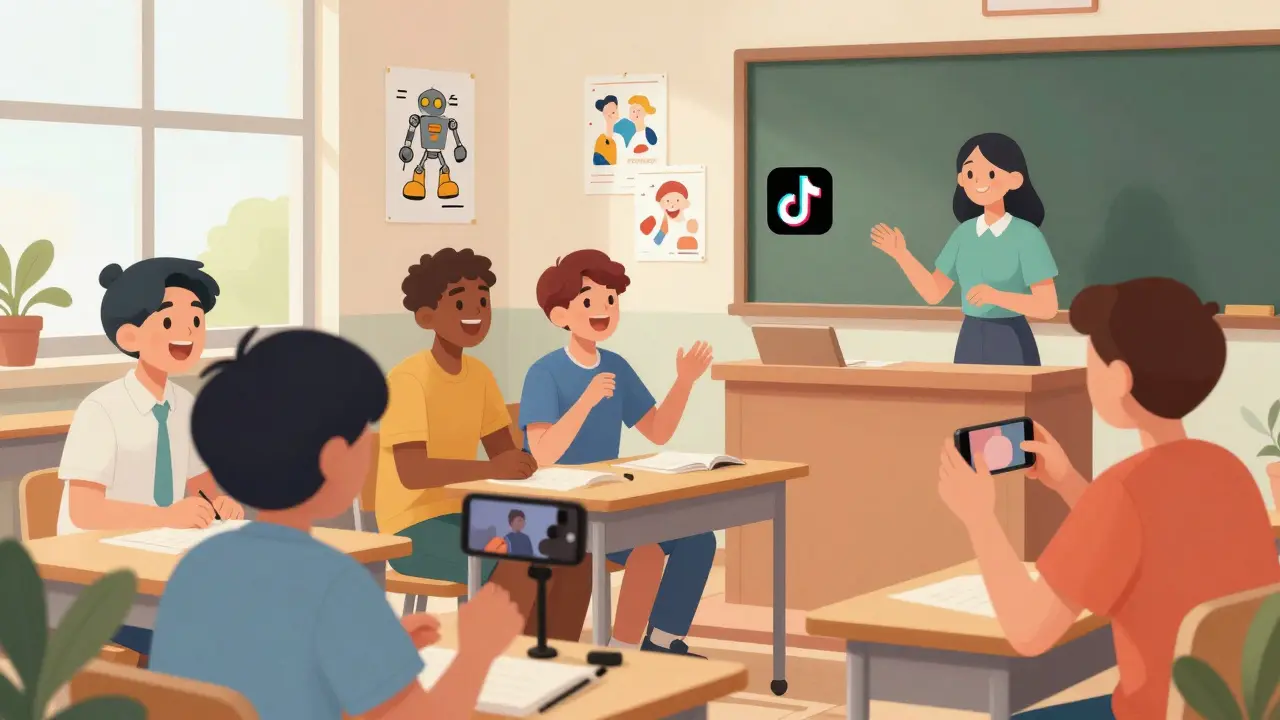
When parents and students search for a school, they don’t start with a website. They start with Instagram. Or TikTok. Or YouTube. By the time they click through to the school’s official site, they’ve already formed an opinion - based on videos of students laughing in the hallway, reels of science fairs, or live Q&As with teachers. Social media isn’t just a tool for schools anymore. It’s the first impression. And for many families, it’s the only one that matters.
Why Schools Can’t Ignore Social Media Anymore
In 2025, 92% of private K-12 schools in the U.S. and New Zealand have active social media accounts. Public schools lag behind at 78%, mostly due to district policies. But even those that are hesitant are feeling the pressure. Why? Because families aren’t waiting for brochures or open house days. They’re scrolling.
According to Cube Creative Design’s 2025 analysis, schools that use social media strategically see 23% higher enrollment conversion rates. That’s not luck. It’s because social platforms let schools show, not just tell. A photo of a student presenting at a robotics competition doesn’t just look good - it proves the school delivers hands-on learning. A 60-second TikTok video of a shy student finding their voice in drama class? That’s more convincing than any mission statement.
The old model - send out a newsletter, host an open house, hope families show up - is dead. The new model is: show up where your audience already lives.
Which Platforms Actually Work for Schools?
Not all platforms are created equal. Trying to be on Facebook, Instagram, TikTok, LinkedIn, and YouTube all at once? That’s a recipe for burnout - and low engagement. The most successful schools focus on 2-3 platforms that match their audience.
- Instagram is the top choice for K-12 schools. With 2.1 billion users (Q3 2025), it’s where parents and teens spend their time. Reels and Stories drive 2.8x more engagement than static posts. Schools using Instagram’s Broadcast Channels (launched September 2024) report sending updates to over 10,000 subscribers at once - no email list needed. Student-led Reels showing classroom projects average 1,247 views each - far outperforming staff-created content.
- TikTok is the fastest-growing platform for education. Even though it’s known for dance challenges, 68% of Gen Z students say they use TikTok to research schools. Short videos (15-90 seconds) with captions get 57% higher engagement than longer ones. Schools that partner with students to create content - like a 30-second “A Day in My Life” series - see trust levels rise by 39%.
- YouTube still rules for deep dives. Educational channels average 15.7 minutes of watch time per video (up from 12.3 in 2024). Schools use it for virtual tours, parent webinars, and student project showcases. But since YouTube’s algorithm changed in February 2025, organic reach for education content dropped 18%. That means schools now need to promote their videos actively - through Instagram Stories, email, or parent groups.
- LinkedIn is for college prep schools and alumni. With 930 million users, it’s where parents researching future careers look. Schools using LinkedIn’s Alumni Profile Aggregation (updated February 2025) can show how their graduates ended up in medicine, engineering, or tech - often connecting them to 12.7 industry contacts on average. This feature alone boosted qualified inquiries from college-bound families by 42%.
- Facebook is fading for students but still holds value for parents. Only 32% of teens use it daily, but 71% of parents over 35 still check Facebook Groups for school updates. It’s the go-to for parent feedback, event coordination, and crisis communication.
One school in Wellington, New Zealand, stopped posting on Twitter/X in 2024 after seeing engagement drop 60%. They redirected that time to Instagram Reels and TikTok - and saw a 52% increase in inquiries within three months.
What Does Authentic Content Look Like?
Here’s the trap: schools often fall into the “polished marketing” trap. Perfectly lit photos. Scripted testimonials. Over-edited videos. It looks professional - but it feels cold.
Dr. Emily Wong from Niche’s 2025 report found that content perceived as overly curated reduces trust by 44% among prospective families. Authenticity isn’t about being messy. It’s about being real.
Successful schools do three things:
- Let students lead. A student-run Instagram account for one week every term. A TikTok series where kids answer questions like “What’s the weirdest thing in your science lab?”
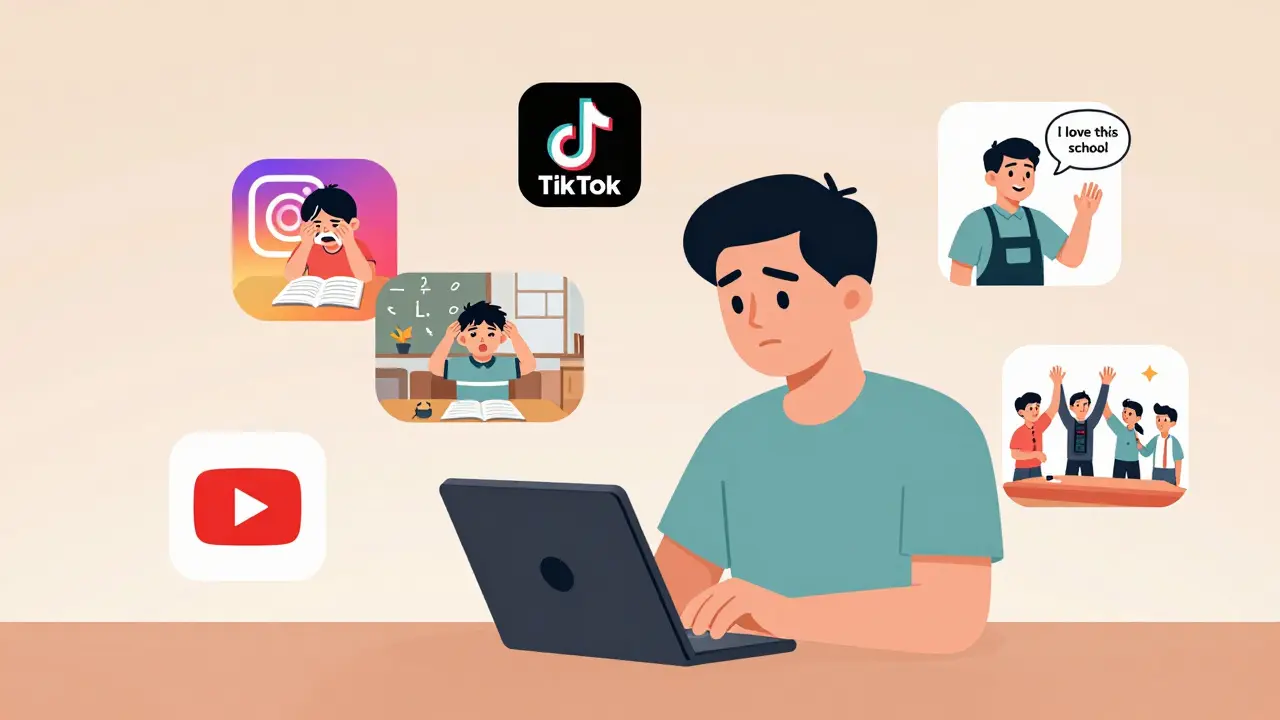
- Show the struggle. Not just the awards - the failed experiments, the late-night study sessions, the nervous first presentations. One school posted a video of a student crying after a math test - then showed them celebrating three weeks later after passing. Comments flooded in: “My daughter felt seen.”
- Use native features. Don’t just cross-post Instagram to Facebook. Use Instagram Notes to share quick tips. Use LinkedIn’s Showcase Pages to highlight STEM programs. Use YouTube’s Community Tab for weekly polls.
One school in Auckland started a “Behind the Bell” series - 30-second clips of teachers, janitors, and lunch staff talking about why they love the school. Engagement jumped 89%. No fancy equipment. Just real voices.
How to Start - Even With Limited Staff
You don’t need a marketing team. You don’t need a budget. You need a plan.
Here’s how a small school in Wellington got started in 10 weeks:
- Choose 2 platforms. They picked Instagram and TikTok - where their families were already active.
- Train one staff member. A part-time admin took 15 hours of free training from F.Learning Studio’s YouTube channel on Instagram Reels and TikTok trends.
- Recruit 3 student ambassadors. High schoolers with social media experience. They posted 3 times a week - no scripts, just their real experiences.
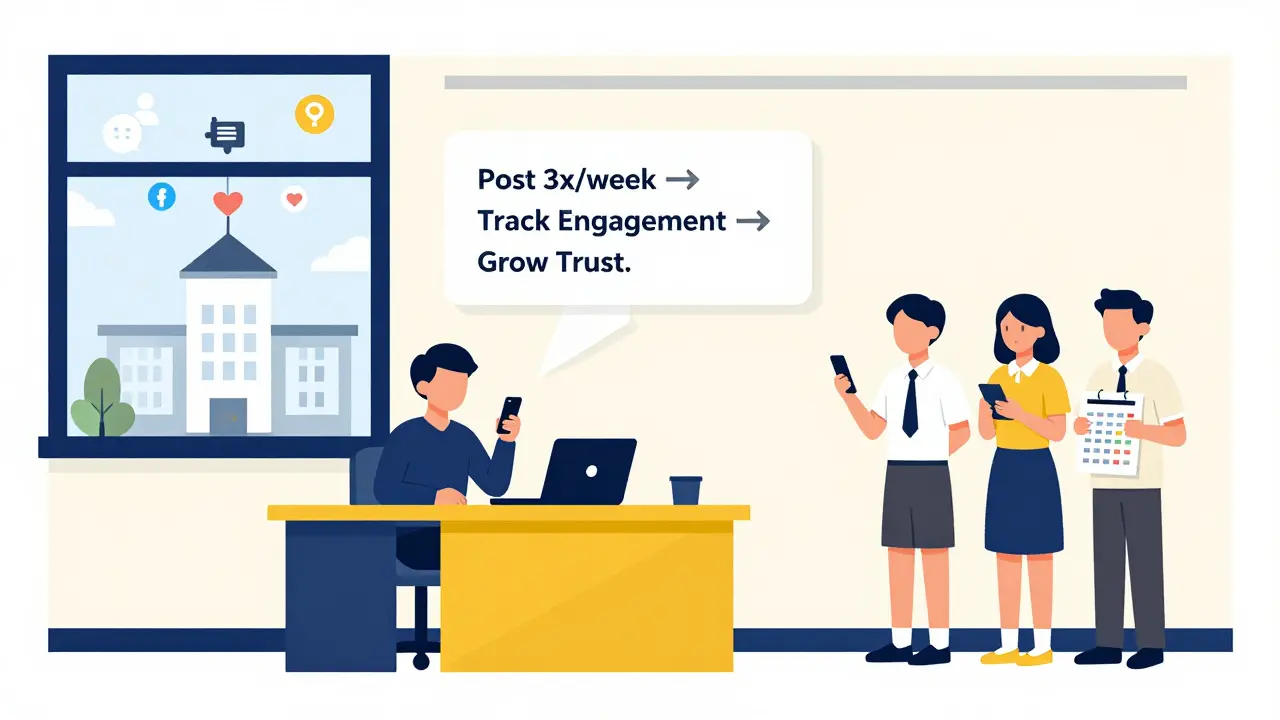
- Post consistently. Every Monday, Wednesday, Friday at 4 p.m. - when parents were scrolling after work.
- Use free tools. CapCut for editing. Canva for captions. Google Sheets for a simple content calendar.
By week 10, their follower count doubled. Inquiries from new families increased by 31%. And they didn’t spend a single dollar on ads.
The Hidden Risks - And How to Avoid Them
It’s not all smooth sailing. In 2025, 37% of schools faced a social media crisis. The most common issues?
- Inappropriate student comments - 58% of affected schools reported this. A student posted a sarcastic comment under a school video. It went viral. The school had no moderation policy.
- Misinformation - 42% of schools had false rumors spread about uniforms, curriculum changes, or staff. TikTok’s Educational Content Verification program (launched November 2025) helped reduce this by 38% for participating schools.
- Over-promising - a school posted a video titled “Our Graduates Get Into Ivy League.” One graduate didn’t get in. The backlash was swift.
Solutions?
- Have a moderation policy - even if it’s just one staff member checking comments daily.
- Use UTM tracking to see which posts actually lead to website visits or inquiries.
- Train students on digital citizenship - not just as a class, but as part of their role as ambassadors.
One school in Christchurch created a “Social Media Code of Conduct” signed by every student involved. They saw a 72% drop in crisis incidents.
The Future: AI, Video, and Student Voices
By 2027, 89% of schools will use AI to suggest content ideas. Tools like Meta’s Education Hub (coming Q1 2026) will auto-generate captions, suggest hashtags, and even recommend posting times based on student activity.
But the real winners? Schools that use tech to amplify human stories - not replace them.
Future trends to watch:
- 73% of Gen Z already uses TikTok and Instagram as their primary search tools - not Google.
- By 2027, 41% of enrollment decisions will be based on authentic storytelling - not rankings or test scores.
- Student-led content creation is up 47% since 2024. Schools that empower students, not just manage them, are seeing the highest trust and engagement.
The bottom line? Social media isn’t about broadcasting. It’s about belonging. It’s not about selling a school. It’s about showing who you are - and letting families decide if they belong there.
What’s the best social media platform for schools in 2026?
Instagram and TikTok are the top two platforms for K-12 schools in 2026. Instagram works best for visual storytelling - Reels, Stories, and Broadcast Channels let schools show daily life. TikTok dominates with Gen Z students and parents who use it as a search tool. YouTube is still strong for longer videos like virtual tours, while LinkedIn is essential for college prep schools. Avoid spreading too thin - focus on 2-3 platforms that match your audience.
Do schools need to hire a social media manager?
Not necessarily. Many successful schools use one staff member - often a teacher or administrator - with support from student volunteers. Training can be done with free resources from F.Learning Studio or YouTube. The key isn’t budget, it’s consistency. Posting 3 times a week with authentic content beats hiring someone who posts once a month with polished ads.
How do schools measure success on social media?
Success isn’t just likes. Track engagement rate (comments + shares ÷ followers), click-throughs to the website (using UTM links), and inquiries from social media. Schools that track these metrics report 31% higher enrollment conversion. Also monitor sentiment - are people saying they feel connected? Do parents say they’ve learned something new? That’s the real ROI.
Can public schools use social media effectively?
Yes - but they face more restrictions. Public schools often need district approval and may be limited in what they can post. The trick is to focus on community building, not promotion. Share student achievements, event highlights, and parent testimonials. Use private groups for internal communication. Even with limits, schools that post consistently see 19% higher community engagement than those who don’t.
What’s the biggest mistake schools make on social media?
Trying to be perfect. Schools often create overly polished content that feels fake. Parents and students can spot inauthenticity instantly. The biggest mistake is treating social media like a billboard - not a conversation. The winning approach? Let students speak. Show the messy, real moments. Be transparent. Trust grows when people feel seen - not sold to.
8 Comments
Write a comment