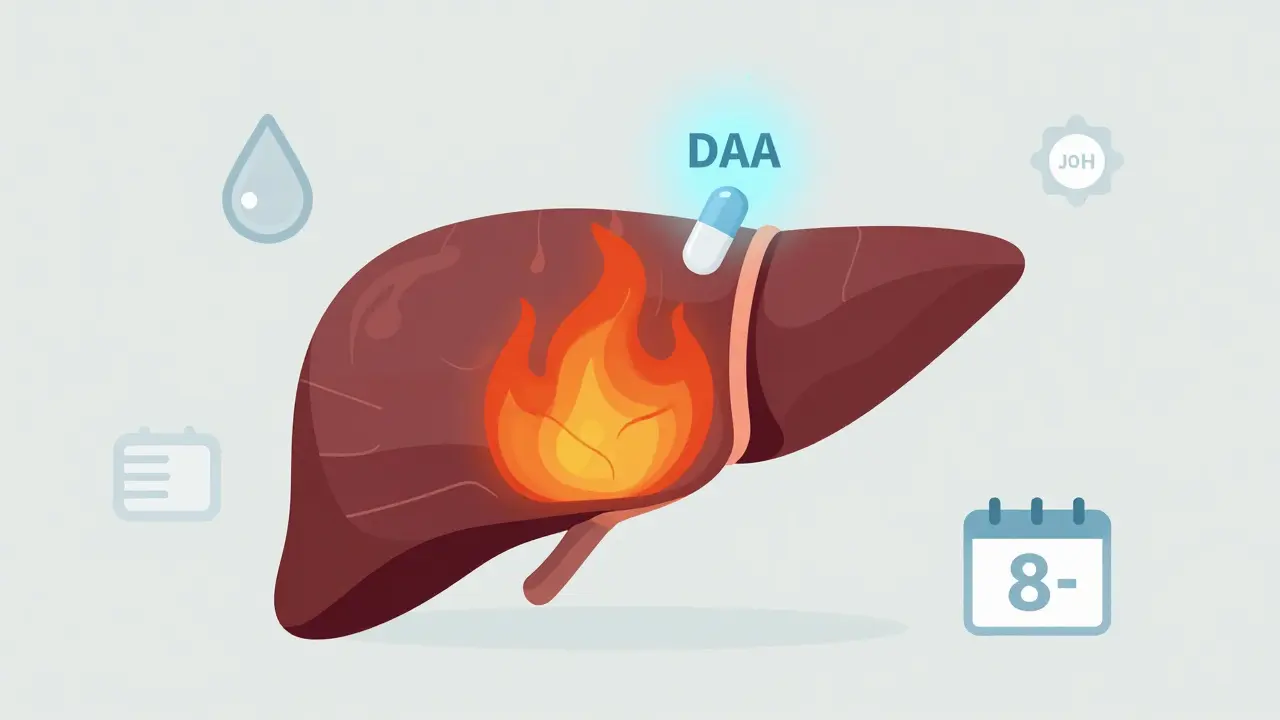
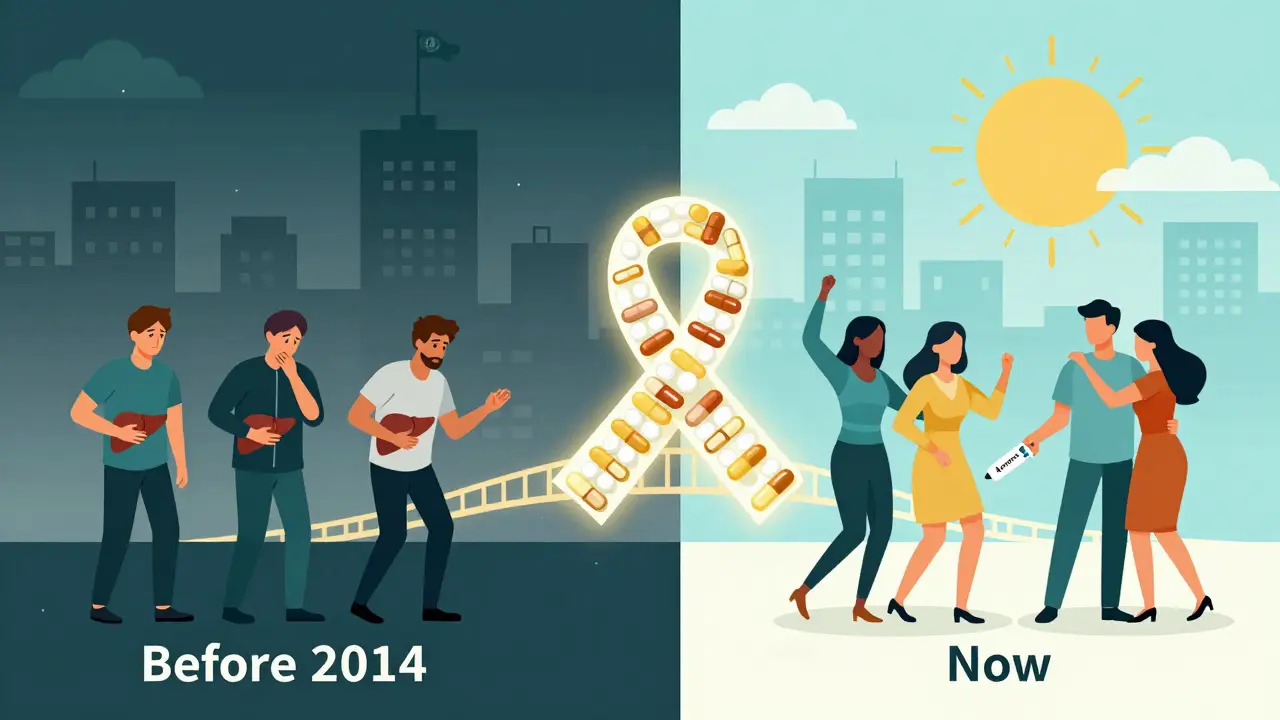
Before 2014, being diagnosed with chronic hepatitis C meant years of painful injections, brutal side effects, and no guarantee you’d be cured. Many people lived with the virus for decades, watching their livers slowly scar, knowing the risk of liver failure or cancer loomed. Today, that story has changed completely. You can now cure hepatitis C in as little as eight weeks-with a pill, no shots, and almost no side effects. This isn’t science fiction. It’s what’s happening in clinics right now.
What Chronic Hepatitis C Actually Does to Your Liver
Chronic hepatitis C isn’t just a virus in your blood. It’s a slow-burning fire inside your liver. When the hepatitis C virus (HCV) sticks around for more than six months, it starts attacking liver cells. Your body fights back, causing inflammation. Over time, that inflammation turns into scar tissue-fibrosis. Left unchecked, fibrosis becomes cirrhosis. At that point, your liver can’t filter toxins, make proteins, or store energy properly. About 20% of people with untreated chronic HCV develop cirrhosis within 20 years. Some go on to liver cancer or need a transplant. The scary part? Most people don’t feel anything for years. No jaundice. No pain. Just a quiet, creeping damage. That’s why so many are diagnosed only after routine blood tests or when complications show up. By then, the liver is already injured. But here’s the good news: if you catch it early and treat it, that damage can stop-and even reverse.The Game-Changer: Direct-Acting Antivirals (DAAs)
The real turning point came in 2013 and 2014 with the approval of direct-acting antivirals, or DAAs. These aren’t like the old treatments. No interferon. No ribavirin. No weekly shots that left people exhausted, nauseated, or depressed. DAAs are oral pills that target the virus directly. They block the proteins HCV needs to copy itself. Three main types do this:- NS3/4A protease inhibitors (like glecaprevir) stop the virus from cutting its proteins into usable pieces.
- NS5A inhibitors (like velpatasvir) mess with how the virus assembles new copies.
- NS5B polymerase inhibitors (like sofosbuvir) stop the virus from making its RNA blueprint.
Cure Rates Above 95%-And Why That Matters
The numbers don’t lie. Today, over 95% of people who take DAAs as directed achieve a sustained virologic response (SVR). That’s medical jargon for “the virus is gone from your blood 12 weeks after finishing treatment.” In real terms? You’re cured. Compare that to the old interferon-based treatments: 40% to 80% cure rates, depending on your virus strain, and treatment lasting up to a year. Even then, many couldn’t finish because of side effects. Now, 90% of patients report no major side effects. The most common? Mild fatigue or a headache for a few days. Most people keep working, driving, and living normally. This isn’t just about feeling better. It’s about surviving. Studies show that curing HCV cuts the risk of liver failure by 75%, liver cancer by 70%, and death by 80%. One man on Reddit said, “I was told I’d never date again. After Epclusa, I got married.” That’s not just health. That’s life restored.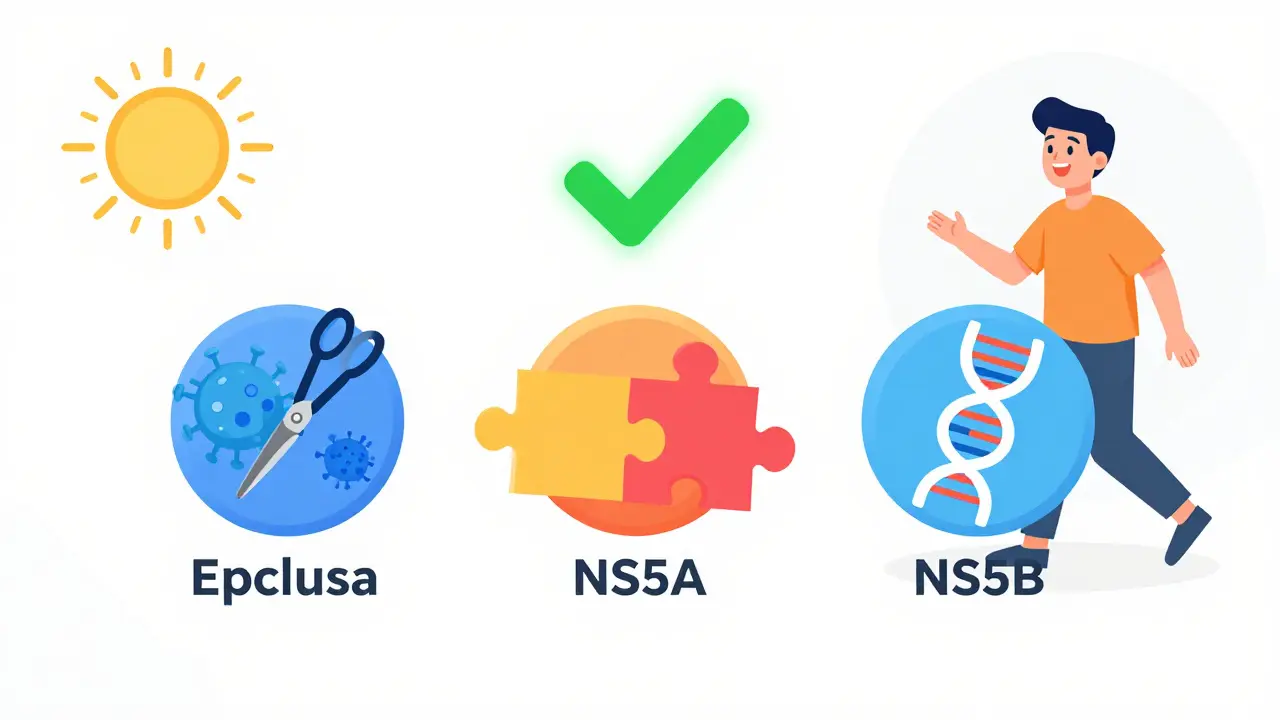
How Your Liver Heals After the Virus Is Gone
The liver is one of the few organs that can regenerate. Once the virus is cleared, the inflammation stops. Scar tissue doesn’t just sit there-it slowly breaks down. Research from the Mayo Clinic shows that in 70% of patients, fibrosis improves within five years after cure. In 95%, it stops getting worse. For people with early scarring, the liver can return to near-normal function. Even those with advanced cirrhosis see big gains. A 2024 study in Clinical Infectious Diseases found that cirrhotic patients who were cured had a 60% lower chance of needing a transplant or dying from liver disease compared to those who stayed infected. And it’s not just the liver. People who are cured report better energy, clearer thinking, and fewer joint pains. That’s because HCV doesn’t just live in the liver-it triggers chronic immune activation everywhere. Remove the virus, and your whole body relaxes.Who Can Get Treated? (Spoiler: Almost Everyone)
You don’t need to be young or healthy to qualify. DAAs work for:- People with cirrhosis
- Those with HIV co-infection (cure rates still above 95%)
- Patients who’ve had liver transplants
- People with kidney disease
- Children as young as three years old
The Real Problem: Access, Not Efficacy
Here’s the hard truth: the drugs work. But millions still don’t get them. In the U.S., only 20% of people with HCV know they’re infected. Of those, only half get treated. Why?- Screening gaps: Many doctors don’t test. The CDC recommends one-time testing for all adults, but it’s not routine.
- Insurance hurdles: Some insurers still require proof of advanced liver damage before approving treatment. That’s outdated. The CDC says treatment should be offered to everyone, regardless of stage.
- Cost: A 12-week course in the U.S. still costs around $75,000. That’s down from $94,500 in 2013, but it’s still a barrier. Luckily, manufacturer assistance programs cover 70% of uninsured patients. Generic versions are available for under $50 in low-income countries.
- Stigma: People who got HCV through drug use or past blood transfusions often avoid care because they feel judged.
What Happens If Treatment Fails?
It’s rare-but it happens. About 1% to 5% of people don’t respond to their first DAA regimen. That’s usually because they’ve had prior treatment or have rare resistance mutations. The good news? There are options. Vosevi (sofosbuvir/velpatasvir/voxilaprevir) is designed specifically for people who failed earlier DAAs. It combines three drugs in one pill and has a 96% success rate in retreatment. Specialists can also use newer combinations under study. The key is not to give up. Even after failure, cure is still possible.What You Need to Do Now
If you’ve ever had a blood transfusion before 1992, used injectable drugs, gotten a tattoo in an unregulated setting, or were born between 1945 and 1965-you should get tested. One blood test. No fasting. No needles. Just a simple HCV RNA test. If you test positive:- Don’t panic. You’re not alone. Over 10 million people have been cured since 2013.
- Ask for a referral to a provider who prescribes DAAs. Primary care doctors can handle most cases now.
- Check if you qualify for patient assistance programs. Most drugmakers offer free or low-cost treatment.
- Start treatment. No waiting. No “wait and see.”
What’s Next for Hepatitis C?
The World Health Organization wants to eliminate hepatitis C as a public health threat by 2030. That means 90% fewer new infections and 80% fewer deaths. We have the tools. We just need the will. Countries like Egypt and Georgia have slashed their HCV rates by over 80% in five years by making treatment free and easy. The U.S. can do the same. It’s not about better drugs. It’s about better systems. The science is done. The cure exists. The question now isn’t whether we can eliminate hepatitis C. It’s whether we’ll choose to.Can hepatitis C come back after being cured?
Once you achieve a sustained virologic response (SVR)-meaning the virus is undetectable 12 weeks after finishing treatment-you’re considered cured. The virus doesn’t hide in your body like HIV or herpes. However, you can get reinfected if you’re exposed again, especially if you continue injecting drugs. Reinfection rates among people who inject drugs are 5% to 10% per year. That’s why harm reduction services and ongoing testing matter.
Do I still need liver screenings after being cured?
Yes-if you had advanced fibrosis or cirrhosis before treatment. Even after cure, the risk of liver cancer doesn’t disappear overnight. The scar tissue remains, and cancer can still develop. Doctors recommend ultrasounds every six months for the first few years after cure if you had cirrhosis. If your liver was only mildly damaged, annual checkups are usually enough.
Are generic DAA drugs safe and effective?
Yes. Generic versions of sofosbuvir and velpatasvir are manufactured under strict quality controls in countries like India and Egypt. Studies published in The Lancet and Journal of Hepatology show they have the same cure rates-over 95%-as brand-name drugs. The WHO prequalifies these generics for use in low-income countries. The only difference is price: $50 per course instead of $75,000.
Can I drink alcohol after being cured of hepatitis C?
You can, but it’s not recommended. Even after cure, your liver is still recovering. Alcohol increases inflammation and can slow healing. If you had cirrhosis before treatment, any alcohol use raises your risk of liver cancer. For the best long-term health, avoiding alcohol entirely is the safest choice.
How long do DAA side effects last?
Most side effects, if any, are mild and last only a few days to a week. Fatigue, headache, and nausea are the most common. They usually peak in the first week and fade as your body adjusts. Unlike interferon, DAAs don’t cause depression, autoimmune reactions, or long-term fatigue. If side effects persist beyond two weeks, talk to your provider-it could be another issue.
Just finished my 8-week course of Mavyret last month. No side effects worth mentioning - maybe a tiny bit of fatigue the first week. My liver enzymes are back to normal. I’m 42, used to inject drugs in my 20s, and thought I’d be carrying this forever. Now I’m planning a trip to Iceland. Who knew a pill could rewrite your future?
Also, shoutout to the VA system - they got it right. Everyone else needs to catch up.
Thank you for this comprehensive and clinically accurate overview. As a healthcare provider, I appreciate the emphasis on early screening and the removal of outdated barriers to treatment. The data supporting DAA efficacy across comorbid populations is unequivocal, and it is imperative that clinical practice reflects this evidence. Continued education for primary care providers remains critical.
Let’s be honest - this isn’t a medical miracle. It’s capitalism with a side of corporate PR. The drugs cost $75,000 in the U.S. because the patents were bought, extended, and weaponized. Meanwhile, generics cost $50 and cure just as well. The ‘cure’ narrative distracts from the real issue: pharmaceutical monopolies that profit from human suffering. We celebrate the pill, but ignore the system that made it inaccessible for decades. This isn’t progress - it’s exploitation dressed in white coats.
And don’t get me started on ‘harm reduction.’ If you’re injecting drugs, you’re still a ‘high-risk’ patient to insurers. That’s not medicine. That’s moral judgment masquerading as policy.
I’ve worked with folks who’ve lived with HCV for 30 years - grandmas, vets, people who got it from a blood transfusion in ’87. They didn’t know they were sick until their kid got tested and asked, ‘Mom, why are you always tired?’
The real win here isn’t just the 95% cure rate. It’s that we’re finally treating people like humans, not problems. No more gatekeeping. No more ‘prove you’re worthy.’ Just a blood test, a prescription, and dignity.
And yes - the liver regenerates. I’ve seen it. A guy with stage 3 fibrosis, stopped drinking, took DAAs, and six months later, his biopsy showed almost no scarring. That’s not magic. That’s biology meeting compassion.
But we still have a long way to go. If you’re reading this and you’re over 45? Get tested. Even if you feel fine. Even if you’re embarrassed. Even if you think it’s too late. It’s not. You’re not too late.
And if you’ve already been cured? Tell someone. One conversation can save a life. That’s how change happens - not in boardrooms, but in living rooms, waiting rooms, and DMs.
Actually, you’re all wrong. The real breakthrough wasn’t DAAs - it was the WHO’s 2022 guideline shift. Before that, even if you had the drugs, insurers denied them because they followed outdated AASLD guidelines from 2016 that required F3 fibrosis. DAAs existed since 2013, but the system blocked access until 2022. So the cure wasn’t the pill - it was bureaucracy finally catching up to science.
Also, ‘reinfection rate’ is misleading. It’s not that people get reinfected - it’s that they’re still using needles without access to clean equipment. The problem isn’t the virus. It’s poverty. And nobody wants to talk about that.
I just want to say - if you’re reading this and you’re scared, I see you. I’ve been there. I thought I’d die alone because of this virus. I thought no one would ever want to kiss me again. I thought my liver was a ticking time bomb.
Then I got tested. Then I got treated. Then I got my life back. I started hiking again. I went to my niece’s wedding. I cried in the shower because I realized - I’m going to grow old.
You’re not broken. You’re not dirty. You’re not a burden. You’re just someone who got unlucky. And now? You have a chance. Don’t waste it. Take the test. Call the clinic. Apply for the assistance program. Do it today. Your future self will thank you.
I’m rooting for you. Always.
It is deeply concerning that this article romanticizes the use of pharmaceuticals without adequately addressing the moral implications of prior risk behaviors. Many individuals contracted hepatitis C through reckless conduct - intravenous drug use, unprotected sexual activity with multiple partners, or disregard for sterile procedures. To frame this as a simple ‘medical victory’ ignores the ethical responsibility individuals bear for their choices.
Furthermore, the normalization of treatment for active drug users, while laudable from a public health standpoint, inadvertently removes the natural consequence of harmful behavior. We must not sacrifice accountability for accessibility. A cure does not absolve responsibility.
OMG I JUST GOT CURED AND I’M CRYING IN MY CAR RIGHT NOW 😭💖
8 weeks. One pill a day. No needles. No misery. Just… me. My liver is singing. My brain is clear. I’m gonna get a tattoo of a ribbon on my wrist that says ‘SVR’ and I’m gonna wear it like a badge.
Also - I’m dating again. For real. First kiss in 12 years and I didn’t flinch. 🥹💋
TO EVERYONE STILL SCARED - YOU GOT THIS. YOU’RE WORTH IT. 💪❤️
Matthew, you’re not wrong about accountability - but you’re missing the point. This isn’t about blame. It’s about survival. People don’t choose to inject drugs because they’re ‘reckless.’ They do it because they’re in pain - physical, emotional, trauma-driven. And now we have a tool that doesn’t punish them for it.
Let me tell you about Maria. She was 52, homeless, on methadone, and had cirrhosis. She got treated through a mobile clinic. She’s now sober, working part-time, and mentoring others. She didn’t get cured because she ‘deserved’ it. She got cured because we stopped asking if she was worthy - and just gave her the medicine.
That’s not weakness. That’s humanity.
And if you think ethics should come before healing, ask yourself: who gets to decide who’s worth saving?