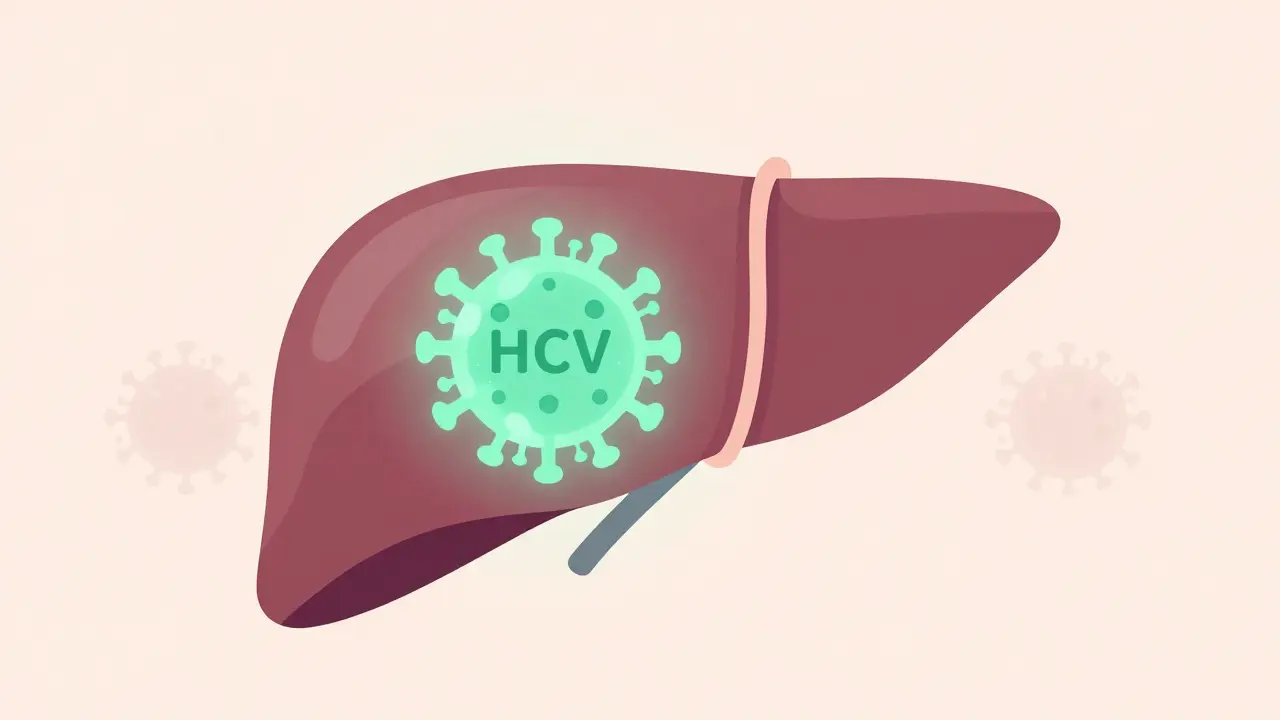
For decades, chronic hepatitis C was a slow-burning fire inside the liver. Many people carried the virus for years without symptoms, only to face cirrhosis, liver failure, or cancer later in life. Treatment used to mean months of painful injections, brutal side effects like depression and fatigue, and no guarantee of success. But everything changed after 2014. Today, chronic hepatitis C isn’t just manageable-it’s curable in most cases, with a simple 8- to 12-week pill regimen and almost no side effects.
What Chronic Hepatitis C Does to the Liver
Chronic hepatitis C happens when the hepatitis C virus (HCV) sticks around in your body for more than six months. Unlike acute infections that clear on their own, this one hides in liver cells and keeps copying itself. Over time, it triggers inflammation. The liver tries to repair the damage, but constant repair turns into scarring-fibrosis. Left unchecked, fibrosis becomes cirrhosis, where healthy tissue is replaced by hard, nonfunctional scar tissue. Cirrhosis raises the risk of liver cancer and liver failure.
What makes hepatitis C dangerous is how quiet it is. You might feel fine for 20 or 30 years. By the time symptoms show up-jaundice, swelling in the legs, confusion-the liver is already badly damaged. That’s why early detection matters. A simple blood test can find the virus before it causes irreversible harm.
The Revolution: Direct-Acting Antivirals (DAAs)
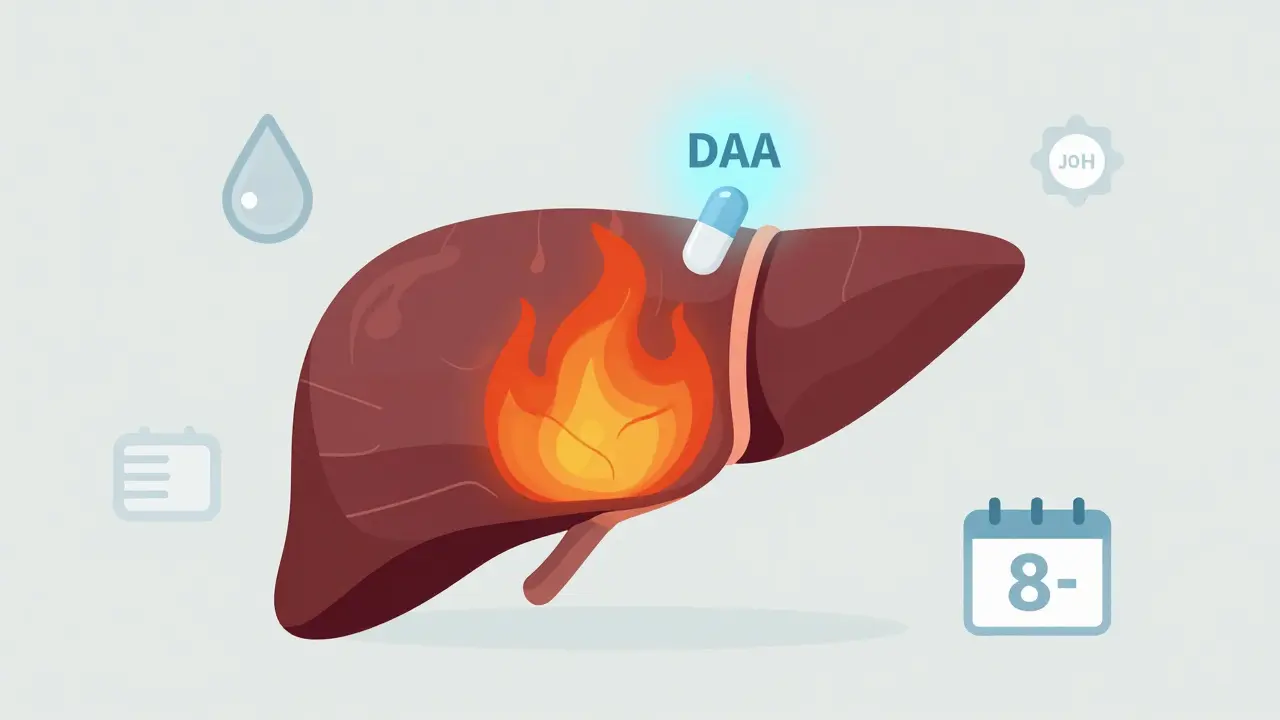
The game-changer came with direct-acting antivirals, or DAAs. These are oral medications that target specific parts of the hepatitis C virus’s life cycle. Before DAAs, treatment relied on interferon and ribavirin-drugs that boosted the immune system but also attacked healthy cells. Cure rates? As low as 40% for some genotypes. Side effects? Debilitating.
DAAs changed all that. Instead of forcing your body to fight, they disable the virus directly. There are three main types:
- NS3/4A protease inhibitors (like glecaprevir) stop the virus from making proteins it needs to replicate.
- NS5A inhibitors (like velpatasvir and pibrentasvir) block the virus from assembling new copies.
- NS5B polymerase inhibitors (like sofosbuvir) prevent the virus from copying its RNA.
Modern treatments combine two or three of these drugs into a single pill. You take one or two pills a day, no injections, no hospital visits. Treatment lasts 8 to 12 weeks. For people without cirrhosis, 8 weeks is often enough. Those with advanced scarring might need 12 or even 24 weeks.
Cure Rates Above 95%
The results are staggering. More than 95% of people who complete DAA treatment achieve a sustained virologic response (SVR)-meaning the virus is undetectable in the blood 12 weeks after finishing treatment. That’s considered a cure. Studies show SVR rates hit 97-99% in first-time patients.
This isn’t just a lab number. It translates to real life. People who were told they’d need a liver transplant are now living normal lives. One man in a Mayo Clinic survey said he finally felt safe enough to marry after being cured. Another said he stopped avoiding doctors because he was no longer ashamed of his diagnosis.
Even in tough cases, DAAs work. People with HIV co-infection now have a 95% cure rate-up from 25-30% with interferon. Liver transplant patients, who used to have a high risk of the virus coming back, now have a 94% chance of being cured after transplant.
How DAAs Protect the Liver
Curing the virus doesn’t just stop the damage-it reverses it. When the virus is gone, the liver starts healing. In 95% of patients, fibrosis stops progressing. In 70% of cases, scar tissue actually decreases over the next five years. That’s huge. It means your liver can regain function, even after years of infection.
Long-term studies show that curing hepatitis C cuts the risk of liver cancer by 70-80%. It also reduces the chance of liver failure and death by nearly 90%. This isn’t just about feeling better today-it’s about living longer, healthier, and without constant worry.
What the Treatment Actually Feels Like
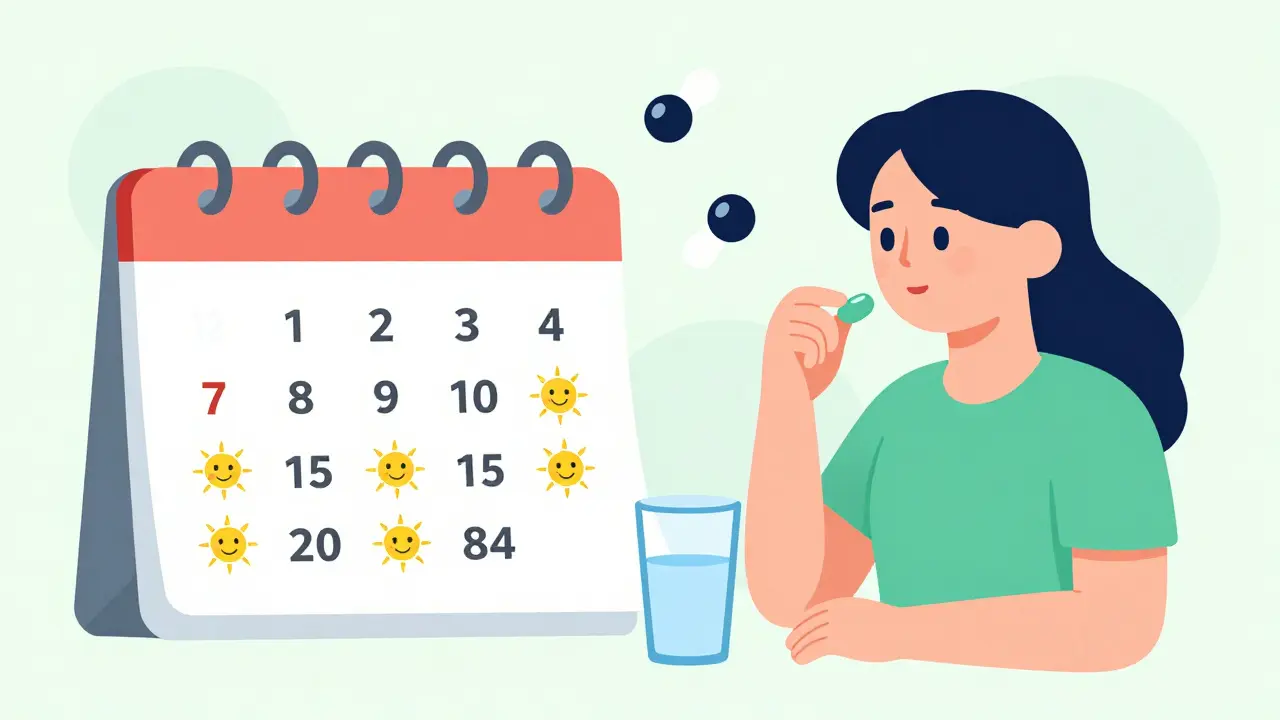
Most people report no side effects at all. The most common complaints? Mild fatigue or a headache during the first week. That’s it. No nausea. No hair loss. No mood crashes. No need to quit work or cancel plans.
On Reddit’s hepatitis C community, 92% of over 1,200 users who shared their experience said treatment was easy. One wrote: “Cured in 12 weeks with Epclusa-only side effect was mild fatigue first week.” Another said, “I didn’t even tell my coworkers. I didn’t want them to think I was sick.”
That’s the biggest shift. Treatment isn’t a burden anymore. It’s a routine. Take your pill. Go to work. Sleep well. Live normally.
Cost and Access: The Real Barrier
Yes, the drugs are expensive. In the U.S., a 12-week course used to cost $94,500. Today, it’s around $74,700. That’s still a lot. But prices have dropped sharply, and many insurance plans cover it now. Patient assistance programs from drugmakers like Gilead cover 70% of uninsured patients.
Outside the U.S., the story is different. Generic versions are available for as little as $50 per treatment course in low- and middle-income countries. The World Health Organization says more than 10 million people have been cured since 2013. But here’s the problem: only 20% of infected people globally even know they have it. And of those diagnosed, only 15% in poorer countries get treated.
Insurance denials are still common in places like the U.S. About 28% of patients face initial rejections and have to appeal. But once approved, treatment works almost every time.
Who Can Be Treated Now?
Almost everyone. The World Health Organization updated its guidelines in 2022 to recommend DAAs for children as young as three. People with kidney disease, HIV, or even advanced cirrhosis can be treated. Doctors no longer need to test for the exact hepatitis C genotype before prescribing-pan-genotypic drugs like Epclusa and Mavyret work against all six major strains.
Primary care doctors can now manage most cases. You don’t need a liver specialist. A simple blood test, a quick review of your other medications, and you’re on your way. The University of Washington found that clinicians can learn to prescribe DAAs correctly after just four hours of training.
What About People Who Failed Treatment Before?
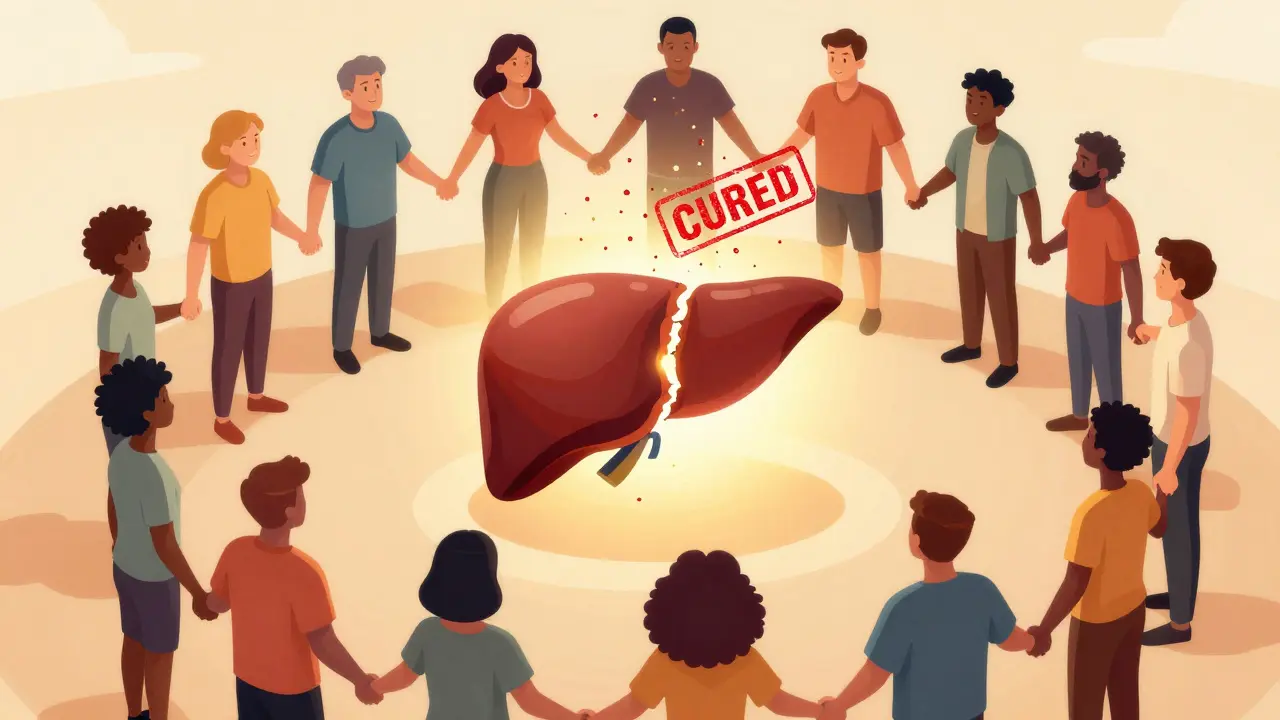
Some people tried interferon and didn’t respond. Others took older DAAs and the virus came back. That’s rare now, but it happens. For them, there’s Vosevi-a three-drug combo of sofosbuvir, velpatasvir, and voxilaprevir. It’s designed specifically for people who’ve already failed one or more DAA regimens. Success rates are still above 90%.
The bigger issue isn’t the drugs-it’s finding these patients. People who inject drugs, migrants, and those without stable housing are often missed by the system. That’s why public health efforts now focus on outreach: testing in needle exchanges, prisons, and homeless shelters.
The Big Picture: Can We Eliminate Hepatitis C?
The World Health Organization wants to eliminate hepatitis C as a public health threat by 2030. That means reducing new infections by 90% and cutting deaths by 65%. We have the tools. What we need is scale.
Right now, the U.S. treats about 200,000 people a year. To meet the 2030 goal, we’d need to treat 400,000. That’s doable-but only if we start testing more. Most people with hepatitis C don’t know they have it. Routine screening for adults born between 1945 and 1965, or anyone with a history of drug use, could find millions.
Some health systems are leading the way. The Veterans Health Administration now treats 95% of diagnosed patients. Community clinics? Only 65%. The gap isn’t about medicine. It’s about access, awareness, and resources.
What Comes Next?
The future isn’t about better pills-it’s about better delivery. Gilead plans to reach 1 million more patients in low-income countries by 2025. New guidelines focus on treating people with decompensated cirrhosis, liver cancer, and severe kidney disease. Even people with active drug use are now eligible for treatment, because curing hepatitis C reduces liver damage and improves overall health.
Reinfection is still possible, especially among people who inject drugs. About 5-10% get infected again each year. That’s why treatment must come with harm reduction: clean needles, counseling, and ongoing support.
But here’s the truth: hepatitis C is no longer a life sentence. It’s a solvable problem. The science is solid. The drugs work. The side effects are minimal. The only thing standing in the way is whether we choose to find and treat the people who need it.
If you’ve ever been told you have chronic hepatitis C, know this: you don’t have to live with it. You don’t have to wait. You don’t have to suffer. A cure exists. It’s simple. It’s effective. And it’s waiting for you.
Let’s be real - DAAs are one of the most successful medical breakthroughs of the 21st century. The fact that we went from 50% cure rates with interferon hell to 99% with a daily pill is insane. And it’s not just about the numbers - it’s about dignity. People who spent decades hiding their diagnosis can now walk into a doctor’s office without shame. That’s medical progress with a soul.
I work in a community clinic and I’ve seen it firsthand - a 62-year-old woman who hadn’t left her house in 7 years because she was terrified of her liver failing. She started Epclusa in March. By May, she was gardening again. By July, she was volunteering at the food bank. This isn’t medicine - this is magic. And we’re still not treating enough people. Why? Because we still treat hepatitis C like it’s a moral failure instead of a disease.
India has generic DAAs for $30 per course. We cured over 200,000 people last year. The problem isn’t cost - it’s screening. Most people don’t know they’re infected until they collapse. We need mobile testing vans in rural areas. Not more ads. Not more paperwork. Just access.
There’s something deeply human here. Hepatitis C didn’t just attack the liver - it attacked identity. People lost jobs, relationships, self-worth. The virus was silent, but the stigma screamed. Now, when someone gets cured, it’s not just a lab result - it’s a rebirth. I’ve had patients cry in my office because they finally feel ‘normal’ again. That’s not a pharmaceutical win. That’s a societal one. We need to stop seeing this as a ‘drug problem’ and start seeing it as a ‘care problem’.
And yes, the cost is still a nightmare in the U.S. But here’s the thing: the cost of *not* treating is higher. ER visits. Transplants. Lost wages. Families shattered. We’re spending billions on crisis management while ignoring prevention. That’s not fiscal responsibility - that’s moral bankruptcy.
Primary care docs can prescribe these pills now. No specialist needed. But many still don’t. Why? Because they’re scared. They don’t know the guidelines. Or worse - they assume their patient won’t comply. That’s bias disguised as caution. We’re failing people not because we lack drugs - but because we lack courage.
And let’s talk about reinfection. Yes, it happens. But curing someone doesn’t mean they’re ‘clean’ forever - it means they’re given a second chance. And if they relapse? We don’t punish them. We treat them again. That’s the point. Medicine isn’t about purity tests. It’s about humanity.
My 78-year-old uncle got cured last year. He’s been sober for 12 years. He didn’t need rehab to get this treatment. He just needed someone to believe he deserved it. He does. We all do.
My cousin took the pills. Didn’t tell anyone. Finished in 12 weeks. Now she hikes every weekend. She says the hardest part was telling her mom she had it - not taking the medicine. That’s the real story. The science is perfect. The stigma? Still broken.
Let me cut through the noise. The system is rigged. Big Pharma made $100 billion off these drugs. Now they’re charging $70k because ‘they need to recoup R&D.’ But the R&D was funded by taxpayers. The patents were built on government research. And now they’re locking access behind insurance hurdles? That’s not capitalism - that’s theft. If you’re still denying coverage, you’re not protecting profits - you’re killing people. And you know who pays? The uninsured. The homeless. The addicts. The elderly. The ones who can’t fight back.
And don’t give me that ‘but generics are cheap abroad’ crap. If you can make it for $50, you can make it for $50 here. The difference isn’t cost - it’s greed.
95% cure rate? That’s statistically impressive. But let’s not ignore the 5% who fail. What happens to them? Are they just written off? And what about the long-term liver recovery data? Most studies are only 5 years out. What about 15? 20? We don’t know if fibrosis reversal holds. This feels like hype wrapped in a clinical trial.
Let’s contextualize this. The WHO’s 2030 elimination goal is a socialist fantasy. We’re talking about eradicating a disease that thrives in populations with high rates of IV drug use, incarceration, and transnational migration. You can’t cure what you won’t test. And you won’t test if you’re afraid of the social cost. This isn’t a medical problem - it’s a cultural one. And we’re not ready to face it. DAAs are a band-aid on a hemorrhage.