Imagine buying a bottle of generic ibuprofen. You expect the price to be roughly the same whether you are in New York, Texas, or California. It is a mass-produced commodity with identical ingredients and manufacturing standards. Yet, when you walk into different pharmacies across state lines, the sticker shock can be real. One person might pay $4 for a month’s supply, while another pays $20 for the exact same medication. This isn’t just bad luck; it is a systemic feature of how the United States handles pharmaceutical distribution.
The question on everyone’s mind is simple: why do generic drug prices fluctuate so wildly based on geography? The answer lies not in the cost of production, but in a tangled web of insurance contracts, state laws, and middleman negotiations that vary from one border to the next.
The Hidden Role of Pharmacy Benefit Managers (PBMs)
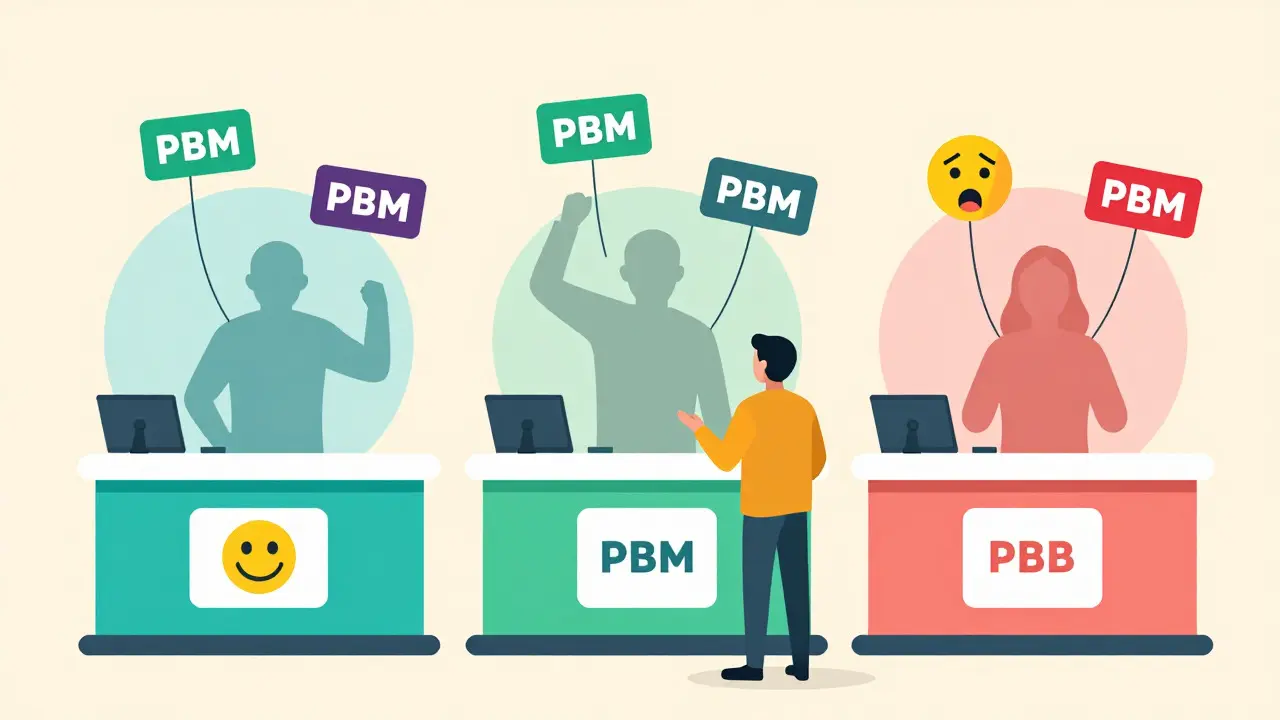
To understand why your location matters, you first have to look at who actually sets the price you see at the counter. For most insured patients, this is not the pharmacist, nor is it the drug manufacturer. It is the Pharmacy Benefit Manager (PBM), which is an intermediary organization that administers prescription drug benefit programs on behalf of health insurers, employers, and government agencies. Major players like CVS Caremark, Express Scripts, and OptumRx negotiate rebates and fees between manufacturers and pharmacies.
Here is where the geographic split happens. PBMs operate under complex, often opaque contracts that differ significantly by region. A study by the USC Schaeffer Center revealed that consumers often overpay for generics by 13% to 20% due to these opaque pricing practices. These distortions are not uniform. In states with high market concentration-where one or two PBMs dominate the insurance landscape-patients tend to face higher out-of-pocket costs because there is less competitive pressure to lower prices.
Consider the case of generic atorvastatin, a common cholesterol medication. Users in California reported paying $45 for a 90-day supply with insurance, while users in Texas paid $120 for the same prescription. The difference wasn’t the drug; it was the specific PBM contract tied to their local insurance plan. In some markets, PBMs charge pharmacies higher administrative fees, which are then passed down to the consumer in the form of inflated copays.
State Laws and Transparency Regulations
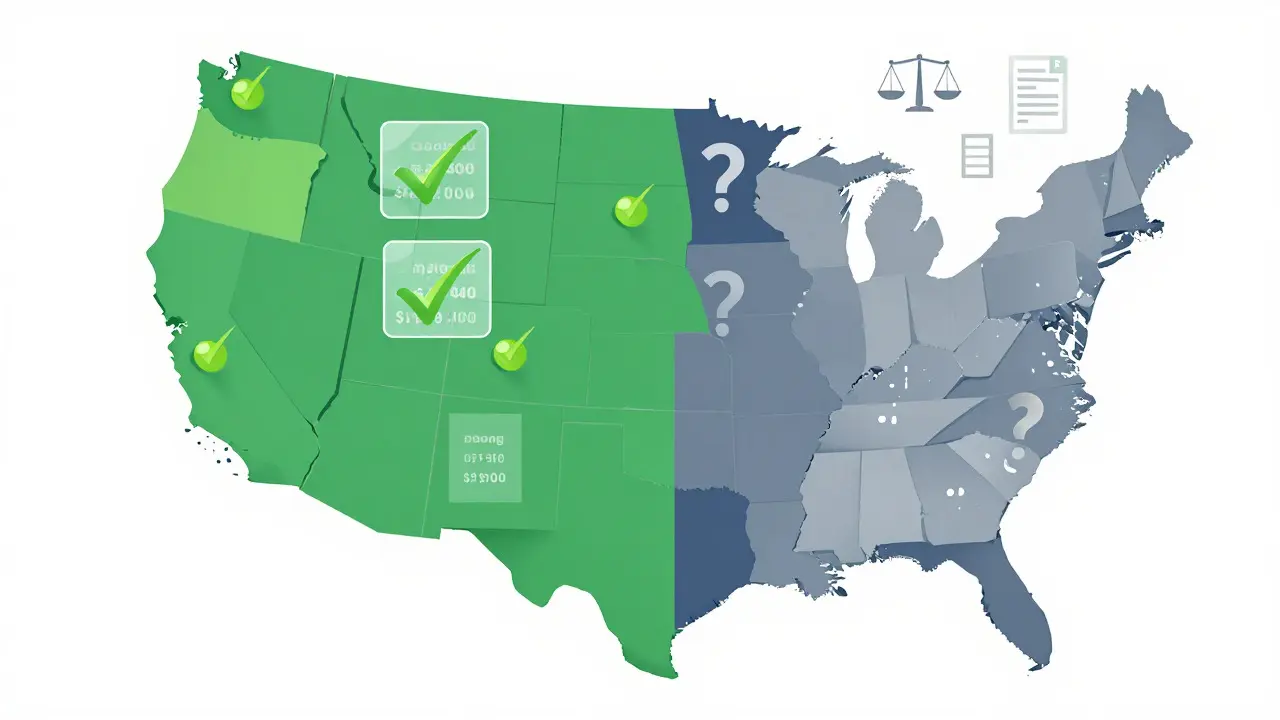
If PBMs are the engine of price variation, state legislation acts as the brakes-or sometimes, the accelerator. Over the last decade, states have become the most proactive level of government in addressing drug pricing issues. Vermont became the first state to pass drug transparency legislation in June 2016, followed closely by California in 2017. These laws require manufacturers and PBMs to disclose pricing data, theoretically allowing for more competition and lower costs.
Data supports the impact of these regulations. Patients in states with stronger transparency laws, like California, paid 8-12% less for generic medications than those in states with weaker regulations. However, the legal landscape is tricky. In April 2018, a federal appeals court ruled that Maryland’s law targeting generic drug price-gouging was unconstitutional, citing violations of interstate commerce clauses. This ruling constrained states’ ability to directly cap prices, forcing them to rely on indirect methods like transparency mandates and affordability boards.
As of 2023, 18 states had implemented drug affordability boards. These bodies review drug prices and can recommend alternatives or impose penalties if prices rise without justification. While they cannot always force a price drop, they create a regulatory environment that discourages arbitrary spikes, leading to more stable pricing compared to states without such oversight.
| Factor | Impact on Price | Example Mechanism |
|---|---|---|
| PBM Market Concentration | Higher prices in low-competition areas | Fewer PBMs negotiating leads to less leverage for lower rebates |
| Transparency Laws | Lower prices (8-12% reduction) | States like CA and VT require public disclosure of pricing data |
| Medicaid Reimbursement Rates | Varies by state formula | Some states use NADAC, others use Average Wholesale Price (AWP) |
| Pharmacy Competition | Lower prices in high-competition zones | Rural areas with single pharmacies often see higher markups |
Medicaid and Reimbursement Formulas
For millions of Americans covered by Medicaid, the price of a generic drug is largely determined by the state’s reimbursement methodology. Medicaid does not pay a flat national rate. Instead, each state chooses how to calculate what they will reimburse pharmacies for dispensing drugs to beneficiaries.
Some states utilize the National Average Drug Acquisition Cost (NADAC), which is updated monthly using a three-month moving average. Others may use older benchmarks like the Average Wholesale Price (AWP). The choice of benchmark matters immensely. If a state uses an outdated or inflated benchmark, pharmacies receive higher reimbursements, which can lead to higher list prices and copays for patients. Conversely, states that aggressively update their rates to reflect actual acquisition costs can drive down the overall price floor for generics.
This creates a patchwork system. A patient moving from a state with aggressive NADAC updates to one with lagging AWP-based calculations might see their effective cost for the same generic medication jump overnight, even if their insurance plan remains similar. This disparity is particularly acute for low-income populations who rely heavily on Medicaid coverage.
The Cash vs. Insurance Paradox
One of the most confusing aspects of U.S. drug pricing is that using your insurance doesn’t always save you money. In fact, for many generic prescriptions, paying cash is significantly cheaper. A 2021 study found that direct out-of-pocket payments by insured consumers for generic prescription drugs declined by about 50% when patients paid cash rather than using insurance.
Why does this happen? Insurance plans often have negotiated copays that are disconnected from the actual wholesale cost of the drug. Meanwhile, cash-pay services like GoodRx or discount pharmacies like Mark Cuban’s Cost Plus Drug Company bypass the PBM entirely. They negotiate directly with wholesalers or manufacturers, cutting out the middlemen fees that inflate insured prices.
In 2020, 4% of U.S. prescriptions were paid in cash, with 97% of those being for generics. This trend highlights a critical insight: the “insurance price” is often an artificial construct driven by state-specific PBM contracts. In states with weak regulatory oversight, the gap between the cash price and the insured copay widens, making cash payment the rational economic choice for savvy consumers.
Market Competition and Rural Disparities
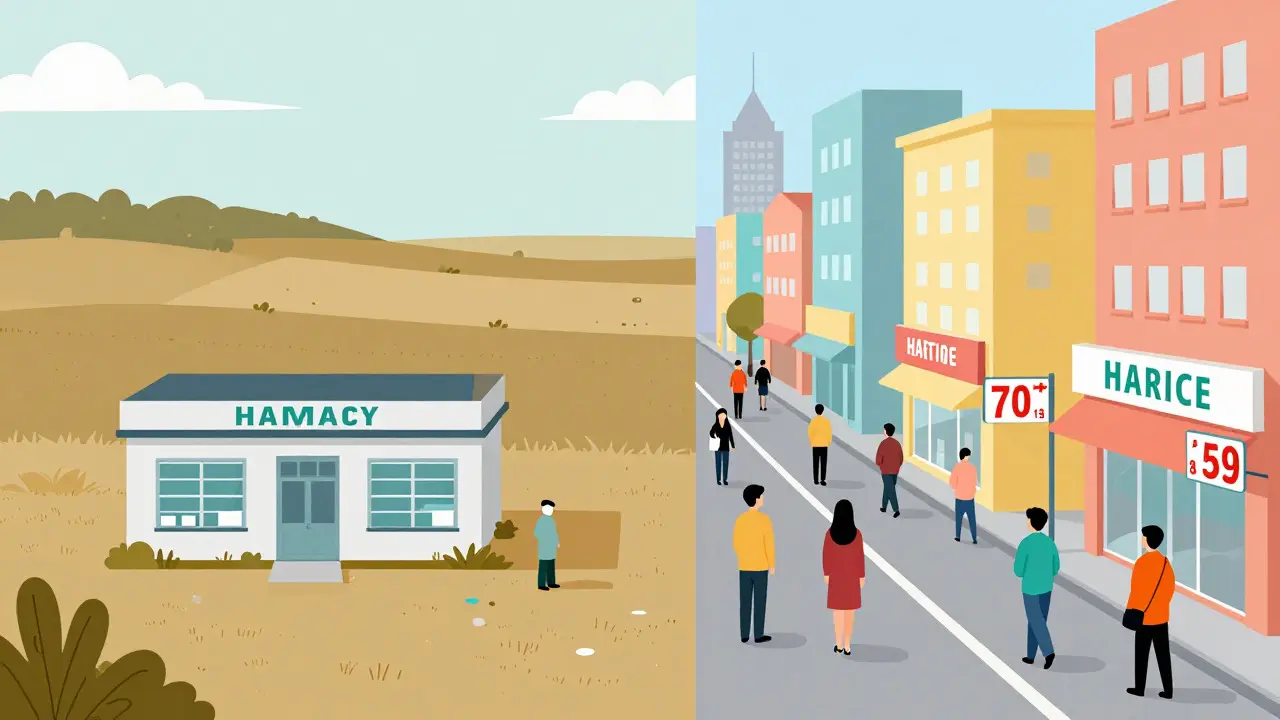
Geography also dictates the level of competition among pharmacies. In dense urban centers, multiple chain pharmacies and independent stores compete for customers, driving prices down through volume discounts and promotional offers. In rural areas, however, a single pharmacy might serve an entire county.
Lack of competition allows these isolated pharmacies to maintain higher markups. Data shows that rural areas typically experience higher generic drug prices due to reduced pharmacy competition. When there is no alternative provider nearby, patients have little bargaining power. This geographic monopoly effect compounds the issues caused by PBM contracts and state reimbursement rules, creating hotspots of high drug costs in underserved regions.
Federal Interventions and Future Outlook
While states have been experimenting with solutions, federal policy is beginning to play a larger role. The Inflation Reduction Act of 2022 introduced significant reforms for Medicare Part D, including a $35 monthly cap on insulin and a $2,000 annual out-of-pocket cap effective in 2025. These provisions apply only to Medicare beneficiaries, who accounted for 32% of national drug spending in 2021.
CMS actuaries project that these federal caps will reduce out-of-pocket drug spending by 18.5% by 2030. However, the impact will vary by state based on Medicare enrollment rates and existing state-level regulations. For non-Medicare patients, the burden remains on state-level actions and individual navigation skills. Experts predict that state variations will persist but may narrow as federal policies take full effect between 2023 and 2026. Until then, understanding your local market dynamics is the best defense against unexpected costs.
Why is my generic drug more expensive in my state?
Prices vary due to differences in Pharmacy Benefit Manager (PBM) contracts, state transparency laws, and Medicaid reimbursement formulas. States with fewer competing PBMs or weaker transparency regulations often see higher prices for consumers.
Is it cheaper to pay cash for generic drugs?
Often, yes. Studies show that paying cash can reduce costs by up to 50% for generic medications compared to using insurance. This is because cash payments bypass PBM fees and opaque insurance copay structures. Services like GoodRx or discount pharmacies facilitate these savings.
How do state laws affect drug prices?
States with strong transparency laws, such as California and Vermont, require drug makers and PBMs to disclose pricing data. This increased visibility has been linked to 8-12% lower prices for generic medications compared to states with weaker regulations.
Do rural residents pay more for generic drugs?
Yes, rural areas typically experience higher prices due to reduced pharmacy competition. With fewer providers serving a large area, pharmacies have more pricing power, leading to higher markups compared to competitive urban markets.
Will the Inflation Reduction Act lower generic drug prices nationwide?
The Act primarily helps Medicare beneficiaries by capping insulin costs and setting an annual out-of-pocket limit. While it reduces overall spending for seniors, its impact on commercial generic drug prices varies by state and depends on existing local regulations.