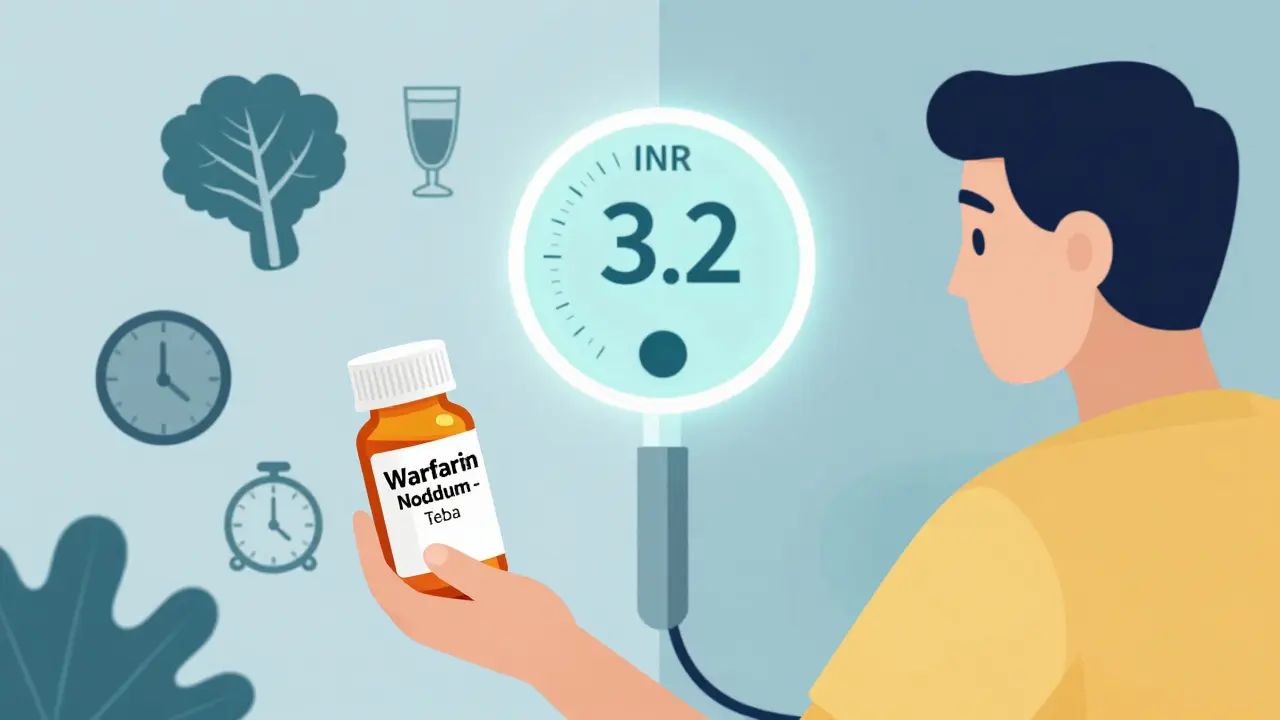
Switching from brand-name warfarin (Coumadin) to a generic version might seem like a simple cost-saving move-but for patients on this medication, it can be anything but. Warfarin isn’t like most pills. It’s a warfarin with a razor-thin margin between working perfectly and causing dangerous bleeding or blood clots. That’s why every dose change, every switch in brand, and every dietary shift matters. If you’re on warfarin-or care for someone who is-you need to understand what happens when generics are swapped in, and how to stay safe.
Why Warfarin Is Different
Most medications have some wiggle room. If your blood pressure pill works at 10 mg, 12 mg might still be fine. Not warfarin. Its therapeutic window is so narrow that a 10% change in dose can push your INR from safe to life-threatening. The target INR? Usually between 2.0 and 3.0. Go below 2.0, and you risk clots. Go above 3.0, and you risk bleeding. For someone with a mechanical heart valve, the range is even tighter: 2.5 to 3.5. One wrong move, and you could end up in the ER.Warfarin’s job is to slow blood clotting, but it does so by blocking vitamin K, which your body needs for normal clotting. That means what you eat, what other drugs you take, and even how your body processes the medicine can all change how well it works. It’s why doctors don’t just write a prescription and walk away-they schedule regular blood tests to check your INR. And when you switch from one generic version to another, even if they’re both labeled "warfarin sodium," your body might react differently.
Generic Warfarin: Same Drug, Different Results?
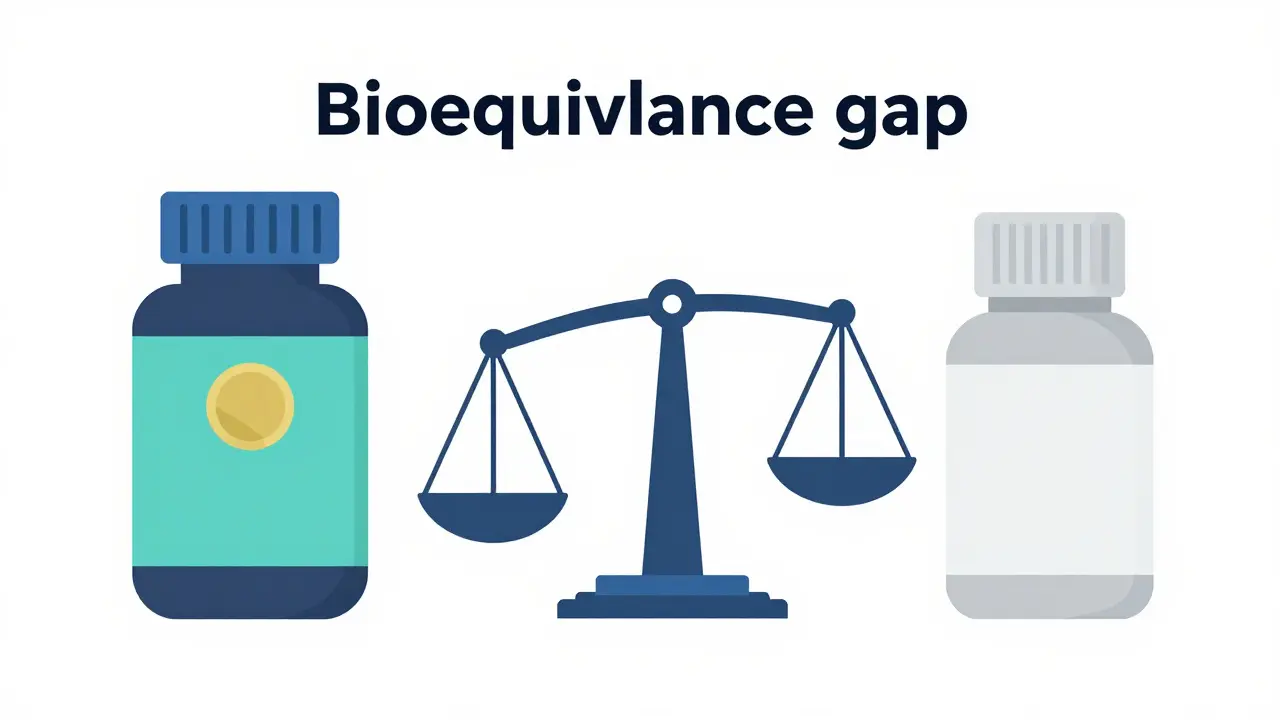
The FDA says all approved generic warfarin products are "therapeutically equivalent" to Coumadin. That means they meet the same standards for absorption, strength, and quality. But "equivalent" doesn’t always mean "identical" in practice.Generic drugs must prove they deliver 80% to 125% of the active ingredient compared to the brand. For most medications, that’s fine. For warfarin? That 45% range is huge. A 10% difference in absorption can shift your INR by 0.5 units-enough to trigger a warning. Studies show that while most patients switch without issue, about 15-20% see unexpected INR changes after a generic switch. Some see their INR spike. Others drop. Neither is safe.
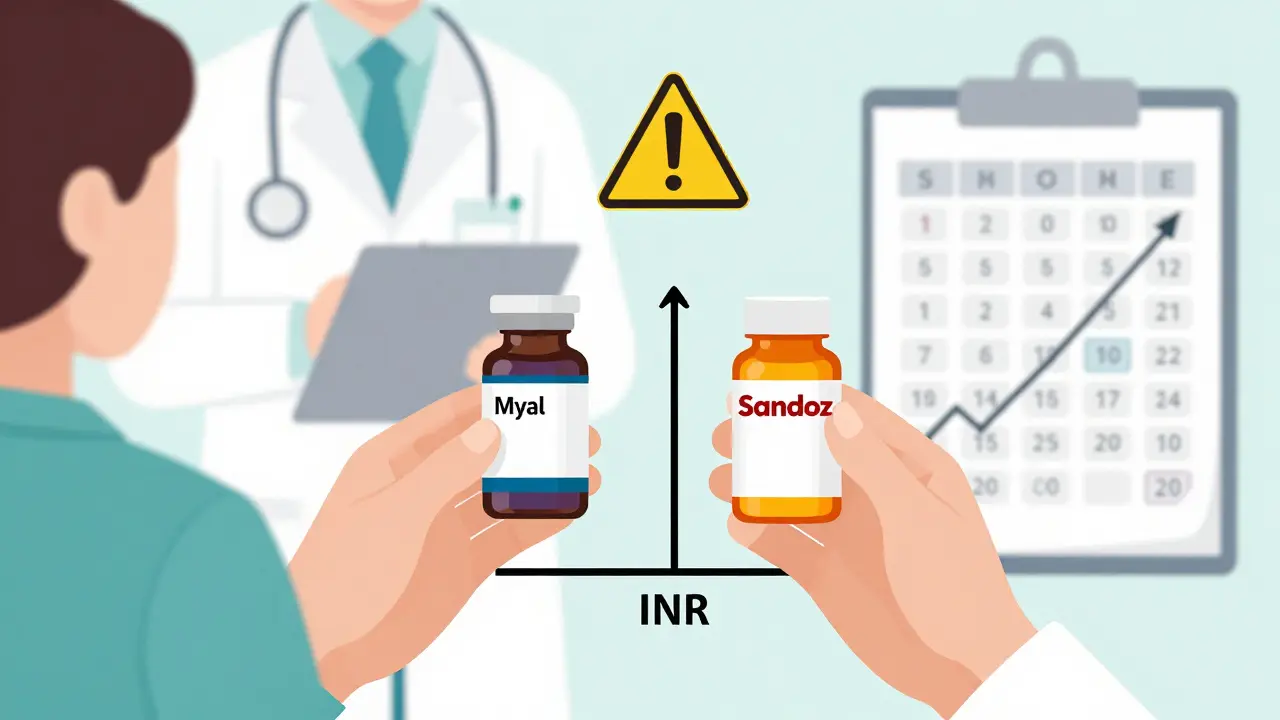
One 2000 study of 182 patients who switched from Coumadin to a generic made by Barr Laboratories found no significant change in INR control or bleeding events. But that was one generic, from one manufacturer. Today, there are 12 approved generic warfarin products from eight different makers. If you switch from Teva to Mylan to Sandoz, each change carries a small but real risk. The FDA acknowledges this: they warn that "individual patient responses may vary when switching between products."
When Switching Generics, Monitor Like You’re Starting Over
If you’ve been stable on warfarin for months-or years-and your pharmacy switches your prescription to a different generic, don’t assume everything’s fine. The Cleveland Clinic and American Family Physician both recommend treating every switch like a new start.Here’s what you should do:
- Get your first INR test within 3 to 5 days after the switch.
- Test again every 2 to 3 days for the next week.
- Continue testing weekly for at least two weeks.
- Only return to your normal 4- to 6-week schedule if your INR stays steady.
Some patients need even more frequent checks. If you’re elderly, have liver disease, or are taking other medications that interact with warfarin, your doctor may ask for daily testing for the first week. Don’t push back. This isn’t overkill-it’s survival.
Also, keep a written log. Write down the name of the generic you’re taking (e.g., "Warfarin Sodium, Teva 5 mg"). If your INR goes haywire, that info could be the key to figuring out why. The Institute for Safe Medication Practices says this level of documentation saves lives.
What Else Can Throw Off Your INR?
Even if you stay on the same generic, other things can mess with your INR:- Diet: Eating a big bowl of kale, spinach, or broccoli one week and then skipping greens the next? That can swing your INR. Vitamin K counteracts warfarin. Keep your intake steady-around 100-150 mcg daily. Don’t go on a kale diet or a juice cleanse.
- Medications: Over 300 drugs interact with warfarin. Antibiotics, antifungals, even some OTC painkillers and herbal supplements (like garlic, ginkgo, or St. John’s wort) can spike or drop your INR. Always tell your doctor about every pill, patch, or supplement you take-even if you think it’s "harmless."
- Alcohol: Heavy drinking raises bleeding risk. Even moderate drinking can make your INR unpredictable.
- Illness: Fever, infection, or diarrhea can change how your body absorbs or breaks down warfarin. Call your doctor if you’re sick.
- Missed doses: Skipping a pill? Taking two? That’s a recipe for trouble. Set phone alarms. Use pill organizers. Don’t guess.
Why Do Doctors Still Prescribe Warfarin?
You’ve probably heard about newer blood thinners-DOACs like Eliquis, Xarelto, Pradaxa. They don’t need INR checks. They have fewer food interactions. They’re easier. So why isn’t everyone on them?Because they’re not always better.
- Cost: Generic warfarin costs $4 to $10 a month. DOACs cost $300 to $500. Medicare patients often choose warfarin because they can’t afford the alternatives.
- Reversibility: If you bleed out in an emergency, doctors can reverse warfarin with vitamin K or fresh frozen plasma. DOACs don’t have reliable, fast-acting antidotes for all types.
- Specific conditions: Warfarin is still the gold standard for mechanical heart valves, especially mitral valves. DOACs aren’t approved for this use. They’re also not recommended for patients with severe kidney failure, where warfarin is safer.
That’s why, despite DOACs making up 65% of new prescriptions, over 1.2 million Americans still rely on warfarin in 2026. For many, it’s not a second choice-it’s the only choice.
What to Do If Your INR Goes Wild
If your INR suddenly jumps above 4.0 or drops below 1.5, don’t panic-but don’t ignore it either. Here’s what your doctor will likely do:- Check for causes: Did you change your diet? Start a new drug? Miss doses? Get sick?
- Adjust your dose by 5-10% and retest in a week.
- If no cause is found, they may switch you back to your original brand or generic-especially if you’ve had a recent switch.
- If your INR is dangerously high (above 5.0), you might need vitamin K or even a blood transfusion.
One study of 3,000 nursing home residents found that 1 in 6 had an adverse event linked to warfarin-and many were preventable. The biggest culprit? Poor monitoring and unexplained INR changes after switching products.
Bottom Line: Don’t Let a Generic Switch Become a Crisis
Generic warfarin saves money. It’s safe for most people. But safety doesn’t mean "no monitoring." It means smart monitoring.If you’re switching generics:
- Ask your pharmacist: "Which manufacturer is this?" Write it down.
- Call your doctor immediately after the switch to schedule your first INR test.
- Don’t wait for your next routine check. Test early and often.
- Keep your diet consistent. Avoid new supplements. Tell your doctor about every medication.
- If your INR is unstable, don’t assume it’s "just a fluke." Push for answers.
Warfarin isn’t going away. It’s too cheap, too effective for certain conditions, and too vital for millions. But it demands respect. A switch isn’t just a refill. It’s a red flag. Treat it like one.
Can I switch between different generic warfarin brands without testing?
No. Even though all generics are FDA-approved as equivalent, switching between different manufacturers can cause unpredictable changes in your INR. Always get your INR checked within 3 to 5 days after any switch, and continue testing weekly for at least two weeks. Never assume stability after a switch.
Why does warfarin need so much monitoring compared to newer blood thinners?
Warfarin works by blocking vitamin K, which affects clotting proteins your body constantly produces. Its effect is influenced by diet, other medications, liver function, and even genetics. Newer drugs like Eliquis or Xarelto work differently-they don’t interact with vitamin K, and their levels are more predictable. That’s why they don’t require routine blood tests. But warfarin’s reliance on metabolic pathways makes it far more variable.
Is generic warfarin less effective than Coumadin?
Studies involving over 40,000 patients show that generic warfarin is just as effective as Coumadin for most people. The average difference in INR after switching is less than 0.1 units-clinically insignificant for most. But individual responses vary. A small percentage of patients (15-20%) will have noticeable changes in INR after a switch, which is why monitoring is critical.
What should I do if I notice unusual bruising or bleeding after switching warfarin?
Call your doctor immediately. Unusual bruising, nosebleeds, blood in urine or stool, or severe headaches could mean your INR is too high. Don’t wait for your next appointment. Get an INR test right away. If your INR is above 5.0, you may need emergency treatment with vitamin K or plasma.
Can genetic testing help predict how I’ll respond to a generic switch?
Yes. Research shows that variations in two genes-CYP2C9 and VKORC1-affect how your body processes warfarin. People with certain genetic profiles are more sensitive to small dose changes. While routine genetic testing isn’t standard yet, it’s becoming more common in specialized anticoagulation clinics. If you’ve had unstable INR after switches, ask your doctor if genetic testing could help guide future dosing.
Next Steps: How to Stay Safe
- Always know which generic you’re on-write down the manufacturer name.
- Keep a log of your INR results, dates, and any changes in diet or meds.
- Set reminders for INR tests-don’t rely on your pharmacy to call you.
- Never refill a warfarin prescription without checking your latest INR.
- If you’re stable for over 6 months, ask if you’re a candidate for a DOAC-but only if cost and health status allow.
Warfarin saves lives. But it doesn’t forgive mistakes. Stay informed. Stay vigilant. Your next INR test could be the one that keeps you alive.
OMG I switched generics last month and my INR went from 2.8 to 4.3 in 48 hours 😱 I thought I was gonna bleed out in my sleep. My doc had to give me vitamin K and I’m now stuck on Coumadin again. Don’t let Big Pharma trick you into thinking generics are the same. They’re not. Stay vigilant.
Generic warfarin is a regulatory failure. The FDA’s 80-125% bioequivalence window is a joke. You wouldn’t let a pharmacist swap your insulin brand. Why are we letting this happen with anticoagulants? It’s not science. It’s cost-cutting disguised as efficiency.
US patients need to stop whining. If you can’t afford Coumadin, you’re not entitled to premium care. Generic warfarin works for 80% of people. The rest? They’re outliers. Stop demanding special treatment. The system isn’t broken-it’s efficient.
Dear friends, I must express my deep concern regarding the lack of standardized monitoring protocols across healthcare systems. While the article provides excellent guidance, many patients in underserved communities do not have access to timely INR testing. This is not merely a pharmacological issue-it is a systemic equity crisis.
Generic switching is a corporate conspiracy to maximize profit under the guise of cost reduction. The FDA is complicit. The same labs that approve generics are funded by pharma. Your INR fluctuations? Not random. Deliberate. They want you dependent on frequent testing so they can bill you for more visits. Wake up.
Anyone who thinks generics are safe for warfarin is either naive or paid by a pharmacy chain. I’ve seen 3 patients bleed out after a switch. The FDA doesn’t test real-world variability. They test in labs with healthy people. Real patients? We’re guinea pigs. And the worst part? No one’s held accountable.
It’s fascinating how emotionally charged this topic is. The assumption that patients are incapable of managing their own INR shifts reveals a paternalistic bias in modern medicine. If we trust people to manage insulin or dialysis, why not warfarin? The real issue is not the drug-it’s the lack of patient autonomy.
Why are we even still using warfarin? It’s 2026. DOACs exist. They’re safer. They’re easier. The only reason people are still on it is because doctors are lazy and pharmacies push generics for profit. Stop romanticizing a 70-year-old drug. It’s like driving a Model T because "it’s reliable."
Oh wow. A 15-sentence article about a drug that requires a PhD to use safely. Congratulations. You’ve turned a simple anticoagulant into a full-time job. Next up: How to properly breathe while on warfarin. I’m sure there’s a 200-page white paper on optimal oxygen intake.
so like i switched to teva warfarin and my doc said its fine but then i started taking turmeric for my knee and my inr went to 5.3. now i know never to trust anyone. not docs not pharmacists not the fda. just dont switch. ever.
Wait… so you’re telling me… that if you switch from one generic to another… you need to test your INR… more than once?!!?? Like… multiple times?? That’s… insane. Who has time for this? This is why people stop taking it. It’s not the drug. It’s the system. And the system is broken.
I’ve been on warfarin for 12 years. I’ve switched generics 7 times. I keep a notebook. I write down the manufacturer, the date, my INR, what I ate, even if I drank coffee that day. I’ve had 3 ER trips. All because someone at the pharmacy thought "it’s the same drug." It’s not. And if you don’t track it? You’re gambling with your life.
Thank you for this. My mom had a stroke last year after a generic switch. No one warned us. We thought "FDA-approved" meant "safe." We were wrong. Now I call the pharmacy before every refill. I ask for the brand. I ask for the manufacturer. I write it down. I’m not letting anyone else ignore this again.