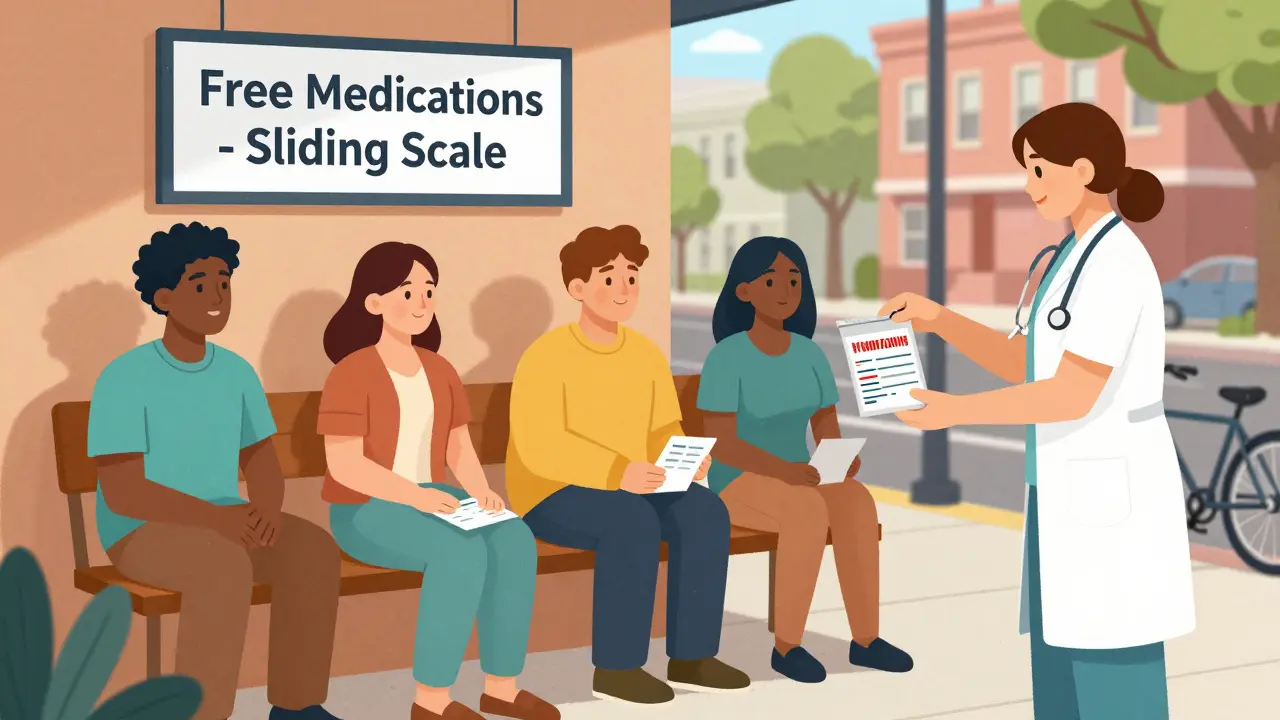
When you need medication but can’t afford it, the stress doesn’t just come from the price tag-it comes from wondering if you’ll be able to take your pills tomorrow, next week, or next month. Millions of Americans face this reality every day, even if they work full-time. The good news? There are real, working options for getting essential medications for free or at very low cost through community clinics. You don’t need insurance. You don’t need to be homeless. You just need to know where to look.
What Kind of Clinics Offer Free or Low-Cost Medications?
Not all clinics are the same. Some are run by volunteers, others are government-funded, and some are tied to universities. But they all share one goal: making sure people who can’t pay still get the medicines they need to stay alive. Federally Qualified Health Centers (FQHCs) are the most widespread option. These clinics get federal funding to serve low-income communities and charge based on what you can afford-called a sliding scale. If you earn less than $29,160 a year as a single person (200% of the federal poverty level in 2023), your visit might cost $20-$50, and your medications could be priced the same way. You’ll still pay something, but it’s often a fraction of what you’d pay at a regular pharmacy. You can find these clinics using the HRSA Find a Health Center tool. Then there are free clinics. These are usually nonprofit, volunteer-run, and serve people who have no insurance at all. Many of them give medications completely free-no copay, no fee. They typically require proof that you earn less than 200% of the poverty level and don’t have prescription coverage. These clinics often focus on chronic conditions like diabetes, high blood pressure, and asthma, because those are the conditions where missing a dose can lead to hospitalization. Some clinics are run by medical schools. For example, the Charlottesville Free Clinic was started by University of Virginia residents and still benefits from student and faculty volunteers. These clinics often have better access to specialty medications because they’re connected to larger medical systems.How Do These Clinics Get the Medications?
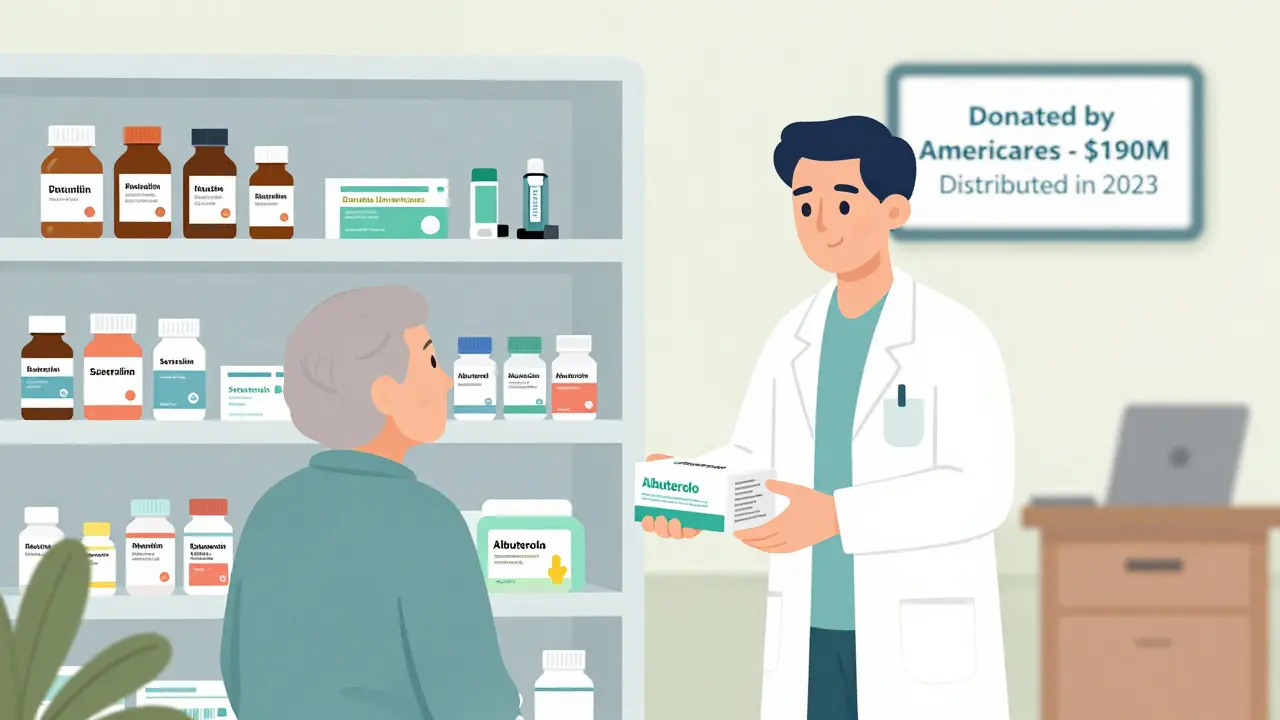
You might wonder: where do these clinics even get the drugs? They don’t buy them like a regular pharmacy. Most get them through donations. The biggest player is Americares U.S. Program. In 2023 alone, they distributed $190 million in donated medications to nearly 1,000 clinics across all 50 states and Puerto Rico. They work directly with drug companies like Pfizer, Merck, and Teva to get unused or surplus medicines-often brand-name drugs-and give them to clinics for free. Their program is designed for people who need long-term meds for conditions like diabetes, heart disease, or depression but can’t afford them. Other organizations like Direct Relief and Teva Pharmaceuticals have partnered on specific programs. One example is the Community Routes: Access to Mental Health Care initiative, launched in early 2023. It gave $75,000 grants to clinics in California, Florida, and New Jersey to help them stock anxiety and depression medications. That’s not a small thing-antidepressants and anti-anxiety drugs can cost $100-$300 a month out of pocket. Many clinics also run their own pharmaceutical assistance programs. These aren’t magic-they’re paperwork-heavy. The clinic helps you apply to drug company programs that give free medicine to low-income patients. You might need to fill out forms, send in income proof, and get your doctor to sign off. But if you’re eligible, you could get your entire prescription shipped to you for free.Who Qualifies?
Eligibility is usually simple: if you don’t have insurance and your income is below 200% of the federal poverty level, you likely qualify. For a single person in 2023, that’s $29,160 a year. For a family of four, it’s $59,940. You don’t need to be unemployed. In fact, most patients at these clinics are working people-cashiers, home health aides, delivery drivers-who still can’t afford their prescriptions. You’ll need to bring:- Photo ID
- Proof of income (last 30 days of pay stubs, tax return, or unemployment letter)
- Proof of residency (utility bill, lease, or mail with your name and address)
- List of current medications (or the bottles themselves)
What Medications Are Available?
Free clinics don’t stock every drug under the sun. They focus on the essentials-medications that keep people alive and out of the ER. Commonly available medications include:- Diabetes: Metformin, insulin (like Humalog or Lantus), Glipizide
- High Blood Pressure: Lisinopril, Amlodipine, Hydrochlorothiazide
- Asthma: Albuterol inhalers, Fluticasone
- Cholesterol: Atorvastatin, Simvastatin
- Mental Health: Sertraline, Fluoxetine, Escitalopram, Lorazepam
- Thyroid: Levothyroxine
How to Find a Clinic Near You
The first step is finding one. Don’t just Google “free clinic near me”-you’ll get outdated or inaccurate results. Use these trusted resources:- National Association of Free & Charitable Clinics (NAFC) - nafcclinics.org - Their directory lists over 1,400 clinics nationwide, with contact info and services offered.
- HRSA Find a Health Center - findahealthcenter.hrsa.gov - Use this to find FQHCs that offer sliding-scale prescriptions.
- State-specific networks - Many states have their own associations. For example, Virginia’s Virginia Association of Free & Charitable Clinics lists every member clinic with details on hours and services.
What to Expect When You Go
Your first visit might take longer than a regular doctor’s appointment. You’ll fill out forms about your income, medical history, and current meds. You’ll likely meet with a nurse or medical assistant first, then a doctor. If you need a prescription, they’ll check if the clinic has it on-site. If not, they’ll help you apply for a drug company program or refer you to a partner pharmacy. Some clinics have their own small pharmacy. Others partner with local pharmacies like CVS or Walgreens that agree to fill prescriptions at reduced prices for clinic patients. You might get your meds the same day-or you might need to wait a few weeks if the clinic is waiting on a shipment from Americares or another donor. Wait times for appointments can be 4 to 6 weeks at busy clinics. If you’re in urgent need-like you’re out of insulin or your blood pressure is dangerously high-tell them. Many clinics have emergency protocols for critical cases.
Limitations and Challenges
It’s not perfect. These clinics rely on donations, volunteers, and grants. That means things can change fast. A 2022 survey by the NAFC found that 42% of clinics reported medication shortages in the past year. One clinic might have plenty of insulin but none of the specific brand you need. Another might be out of antidepressants because their donor stopped shipping that month. Also, not every clinic serves every condition. Some focus only on primary care. Others specialize in mental health or women’s health. You might need to visit more than one clinic to get all your meds. And while FQHCs have set hours and more stable funding, free clinics often close early, have limited parking, or are in hard-to-find locations. But for people who can’t pay full price, they’re the only option.What If You Don’t Qualify?
If your income is slightly above the cutoff, don’t give up. Some clinics make exceptions based on medical need. Others can connect you with drug company programs that have higher income limits-some go up to 400% or even 500% of the poverty level. You can also check with your pharmacy. Many drug manufacturers have their own patient assistance programs. For example, Novo Nordisk gives free insulin to people who earn under $50,000 a year. Eli Lilly offers free insulin through its program too. You don’t need a clinic to apply-you just need to fill out the form and get your doctor’s signature.How You Can Help
These clinics survive because of donations and volunteers. If you know someone who needs help, help them make the call. If you have extra medication (unopened, in-date, and not expired), some clinics accept it. If you’re a healthcare professional, consider volunteering one night a month. The system isn’t broken because people don’t care. It’s broken because it’s underfunded. But the people running these clinics? They’re not waiting for a government fix. They’re showing up, day after day, making sure someone gets their next pill.Can I get free medications if I have insurance but can’t afford my copay?
Yes. Many free clinics serve people who are underinsured-meaning you have insurance but your copays, deductibles, or drug costs are too high to afford. You’ll need to show proof of your insurance and recent medical bills. Clinics like HOPES in Virginia specifically define underinsured patients as those who can’t afford out-of-pocket costs from multiple visits or prescriptions.
Do I need to be a U.S. citizen to get free medications?
No. Most clinics don’t ask for citizenship status. They ask for proof of residency in their service area, like a utility bill or lease agreement. Immigrants, including undocumented individuals, can access care at many free clinics and FQHCs. Americares and other major donors explicitly state their programs serve all low-income U.S. residents regardless of immigration status.
How long does it take to get medications after applying?
It varies. If the clinic has the medication in stock, you might get it the same day. If they need to order it from a donor like Americares, it could take 1-3 weeks. Drug company assistance programs can take 2-6 weeks to process. If you’re in urgent need, tell the clinic-they often have emergency supply protocols for critical conditions like insulin or heart meds.
Can I get free medications for mental health conditions?
Yes. The Community Routes program, launched in early 2023, specifically expanded access to anxiety and depression medications for clinics in seven states. Many clinics now stock common antidepressants and anti-anxiety drugs like sertraline, fluoxetine, and lorazepam. Mental health is now a top priority for most free clinics, especially since demand has grown sharply in recent years.
Are generic medications the only ones available?
No. Many clinics distribute brand-name medications donated by pharmaceutical companies. For example, insulin, asthma inhalers, and cholesterol drugs are often brand-name versions given for free. Generic versions are more common, but if you’ve been prescribed a specific brand for medical reasons, clinics will try to match it.
Just got my insulin through a free clinic last month. Was paying $400 a vial before. Now it’s $15 a month. No joke, this saved my life. If you’re struggling, don’t wait-call your nearest FQHC. They’re not perfect, but they’re real.
I think it’s wild that we live in a country where people have to hunt for medicine like it’s a treasure hunt. But also… these clinics? They’re quiet heroes. No fanfare, just showing up. I hope more people find them.
Wow. So we’re just gonna hand out free drugs now? Next thing you know, people will expect free vacations and Netflix. This isn’t a charity model-it’s a band-aid on a hemorrhage. Someone’s gotta pay for this.
lol why not just give everyone free stuff? 🤡
i went to a clinic last year after losing my job and got my blood pressure meds for free… i didnt even know this was a thing. thank god they were there. i still cry a little thinking about it
My cousin in rural Mississippi got her antidepressants through a free clinic. She’s been working two jobs and still couldn’t afford the copay. These programs aren’t just helpful-they’re essential. We need to protect them.
Bro… imagine having to beg for your life-saving meds like you’re asking for spare change at a bus stop. This ain’t just broken-it’s a national disgrace. 🕊️💔
It’s worth noting that many of these clinics are staffed by retired doctors, nursing students, and pharmacists volunteering their time. The infrastructure exists-it’s the funding that’s missing. We need policy change, but until then, these clinics are the only thing standing between people and disaster.
Let’s be real for a second-most people don’t even know these clinics exist because the system doesn’t advertise them. You have to stumble on them by accident, or someone you know tells you. Meanwhile, Big Pharma spends billions on ads for drugs that cost $1,000 a month. Why isn’t this information on TV? Why isn’t it on Medicare websites? Why isn’t it in every doctor’s office? Because the system doesn’t want you to know you have options. They want you to keep paying.
Free insulin? Cool. Now tell me why it took a pandemic for this to get any attention. 🤦♂️
...I just found out my neighbor is using this service... I had no idea... I mean... wow... I should’ve asked sooner... I feel bad now... I didn’t even think... about this... possibility...
...I’ll call the clinic tomorrow... for my mom... if she’ll let me...
My aunt got her asthma inhaler for $5 at a free clinic in Ohio. She’s 72, on Social Security, and works part-time at a thrift store. She told me, ‘I’d rather skip lunch than skip my meds.’ That’s the kind of strength you don’t hear about. We need to make this system bigger, not smaller.