Warfarin Bleeding Risk Calculator
Calculate Your Bleeding Risk
This tool calculates your bleeding risk based on the HAS-BLED scoring system used by healthcare professionals. Enter your risk factors below to see your personalized risk assessment.
Your Bleeding Risk Assessment
Risk Factors Identified
Recommended Actions
When you're prescribed Warfarin, it's not just another pill. It's a powerful tool that can save your life - but only if you understand what it can do to your body. Warfarin, commonly sold under the brand name Coumadin, has been used for over 70 years to prevent dangerous blood clots. It helps people with atrial fibrillation, artificial heart valves, or a history of deep vein thrombosis avoid strokes and pulmonary embolisms. But here’s the truth: Warfarin doesn’t just thin your blood. It makes you vulnerable to bleeding - sometimes in ways you won’t see coming.
Why Warfarin Works - And Why It’s Dangerous
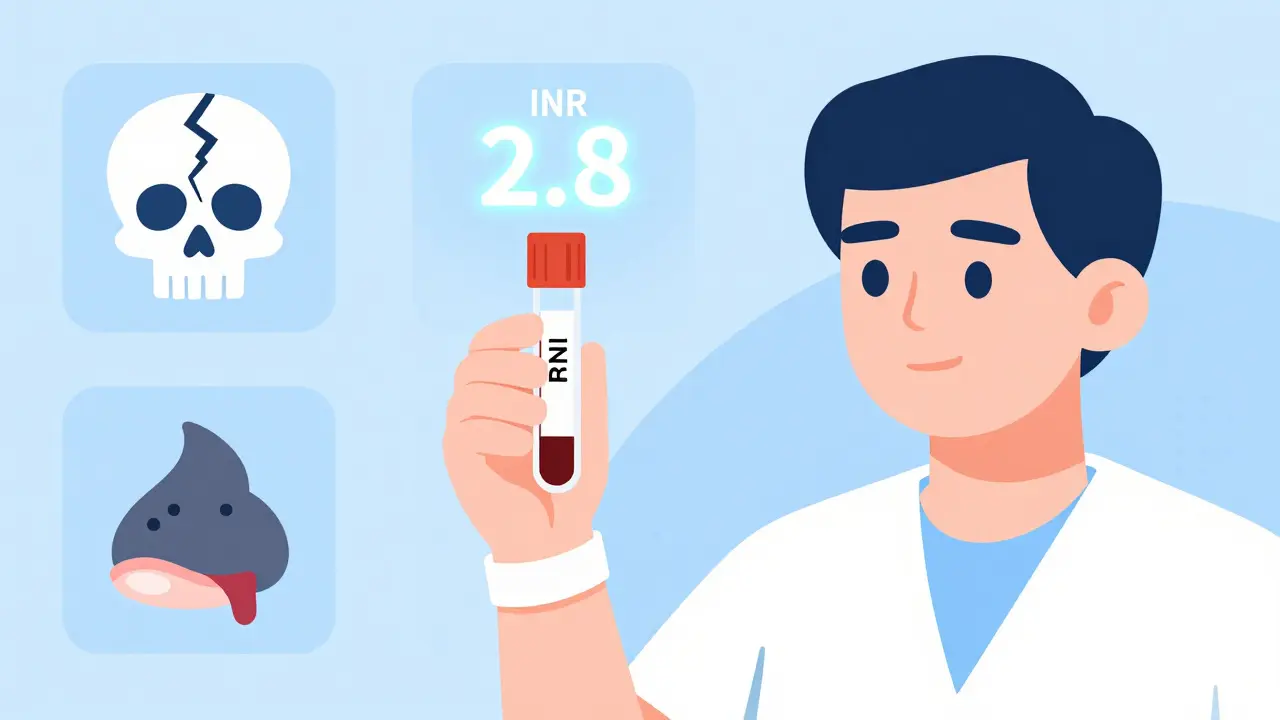
Warfarin blocks vitamin K, which your body needs to make clotting proteins. Less clotting = fewer dangerous clots. Simple, right? But your body doesn’t work on a switch. It’s a balancing act. Too little, and clots form. Too much, and you bleed uncontrollably. That’s why your doctor checks your INR - a number that tells how long it takes your blood to clot. The sweet spot? Usually between 2.0 and 3.0. If it goes above 4.0, your risk of serious bleeding jumps by 4 to 8 times.
According to a 2007 FDA analysis, about 10% to 16% of people on Warfarin experience major bleeding each year. That’s not rare. That’s common enough that every single patient needs to know the signs - and act fast.
The Warning Signs: When to Panic
You don’t need to wait for a hemorrhage to call your doctor. Look for these red flags:
- Nosebleeds that last more than 5 minutes, even with pressure
- Bleeding gums when brushing your teeth
- Unexplained bruises - especially large ones or clusters
- Pink, red, or brown urine
- Black, tarry, or bloody stools
- Vomiting blood or material that looks like coffee grounds
- Sudden, severe headache or dizziness
- Sharp pain in your back or abdomen
- Heavy vaginal bleeding outside your period
These aren’t just inconveniences. They’re signals your body is bleeding internally. If you see any of these, go to the ER. Don’t wait. Don’t call your doctor tomorrow. Go now.
What Happens During Major Bleeding?
Major bleeding can happen anywhere. The most dangerous? Brain bleeds. About 0.2% to 0.5% of Warfarin users have a brain hemorrhage each year. Gastrointestinal bleeds - like bleeding in your stomach or intestines - account for 15% to 30% of serious events. Both can kill if not treated fast.
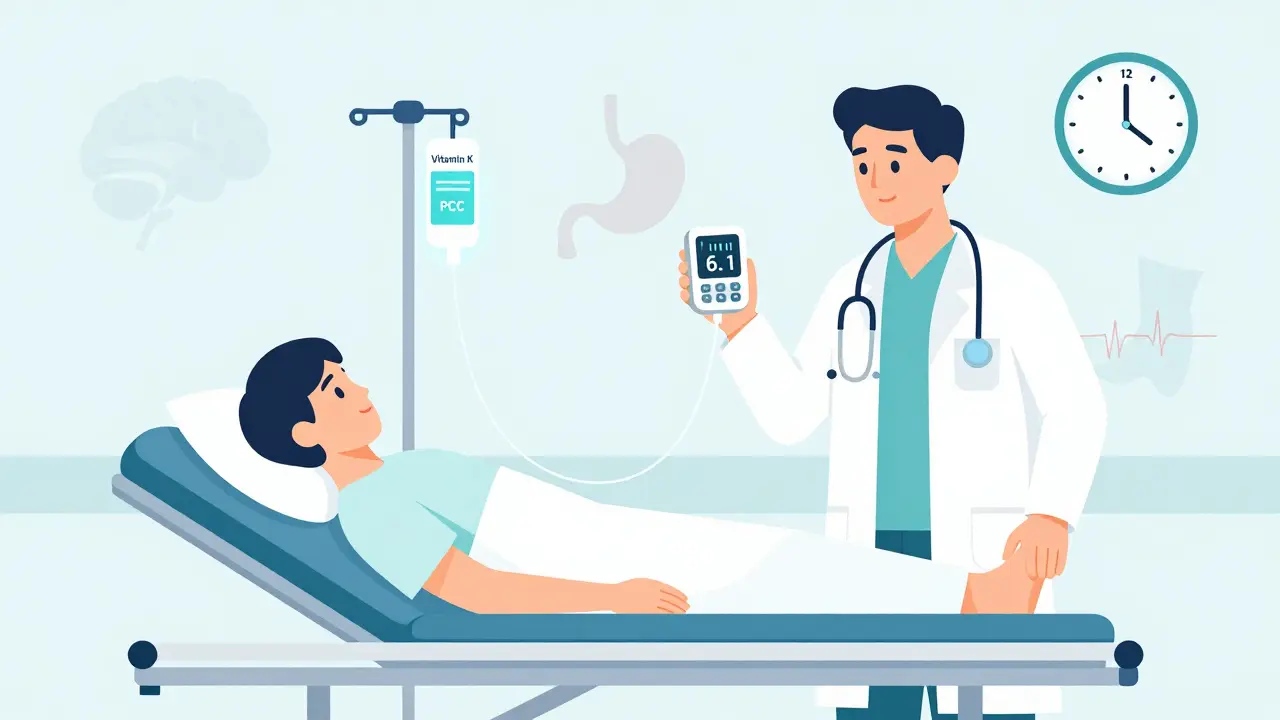
When bleeding is severe, doctors don’t just stop Warfarin. They reverse it. That means giving you vitamin K (10 mg IV) to help your body start making clotting factors again. If it’s life-threatening, they use prothrombin complex concentrate (PCC) - a concentrated mix of clotting proteins that works in minutes. Fresh frozen plasma is used if PCC isn’t available. For brain bleeds, guidelines say reversal must happen within 30 to 60 minutes. Every minute counts.
Who’s at Highest Risk?
Not everyone on Warfarin bleeds. But some people are far more likely to. The biggest risk factor? Age. If you’re 65 or older, your bleeding risk doubles. History of stomach bleeding? Triple your risk. High blood pressure? Adds 2.8 times more risk. Kidney disease, heart failure, cancer, or anemia? Each one stacks on top of the last.
Doctors use a tool called HAS-BLED to score your risk. If you have three or more of these factors, your chance of major bleeding hits 20% per year. That’s not a small number. That’s a reason to double down on monitoring.
What You Can Do - Every Single Day
You can’t control your age or your past medical history. But you can control what happens next. Here’s how:
- Get your INR checked regularly. Once a month is standard if you’re stable. If you’ve just started or changed doses, check weekly. Self-testing devices like the CoaguChek Pro II are FDA-approved and accurate. Many patients who test at home spend 15-20% more time in the safe INR range.
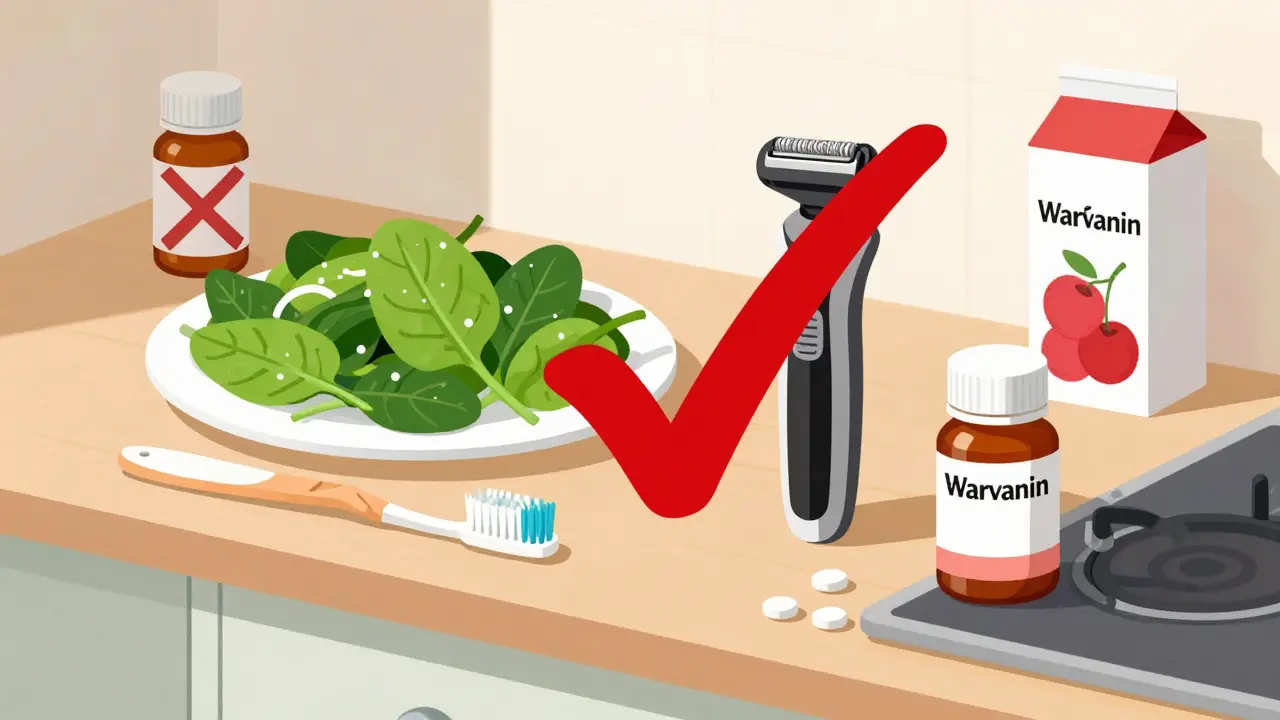
- Keep your vitamin K intake steady. Leafy greens - spinach, kale, broccoli - are full of vitamin K. Don’t stop eating them. But don’t suddenly start eating a huge salad every day either. Aim for 60-80 mcg daily, consistently. A 100 mcg swing in daily intake can throw your INR off by 0.5 to 1.0 points.
- Avoid NSAIDs. Ibuprofen, naproxen, even aspirin - these drugs increase stomach bleeding risk by 2 to 4 times when taken with Warfarin. Use acetaminophen (Tylenol) instead for pain.
- Use an electric razor. No blade razors. Tiny nicks can turn into slow, dangerous bleeds.
- Use soft-bristle toothbrushes and waxed floss. Gum bleeding is common - but avoid letting it get worse.
- Wear a medical alert bracelet. It should say “On Warfarin” and include your INR target range. Emergency responders need to know this immediately.
- Tell every doctor, dentist, and pharmacist you’re on Warfarin. Over 300 medications and supplements interact with it. Even St. John’s Wort, garlic pills, or ginkgo can mess with your INR.
Other Side Effects You Might Not Know About
Bleeding isn’t the only risk. Rare, but serious:
- Warfarin-induced skin necrosis. This happens in about 1 in 10,000 patients. Within days of starting Warfarin, you may develop painful, dark patches on your skin - usually on the breasts, thighs, or buttocks. It’s linked to low protein C levels. If you see this, stop the drug and go to the ER.
- Purple toe syndrome. Three to eight weeks after starting Warfarin, your toes may turn deep purple. It’s caused by cholesterol crystals blocking small blood vessels. It’s rare, but painful. Your doctor will need to adjust your dose.
- Calciphylaxis. Seen mostly in people with kidney failure. Calcium builds up in blood vessels, causing painful skin ulcers. About 4 cases per 10,000 patient-years. If you’re on dialysis and get sudden, unexplained skin sores, mention Warfarin.
These are rare. But if you notice something weird - especially skin changes - don’t ignore it.
When Should You Consider Switching?
Newer blood thinners - called DOACs (direct oral anticoagulants) - like apixaban, rivaroxaban, or dabigatran, have become popular because they don’t need INR checks and have lower bleeding rates. Studies show they reduce major bleeding by about 30% compared to Warfarin.
But Warfarin isn’t outdated. It’s still the best choice for people with mechanical heart valves (especially in the mitral position) or severe kidney failure. It’s also reversible. If you bleed, we can fix it. With DOACs, reversal is harder and more expensive.
Ask your doctor: Is Warfarin still right for me? Or would a DOAC be safer?
What to Do If You Bleed
Minor bleeding - like a small nosebleed that stops in 3 minutes - just call your provider. Keep an eye on it.
Major bleeding? Go to the ER. Bring your medication list. If you have your latest INR result, bring that too. Don’t wait to see if it gets better. Bleeding doesn’t wait.
At the hospital, they’ll check your INR, stop Warfarin, and start reversal. If you’re in the ER because of a fall or head injury - even if you feel fine - get checked. Brain bleeds don’t always cause immediate symptoms.
Final Thought: Warfarin Is Not a Set-It-and-Forget-It Drug
It’s not like taking a daily vitamin. Warfarin demands attention. It’s a tool that works only when you’re engaged. Every meal, every pill, every doctor visit, every test matters. Miss a check-up? Your INR could drift. Change your diet? Your INR could spike. Take a new supplement? Your INR could crash.
But if you do it right - if you stay consistent, stay informed, and speak up when something feels off - Warfarin can keep you alive for decades. The goal isn’t to avoid side effects. It’s to manage them so they never become emergencies.
Can I still eat leafy greens while on Warfarin?
Yes - but keep your intake consistent. Don’t suddenly start eating a large spinach salad every day, and don’t stop eating them entirely. Aim for about 60-80 mcg of vitamin K daily. Your INR is more stable when your diet doesn’t change drastically. Talk to your doctor or pharmacist about a sample meal plan if you’re unsure.
What should I do if I miss a dose of Warfarin?
If you miss a dose, don’t double up the next day. Call your provider or pharmacist for advice. If it’s the same day and you remember within a few hours, take it. If it’s the next day, skip the missed dose and take your regular dose. Never take two doses at once unless told to do so by your doctor.
Is Warfarin safe during pregnancy?
No. Warfarin can cross the placenta and cause serious birth defects, especially in the first trimester. If you’re pregnant or planning to become pregnant, talk to your doctor. Heparin injections are usually used instead during pregnancy because they don’t cross the placenta.
Can I drink alcohol while taking Warfarin?
Occasional, moderate alcohol (one drink per day) is usually okay. But heavy or binge drinking can raise your INR and increase bleeding risk. Alcohol also affects how your liver processes Warfarin. If you drink regularly, tell your doctor - they may need to check your INR more often.
How long do I need to take Warfarin?
It depends on why you’re taking it. For a one-time blood clot, you might take it for 3 to 6 months. For atrial fibrillation or a mechanical heart valve, you’ll likely take it for life. Your doctor will reassess your risk every year. Never stop Warfarin on your own - even if you feel fine.
Are there any foods I must avoid completely?
No foods are completely off-limits. But avoid sudden changes. Don’t start juicing kale every morning if you’ve never eaten it before. Avoid large amounts of cranberry juice - it can increase bleeding risk. Herbal teas like chamomile or ginseng may interact with Warfarin. Stick to your usual diet and talk to your provider before adding new supplements or superfoods.
Also, electric razor. Non-negotiable.
And yes, I still eat broccoli. Just not 3 cups in one day. Balance, not banishment.
Warfarin isn’t scary if you respect it. But if you treat it like aspirin? You’re playing Russian roulette with your organs.
Warfarin’s been around 70 years. The new ones? Still have unknown long-term risks. Don’t fall for the marketing.
Doctors need to talk about this more. It’s rare, but when it hits? You’re screwed if you don’t know what it is.
My cousin died from a ‘Warfarin-induced bleed’ - but the autopsy showed no bleeding. They covered it up. The system doesn’t care if you live - only if you’re monitored.
Organic only. Or switch to DOACs. But if you’re gonna be dumb, at least be dumb with clean greens.