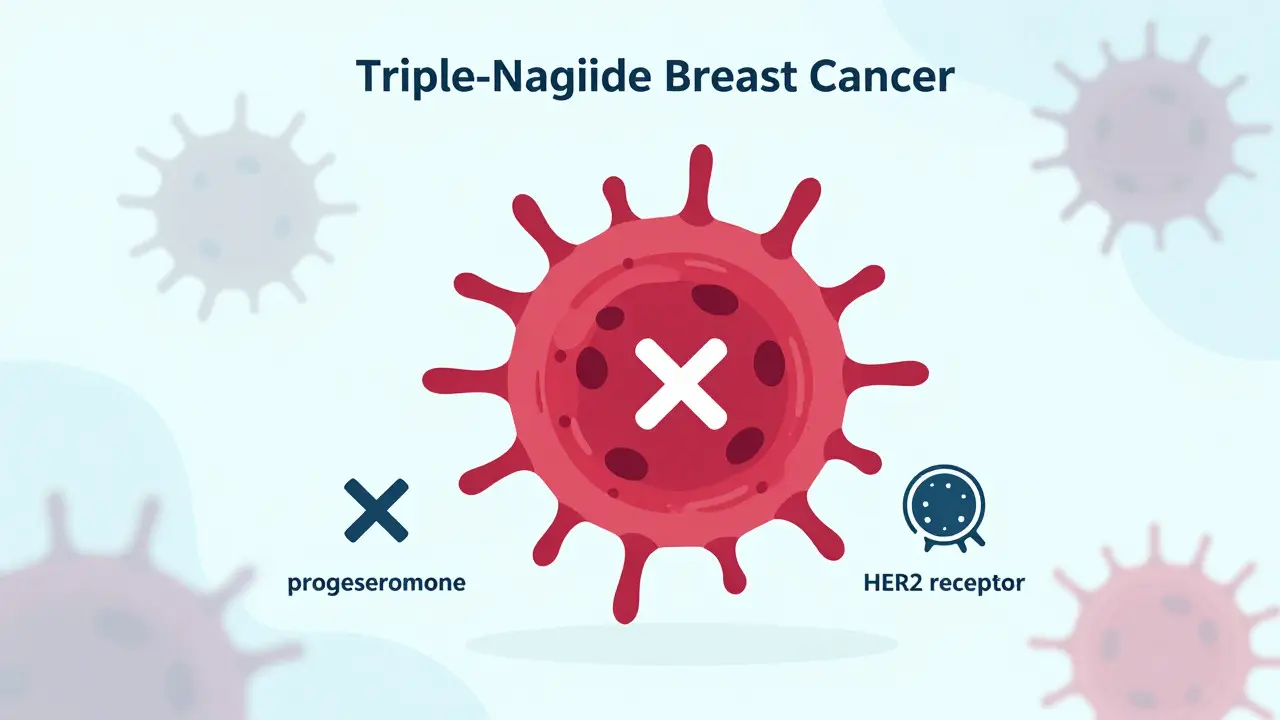
Receiving a diagnosis of Triple-Negative Breast Cancer is an aggressive form of breast cancer that lacks estrogen receptors, progesterone receptors, and HER2 protein overexpression, accounting for approximately 10% to 15% of all breast cancer cases often feels like hitting a wall. Unlike other subtypes, it doesn’t respond to hormone therapies or HER2-targeted drugs, leaving chemotherapy as the traditional go-to option. But the landscape has shifted dramatically in recent years. With new immunotherapies, antibody-drug conjugates, and personalized vaccines entering the clinic, patients now have more tools than ever before. This article breaks down what’s working, what’s coming, and how you can navigate these complex options.
Understanding Triple-Negative Breast Cancer
To understand why TNBC is so challenging, we need to look at its biology. It is defined by what it lacks: three specific receptors that most breast cancers use to grow. Without these targets, doctors couldn’t easily block the cancer’s fuel source. Instead, TNBC tends to grow quickly and has a higher risk of returning within the first three to five years after diagnosis. According to research from Houston Methodist Hospital published in late 2025, this subtype represents about 10-15% of all breast cancer diagnoses but accounts for a disproportionate number of deaths due to its aggressiveness and limited treatment options until recently.
The heterogeneity of TNBC is another major hurdle. It isn’t just one disease; it’s a collection of different molecular subtypes. Some behave like basal-like tumors, while others resemble mesenchymal types. This diversity means that a drug that works wonders for one patient might do nothing for another. That’s why biomarker testing has become essential. Identifying features like PD-L1 expression, BRCA mutations, or high tumor mutational burden helps doctors match patients with the right therapy rather than relying on a one-size-fits-all approach.
Standard Care: Chemotherapy and Surgery
For early-stage TNBC, the standard of care has long been neoadjuvant chemotherapy-treatment given before surgery to shrink the tumor. The goal here is often a pathologic complete response (pCR), meaning no cancer cells are found in the tissue removed during surgery. Achieving pCR is strongly linked to better long-term survival. Typical regimens include anthracyclines (like doxorubicin) and taxanes (like paclitaxel), sometimes combined with platinum agents such as carboplatin, which seem to work particularly well against the DNA damage repair defects common in TNBC.
| Approach | Key Drugs | Average Duration | Primary Goal |
|---|---|---|---|
| Traditional Neoadjuvant Chemo | Anthracycline + Taxane | 18-24 weeks | Tumor shrinkage & pCR |
| Platinum-Enhanced Regimen | Carboplatin + Paclitaxel | 16-20 weeks | Higher pCR rates in BRCA+ patients |
| UT Southwestern Protocol (2025) | Radiation + Pembrolizumab + Chemo | ~12 weeks | Reduced toxicity, maintained efficacy |
However, conventional chemotherapy comes with significant side effects, including fatigue, hair loss, and increased infection risk. A breakthrough study from UT Southwestern Medical Center, published in the Journal of Clinical Oncology in January 2025, offers a promising alternative. By resequencing treatment-starting with radiation, followed by just two doses of pembrolizumab, then chemotherapy-they achieved a 59% pCR rate with only 41% serious toxicity, compared to 82% in the KEYNOTE-522 trial. This shorter, less toxic protocol could become the new standard if confirmed in larger studies.
Immunotherapy: Unlocking the Body’s Defenses
Immunotherapy has revolutionized TNBC treatment, especially for patients whose tumors express PD-L1. Checkpoint inhibitors like Pembrolizumab is an immune checkpoint inhibitor that blocks the PD-1 pathway, allowing T-cells to recognize and attack cancer cells work by removing the brakes on your immune system. In the KEYNOTE-522 trial, adding pembrolizumab to chemotherapy boosted pCR rates from 44.1% to 64.8% in PD-L1-positive patients. For metastatic disease, the IMpassion130 trial showed that atezolizumab plus nab-paclitaxel improved progression-free survival from 5.5 to 7.2 months compared to placebo.
Not everyone benefits equally. PD-L1 status matters significantly. About 40% of metastatic TNBC cases show PD-L1 positivity, making them candidates for immunotherapy. Testing uses the 22C3 pharmDx assay, which measures combined positive scores (CPS). Patients with CPS ≥10 see the greatest benefit. But even those with lower scores may still gain some advantage, leading many oncologists to consider immunotherapy broadly. The challenge remains managing immune-related adverse events, which can affect organs like the lungs, liver, or thyroid.
Targeted Therapies: Precision Medicine in Action
When general approaches fall short, targeted therapies offer precision strikes based on genetic markers. PARP inhibitors like olaparib and talazoparib are game-changers for patients with germline BRCA1/2 mutations, which occur in 15-20% of TNBC cases. These drugs exploit synthetic lethality-a concept where blocking DNA repair pathways kills cancer cells while sparing healthy ones. The OlympiAD trial demonstrated a 7.8-month improvement in progression-free survival for olaparib versus chemotherapy in BRCA-mutated metastatic TNBC.
Antibody-drug conjugates (ADCs) represent another leap forward. Sacituzumab govitecan is an antibody-drug conjugate targeting Trop-2, delivering chemotherapy directly to cancer cells, approved for metastatic TNBC after prior treatments links a potent chemo agent to an antibody that binds Trop-2, a protein highly expressed in TNBC. In the ASCENT trial, it delivered a 35% objective response rate and extended overall survival with a hazard ratio of 0.43. Another ADC, trastuzumab deruxtecan, shows promise for "HER2-low" tumors, achieving 37% response rates in the DESTINY-Breast04 trial. Even tumors with minimal HER2 expression can now be treated effectively.

Clinical Trials: The Frontier of Hope
If standard options don’t fit, clinical trials offer access to cutting-edge therapies. Over 1,500 TNBC-specific trials have launched globally since 2019, representing nearly 30% of all breast cancer research. One exciting area is personalized neoantigen vaccines. At Houston Methodist Hospital, researchers create custom vaccines within six weeks of tumor sequencing, targeting unique mutations in each patient’s cancer. Combined with pembrolizumab, this approach activated immune responses in 78% of phase I participants as of September 2025. While still experimental, it holds immense potential for preventing recurrence.
Dual-target inhibition strategies are also gaining traction. Combining CDK12 inhibitors with PARP inhibitors, for example, achieved 68% tumor growth inhibition in preclinical models versus 32% with single agents. Other combinations target PI3K/AKT/mTOR pathways or EZH2 epigenetic regulators. These multi-pronged attacks aim to overcome resistance mechanisms that limit monotherapy success. Companies like Roche, Merck, and Gilead are heavily invested, driving rapid innovation. If you’re considering a trial, ask about eligibility criteria, travel requirements, and whether placebo controls are used.
Navigating Your Treatment Journey
Making decisions about TNBC treatment can feel overwhelming. Start by asking for comprehensive biomarker testing: PD-L1, BRCA1/2, HRD status, and possibly next-generation sequencing panels. Discuss all available options-including clinical trials-with a multidisciplinary team. Don’t hesitate to seek second opinions, especially at major cancer centers familiar with the latest guidelines. The NCCN updated its recommendations in March 2025 to reflect emerging data, so ensure your care aligns with current standards.
Support matters too. Connect with organizations like the American Cancer Society or local TNBC support groups. Mental health resources, nutritional counseling, and survivorship programs can improve quality of life during treatment. Remember, TNBC is evolving rapidly. What was impossible five years ago is now routine. Stay informed, stay engaged, and advocate for yourself every step of the way.
What makes triple-negative breast cancer different from other types?
TNBC lacks estrogen, progesterone, and HER2 receptors, meaning it doesn’t respond to hormone therapies or HER2-targeted drugs. It grows faster and recurs sooner than other subtypes, requiring aggressive initial treatment.
Are there any targeted therapies for TNBC?
Yes. PARP inhibitors help patients with BRCA mutations, while antibody-drug conjugates like sacituzumab govitecan target Trop-2. Immunotherapies like pembrolizumab work best in PD-L1-positive tumors.
How effective is immunotherapy for TNBC?
In PD-L1-positive early-stage TNBC, adding pembrolizumab to chemotherapy increases pathologic complete response rates from ~44% to ~65%. For metastatic disease, it extends progression-free survival modestly but significantly.
Should I consider a clinical trial?
Absolutely. Over 1,500 TNBC trials are active worldwide. They offer access to novel therapies like personalized vaccines or dual-inhibition combos not yet widely available. Ask your oncologist about matching opportunities.
What tests should I request at diagnosis?
Request PD-L1 testing (22C3 assay), germline BRCA1/2 mutation analysis, and consider broader genomic profiling to identify actionable alterations like PI3K or HRD status. These guide therapy selection.