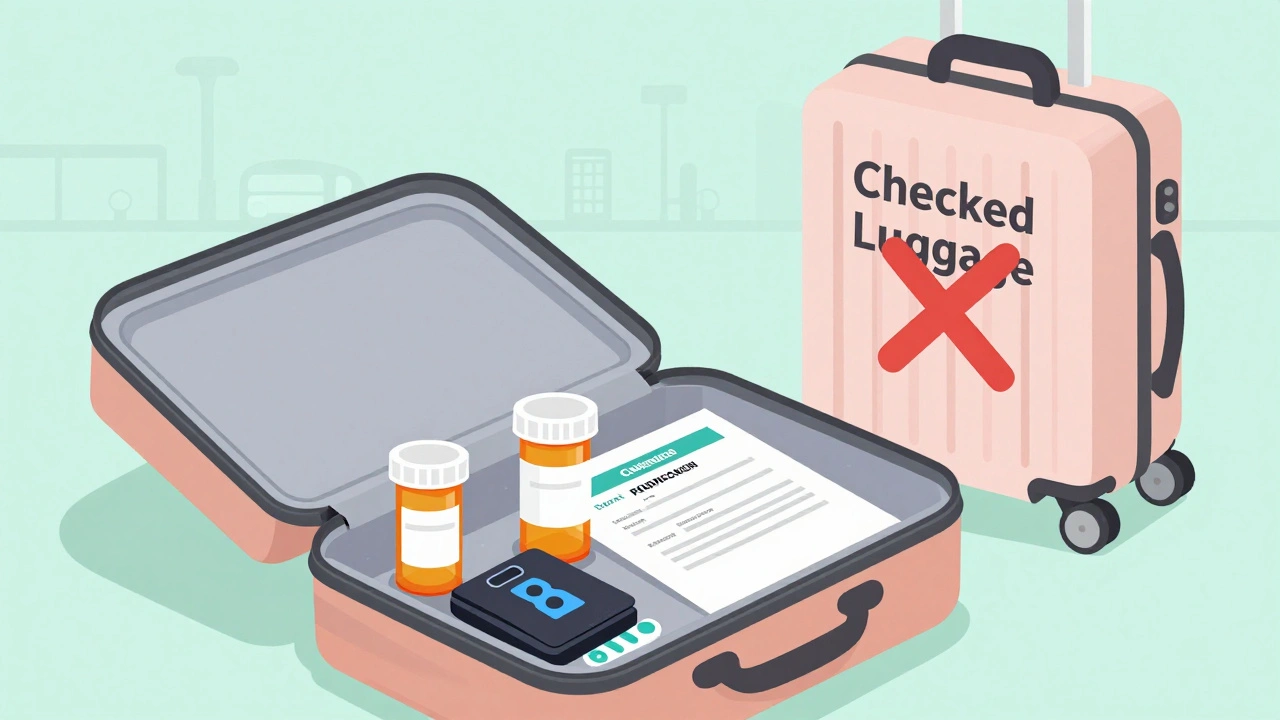
Carrying controlled medications while traveling isn’t just about packing a pill bottle-it’s about avoiding theft, legal trouble, and medical emergencies. Every year, thousands of travelers lose their prescription painkillers, anxiety meds, or sleep aids to theft, misplacement, or customs seizures. And when those medications are Schedule II or III controlled substances-like oxycodone, hydrocodone, or alprazolam-the stakes are higher than most people realize. Losing them isn’t just inconvenient; it can leave you in pain, panic, or worse. The good news? With the right steps, you can travel safely with your meds and avoid becoming a statistic.
Know What You’re Carrying and Where You’re Going
Not all controlled medications are treated the same. The U.S. Drug Enforcement Administration (DEA) classifies them into five schedules based on abuse potential. Schedule II drugs-like fentanyl, oxycodone, and Adderall-have the highest risk of misuse and are the most targeted by thieves. Schedule III-V drugs, such as ketamine or certain benzodiazepines, still require caution but carry slightly lower risk. Your first step? Know your medication’s schedule. Check the label or ask your pharmacist. If you’re unsure, call your pharmacy. They’ll tell you exactly what you’re carrying. But knowing your drug isn’t enough-you need to know your destination. Countries have wildly different rules. Japan bans even small amounts of pseudoephedrine (common in cold meds). Saudi Arabia prohibits 147 controlled substances outright, no exceptions. In some European countries, carrying more than a 30-day supply triggers automatic customs alerts. The International Narcotics Control Board is the global authority that sets travel guidelines for controlled substances, updated in 2024 to standardize limits and documentation requirements. Before you book your flight, check their interactive portal for your destination’s specific rules. Don’t rely on outdated blogs or forum posts-rules change often.Always Keep Meds in Your Carry-On
Never, ever check your controlled medications. The Transportation Security Administration (TSA) requires all medications, especially controlled substances, to be carried in your personal item or carry-on luggage. Checked bags get lost, delayed, or stolen. According to SITA’s 2022 Baggage Report, about 25.5 bags per 1,000 passengers are mishandled. That’s more than 1 in 40. If your painkiller is in a suitcase that ends up in Atlanta while you’re in Tokyo, you’re out of luck. Keep your meds with you at all times-even during layovers. Don’t leave them in your rental car, hotel room, or airport locker. The CDC reports that 92% of medication thefts happen during hotel stays or when meds are left unattended in vehicles. Thieves know what to look for: visible pill bottles, travelers talking about prescriptions, or someone carrying a bulky medical bag. Be discreet. Don’t announce you’re on pain meds at the bar or in the elevator.Use Original Prescription Containers
The single most effective way to avoid trouble at security or customs is to keep your meds in their original pharmacy-labeled bottles. That means the bottle with your name, the doctor’s name, the pharmacy’s name, the drug name, strength, and dosage instructions printed on the label. It’s not optional. The Cleveland Clinic found that 78% of airport medication issues occur because travelers used unlabeled or improperly labeled containers. If you need to transfer pills for convenience-say, to a pill organizer for daily doses-do it carefully. Only transfer a day or two’s supply. Keep the rest in the original bottle. The International Narcotics Control Board allows secondary containers as long as they include full labeling: patient name, prescriber, drug name, strength, and instructions. A plain plastic pill box with no labels? That’s a red flag. You could be detained, questioned, or worse.Carry a Doctor’s Letter
A prescription label isn’t always enough, especially internationally. Many countries require a signed letter from your doctor explaining why you need the medication. The CDC recommends a standardized travel letter template that includes your diagnosis, medication details, dosage, and duration of need. About 83% of international pharmacies recognize this letter as valid documentation. Your letter should include:- Your full name and date of birth
- Diagnosis (e.g., chronic back pain, anxiety disorder)
- Medication name, strength, and dosage
- Prescribing doctor’s name, license number, and contact info
- Travel dates and destination
- Statement that the medication is for personal use only
Use a Secure, Discreet Storage Solution
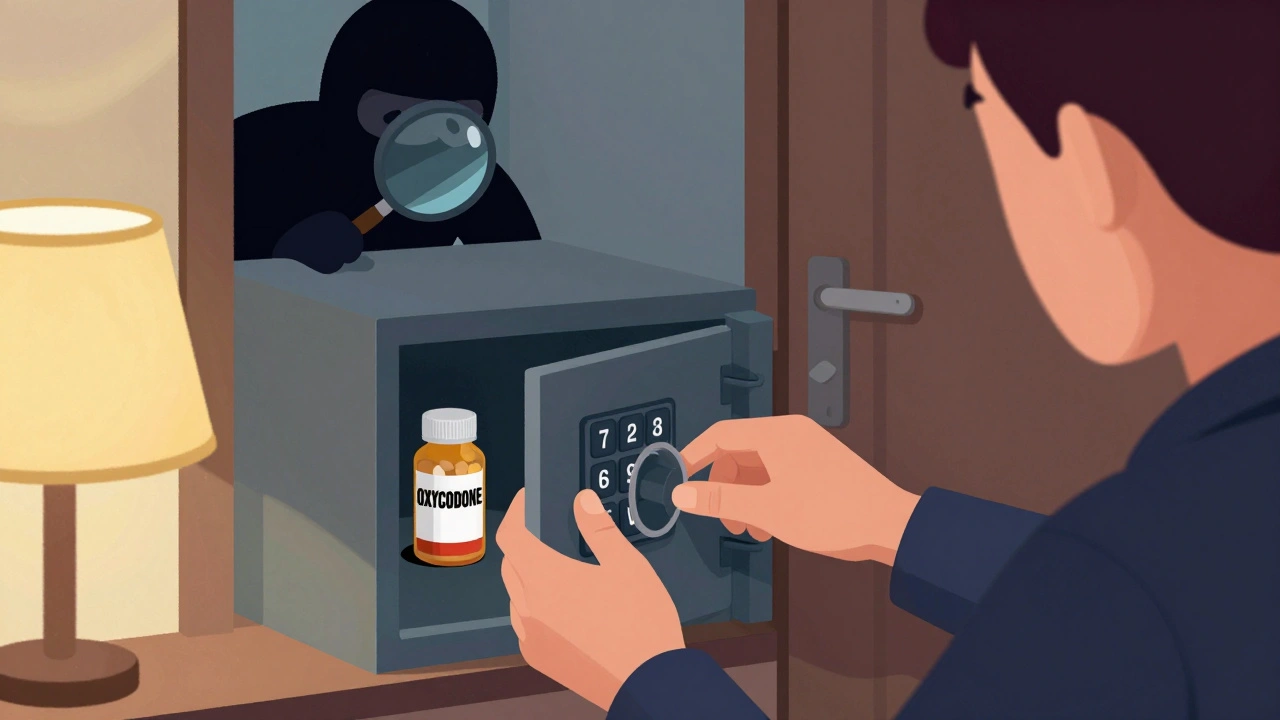
A pill bottle in your carry-on is good. A pill bottle in an RFID-blocking medication case is better. These small, lockable cases block electronic signals that could be used to scan for pills-though that’s rare, it’s a real concern on crowded flights. More importantly, they’re discreet. No one sees a bottle labeled "OXYCODONE 10MG" when you pull it out. Pair this with your hotel safe. Not all hotel safes are created equal. Use one with a digital keypad, not a key. Make sure it’s installed properly and tested before you leave your room. According to aggregated data from PackPoint’s travel safety blog, travelers who used RFID-blocking cases and hotel safes reduced theft incidents by 76%. Avoid carrying your meds in your purse or backpack if you’re in a high-risk area. Use a hidden pocket in your jacket, a money belt, or a waist pouch. The goal is to make them hard to grab-and easy for you to access when needed.Know the Rules for Refills and Replacements
If your meds are stolen, you can’t just walk into a pharmacy and get a new prescription. DEA rules are strict. Schedule II drugs-like oxycodone or Adderall-can’t be refilled early unless your doctor gets special permission. Even then, it takes time. Pharmacies can’t dispense them more than five days early without DEA approval. Schedule III-V meds have a little more flexibility-up to 14 days early. Your insurance might cover replacement, but only if you file a police report within 24 hours. UnitedHealthcare’s 2023 policy update shows only 17% of stolen medication claims were approved without a police report. That’s why it’s critical to report theft immediately, even if you’re overseas. Contact your country’s embassy. They can help you file a report locally. A 2022 IPM survey found travelers who had police reports for stolen meds got insurance replacements 63% faster.Prepare for the Unexpected
Even with perfect planning, things go wrong. Your flight gets delayed. Your hotel safe malfunctions. You’re pulled over at a border crossing. That’s why you need backups. Carry a digital copy of your prescription and doctor’s letter on your phone. Take a photo of your original pill bottle. Email it to a trusted friend or family member. If you’re detained or your meds are seized, this can speed up verification. Also, know your DEA number and your prescriber’s NPI number. Some pharmacies use these to verify prescriptions electronically. The DEA’s April 2024 pilot program now allows electronic verification at over 1,200 pharmacies across 17 states, cutting replacement wait times from 72 hours to under 4. That’s a game-changer-if you have the right info.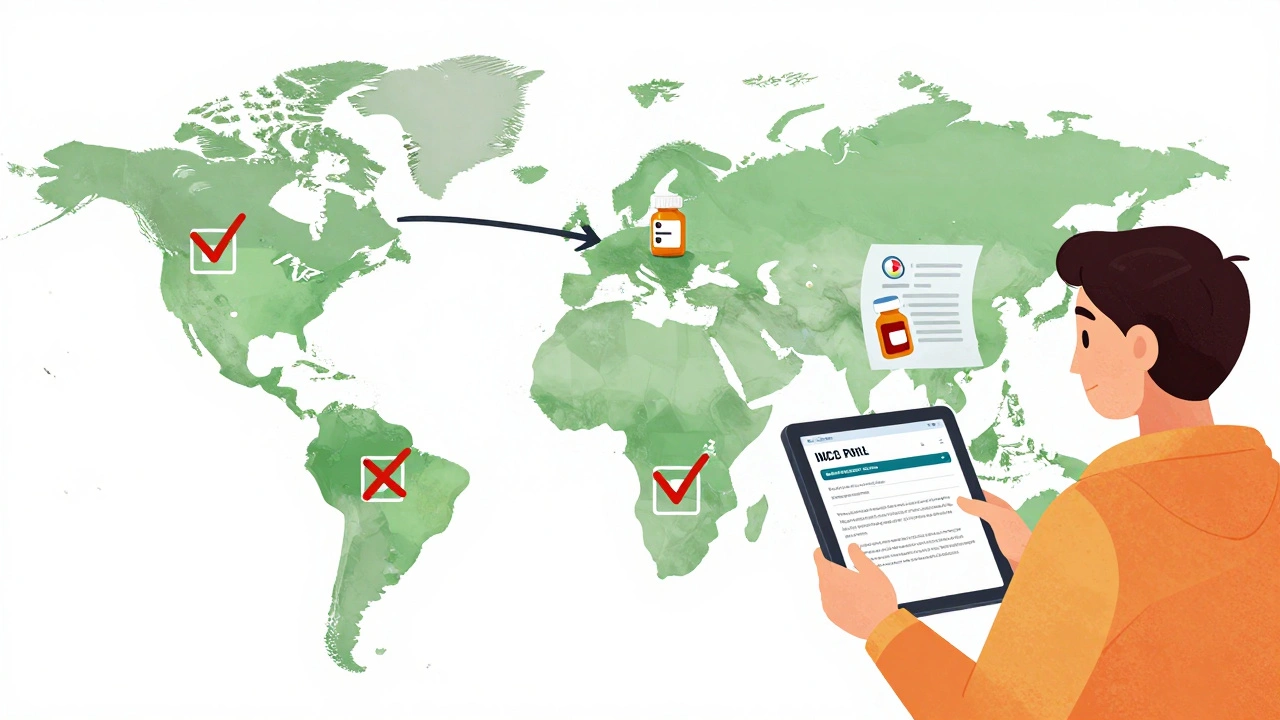
What to Avoid at All Costs
Here’s what gets travelers into trouble:- Carrying more than a 30-day supply without approval
- Using unlabeled containers or pill organizers as primary storage
- Leaving meds in checked luggage or rental cars
- Not having a doctor’s letter for international travel
- Trying to buy meds abroad without checking local laws
- Sharing your meds with others-even if they’re in pain
What’s Changing in 2025
The landscape is evolving. The International Narcotics Control Board updated its guidelines in September 2024 to standardize maximum allowable quantities at 30-day supplies for Schedule III-V meds. New tamper-evident packaging is now on 68% of U.S. Schedule II prescriptions, with color-changing seals that show if someone opened the bottle. Some airlines now train staff to spot fake prescriptions. The International Air Transport Association (IATA) requires all member airlines to train security teams to distinguish real meds from illicit ones, reducing delays by 31% since 2022. In the future, blockchain-based prescription systems-already piloted in the EU-will let travelers access digital copies of their prescriptions securely. But in the U.S., HIPAA rules are slowing adoption. For now, paper and digital backups are still your best tools.Final Checklist Before You Fly
Before you leave, run through this:- Confirm your medication’s DEA schedule (II, III, IV, or V)
- Check your destination’s medication laws on the INCB portal
- Keep all meds in original prescription bottles
- Carry no more than a 30-day supply (14 days for Schedule II)
- Bring a signed doctor’s letter on official letterhead
- Use an RFID-blocking case and store meds in your carry-on
- Lock your meds in the hotel safe when not in use
- Take photos of your prescriptions and doctor’s letter
- File a police report immediately if stolen
- Know your insurance’s replacement policy
Can I put my controlled medication in a pill organizer when traveling?
You can use a pill organizer for daily doses, but only if you keep the original prescription bottle with you. Never rely on a pill organizer as your primary storage. TSA and customs require original labeling with your name, doctor, and pharmacy details. If you’re caught with unlabeled pills, you could face delays, questioning, or even confiscation.
Do I need a doctor’s letter for domestic U.S. travel?
TSA doesn’t require a doctor’s letter for domestic flights, but 32 states-including California, Texas, and Florida-have laws that require original pharmacy labels. A doctor’s letter isn’t mandatory, but it’s smart to carry one. It can help if you’re questioned by law enforcement or if your prescription label is faded or missing.
What happens if my medication is stolen overseas?
File a police report immediately-even if you’re in a foreign country. Contact your country’s embassy for help. Without a police report, your insurance likely won’t cover replacement. Some pharmacies abroad may refill your prescription if you have a doctor’s letter and original bottle, but many won’t. Always carry digital copies of your prescription and doctor’s note.
Can I bring my controlled medication into Japan?
Japan has extremely strict rules. Even over-the-counter cold meds containing pseudoephedrine are banned. Controlled substances like opioids, benzodiazepines, and stimulants require prior approval from Japan’s Narcotics Control Department. You must apply at least 30 days in advance. Bringing them without approval can lead to arrest. Check Japan’s official guidelines before you go.
Is it safe to carry controlled meds in checked luggage if I have a doctor’s note?
No. Never check controlled medications. Even with a doctor’s note, checked bags are vulnerable to loss, theft, or delays. TSA and international authorities require these medications to be in your carry-on. If your bag is lost, you could be without your meds for days. The risk isn’t worth it.
How much medication can I bring on an international trip?
For Schedule III-V medications, the INCB recommends no more than a 30-day supply. For Schedule II drugs, stick to 14 days plus a few extra doses as backup. Some countries allow more, some less. Always check your destination’s specific rules. Carrying more than needed raises red flags and increases your risk of confiscation or legal trouble.
Can I get a refill if my meds are stolen abroad?
It’s difficult. Most foreign pharmacies won’t refill a U.S. prescription. You’ll need your doctor’s letter, original bottle, and a police report. In some cases, your embassy can help connect you with a local doctor who can issue a temporary prescription. But don’t count on it. Prevention is better than replacement.
Are there special rules for flying with injectable controlled meds?
Yes. Injectable medications must be in their original packaging with a prescription label. Bring a doctor’s letter explaining why you need injections. You may be asked to demonstrate the injection device at security. Never pack needles or syringes in checked luggage. Always carry them in your carry-on with the medication.
Always keep meds in carry-on. Simple. No exceptions. Checked bags = risk. I’ve seen friends lose their prescriptions abroad. No doctor’s letter, no luck. Stay smart.
THIS. So many people don’t realize how dangerous it is to check meds!! 😱 I carry mine in a tiny RFID case + doctor’s letter. Been traveling for 8 years with chronic pain-never had an issue. You’re not being paranoid, you’re being prepared. 💪❤️
Why do we even need to jump through these hoops? It’s my body, my medicine. The DEA and INCB are just controlling us under the guise of ‘safety.’ You know what they did in 2022? They flagged a woman for carrying melatonin. Melatonin. In 2024. This isn’t protection-it’s institutionalized fear-mongering. I’m not playing along anymore.
They’re watching you. RFID-blocking cases? That’s not paranoia-it’s survival. Did you know some airlines have AI scanners that flag ‘high-risk’ travelers based on prescription patterns? I read it in a whistleblower forum. They’re building profiles. Your Adderall? Your Xanax? They’re logging it. Don’t be naive. Use the case. Always.
Just wanted to add: if you’re flying with injectables, bring extra syringes in original packaging, and a note that says ‘for personal medical use’-even if you think it’s obvious. Last month, a guy in Atlanta got held for 45 minutes because his syringes weren’t labeled with the drug name. He had the bottle, but the TSA agent didn’t know how to read it. Just save yourself the stress. Also, print two copies of your doctor’s letter. One in your bag, one in your phone. Backup is everything.
Actually, the INCB guidelines are outdated. They still reference 2024 updates, but the EU’s new Regulation 2025/128 on digital prescriptions supersedes much of it. Also, ‘30-day supply’ is misleading-it’s 30 days *for the prescribed regimen*, not calendar days. And you can’t just ‘email it to a friend’-HIPAA prohibits that unless encrypted. Please, people, stop spreading misinformation. This isn’t a blog post-it’s a legal minefield.
man i just put my pills in a ziploc and call it a day. no letter, no case, no stress. if they ask, i say i’m on antidepresants. they never check. its 2025, not 1995. also, why do people say ‘schedule ii’ like its a bad thing? its just a label. chill.
I appreciate the thoroughness of this guide, but I’d like to gently expand on one point: the assumption that everyone has access to a prescribing physician who can provide a letter on official letterhead. For many of us-especially those on long-term opioid therapy after accidents or chronic conditions-doctors are scarce, insurance is a nightmare, and appointments are months out. I’ve had to carry a notarized affidavit from my pharmacist because my doctor retired and no one would sign. It’s not just about following rules-it’s about navigating broken systems. I’d love to see a section on how to get documentation if you’re in a rural area, underinsured, or dealing with a provider who’s burned out. This isn’t just logistics; it’s healthcare equity.
Also, the part about digital backups? Brilliant. But don’t just email it to a friend. Use a secure, encrypted cloud like ProtonDrive or Tresorit. And password-protect the files. I once had my cloud account hacked, and someone tried to use my prescription to buy pills online. It took weeks to clear. So yes, digital copies are essential-but treat them like your passport.
And for those saying ‘just carry it in a ziplock’-I get the frustration, but you’re risking arrest, deportation, or worse. I’ve seen people lose their jobs because customs flagged them. This isn’t about being paranoid. It’s about being a responsible adult in a world that doesn’t make things easy for people who need medicine.
As someone who travels between India and the US for work, I can confirm: Japan’s rules are brutal, but India is worse. They don’t even allow tramadol without a special permit. I carry my meds in a locked metal box inside my carry-on, and I always declare them at customs-even if not asked. Better safe than detained. Also, get a WHO International Certificate of Medication. It’s free from your embassy. Game changer.
Just a quick tip: if you're using a pill organizer, write the drug name and dosage on the inside lid with a sharpie. I did this after a TSA agent nearly confiscated my meds because the bottle label was faded. They accepted the sharpie note + original bottle. 🛡️💊
omg i just realized i left my xanax in my checked bag last week 😭 i was so stressed out at the airport but luckily i had a backup bottle in my purse. never again. i now have a little pouch with my meds + doctor letter + photo of bottle. its like my medical survival kit. 🥺✨
Why are we even allowing foreigners to dictate our medicine policies? The DEA is already overreaching. Now we’re bowing to Japan and Saudi Arabia? This isn’t travel safety-it’s cultural surrender. If you need painkillers, you need them. Don’t let some bureaucrat in another country tell you what your body can handle. American citizens deserve better.