When you're pregnant and fighting a cold or the flu, your body is already under more stress than usual. Your immune system is working differently to protect your baby, and that means even a simple sniffle can feel much worse. But here's the real question: what can you safely take - and what could put your baby at risk?
Many over-the-counter cold and flu medications seem harmless, but some contain ingredients that can cross the placenta and affect fetal development. The good news? You don't need to suffer. There are clear, science-backed options that are safe. And just as important - there are several products you should avoid at all costs.
What’s Safe to Take During Pregnancy
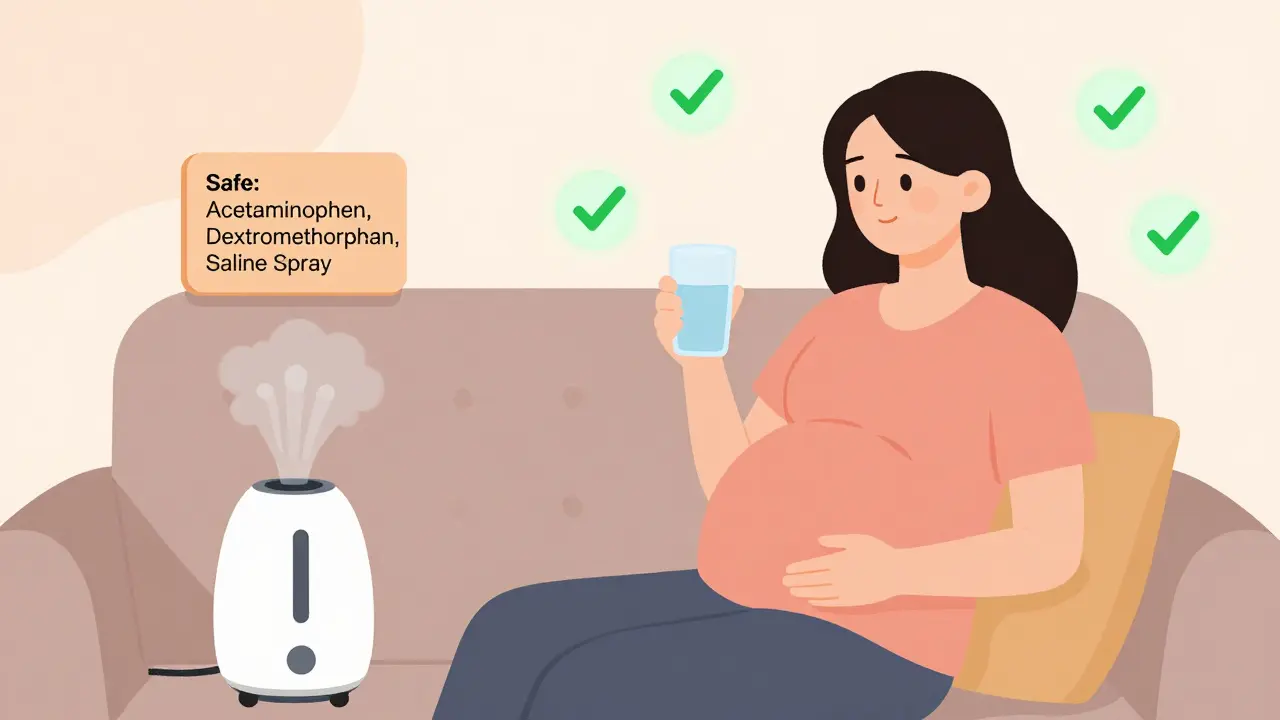
Acetaminophen (Tylenol) is the gold standard for pain and fever relief during pregnancy. It’s been studied in more than 50,000 mother-baby pairs, including over 200 cases where it was taken in the first trimester. No increased risk of birth defects was found. It’s safe in all three trimesters, and you can use it as directed on the label - no need to wait until the second trimester.
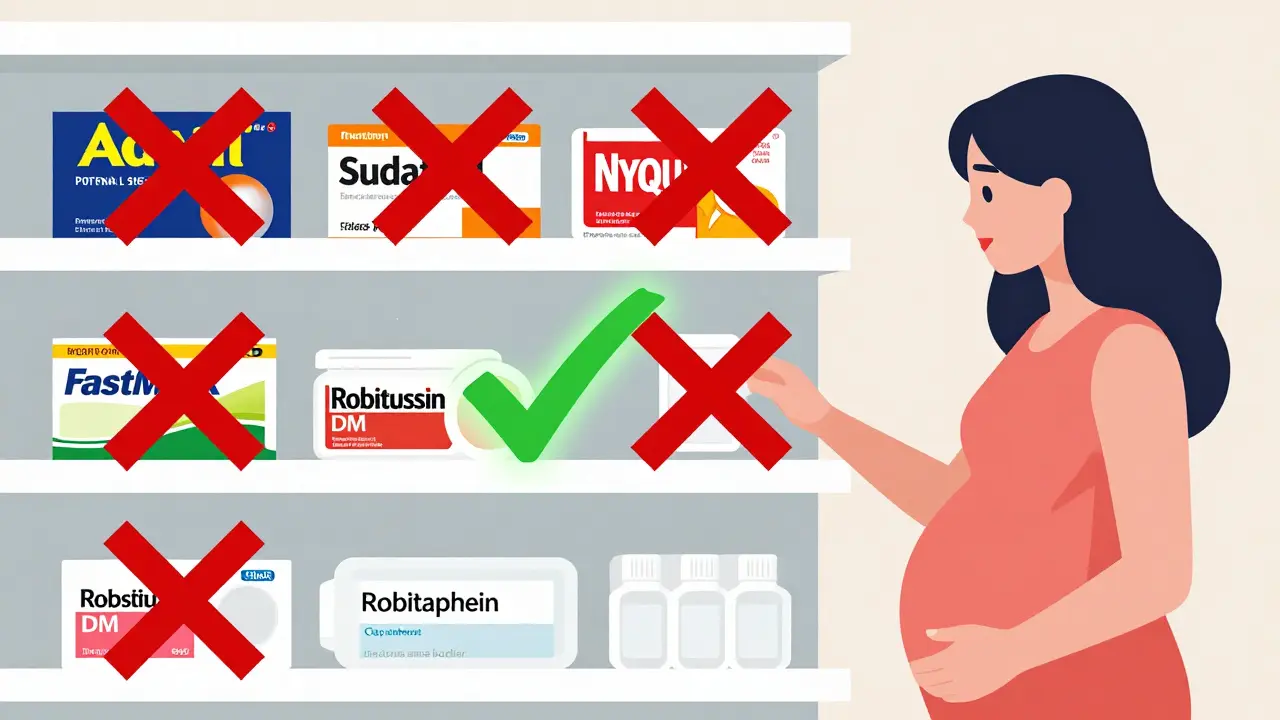
For coughs, dextromethorphan (found in Robitussin DM) is considered safe for short-term use. A 2007 study followed 300 women who took it during the first trimester and 580 who used it at any point during pregnancy. No link to birth defects was detected. Just make sure it’s the plain version - no alcohol, no added decongestants or antihistamines.
Guaifenesin (plain Mucinex) helps loosen mucus and is also considered safe. Again, stick to the version without added ingredients. Combination products are where things get risky.
For allergies or runny noses, second-generation antihistamines like loratadine (Claritin) and cetirizine (Zyrtec) are preferred. They don’t cause drowsiness like older antihistamines (like diphenhydramine/Benadryl), and multiple studies show they’re safe during pregnancy. Nebraska Medicine specifically recommends these as go-to options for pregnant women.
Topical remedies like Vicks Vapor Rub and menthol cough drops are also fine. They’re applied to the skin or mouth, not swallowed in large amounts, so they don’t reach the baby in significant doses. Saline nasal sprays and humidifiers are equally safe and often more effective than pills.
What You Must Avoid
NSAIDs - like ibuprofen (Advil, Motrin), naproxen (Aleve), and aspirin - should be avoided entirely during pregnancy unless your doctor specifically prescribes them. These drugs can reduce blood flow to the placenta and affect fetal kidney development. In the third trimester, they can even cause premature closure of a vital blood vessel in the baby’s heart.
Decongestants are tricky. Phenylephrine (found in Sudafed PE, DayQuil, and many combo products) is consistently flagged as unsafe. VCU Health and Catholic Health both list it as a no-go. Even though it’s sold as an OTC remedy, it can restrict blood flow to the placenta and raise blood pressure - not something you want during pregnancy.
Pseudoephedrine (Sudafed) is more confusing. Some OB-GYNs say it’s okay in limited doses after the first trimester. Others, like VCU Health, advise avoiding it completely. Because of this conflict, most experts recommend skipping it unless you’ve talked to your provider. If you do use it, limit it to 3-5 days max.
Combination cold medicines? Avoid them. Products like DayQuil, NyQuil, Mucinex FastMax, and TheraFlu mix multiple ingredients - some safe, some not. You might think you’re treating a cough and a runny nose, but you’re also accidentally taking alcohol (up to 15% in liquid NyQuil), phenylephrine, or even codeine. Even if a caplet version claims to be alcohol-free, it may still contain unsafe decongestants.
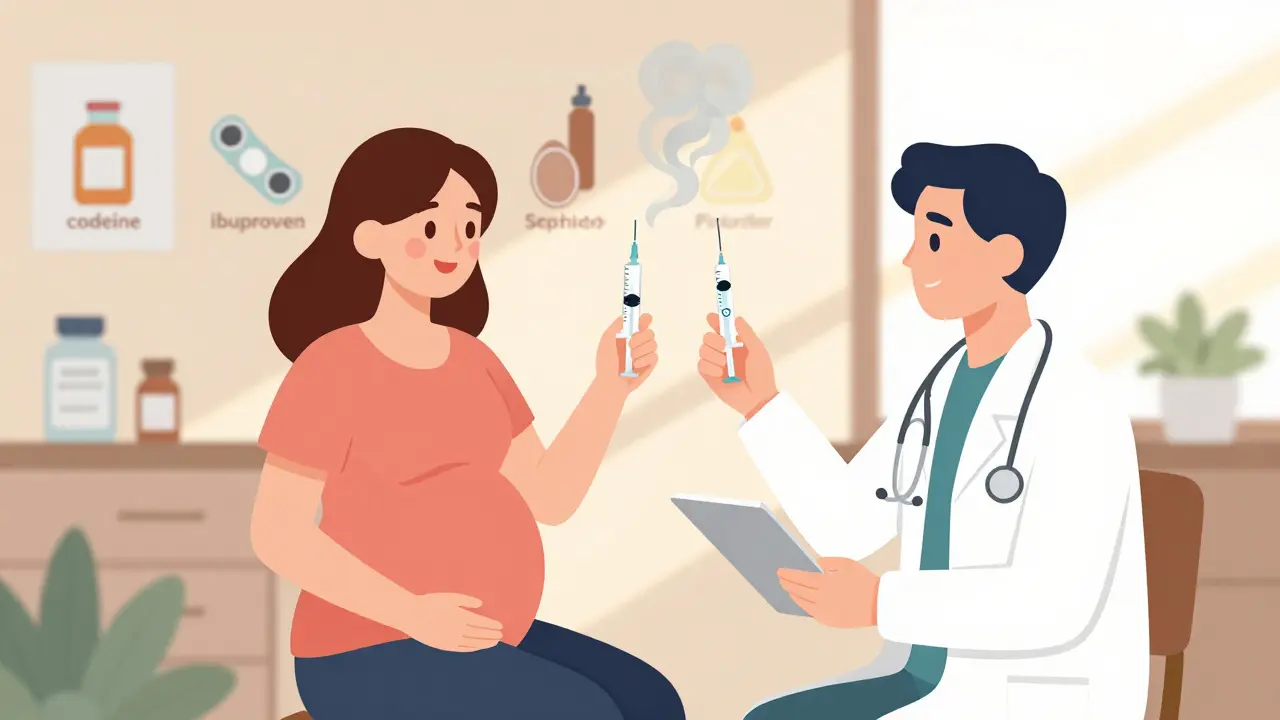
Codeine is another red flag. The FDA warned in 2021 that codeine can cause dangerous breathing problems in newborns, especially if taken near delivery. It’s been removed from most pregnancy-safe lists. Don’t risk it.
Herbal supplements? Skip them. The FDA doesn’t regulate them. Just because something says “natural” doesn’t mean it’s safe. Echinacea, elderberry, zinc lozenges - none have enough research to prove they’re safe for your baby. And some, like goldenseal, may even trigger uterine contractions.
What About the Flu? Don’t Wait
Flu isn’t just a bad cold. Pregnant women are 5 times more likely to be hospitalized with flu complications - and up to 7 times more likely to end up in the ICU. That’s why the CDC and ACOG say: if you have flu symptoms, get treated fast.
Oseltamivir (Tamiflu) is the go-to antiviral. Studies show no increased risk of birth defects, even when taken in the first trimester. It works best if started within 48 hours of symptoms, but even after that, it still helps. Don’t wait for a positive test. If you feel sick with fever, body aches, and fatigue during flu season, call your provider right away.
Zanamivir (Relenza) is another option, though it’s inhaled and may not be ideal if you have asthma. Baloxavir (Xofluza) is not recommended - there’s simply not enough safety data yet.
And don’t forget prevention. The CDC recommends the flu shot for every pregnant woman, no matter the trimester. It’s safe, effective, and protects your baby for months after birth. The Abrysvo vaccine (for RSV) is also now recommended for women between 32 and 36 weeks - it’s not a flu shot, but it helps protect newborns from serious lung infections.
Non-Medication Strategies That Work
Before you reach for a pill, try these proven, zero-risk methods:
- Drink plenty of water - dehydration makes mucus thicker and harder to clear.
- Use a saline nasal spray or neti pot (with distilled water) to flush out sinuses.
- Sleep with a humidifier running - moist air soothes irritated throats and nasal passages.
- Gargle with warm salt water - reduces throat pain and loosens mucus.
- Rest as much as possible. Your body needs energy to fight the virus.
- Use honey (not for babies under 1) for cough relief - it’s as effective as dextromethorphan in some studies.
These steps alone can cut symptom duration by days. And if you combine them with safe medications like acetaminophen and dextromethorphan, you’re doing everything right.
When to Call Your Doctor
You don’t need to panic over every sniffle. But call your provider if:
- Your fever stays above 101°F for more than 24 hours
- You’re having trouble breathing or chest pain
- You notice reduced fetal movement
- Your symptoms last longer than 10 days
- You’re considering any new supplement or medication - even if it’s labeled “natural”
Always check with your OB-GYN or midwife before taking anything new. Even if it’s on a “safe” list, your individual health history matters. A medication that’s fine for one person might not be for another.
Can I take Tylenol Cold and Flu while pregnant?
No. Tylenol Cold and Flu products contain multiple ingredients - including phenylephrine or pseudoephedrine - that are not recommended during pregnancy. Stick to plain acetaminophen alone. If you need help with congestion or cough, ask your provider for a safer alternative.
Is it safe to take Robitussin during pregnancy?
Yes, but only the plain dextromethorphan version - no alcohol, no decongestants, no antihistamines. Always check the label. If it says "DM" and nothing else, it’s generally safe. Avoid the nighttime or multi-symptom versions.
Can I use Vicks Vapor Rub while pregnant?
Yes. Vicks Vapor Rub is safe to use topically on your chest, throat, or under your nose. It doesn’t enter your bloodstream in significant amounts, so it won’t affect your baby. Just avoid applying it directly inside your nostrils.
What should I do if I took ibuprofen before I knew I was pregnant?
If you took ibuprofen once or twice before realizing you were pregnant, it’s unlikely to cause harm. The biggest risks come with long-term or high-dose use, especially in the third trimester. Tell your provider at your next appointment - they’ll monitor your pregnancy closely, but there’s no need to panic.
Are herbal teas safe during pregnancy?
Some are, but many aren’t. Chamomile and ginger tea are generally fine in moderation. But avoid teas with licorice root, ephedra, or goldenseal - they can stimulate contractions or affect fetal hormones. Always check the ingredients. If you’re unsure, skip it.
8 Comments
Write a comment