Chronic pain isn’t just a physical problem. If you’ve lived with it for months or years, you know the fatigue, the frustration, the way it steals your sleep, your mood, and your sense of control. Medications help some people, but they often come with side effects, tolerance, or just don’t do enough. That’s where CBT for chronic pain comes in-not as a cure, but as a way to take back power over how pain affects your life.
What CBT for Chronic Pain Actually Does
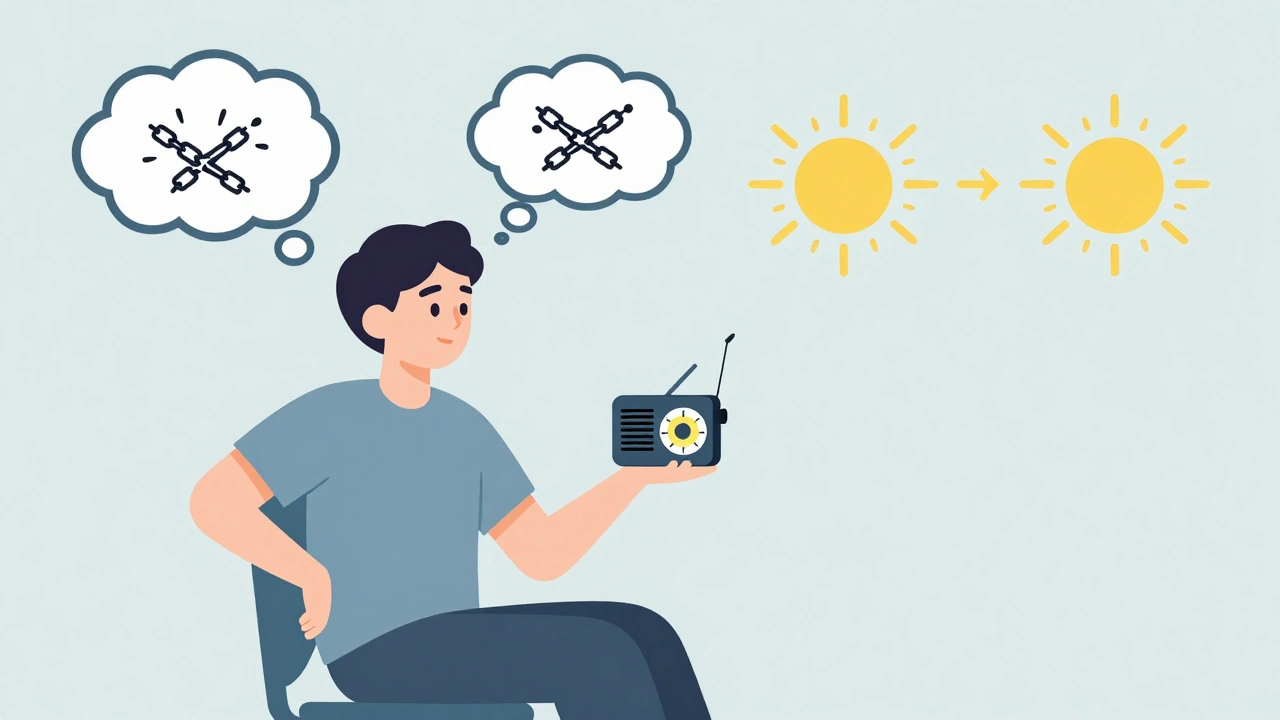
Cognitive Behavioral Therapy for Chronic Pain (CBT-CP) isn’t about pretending your pain isn’t real. It’s about understanding how your thoughts, emotions, and behaviors interact with pain-and changing the parts you can control. Think of it like adjusting the volume on a radio. You can’t turn off the signal, but you can turn down the noise. The therapy targets three main things: pain catastrophizing (thinking the worst, like “This will never get better”), fear-avoidance (stopping movement because you’re scared it’ll hurt more), and all-or-nothing activity patterns (doing too much on a good day, then crashing for days). These habits keep pain stuck in a loop, even when the original injury has healed. A 2023 review of 13 studies found that CBT-CP consistently improves mood, sleep, and daily function. For depression and anxiety linked to pain, the effect sizes are strong-sometimes as high as d=1.31. For pain intensity itself? The changes are smaller. That’s not a failure. It’s the point. CBT-CP doesn’t promise to erase pain. It helps you live better with it.How It Works: The Core Tools
Most CBT-CP programs run for 8 to 16 weekly sessions, each about an hour long. You’ll work with a trained therapist-either one-on-one or in a group. Here’s what you’ll actually do:- Pain neuroscience education: You’ll learn how pain signals work in the nervous system. It’s not just “your back is broken.” It’s your brain interpreting signals as dangerous-even when tissue damage is minimal. Understanding this reduces fear.
- Activity pacing: Instead of pushing through pain to get things done (then crashing), you learn to break tasks into smaller chunks and space them out. One patient said, “Pacing stopped my boom-bust cycles. I finally have energy on weekends.”
- Cognitive restructuring: You’ll identify thoughts like “I can’t do anything right anymore” and test them. Is that really true? What’s a more balanced thought? “I can’t do everything, but I can do something today.”
- Relaxation and breathing: Chronic pain keeps your nervous system on high alert. Simple breathing techniques lower stress hormones and reduce muscle tension.
- Behavioral activation: You rebuild activities you’ve given up-not because the pain is gone, but because you’re learning to move through it.
How It Compares to Other Treatments
What about pills? Physical therapy? Mindfulness? A 2024 study in JAMA Network Open compared CBT-CP to mindfulness-based therapy in 254 people with chronic low back pain who were taking opioids. After 26 weeks, both therapies worked equally well-better than usual care. But here’s the kicker: 36% of people in the CBT group reduced their daily opioid use. Only 17% did in the usual care group. Compared to physical therapy alone, CBT-CP doesn’t improve physical function more-but it does a much better job with depression, anxiety, and quality of life. Combine CBT-CP with physical therapy? That’s the strongest combo. One study showed 40% greater functional improvement than CBT alone. It doesn’t work as well for neuropathic pain (nerve damage) as it does for musculoskeletal pain (back, joints). But for chronic low back pain, fibromyalgia, or arthritis? It’s one of the most evidence-backed tools you’ve got.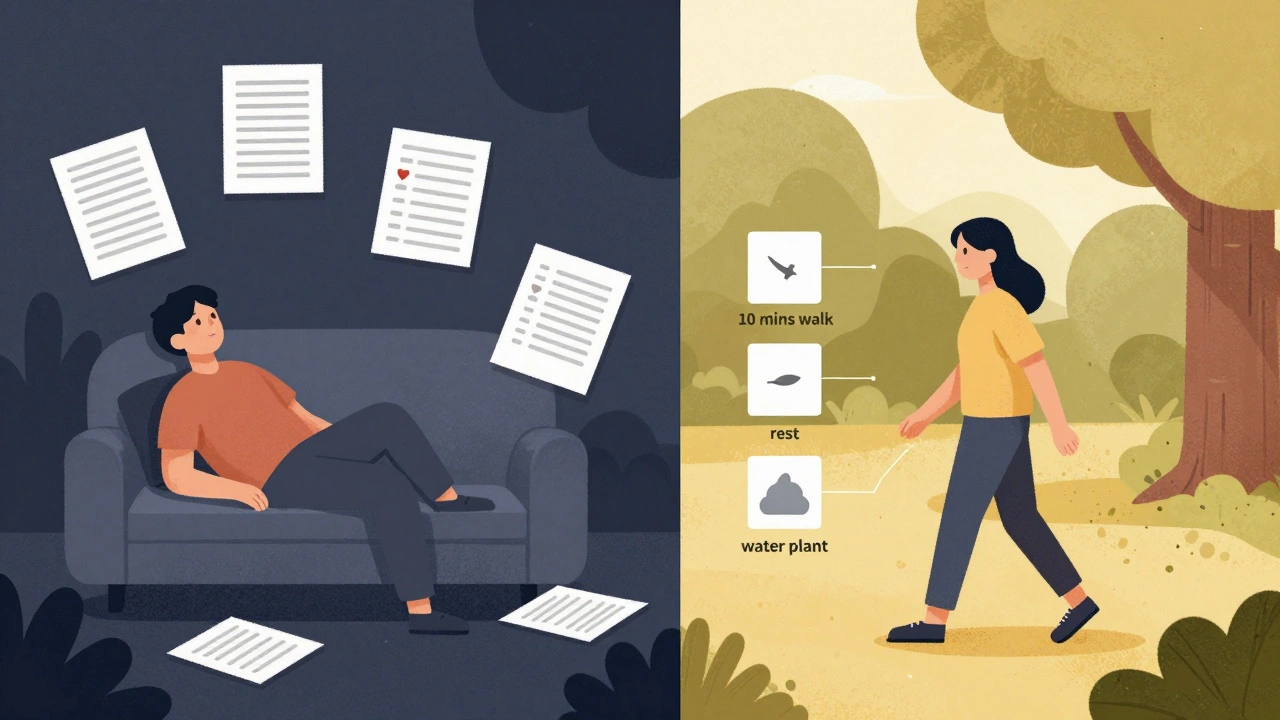
Who Benefits Most-and Who Might Struggle
CBT-CP isn’t a one-size-fits-all. It works best for people with:- Depression or anxiety along with pain
- High levels of fear-avoidance or catastrophizing
- Willingness to try new ways of thinking and acting
Real People, Real Results
In the Veterans Health Administration’s 2023 survey, 73% of patients said they experienced “meaningful improvement” in their ability to function. Not in pain levels-function. Getting out of bed. Walking the dog. Cooking dinner. Playing with grandkids. Qualitative feedback from patients is full of phrases like:- “I stopped waiting for the pain to disappear before I lived.”
- “I learned to notice when I was catastrophizing and say, ‘That’s my pain brain talking, not me.’”
- “I still hurt, but I’m not scared of it anymore.”
Access and Barriers
Here’s the hard truth: CBT-CP is underused. Only 32% of community health centers in the U.S. offer it. Insurance coverage is a mess. Medicare only pays for 10 sessions a year. You need 12 to 16 for full benefit. Commercial insurers vary: UnitedHealthcare covers 12, Aetna covers 8. Some don’t cover it at all. Therapist availability is another bottleneck. Only 15% of eligible U.S. patients can access a trained CBT-CP provider. Training takes time-clinicians need 40 hours of specialized instruction plus supervision. Those with prior CBT experience can get up to speed in 3-6 months. Beginners take 9-12. But things are changing. Virtual CBT (vCBT) is now proven just as effective as in-person. A 2021 study showed 30% or more improvement in pain severity at three months with video sessions. Telehealth opens access to rural areas and people with mobility issues. Digital CBT apps are also growing. In 2023, FDA-cleared apps for pain jumped 47%. They’re not a replacement for therapy, but they’re a bridge-especially if you’re waiting for a therapist or can’t afford one.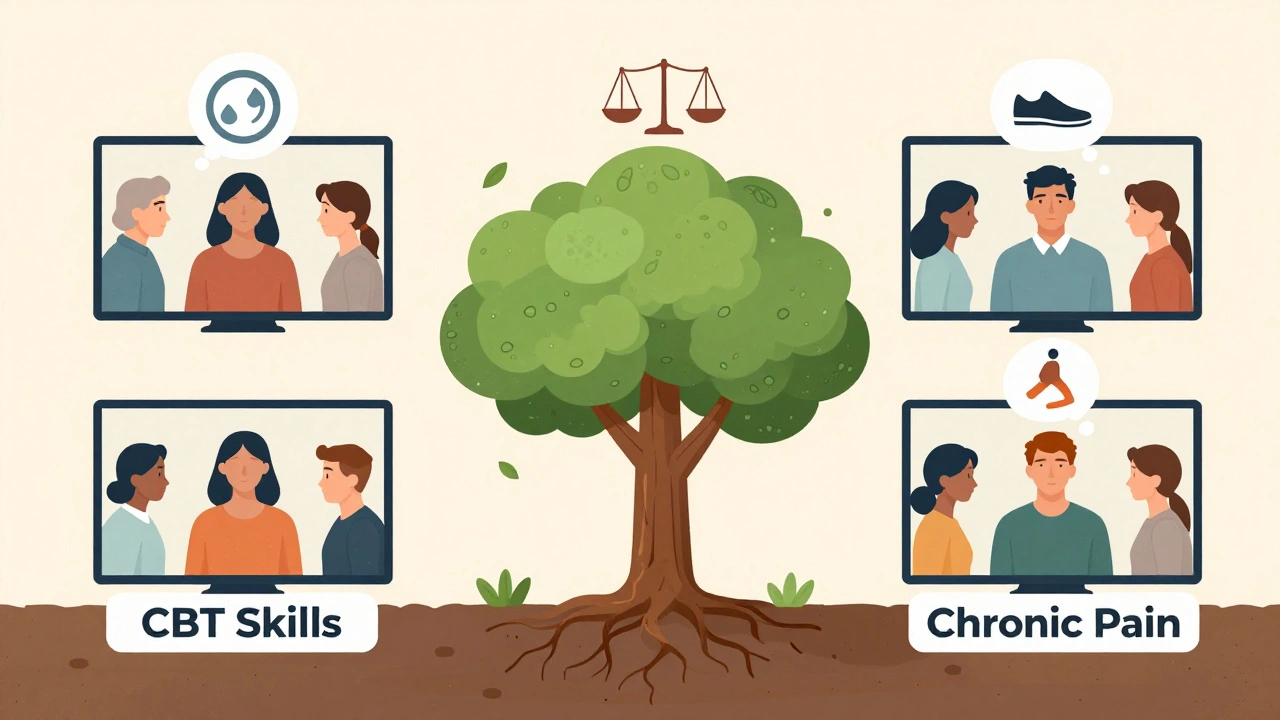
What Experts Say
Dr. Robert Kerns, a pioneer in pain psychology, calls CBT-CP the “gold standard” because it targets the psychological and behavioral drivers that keep pain chronic. The American Psychological Association gives it a “strong recommendation” based on 37 randomized trials. But Dr. Beth Darnall from Stanford is clear: “CBT-CP’s effects on pain intensity alone are too small for severe pain. It needs to be part of a team.” That’s the key. CBT-CP isn’t the whole answer. It’s one vital piece-alongside movement, medical care, and sometimes medication.How to Get Started
If you’re considering CBT-CP:- Ask your doctor for a referral to a psychologist trained in CBT for chronic pain. Look for credentials like “licensed clinical psychologist” with experience in pain management.
- Check if your insurance covers it. Call your provider and ask: “Do you cover Cognitive Behavioral Therapy for Chronic Pain? How many sessions?”
- If therapy isn’t available, try a digital CBT app approved by the FDA. Look for ones developed by academic institutions or pain clinics.
- Be patient. Progress is slow. You won’t feel better after one session. But after 6-8, many report a shift in how they relate to pain.
- Pair it with movement. Even gentle walking or stretching helps. CBT-CP works best when it’s not alone.
Final Thought
Chronic pain doesn’t have to be your whole identity. CBT-CP won’t make your pain vanish. But it can help you stop letting it run your life. You don’t need to be fixed. You need to be equipped. And with the right tools, you can move again-even with pain.Is CBT for chronic pain just in my head?
No. CBT doesn’t say your pain is imaginary. It acknowledges that pain is real and physical. But it also recognizes that your brain’s response to pain-your thoughts, fears, and behaviors-can make it worse or keep it going long after healing. CBT helps you change those responses so pain doesn’t control your life.
How long does CBT for chronic pain take to work?
Most people start noticing changes after 4-6 sessions. Improvements in mood, sleep, and daily function usually show up before pain intensity does. Full benefits often take 8-12 sessions. It’s not a quick fix-it’s a skill-building process. The goal isn’t to feel no pain, but to feel more in control.
Can I do CBT for chronic pain online?
Yes. Virtual CBT (vCBT) has been proven just as effective as in-person sessions in multiple studies. Video sessions work well if you have a stable internet connection and a quiet space. Many clinics now offer telehealth CBT-CP, and there are also FDA-cleared digital apps that guide you through the same techniques.
Will CBT help me reduce my pain medication?
Many people do reduce their medication use after CBT, especially opioids. In one major trial, 36% of CBT participants cut their daily opioid use compared to 17% in usual care. CBT helps you manage pain without relying as heavily on pills. But never stop medication without talking to your doctor.
What if I don’t believe in therapy for physical pain?
That’s common. Many people think pain is only about tissue damage. But research shows pain is shaped by emotions, stress, past experiences, and beliefs. CBT doesn’t ask you to believe anything-it asks you to try a few simple tools and see if they help. You’re not giving up on medicine. You’re adding a tool that works with it.
i just tried this cbt thing after my dr pushed it for 2 years and honestly? it felt like being told to just think happy thoughts while my spine was on fire. like yeah i know my brain is overreacting but my pain is REAL and i’m tired of people acting like it’s all in my head. i’m not broken, i’m just hurt.
How utterly reductionist. You reduce the complex phenomenology of chronic pain to a mere cognitive distortion? This is the epitome of Western medical hubris-ignoring the ontological weight of suffering in favor of behavioral engineering. Pain is not a signal to be reprogrammed; it is an existential truth that demands reverence, not behavioral modification.
you think this is therapy? it’s just a fancy way for insurance companies to avoid paying for real treatment. they don’t care if you’re in agony-they just want you to stop complaining. cbt doesn’t fix broken discs, it just makes you feel guilty for still hurting.
you’re not alone!! 💔 i felt the same way at first. but after 6 weeks of pacing and breathing? i actually slept through the night for the first time in 3 years. it’s not magic, but it’s real. you don’t have to be fixed to be whole. ❤️
Let me be perfectly clear-this whole CBT-for-pain paradigm is a product of neoliberal healthcare capitalism masquerading as compassion. The pharmaceutical industry can’t profit from cognitive restructuring so they’ve outsourced suffering to underpaid psychologists who charge $150/hour to teach you to say ‘I am not my pain’ while your insurance caps you at 10 sessions. This isn’t healing-it’s containment. And the fact that people are swallowing this as ‘evidence-based’ is a tragedy of epistemic collapse. We’ve turned human suffering into a self-help checklist.
stephanie i hear you. i thought cbt was blaming me too… until my therapist said ‘your pain isn’t fake, but your fear of it is making it worse.’ i started small-just 5 minutes of walking a day. now i can play with my niece without crying afterward. it’s not perfect, but it’s mine again. you got this.
in my village in South Africa, we don’t have CBT-but we have community. When someone is in pain, we sit with them. We don’t fix them. We don’t reframe their thoughts. We just sit. Maybe that’s the missing piece-not more tools, but more presence.
What if pain isn’t something to be managed or changed at all? What if it’s a teacher? CBT gives us techniques to reduce suffering, but maybe the deeper work is learning to listen-to the body, to the fear, to the grief underneath. Maybe the goal isn’t to lower the volume, but to understand the song.
Of course CBT works-it’s a brainwashing tool the NHS uses to cut costs. They don’t want to pay for MRIs or surgery so they hand you a workbook and call it ‘therapy.’ I’ve seen it happen. They’ll say ‘it’s all in your head’ and then wonder why people turn to opioids. It’s not psychology-it’s policy.