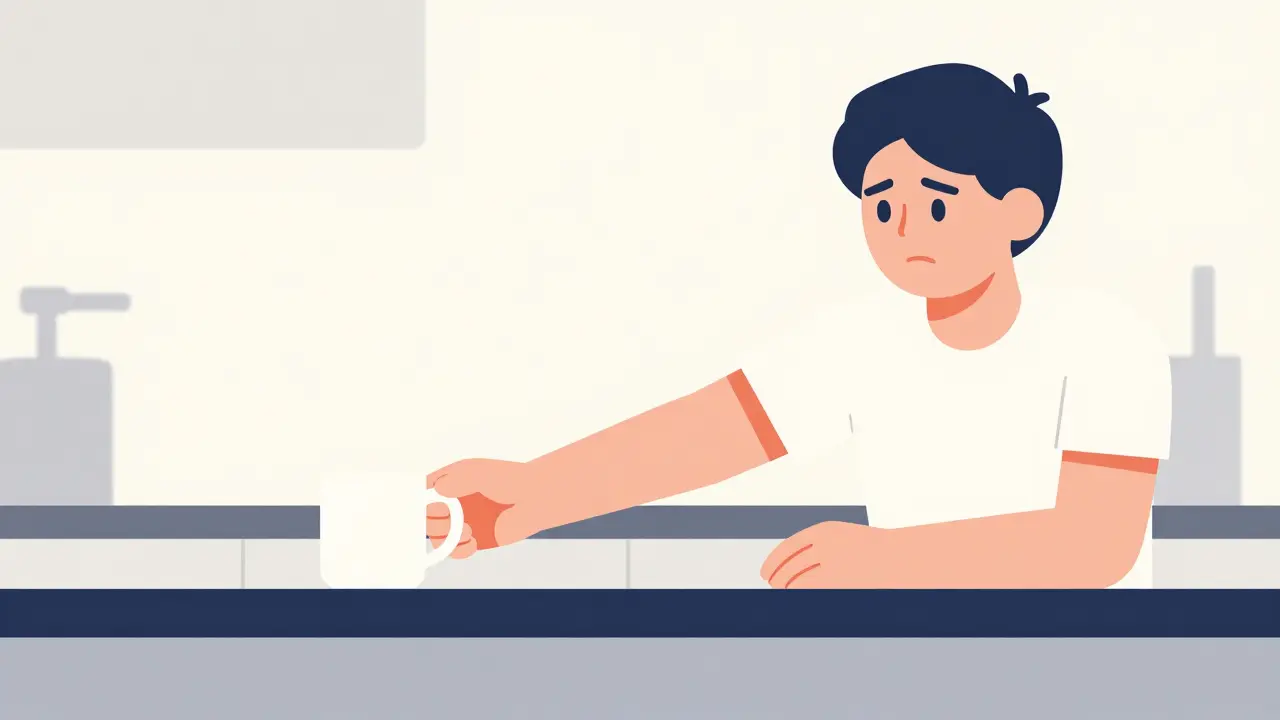
Imagine reaching for a coffee mug, but your hand overshoots. You try to correct it, but you wobble past the target entirely. This isn't just clumsiness; it is ataxia, a neurological condition where the brain loses its ability to coordinate voluntary muscle movements. For the 150,000 Americans living with this diagnosis, daily life becomes a constant battle against instability, slurred speech, and unpredictable balance. The good news? While there is no cure for most forms of ataxia, targeted neurological rehabilitation can significantly improve function, reduce falls, and restore independence.
The key lies in understanding that ataxia is not a single disease but a symptom of damage to the cerebellum, the part of the brain responsible for timing and precision in movement. When this area is compromised-whether by genetics, stroke, or toxins-the signals between your brain and muscles get scrambled. Rehabilitation doesn't fix the underlying damage, but it teaches your nervous system new ways to compensate. Think of it as rerouting traffic around a road closure rather than paving over the hole.
Understanding Your Ataxia Type Matters
Not all ataxia is created equal. Before starting any rehab program, you need to know what type you have because the approach differs drastically. Roughly 70% of cases are acquired, meaning they develop suddenly due to an external cause like a stroke, head trauma, or vitamin B12 deficiency. In these cases, recovery can be substantial if the underlying issue is treated promptly. The remaining 30% are hereditary, such as Friedreich's ataxia or spinocerebellar ataxia (SCA). These are progressive, meaning symptoms worsen over time. Hereditary forms typically start between ages 5 and 25, while idiopathic late-onset cerebellar ataxia (ILOCA) appears after age 50 with unknown causes.
Knowing your subtype dictates your goals. If you have post-stroke ataxia, studies show 40-60% functional recovery is possible. If you have a hereditary form, the goal shifts to slowing decline and maximizing quality of life, with improvements often ranging from 10-20%. Dr. Thomas Klockgether of the University of Bonn warns that gains in hereditary ataxias can be temporary due to disease progression, requiring continuous therapy adjustments. Getting the diagnosis right prevents you from wasting time on treatments that don't match your biological reality.
Why Standard Physical Therapy Often Fails
Many patients hit a wall when they first seek help. They go to a general physical therapist who prescribes standard exercises designed for knee replacements or back pain. For ataxia, this often backfires. A 2022 consensus statement from the Ataxia Global Initiative found that constraint-induced movement therapy-a common technique for stroke survivors-actually worsened symptoms in 68% of ataxia patients. Why? Because ataxia involves different neural pathways. Generic strengthening doesn't address the core issue: impaired timing and coordination.
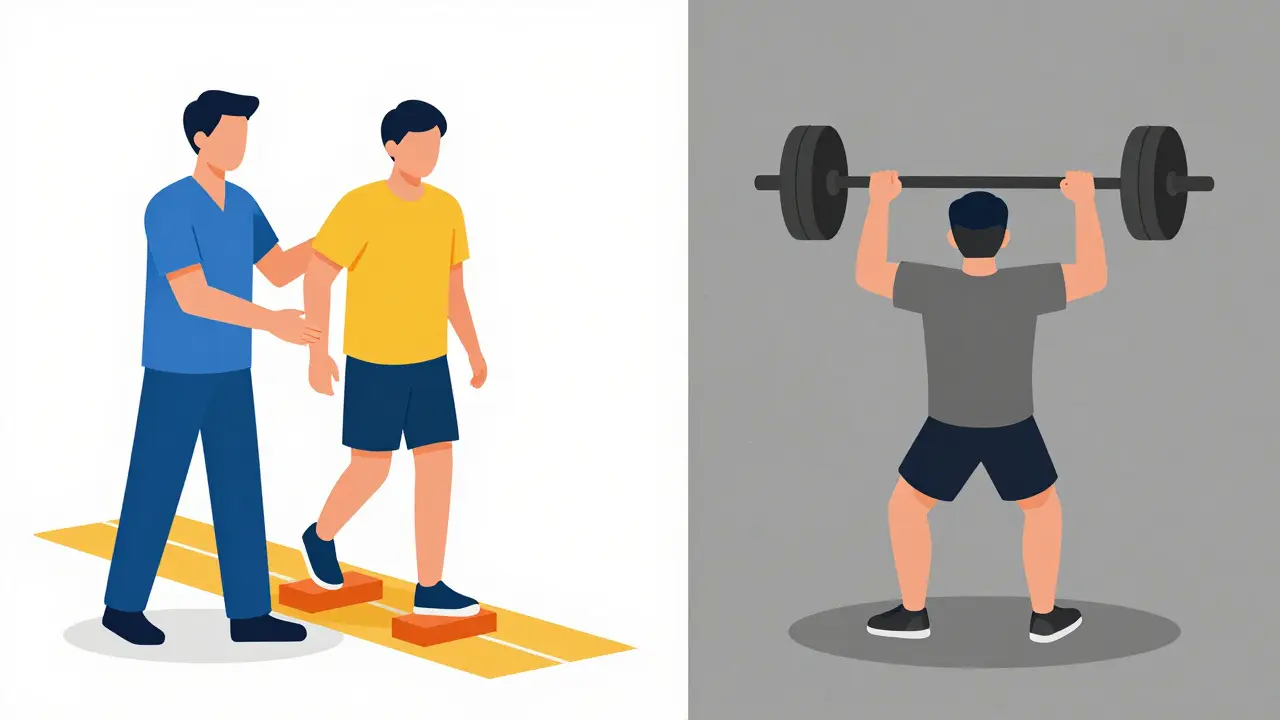
Effective ataxia rehab requires specialized protocols. Task-specific training has been shown to deliver 35% greater functional improvement than traditional approaches. This means practicing the exact movements you struggle with, like walking on uneven surfaces or buttoning a shirt, repeatedly and intensely. The European Federation of Neurological Societies recommends "intensive, task-oriented training with progressive challenge" as the gold standard. It’s not about lifting weights; it’s about retraining your brain’s motor planning centers through repetition and feedback.
The Core Components of Effective Rehabilitation
A comprehensive rehab plan for ataxia usually involves three pillars: physical therapy, occupational therapy, and speech-language pathology. Each targets specific deficits caused by cerebellar dysfunction.
- Balance and Gait Training: This is the foundation. Therapists use tools like computerized dynamic posturography systems (e.g., NeuroCom SMART Balance Master) to provide real-time feedback on your stability. Research from Mayo Clinic shows these systems boost Berg Balance Scale scores by an average of 8.2 points, compared to 4.7 points with conventional therapy. You’ll practice standing on one leg, walking with obstacles, and dual-tasking (like talking while walking) to mimic real-world challenges.
- Occupational Therapy (OT): OT focuses on activities of daily living (ADLs). If you’re dropping utensils or struggling to dress, an OT will adapt your environment and teach compensatory strategies. This might include using weighted utensils to dampen tremors or modifying home layouts to prevent falls. The goal is independence in self-care tasks, which 82% of patients report improving after targeted intervention.
- Speech-Language Pathology: Dysarthria, or slurred speech, affects 92% of ataxia patients. Speech therapists work on breathing control, articulation, and pacing. Techniques like slow-rate speech training and respiratory exercises can make your voice clearer and more understandable without changing the words themselves.
Technology and Biofeedback: The New Frontier
Traditional mirrors and verbal cues are being augmented by technology. Wearable sensors, such as APDM Opal devices, track up to 17 gait parameters, giving therapists precise data on your stride length, symmetry, and speed. Virtual reality systems like CAREN create immersive environments that increase engagement by 28% compared to standard treadmill walking. This matters because adherence is a major hurdle; patients are more likely to stick with therapy if it feels interactive and game-like.
However, not all tech is created equal. Robotics-assisted gait training, while popular for stroke rehab, shows limited efficacy for cerebellar ataxia. A 2023 multicenter trial found only 12% of ataxia patients achieved clinically meaningful improvements with robotics. The reason? Robots enforce rigid patterns, whereas ataxia rehab needs adaptable, variable practice to challenge the cerebellum’s timing mechanisms. Always ask your provider why a specific technology is recommended for your case.
| Approach | Effectiveness for Ataxia | Key Benefit | Limitation |
|---|---|---|---|
| Task-Specific Training | High (35% better than standard) | Improves real-world function | Requires high patient effort |
| Computerized Posturography | High (+8.2 Berg Score pts) | Precise balance feedback | Expensive equipment access |
| Robotics-Assisted Gait | Low (12% success rate) | Good for strength building | Lacks variability needed for ataxia |
| Constraint-Induced Therapy | Negative (Worsens 68%) | Useful for hemiparesis | Inappropriate for cerebellar issues |
Overcoming Access and Insurance Barriers
Even with the best protocol, getting care is a battle. In the U.S., Medicare covers about 65% of medically necessary therapy, but strict visit limits (often 10-20 sessions) cut off care before maximum benefit is reached. Private insurance varies, with out-of-pocket costs averaging $2,450 annually. Many patients report being denied coverage for essential ongoing maintenance therapy.
To navigate this, document everything. Use standardized metrics like the Scale for the Assessment and Rating of Ataxia (SARA) to prove progress. Only 37% of clinics routinely use SARA scoring, so finding one that does is crucial. Additionally, look for therapists with CRED certification (Cerebellar Rehabilitation and Evaluation Dynamics). As of late 2023, only 327 therapists in the U.S. hold this credential, creating a shortage. Rural areas face even steeper odds, with one certified therapist per 458 patients versus one per 87 in cities. Telehealth options are growing, with 45% of rural patients using them, though cross-state licensure laws can still block access.
Building a Sustainable Home Program
Clinic visits alone aren’t enough. Neuroplasticity-the brain’s ability to rewire itself-requires volume. A typical effective protocol demands at least 30 hours of intensive practice over 6-8 weeks. Since you can’t be in the clinic every day, a home exercise program (HEP) is non-negotiable. Sixty-eight percent of patients who consistently follow their HEP see measurable benefits.
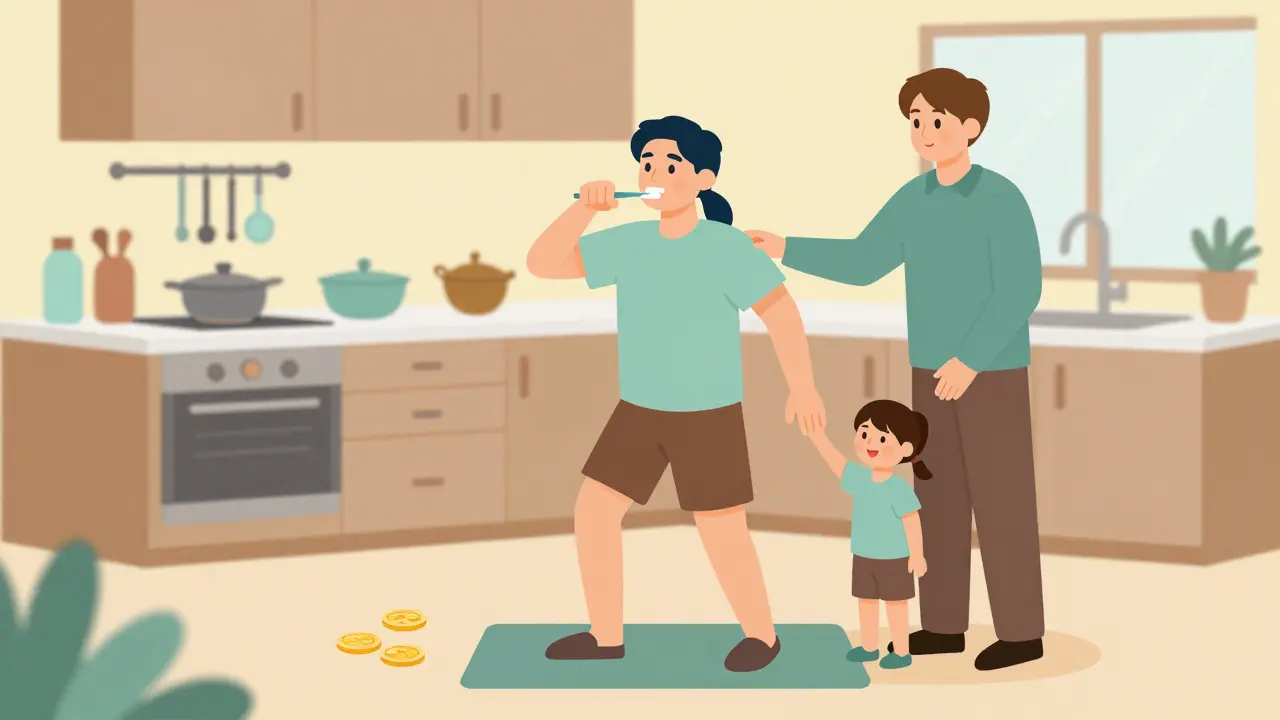
Your home program should mirror clinic tasks. If you’re working on balance, practice standing near a counter while brushing your teeth. If you’re working on fine motor skills, pick up coins or sort buttons. Consistency beats intensity here. Short, daily sessions are better than one long weekly marathon. Also, involve your family. Caregiver education is often insufficient, yet having someone who understands your triggers and limitations can prevent accidents and encourage adherence.
Looking Ahead: Emerging Treatments
The field is evolving. Non-invasive brain stimulation, like cerebellar transcranial direct current stimulation (ctDCS), combined with physical therapy, showed 22% greater improvement in SARA scores in a 2024 study. Wearable devices like the FDA-cleared Cerebello offer real-time tremor suppression via neuromodulation. While these aren’t replacements for rehab, they may enhance outcomes. Keep an eye on clinical trials like NCT05112345, which is testing intensive vs. distributed practice schedules. Results expected in 2025 could reshape how we structure therapy frequency.
For now, the best strategy remains proactive, specialized, and persistent. Ataxia rehabilitation is not a quick fix, but a lifelong partnership with your healthcare team. By focusing on task-specific training, leveraging appropriate technology, and advocating for adequate coverage, you can reclaim control over your movements and your life.
How long does ataxia rehabilitation take to show results?
Most patients begin noticing improvements in balance and coordination within 6 to 12 weeks of intensive, task-specific therapy. However, significant functional gains often require 30+ hours of practice over 2-3 months. Hereditary forms may show slower, more modest progress compared to acquired ataxia.
Is ataxia rehabilitation covered by insurance?
Coverage varies widely. Medicare typically covers 65% of medically necessary therapy but imposes strict visit limits (often 10-20 sessions). Private insurance may cover 60-80%, leaving average out-of-pocket costs around $2,450 annually. Patients often need to appeal denials by providing detailed progress reports using standardized scales like SARA.
What is the difference between acquired and hereditary ataxia treatment?
Acquired ataxia (from stroke, trauma, etc.) often allows for substantial recovery (40-60% functional improvement) if treated early. Hereditary ataxia is progressive, so rehabilitation focuses on maintaining function and safety, with typical improvements ranging from 10-20%. Treatment plans for hereditary forms must be adjusted continuously as the disease evolves.
Can I do ataxia exercises at home?
Yes, and you should. Home exercise programs are critical for neuroplasticity. Activities like balancing while brushing teeth, picking up small objects, or walking on varied surfaces reinforce clinic gains. Consistency is key; short daily practices are more effective than occasional long sessions.
What is CRED certification for therapists?
CRED stands for Cerebellar Rehabilitation and Evaluation Dynamics. It is a specialized certification requiring 120 hours of training focused specifically on ataxia. As of late 2023, only 327 therapists in the U.S. are CRED-certified, making them highly sought after for evidence-based ataxia care.
They want you to believe it's just a 'neurological condition' requiring 'rehabilitation' but have you considered that the modern diet and electromagnetic pollution are scrambling your cerebellum before you even take a step? The establishment pushes these expensive therapies to keep you dependent on their system while ignoring the root cause of environmental toxicity. It is a controlled narrative designed to monetize your suffering rather than heal your spirit. We are being conditioned to accept brokenness as normal when in reality our bodies are screaming for purity from the synthetic sludge we consume daily. Wake up and look at the water supply, not just the mirror. :)
i see you posted this because you probably dont understand how hard it is to actually get better without paying thousands out of pocket which most people cant afford so why bother reading this if you are poor anyway its just another way for doctors to feel important while you struggle
This article highlights a critical gap in standard care protocols that many patients face. I am particularly interested in the specific metrics used to define 'functional improvement' in hereditary cases versus acquired ataxia. How do clinicians determine when a patient has plateaued in task-specific training? Is there a standardized threshold for adjusting the intensity of the home exercise program based on SARA scores? Understanding the clinical decision-making process here would provide valuable insight into long-term management strategies.
Hey everyone, just wanted to share some practical advice since I work with ataxia patients regularly. The key takeaway here is consistency over intensity. You don't need fancy robots or VR setups to start making progress. Simple tasks like standing on one foot while brushing your teeth can rewire neural pathways effectively. If you are looking for a therapist, check if they have CRED certification because general PTs often use techniques that can actually worsen symptoms. Start small, stay consistent, and track your progress with simple metrics. It is about building new habits, not fixing a broken machine.
Interesting read. I noticed the section on insurance barriers is quite accurate for my region too. Many people give up because they think therapy is only for acute phases. But neuroplasticity doesn't stop after six months. Keep going even if it feels slow.
I really appreciate the emphasis on caregiver education in this post. It is often overlooked, yet family members play such a crucial role in safety and adherence. Having someone who understands the triggers for instability can prevent falls and reduce anxiety for the patient. It creates a supportive environment where rehabilitation becomes a shared journey rather than an isolated struggle. Thank you for highlighting this aspect of holistic care.
The point about constraint-induced movement therapy worsening symptoms was eye-opening. I had no idea that a common stroke technique could be counterproductive for ataxia. It makes sense given the different neural pathways involved. This underscores the importance of specialized diagnosis before starting any regimen. Misapplied treatments can set back progress significantly.
It is inspiring to see that targeted rehabilitation can lead to significant improvements. Even with hereditary forms, focusing on quality of life and independence is a powerful goal. Every small victory counts. Stay positive and keep advocating for yourself. You are stronger than you think.
Most people fail because they lack discipline. Stop blaming the system and start doing the work.
Oh great, another article telling us to pay more money for less results. Sure, let's just buy a $2000 sensor to tell us we're walking weird. Meanwhile, the average person can't afford basic healthcare. Typical corporate spin on disability.
It is imperative that individuals recognize the ethical implications of relying solely on technological interventions without understanding the underlying physiological mechanisms. The reliance on external devices may foster dependency rather than genuine neurological adaptation. One must consider the moral responsibility of healthcare providers to ensure equitable access to evidence-based therapies. Without rigorous adherence to established protocols, the integrity of rehabilitation outcomes is compromised. Society must demand higher standards of care that prioritize patient autonomy and scientific validity over commercial interests.