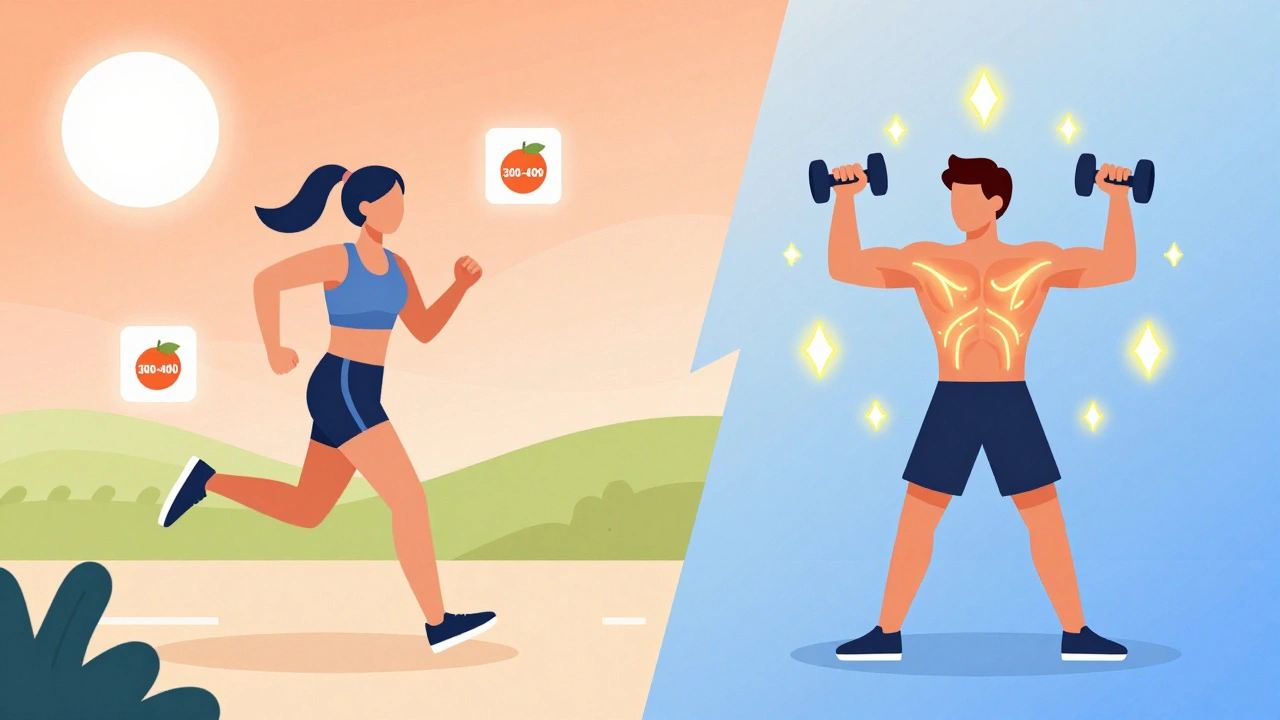
When you start trying to lose weight, the first question you hear is: cardio or strength training? It feels like a battle - one side screams about running miles to burn calories, the other insists lifting weights is the real secret. But here’s the truth: neither wins alone. The best approach uses both - and understanding why makes all the difference.
Cardio Burns Calories Fast - But Only While You’re Doing It
Cardio is straightforward: you move your body for a long time, your heart races, and you burn calories. A 30-minute jog at a moderate pace burns around 300-400 calories for someone weighing 155 pounds. Cycling, swimming, or dancing can hit similar numbers. That’s why the scale drops fast in the first few weeks. People who stick with cardio often see quick results - and that feels great. But here’s the catch: as soon as you stop moving, the calorie burn stops too. Your metabolism returns to baseline. And after 8-12 weeks, many people hit a wall. The body adapts. You’re doing the same route, same pace, same time - and suddenly, the scale won’t budge. That’s not your fault. It’s biology. Your body gets efficient. It learns to use less energy to do the same work.Strength Training Burns Fewer Calories - But Changes Your Body Forever
If you walk into a gym and watch someone lifting weights, you might think they’re not working hard enough. Thirty minutes of strength training burns only 90-150 calories. That’s less than half of what cardio burns in the same time. So why do people who lift weights look leaner even when the scale doesn’t change? Because strength training builds muscle. And muscle burns more calories - even when you’re sitting still. One kilogram of muscle uses about 13-15 calories per day just to exist. Fat? Only 4.5-5. So if you gain 2kg of muscle and lose 2kg of fat, your resting metabolism jumps by 16-20 calories a day. That’s not huge - but over a year, it adds up to over 7,000 extra calories burned. That’s nearly 1kg of fat. There’s another hidden perk: EPOC. That’s short for excess post-exercise oxygen consumption. After a hard strength session, your body keeps burning calories for up to 48 hours. It’s repairing muscle, restoring energy, and resetting hormones. Cardio doesn’t do this nearly as much. A 2024 study from the Cleveland Clinic showed strength training spikes metabolism longer than steady-state cardio, even if the workout itself burns fewer calories.Combining Both Is the Real Game-Changer
Here’s where most people get it wrong. They pick one and stick with it. But the science is clear: the best results come from doing both. A 2022 study in The Obesity Journal followed 150 overweight adults for six months. One group did only cardio. Another did only strength training. The third did 150 minutes of cardio and 120 minutes of strength training each week. Who won? The combo group lost 12.4% body fat and gained 1.8kg of muscle. The cardio-only group lost 9.7% fat - but also lost 0.3kg of muscle. The strength-only group gained 2.3kg of muscle but only lost 7.1% fat. The combo group didn’t just lose weight. They changed their body composition. They looked leaner, stronger, and more toned - even if the scale didn’t drop as dramatically as the cardio group’s. And it’s not just one study. Data from the National Weight Control Registry - which tracks over 10,000 people who’ve lost 13kg or more and kept it off - shows that the most successful maintainers do 220 minutes of cardio weekly. But they also do at least three strength sessions. The ones who skipped weights? They were far more likely to regain weight.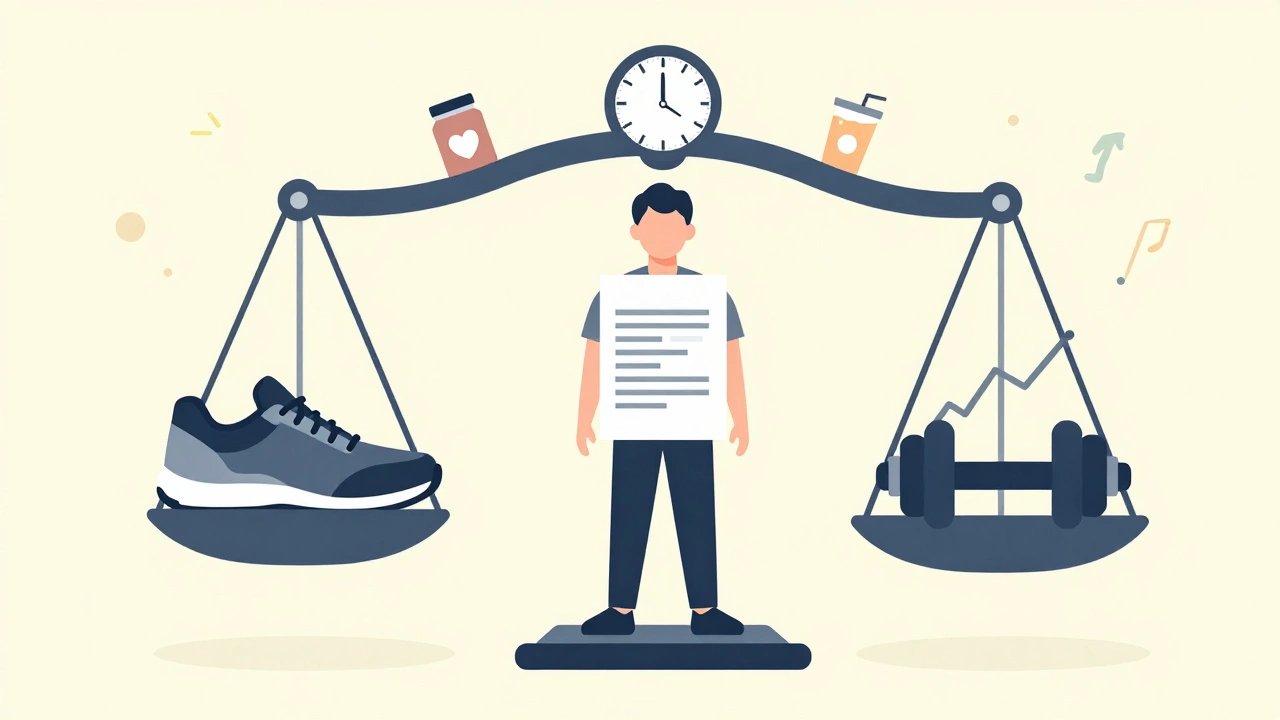
Why Your Scale Lies - And What to Track Instead
If you’re doing strength training, the scale might go up. That’s not failure. It’s progress. Muscle is denser than fat. So when you build muscle and lose fat at the same time, your weight stays the same - but your clothes fit better. People who lift weights often say: “I haven’t lost any weight, but my jeans are loose.” That’s the real win. A 2023 Reddit survey of 1,200 people trying to lose weight found that 82% of those who lifted weights said their clothes fit better, even when the scale didn’t move. Only 42% of people who did only cardio said the same. Why? Because cardio burns calories - but it doesn’t reshape your body. Strength training does. And don’t get fooled by the initial water weight gain. When you start lifting, your muscles hold more water. That’s normal. It’s not fat. It’s your body repairing and growing. Give it 3-4 weeks. The scale will start to drop - or at least stabilize - while your body tightens up.What the Experts Really Say
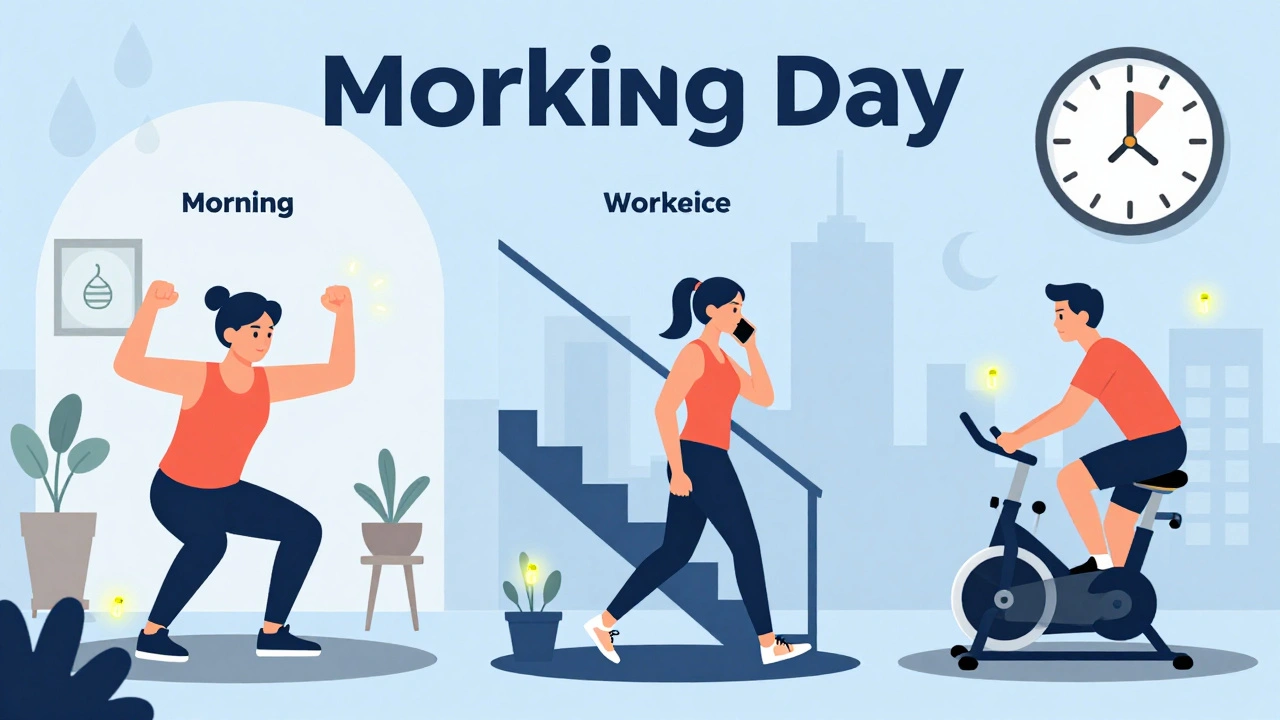
Dr. Timothy Church from LSU says a 2:1 ratio of cardio to strength training works best for most people. That means 60 minutes of cardio for every 30 minutes of lifting. Kelly St. George, an exercise physiologist, found in her 15-year clinical data that combining both leads to 37% more fat loss than either alone. But not everyone agrees. Dr. James Levine from Mayo Clinic points out that how you move all day matters more than your gym session. Standing, walking, fidgeting - what he calls NEAT (non-exercise activity thermogenesis) - can burn 2-3 times more calories than a 30-minute workout. So if you’re sitting all day and then running for 30 minutes, you’re still behind. The fix? Move more between workouts. Take the stairs. Walk while you talk on the phone. Park farther away. These small things add up - and they work with your exercise, not against it.How to Start - Without Overwhelming Yourself
You don’t need to run marathons or bench press 100kg. Start small. Here’s what works for beginners:- Do 3 days of cardio: brisk walking, cycling, or dancing for 20-30 minutes. Keep it at a pace where you can talk but not sing.
- Do 2 days of strength training: bodyweight squats, push-ups (on knees if needed), dumbbell rows, and planks. Do 2-3 sets of 8-12 reps.
- Rest one day between strength sessions so your muscles recover.
The Biggest Mistake People Make
It’s not doing too much. It’s not doing too little. It’s forgetting protein. If you lift weights but don’t eat enough protein, your body breaks down muscle for energy. That’s the opposite of what you want. The International Society of Sports Nutrition recommends 1.6-2.2 grams of protein per kilogram of body weight daily. For a 70kg person, that’s 112-154 grams of protein. That’s about 3 eggs, a chicken breast, a cup of Greek yogurt, and a scoop of whey - easy to hit if you plan it. Also, don’t skip recovery. Sleep. Hydration. Rest days. These aren’t optional. They’re part of the process. Muscle grows when you rest - not when you’re sweating.The Future Is Hybrid
The fitness industry is shifting. More people aren’t asking “cardio or weights?” - they’re asking “how do I do both?” Wearables like Garmin and Apple Watch now track EPOC and metabolic rate. Gyms are offering “metabolic flexibility” classes that mix HIIT with resistance circuits. Even corporate wellness programs are switching to combined protocols because they work better. New research from the University of Bath found that doing 15 minutes of strength training and 30 minutes of cardio - broken into small chunks throughout the day - works just as well as one long session. You don’t need 60 minutes straight. Just move. Often.Final Take: Stop Choosing. Start Combining.
Cardio is great for burning calories fast and improving heart health. Strength training is better for reshaping your body and keeping your metabolism high long-term. Neither is better. They’re partners. If you want to lose weight and keep it off, do both. Start with 3 cardio days and 2 strength days. Eat enough protein. Move more between workouts. Sleep well. Track how your clothes fit, not just the number on the scale. The goal isn’t to burn the most calories in one workout. It’s to build a body that burns more calories all day - every day. That’s the real win.Should I do cardio or strength training to lose weight?
Do both. Cardio burns more calories during the workout, but strength training builds muscle, which increases your resting metabolism. Combining them leads to 37% more fat loss than either alone, according to clinical studies. The best results come from a balanced mix - not choosing one over the other.
Why isn’t the scale moving even though I’m lifting weights?
Muscle is denser than fat. When you build muscle and lose fat at the same time, your weight might stay the same - but your body changes. Your clothes will fit better, your waistline will shrink, and your strength will improve. That’s body recomposition - and it’s more important than the number on the scale.
How much cardio and strength training should I do each week?
Start with 3 days of cardio (20-30 minutes) and 2 days of strength training. After a few weeks, increase to 4 days of cardio (30-45 minutes) and 3 days of strength. The American College of Sports Medicine recommends 150 minutes of cardio and 120 minutes of strength weekly for optimal fat loss and muscle retention.
Does strength training help me lose belly fat?
You can’t spot-reduce fat - no exercise targets belly fat directly. But strength training helps by increasing your overall metabolism. More muscle means your body burns more calories at rest, which helps reduce fat everywhere - including your midsection. Combine it with cardio and a healthy diet for the best results.
Is HIIT better than steady-state cardio for weight loss?
HIIT burns 25-30% more calories than steady-state cardio in the same time and triggers higher EPOC - meaning you keep burning calories after the workout. But it’s harder on the body. If you’re new, start with brisk walking or cycling. Once you’re comfortable, add 1-2 HIIT sessions per week. Don’t do HIIT every day - your body needs recovery.
Do I need to go to a gym to lose weight with strength training?
No. Bodyweight exercises like squats, push-ups, lunges, and planks are just as effective for beginners. Resistance bands and dumbbells at home work too. The key is progressive overload - slowly making exercises harder over time. You don’t need machines. You need consistency.
How long until I see results from strength training?
You’ll feel stronger in 2-4 weeks. Visible muscle changes take 8-12 weeks. Fat loss takes longer - especially if you’re not in a calorie deficit. But after 3 months, most people notice their body looks leaner, even if the scale hasn’t changed much. That’s because muscle is replacing fat.
Can I lose weight with just strength training?
Yes - but slowly. Strength training builds muscle and boosts metabolism, which helps burn fat over time. But it doesn’t burn as many calories during the workout as cardio does. For faster fat loss, combine it with cardio or increase daily movement. If you’re only doing strength training, you’ll need to be stricter with your diet.
What’s the best time of day to exercise for weight loss?
The best time is the one you can stick to. Whether it’s morning, lunchtime, or evening, consistency matters more than timing. Some people burn more fat in the morning on an empty stomach, but the difference is small. Pick a time that fits your life - and stick with it.
Do I need to count calories to lose weight with exercise?
Not necessarily - but you need to be aware of your intake. Exercise alone rarely creates a big enough calorie deficit for weight loss. Most people overestimate how many calories they burn and underestimate what they eat. Focus on whole foods, protein, and portion control. If you track, use it to learn - not to obsess.
Ugh, another one of these posts...
I’ve been doing both for 6 months now - cardio 3x, weights 3x - and my jeans finally fit. The scale hasn’t moved in 3 months, but I look different. Seriously, stop obsessing over pounds.
Also, protein is non-negotiable. I used to skip it and wonder why I felt weak. Now I hit 120g daily and it’s night and day.
YES. This. I was so frustrated when the scale didn’t budge after 2 months of lifting - until I realized I was getting stronger, my arms looked defined, and my stomach wasn’t bloated anymore.
You don’t need to be skinny to be healthy. You just need to be strong. Keep going. You’re doing better than you think.
Interesting breakdown, but I’m curious - how much of the fat loss in the combo group was actually due to the exercise itself versus the fact that they were likely more disciplined overall? I’ve noticed people who follow structured workout plans often also track food more closely, sleep better, and avoid late-night snacking - all of which independently contribute to fat loss. Is the synergy real, or is it just correlation?
Also, the 2:1 cardio-to-strength ratio mentioned - is that based on total time, intensity-adjusted minutes, or session count? Because if you do 30 minutes of HIIT versus 30 minutes of steady-state jog, they’re not equivalent. The study doesn’t specify. Just wondering if we’re comparing apples to oranges here.
Let’s be real - most people who say they ‘do both’ are just doing 10 minutes of squats and calling it a day. The real data? The people who keep weight off are the ones who move constantly - walking, standing, taking stairs. Not the ones grinding out 60-minute gym sessions. You think you’re winning because you lifted? You’re just delaying the inevitable if you sit at a desk 8 hours after.
My friend lost 40 lbs doing only bodyweight workouts at home. No cardio. Just squats, push-ups, and planks every other day. She ate more protein, slept better, and stopped drinking soda. No gym. No fancy gear. Just consistency. So maybe it’s not about cardio vs weights - it’s about showing up.
Also, I’m not sure why everyone’s obsessed with calories burned. It’s like counting raindrops during a storm.
Wow. So now we’re supposed to believe that lifting weights magically melts fat? That’s the same logic used by people who buy detox teas. The only thing that matters is calories in vs calories out. Everything else is marketing. You can’t out-lift a bad diet. Stop lying to yourself.
Respectfully, the science is clear: muscle mass elevates basal metabolic rate, and EPOC from resistance training contributes meaningfully to daily energy expenditure. The Cleveland Clinic 2024 study demonstrated a 19% higher 48-hour post-exercise calorie burn in resistance-trained subjects versus cardio-only subjects. This is not anecdotal - it is measurable, peer-reviewed physiology.
Moreover, the National Weight Control Registry findings are longitudinal and prospective - not cross-sectional. The data reflects real-world success, not lab conditions. To dismiss this as ‘marketing’ is to ignore evidence.
lol u think ur smart with ur 'studies' but most people in usa are lazy and eat junk. u dont need science to know that if u eat pizza every day u wont lose weight. just stop being so complicated. eat less, move more. simple. why do u need 10 paragraphs? 😒
My guy just told me he lost 25 lbs doing nothing but walking 10k steps a day and cutting out soda. No weights. No cardio ‘workouts.’ Just movement. And he says the best part? He doesn’t hate it. I think the real answer is: find something you don’t hate doing. Then do it every day.
Also - protein. Always protein. Even if you’re just walking.
It’s simple: Americans are weak. We want quick fixes. We want to ‘burn calories’ like it’s a video game. In my country, people work with their hands. They lift. They carry. They walk. They don’t need a gym. They don’t need a study. They just live. Maybe we should stop overcomplicating fitness and start living like humans again.
Also, the word ‘metabolism’ is used too much. It’s not magic. It’s biology. Stop treating it like a buzzword.