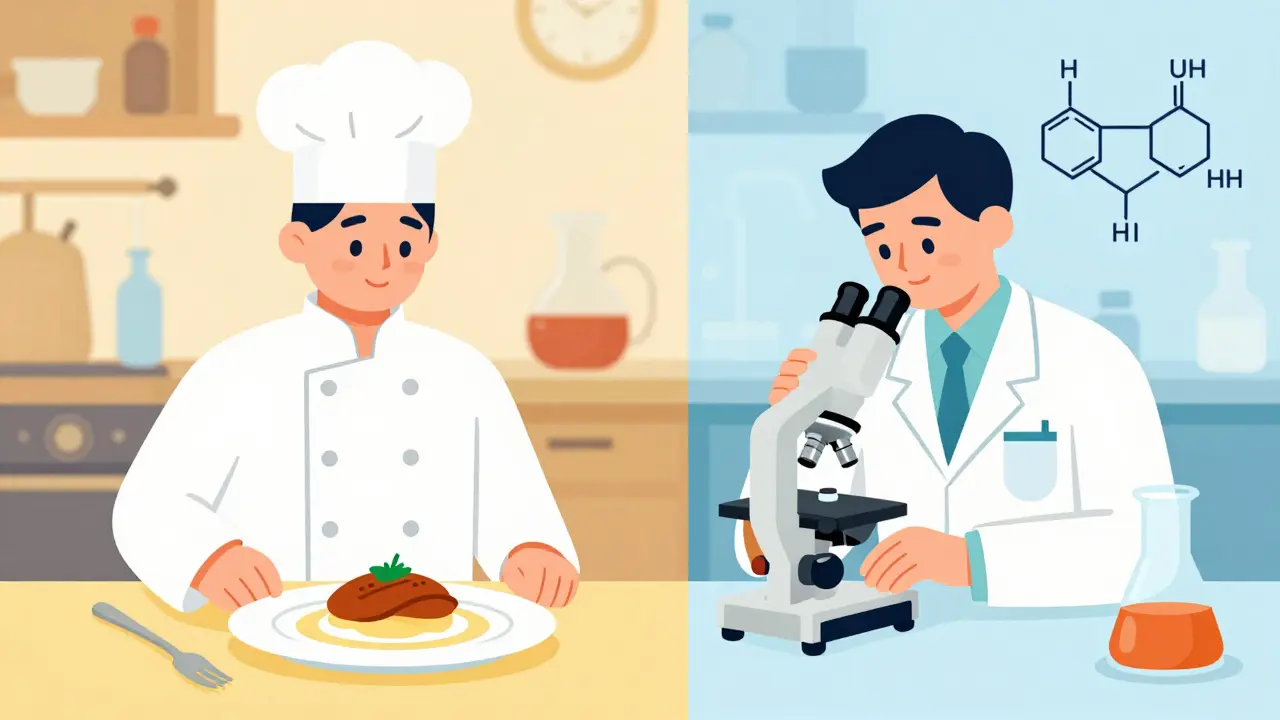
The Golden Rule: The Process Defines the Product
In the world of traditional generics, if you have the right chemical formula, you get the same result every time. In biologics, the process *is* the product. This means that every single decision-from the type of nutrient broth the cells eat to the speed at which the liquid is stirred-determines the final structure of the molecule. Critical Quality Attributes (CQAs) are the physical, chemical, or biological properties that must stay within a specific range to ensure the drug works. If a manufacturer changes the temperature by just a few degrees, the cells might produce a protein that folds slightly differently. Even if the amino acid sequence is identical, a different shape can mean the drug doesn't bind to its target in the body, rendering it useless or, worse, triggering an immune response in the patient.The Glycosylation Nightmare
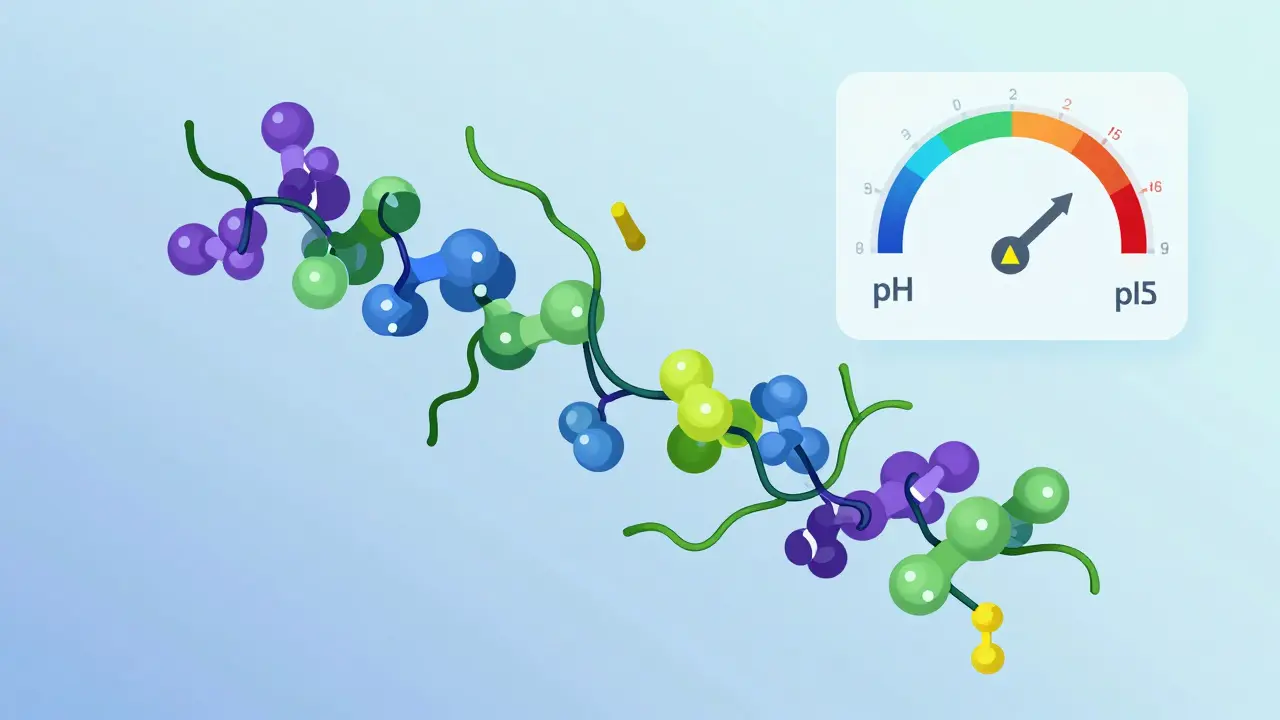
One of the biggest headaches for engineers is Glycosylation is the attachment of carbohydrate chains, or glycans, to the protein backbone of a biologic drug. Think of glycosylation as the "decorations" on a protein. These sugar chains aren't just for show; they control how long the drug stays in the bloodstream and how the immune system recognizes it. The problem is that these patterns are incredibly sensitive. Factors like pH levels, oxygen concentration, and the specific cell line used can shift the glycosylation profile. If the biosimilar's "sugar coating" doesn't match the reference product's fingerprint, the body might clear the drug too quickly or see it as a foreign invader. This is why developers spend years tweaking the culture media and environment just to get these patterns to align perfectly with the original drug.Scaling Up: From Lab Beakers to Massive Tanks
Moving a process from a small laboratory setting to a commercial-scale bioreactor is rarely a smooth transition. What works in a 5-liter flask often fails in a 2,000-liter tank. This is primarily due to physics. In a massive tank, it is much harder to keep the temperature and oxygen levels uniform. You get "dead zones" where cells might starve or overheat, while other areas are over-oxygenated. To fix this, engineers must carefully adjust stirring speeds and aeration rates to ensure the cells "feel" the same environment regardless of the scale. Furthermore, not every facility has the space or budget for these massive installations. Investing in scale-up equipment often requires building entirely new production halls and hiring specialized staff, creating a massive financial barrier to entry for smaller biotech firms.| Feature | Generic Drugs | Biosimilars |
|---|---|---|
| Molecular Structure | Simple, small molecules | Large, complex proteins |
| Production Method | Chemical synthesis | Living cell cultures |
| Consistency | Identical copies | "Highly similar" (not identical) |
| Development Cost | Relatively low | Very high |
| Sensitivity | Stable | Highly sensitive to process changes |
The Logistics of Fragility: Cold Chains and Contamination
Once the drug is produced, the challenge doesn't end. Biologics are notoriously fragile. They are sensitive to light, shaking, and temperature swings. This necessitates a strict Cold Chain is a temperature-controlled supply chain required to maintain the stability of biologic products from production to patient. Any break in this chain-like a freezer failing during transport or a container being handled roughly during filling-can cause the proteins to aggregate or denature. When proteins clump together, the drug loses its potency and can even become toxic. Because these batches are so expensive to produce, a single shipping error can result in millions of dollars in losses.Navigating the Regulatory Maze
Getting a biosimilar approved is a marathon, not a sprint. Regulatory agencies like the FDA is the Food and Drug Administration, the US agency responsible for regulating food and drug safety. and the EMA require an exhaustive amount of data to prove similarity. Manufacturers must use advanced analytical techniques to map the "molecular fingerprint" of the reference product. This isn't just about showing the drug works; it's about proving that it behaves exactly like the original in terms of pharmacokinetics (how the body absorbs it) and pharmacodynamics (how the drug affects the body). Because guidelines evolve, companies often find themselves chasing a moving target, needing to conduct new studies to meet updated standards.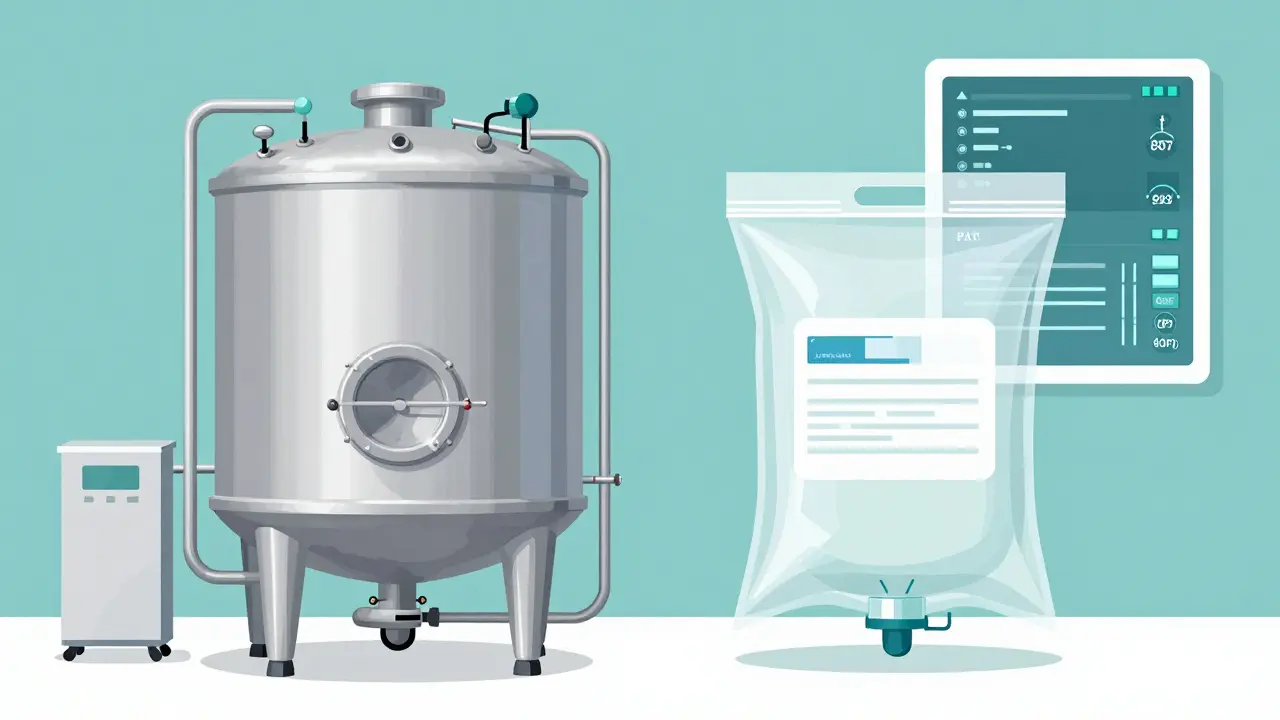
Modern Solutions: Automation and Single-Use Tech
To fight these complexities, the industry is moving away from traditional stainless-steel tanks. The rise of Single-Use Technologies are disposable plastic bioreactors and tubing systems that eliminate the need for permanent steel infrastructure. These "plastic bags" for drugs are game-changers. They eliminate the need for rigorous cleaning validation between batches, which drastically reduces the risk of cross-contamination. If a batch goes wrong, you simply swap the bag instead of spending days scrubbing a giant steel vat. Additionally, Process Analytical Technology (PAT) allows manufacturers to monitor the cells in real-time. Instead of taking a sample and waiting for lab results, PAT uses sensors to track pH and nutrient levels instantly, allowing for automatic adjustments that keep the process stable.The Future of Complex Biologics
We are now entering the era of even more complex molecules, such as Bispecific Antibodies, which can bind to two different targets simultaneously. These require even more purification steps and sophisticated folding processes, adding new layers of potential failure to the production line. As we move toward 2030, the winners in this market will be those who can blend artificial intelligence with continuous manufacturing. AI can now predict when a batch is starting to drift away from the reference fingerprint, allowing engineers to fix the problem before the product is ruined. The goal is to move from a world of "batch-and-test" to a world of "continuous quality," where the process is so controlled that every drop of medicine is virtually identical.Why can't biosimilars be identical to the original drug?
Because they are produced in living cells, which are inherently variable. Unlike a chemical reaction that always yields the same molecule, biological systems produce proteins with slight variations in folding and sugar attachments (glycosylation). This is why they are called "biosimilars" rather than "generics."
What is the biggest risk in scaling up biosimilar production?
The biggest risk is the loss of product consistency. Physical changes in large bioreactors-such as uneven oxygen distribution or temperature gradients-can stress the cells, leading to changes in the protein's structure and potentially failing regulatory similarity tests.
How do single-use technologies help in manufacturing?
Single-use technologies use disposable plastic bioreactors. This eliminates the need for cleaning and sterilizing permanent steel tanks, which reduces the risk of contamination and allows manufacturers to switch between different products much faster.
How does glycosylation affect a patient?
Glycosylation (the sugar patterns on a protein) affects how the drug interacts with the immune system. If the pattern is wrong, the drug might be cleared from the body too quickly, or it could trigger an allergic reaction, making the treatment less effective or dangerous.
What is a 'Cold Chain' and why is it necessary?
A cold chain is a temperature-controlled transport and storage system. It is necessary because biologic proteins are unstable; if they get too warm or are shaken too much, they can clump together (aggregate), which ruins the drug's potency.
The shift toward single-use technologies is honestly the most impactful part of this. In my experience, the time spent on Cleaning Validation (CV) for stainless steel tanks is a massive bottleneck. By using disposable bioreactors, companies can pivot their production lines in a fraction of the time, which is crucial when you're dealing with multiple biosimilar candidates in a pipeline. It also minimizes the risk of batch-to-batch cross-contamination, which is a nightmare for regulatory audits.
It is fascinating how a slight change in temperature can completely alter the protein folding. It makes you realize how precise these biological systems are, yet how fragile they become when we try to scale them up to industrial levels.
American engineering still leads this sector. Others just copy.
The cold chain part is such a huge deal in warmer climates like India. Keeping things at a constant temperature while transporting across different states is a whole different struggle that people often overlook when talking about the lab side of things.
Exactly! The downstream processing and CQA monitoring are where the real magic happens. We need more focus on PAT to ensure the glycosylation profiles are spot on. Let's push for more AI integration to optimize the bioreactor parameters and boost the yield without compromising the protein's tertiary structure. It is all about that synergy between biotech and data science to make these life-saving drugs affordable for everyone!
The paradox of similarity... it is a ghost of the original!!!
who cares about the fancy tanks anyway lol just make the meds cheaper already
I totally agree with the point about the cold chain. It's so stressful to think about how one power outage could ruin millions of dollars worth of medicine. It really shows why we need more robust infrastructure globally to support these treatments.
The comparison table really puts it into perspective. People always confuse biosimilars with generics, but the cost and complexity difference is staggering. It's a massive gamble for any firm to enter this space without a huge war chest.
The part about the "sugar coating" was so helpful! 😊 I never knew that something as simple as a carbohydrate chain could make the body reject a drug. Science is wild! ✨
Honestly, the regulatory maze is just an excuse for big pharma to keep their monopolies. They act like these fingerprints are some divine secret, but we all know it's just about protecting the profit margins while pretending to care about safety. It's such a drama every time a new biosimilar hits the market, and the industry pretends it's a revolution when it's really just basic corporate greed masked as "complexity." I've seen this play out so many times and it's just exhausting how they gatekeep this stuff while pretending to be helpful. Truly a circus.
We should also consider how this complexity affects the accessibility for patients in low-income regions. If the manufacturing is this sensitive and the cold chain is this fragile, we are essentially creating a two-tier healthcare system where only wealthy nations get the advanced biologics. We need to start talking about more stable formulations or decentralized production methods to solve this. The technology is great, but if it isn't accessible, what's the point of the innovation? We need to challenge the current model and find a way to make these "fragile" drugs more robust for global distribution.
It is helpful to see the distinction between the lab and the commercial scale. Many students overlook the physics of the bioreactor and assume the chemistry is the only hurdle.