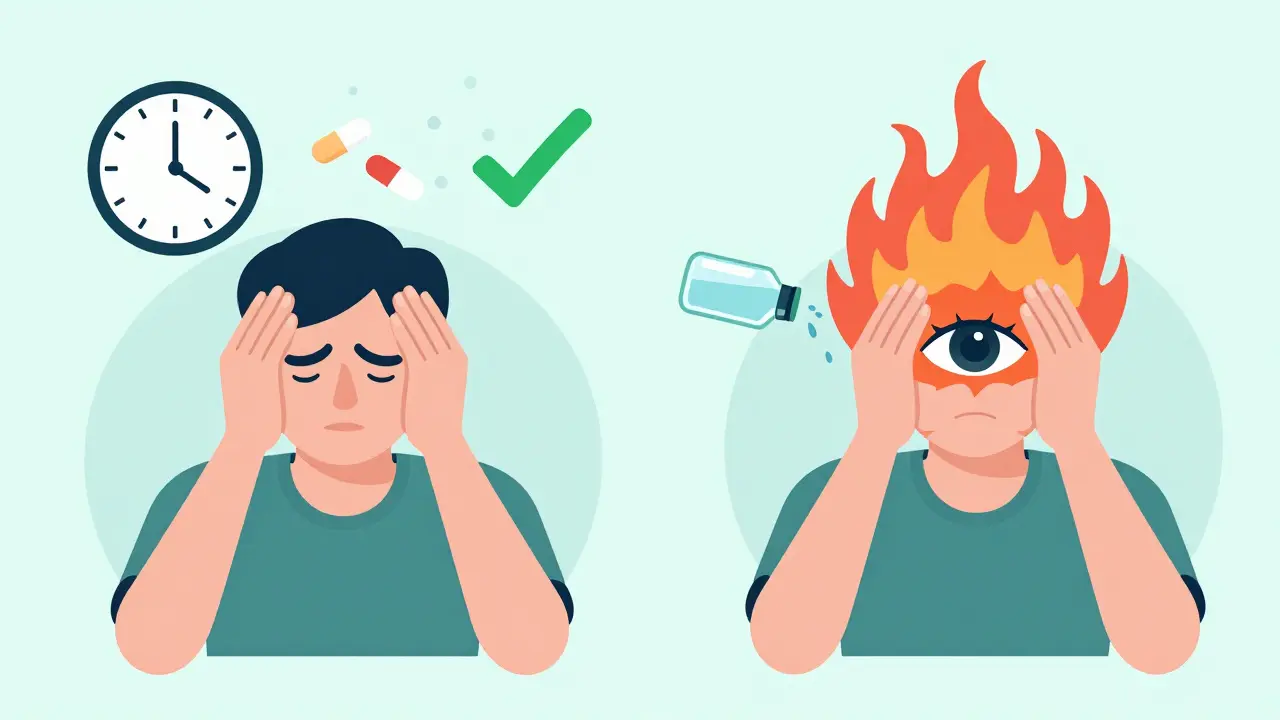
Chronic migraines aren’t just bad headaches. They’re neurological events that can knock you out for hours or days - nausea, light sensitivity, vomiting, and a pounding pain that feels like a drill behind your eye. If you’ve been through this more than 15 days a month, you’re not alone. Over 4 million people in the U.S. alone live with chronic migraine, and many are stuck using outdated or ineffective treatments because the options are confusing, expensive, or misunderstood.
Understanding the Two Types of Migraine Medications
There are two main strategies: abortive and preventive. Abortive meds are for when the migraine hits - they try to stop it in its tracks. Preventive meds are taken daily, even when you feel fine, to reduce how often and how bad your attacks are. Using both together is often the most effective approach, but many people only use one - and that’s where things go wrong.Abortive medications work best when taken early. Studies show that if you take them within the first hour of pain starting - even during the aura phase - you cut your chances of a rebound headache in half. Waiting until the pain is full force? That’s like trying to put out a house fire with a water bottle.
Abortive Medications: What Works When the Pain Hits
For mild to moderate migraines, over-the-counter NSAIDs like ibuprofen (400mg) or naproxen sodium (550mg) are often the first line. They block inflammation-causing chemicals in the brain. But they’re not magic. Only about 20-53% of people get complete pain relief within two hours. Combine them with caffeine (like in Excedrin Migraine: 250mg aspirin, 250mg acetaminophen, 65mg caffeine), and you boost the success rate significantly.Triptans are the gold standard for moderate to severe attacks. Sumatriptan, rizatriptan, zolmitriptan - these are serotonin agonists that constrict swollen blood vessels around the brain. They work fast: 42-76% of users report being pain-free in two hours. But they’re not for everyone. If you have heart disease, high blood pressure, or a history of stroke, triptans can be dangerous.
That’s where the newer drugs come in. CGRP receptor antagonists like ubrogepant (Ubrelvy) and rimegepant (Nurtec ODT) don’t affect blood vessels the same way. They block a pain-signaling protein called CGRP - the first migraine-specific target ever developed. Rimegepant is especially popular because it’s an oral dissolving tablet, works in under 30 minutes for many, and has no heart restrictions. In user surveys, 82% of people on Nurtec ODT say they appreciate not having to worry about cardiovascular side effects.
Lasmiditan (Reyvow) is another breakthrough. It’s a serotonin 5-HT1F agonist, so it doesn’t constrict blood vessels at all. It’s perfect for people who can’t take triptans. Studies show it’s 1.56 times more likely to relieve pain than placebo - and it’s especially effective when triptans have failed.
But here’s the catch: many people still get opioids prescribed for migraines. In fact, 15.2% of migraine visits in U.S. clinics still end with a narcotic prescription - even though guidelines have warned against it since 2018. Narcotics don’t treat migraines; they mask them. And overuse leads to medication-overuse headache (MOH), which turns episodic migraines into chronic ones. Triptan users hit MOH after about 10 doses a month. NSAID users after 15. That’s why timing and dose control matter.
Preventive Medications: Stopping Migraines Before They Start
If you’re having more than four debilitating migraines a month, preventive treatment should be on the table. These aren’t quick fixes - they take weeks to months to show results. But when they work, they change your life.Traditional options include beta-blockers like propranolol and metoprolol, which reduce blood vessel reactivity. Anticonvulsants like topiramate and valproate calm overactive brain signals. Amitriptyline, an old-school antidepressant, helps by balancing neurotransmitters involved in pain. These have been used for decades and still work for many - but side effects can be rough: weight gain, brain fog, fatigue, tingling.
The real game-changer since 2018 has been CGRP monoclonal antibodies: erenumab (Aimovig), fremanezumab (Ajovy), and galcanezumab (Emgality). These are monthly or quarterly injections that block CGRP at the source. In clinical trials, 50-60% of users cut their migraine days by at least half. Some people go from 20 headache days a month to 6. And unlike pills, they don’t cause brain fog or weight gain. The downside? Cost. A single shot can run over $1,000 without insurance. But 65% of commercially insured patients get them covered - if they jump through the right hoops.
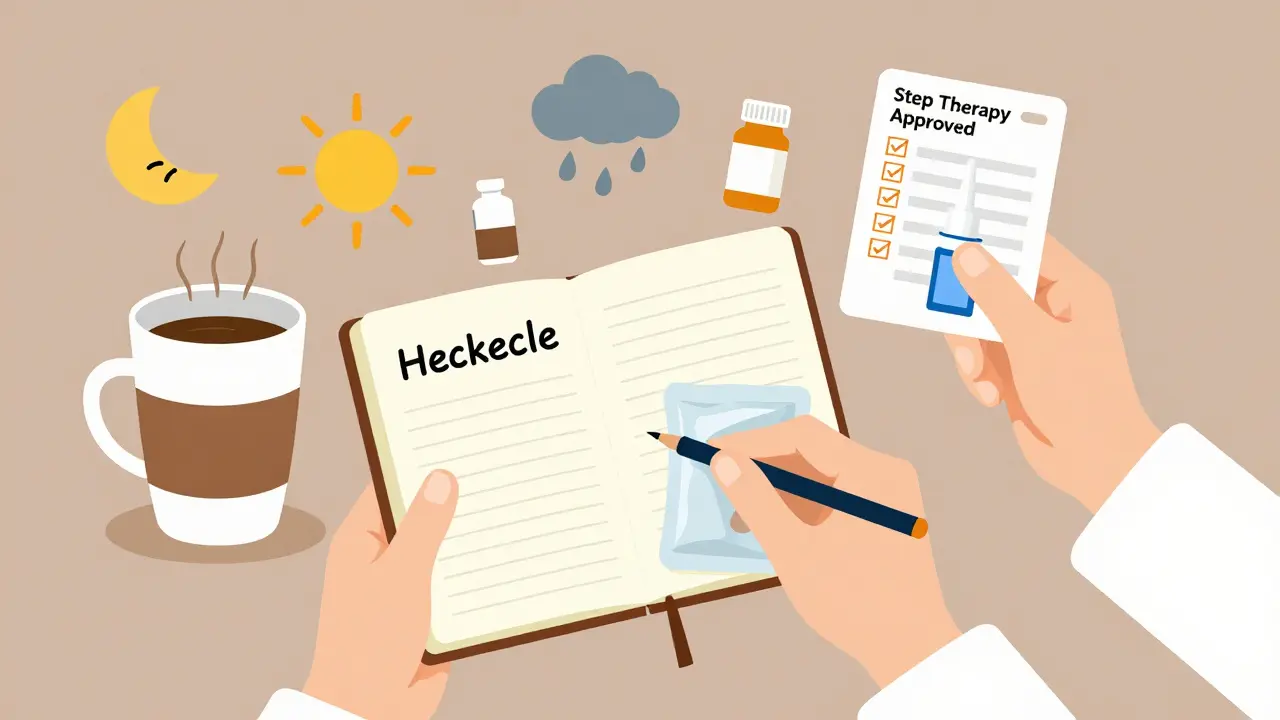
Insurance often requires step therapy: you have to try and fail on at least two older drugs before they’ll approve a CGRP blocker. That’s frustrating, but it’s the reality. Some employers are changing this - 47% of Fortune 500 companies now include CGRP drugs in their health plans, up from 28% in 2020.
Combining Treatments for Maximum Effect
The most effective strategy isn’t choosing one or the other - it’s combining them. For example, taking a triptan at the first sign of pain and a daily CGRP blocker to reduce frequency. Or using naproxen with rizatriptan - a 2007 study showed 32% of patients became completely pain-free at two hours with the combo, compared to just 22% with the triptan alone.For menstrual migraines - which affect 60% of women with migraines - long-acting triptans like frovatriptan (taken twice daily around your period) can reduce attack frequency by up to 70%. This is a targeted approach that many doctors overlook.
Non-drug support matters too. Ice packs on the neck, dark quiet rooms, hydration, and anti-nausea suppositories (because migraines slow stomach emptying) all boost medication effectiveness. One study found 63% of patients who combined meds with these simple techniques saw better results than those relying on pills alone.
What’s New in 2026?
The landscape keeps shifting. In late 2023, the FDA approved zavegepant (Zavzpret), a CGRP blocker you spray up your nose. It works in under 15 minutes for some, and it’s a huge win for people who can’t swallow pills during an attack.The 2024 American Headache Society guidelines (expected April 2024) will likely move rimegepant and lasmiditan to first-line status for people who don’t respond to triptans. That’s a big deal - it means doctors will be encouraged to try these newer drugs sooner, not as a last resort.
On the horizon: atogepant (Qulipta), already approved for prevention, is being tested for episodic migraine. Early data looks promising. And researchers are exploring genetic markers to predict who responds best to which drug - the next step toward personalized migraine care.
Real-World Challenges: Cost, Access, and Misuse
The biggest barrier isn’t science - it’s access. Ubrogepant costs $905 for six tablets out-of-pocket. Even with insurance, copays can hit $300. That’s why 12.6% of migraine sufferers still don’t get any evidence-based treatment. Many just tough it out, or worse - use opioids because they’re cheaper and easier to get.Medication-overuse headache (MOH) is a silent epidemic. It happens when you take abortive meds too often. Triptans, NSAIDs, even combination pills - all can cause it. The fix? Stop the overused meds. It’s brutal at first - headaches get worse for 2-4 weeks - but then they often improve dramatically. Many patients don’t know this is possible. They think they’re just “getting worse,” when really, they’re stuck in a cycle created by their own meds.
Keeping a headache diary for eight weeks is the single best tool to track triggers and treatment response. One study found 70% accuracy in identifying triggers when people logged consistently. Apps help, but pen and paper works fine. Write down: date, time, pain level, meds taken, food, sleep, stress, weather. You’ll start seeing patterns.
What to Do Next
If you’re still using opioids or only taking OTC painkillers for migraines, talk to a neurologist or headache specialist. Don’t wait until it’s “bad enough.”If you’ve tried triptans and they didn’t work - or you can’t take them - ask about rimegepant or lasmiditan. If you’re having more than four migraines a month, ask about CGRP blockers. Bring your headache diary. Ask about insurance step therapy. Ask if your employer’s health plan covers these drugs.
Migraine care has changed. The tools are better than ever. But they only work if you know they exist - and if you’re willing to ask for them.
Can I take triptans every day to prevent migraines?
No. Triptans are abortive medications - meant to stop an attack once it starts. Taking them daily increases your risk of medication-overuse headache (MOH), which can turn occasional migraines into chronic ones. For prevention, use daily medications like beta-blockers, topiramate, or CGRP monoclonal antibodies instead.
Are CGRP inhibitors safe long-term?
CGRP inhibitors have been used clinically since 2018. So far, no major safety concerns have emerged in large studies. They don’t affect liver, kidney, or heart function like some older drugs. The most common side effects are mild: injection site reactions, constipation, or muscle spasms. Long-term data beyond five years is still being collected, but current evidence supports their safety for chronic use.
Why do some migraine meds stop working over time?
This is often due to medication-overuse headache (MOH), not tolerance. If you’re using abortive meds more than 10-15 days a month, your brain gets rewired to expect them. When you don’t take them, withdrawal triggers a headache. The solution isn’t switching drugs - it’s a supervised detox from overused meds, followed by a new preventive strategy.
Can I use NSAIDs and triptans together?
Yes - and it’s often more effective than either alone. Studies show combining naproxen with eletriptan, for example, increases pain-free rates from 22% to 32% at two hours. This combo is especially useful for longer-lasting or more severe attacks. Just make sure you’re not exceeding daily limits for either drug.
What should I do if my insurance denies my CGRP medication?
Most insurers require step therapy - you must try and fail on at least two older drugs first. Ask your doctor to submit a letter of medical necessity explaining why previous treatments failed. Many patients get approved on appeal. Also check if the drug manufacturer offers a copay assistance program - most do. For example, Aimovig and Ajovy have programs that reduce out-of-pocket costs to $0 for eligible patients.
Are there natural alternatives to migraine medications?
Some people find relief with magnesium supplements (400-500mg daily), riboflavin (B2, 400mg daily), or butterbur extract (though quality matters - only use PA-free products). Acupuncture and cognitive behavioral therapy (CBT) also have strong evidence for reducing frequency. But these work best as complements to medication - not replacements - especially for chronic migraine. Always talk to your doctor before starting supplements, as they can interact with other drugs.
Final Thoughts
Migraine treatment isn’t one-size-fits-all. What works for your friend might not work for you. But the good news is: we have more tools now than ever before. The key is matching the right medication to your body, your triggers, and your life - not just taking whatever’s cheapest or easiest to get.If you’ve been suffering for years without relief, it’s not your fault. It’s a system problem. But you’re not powerless. With the right information, a good doctor, and persistence, you can take back control - one headache at a time.
8 Comments
Write a comment