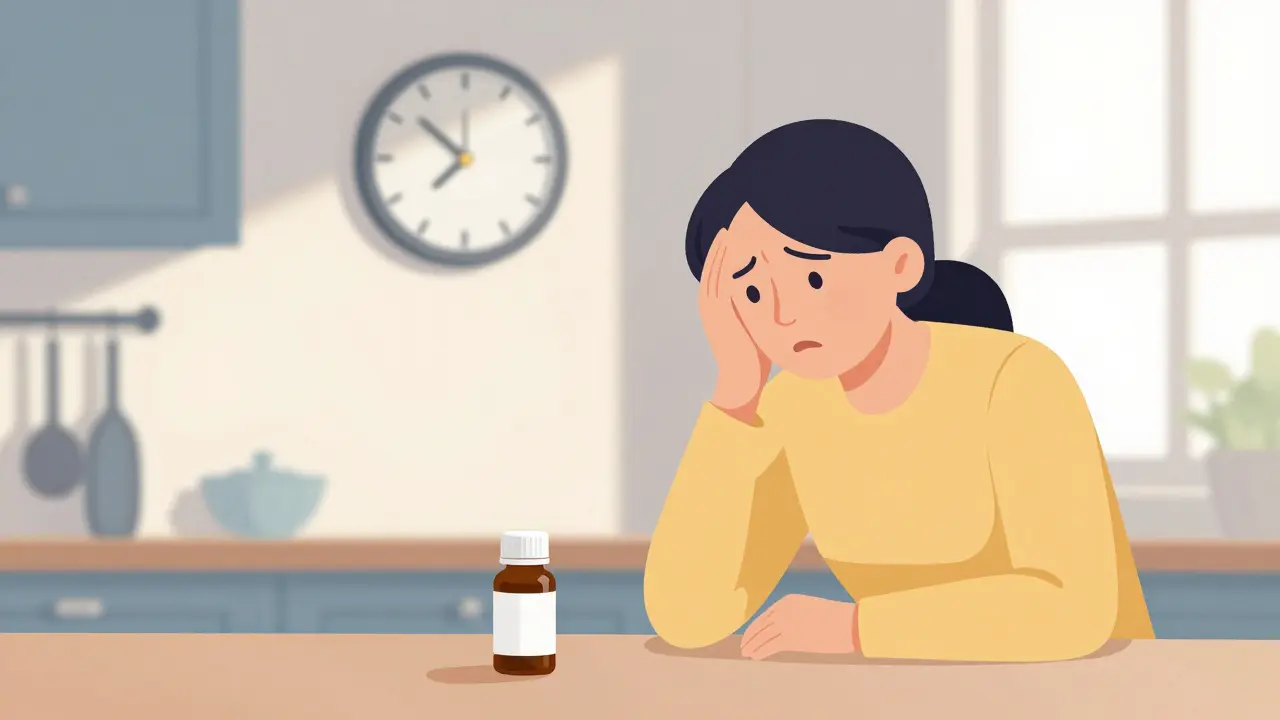
It happens to almost every parent. You’re rushing out the door, the school bus is idling, and you realize your child’s morning medicine is still sitting on the kitchen counter. Your heart sinks. Do you give it now? Skip it? Give half? The anxiety is real, but panic is dangerous. Handling missed pediatric medication doses is a critical safety skill that prevents overdose and ensures treatment efficacy. Making a wrong move here can lead to serious health risks for your child.
The good news is that there are clear, evidence-based rules for this. You don’t need to guess. Major healthcare institutions like Children’s Wisconsin and Cincinnati Children’s Hospital have established specific time-based protocols to keep kids safe. This guide breaks down exactly what to do when a dose is missed, based on how often the medicine is taken, and why the "double up" instinct must be crushed immediately.
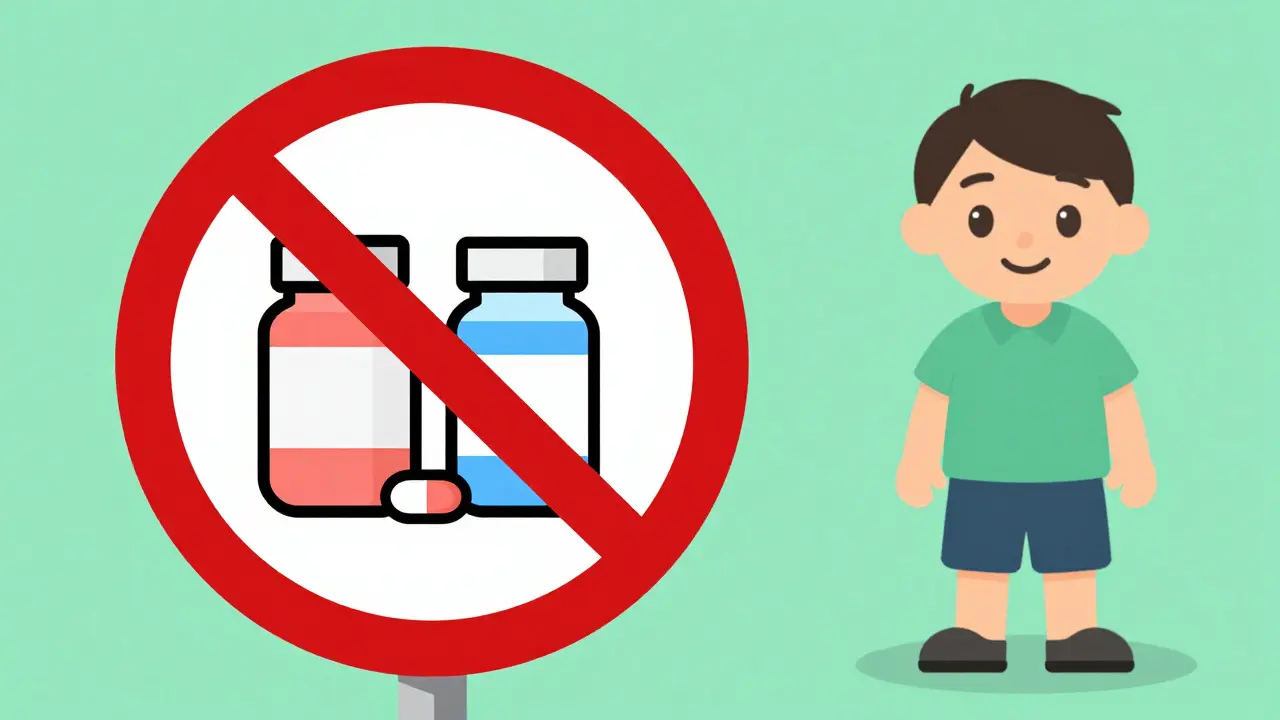
The Golden Rule: Never Double Up
Before we get into the timing charts, we need to address the biggest danger. When parents miss a dose, the natural reaction is often to "catch up" by giving two doses at once. This is extremely risky. Dr. Sarah Verbiest, Director of the National Center for Family Professional Partnerships, notes that doubling doses creates a 278% higher risk of severe adverse reactions in children under 12. Why? Because children’s metabolic pathways are not fully mature. Their bodies process drugs differently than adults, and a sudden spike in medication concentration can cause toxicity, organ stress, or dangerous side effects.
The American Academy of Pediatrics (AAP) identifies medication errors as contributing to 11% of all preventable adverse events in pediatric hospital settings. Of those errors, dosing mistakes make up more than a third. So, rule number one is simple: if you miss a dose, never give two doses to make up for it. It is always safer to skip a single dose than to risk an overdose.
Time-Based Protocols by Frequency
So, if you can’t double up, do you give the missed dose later? That depends entirely on how frequently the medication is prescribed. Different medicines stay in the body for different lengths of time. If you give a dose too close to the next scheduled one, you effectively create an accidental double dose.
Children’s Wisconsin clinical guidelines provide a clear framework based on the "half-interval" rule. Here is how it works:
- Once-Daily Medications: If you remember within 12 hours of the missed time, give the dose. If it has been more than 12 hours, skip it and wait for the next day’s dose.
- Twice-Daily Medications: These are usually given every 12 hours. If you remember within 6 hours of the missed time, give it. If it’s been more than 6 hours, skip it.
- Three-Times-Daily Medications: Usually spaced every 8 hours. If you remember within 3-4 hours, give it. If it’s closer to the next dose (more than 3-4 hours late), skip it.
- Four-Times-Daily Medications: Spaced every 6 hours. If you remember within 2 hours, give it. If it’s been longer than 2 hours, skip it.
Cincinnati Children’s Hospital Medical Center reinforces this with a simpler heuristic: "If it is almost time for the next dose, skip the missed one." The goal is to maintain steady levels of the drug in the bloodstream without spiking them. For medications dosed every 2-4 hours, such as certain pain relievers or antibiotics, the threshold is even tighter-skip any dose missed by more than 2 hours to prevent potential overdose.
| Dosing Frequency | Typical Interval | Action if Missed < Threshold | Action if Missed > Threshold |
|---|---|---|---|
| Once Daily | 24 Hours | Give immediately (if < 12 hrs) | Skip (if > 12 hrs) |
| Twice Daily | 12 Hours | Give immediately (if < 6 hrs) | Skip (if > 6 hrs) |
| Three Times Daily | 8 Hours | Give immediately (if < 3-4 hrs) | Skip (if > 3-4 hrs) |
| Four Times Daily | 6 Hours | Give immediately (if < 2 hrs) | Skip (if > 2 hrs) |
High-Risk Exceptions: Oncology and Critical Care
While the rules above apply to most common medications like antibiotics, antihistamines, and chronic condition meds, there are exceptions. Some medications are so potent or critical that missing even one dose compromises the entire treatment plan. Oncology medications (chemotherapy) fall into this category. For these drugs, a missed dose isn’t just a scheduling hiccup; it can affect cancer cell suppression rates.
If your child is on high-alert medications, particularly those classified as "red" risk by the National Patient Safety Agency, you should not rely on general internet advice. In fact, 25% of high-risk medications lack clear missed-dose instructions in their leaflets. In these cases, the protocol is immediate provider notification. Call your oncologist or specialist before making any decision. Do not guess. The stakes are too high.
Preventing Errors: Tools and Techniques
Knowledge is power, but systems save lives. The confusion around missed doses is partly due to poor communication. A survey by the Children’s Hospital of Philadelphia found that 41% of parents couldn’t correctly identify when to skip versus administer a missed dose for twice-daily medications. To bridge this gap, experts recommend several practical strategies.
First, use proper measuring tools. Household teaspoons and tablespoons are notoriously inaccurate. The FDA warned about this confusion in 2021, noting that using oral syringes reduces measurement errors by 58%. Always use the device provided by the pharmacy or a calibrated oral syringe.
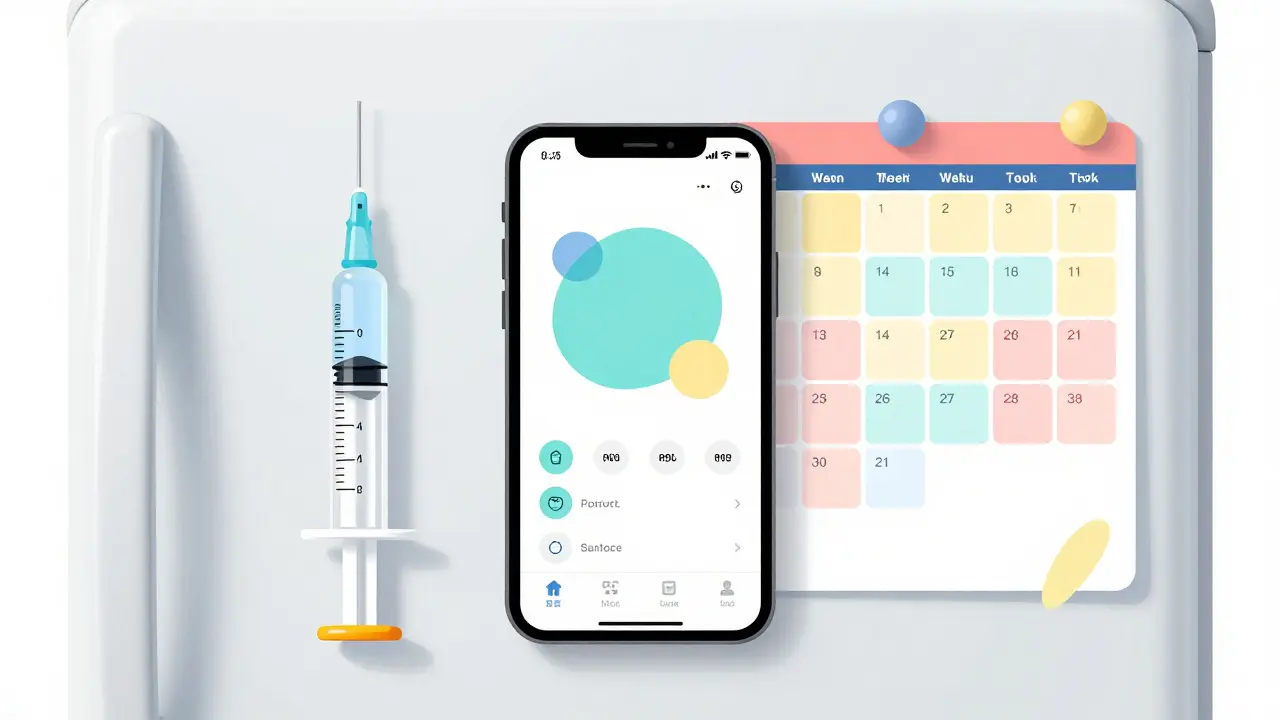
Second, leverage technology. The American Academy of Pediatrics launched the Pediatric Medication Safety Calculator app in 2023. It provides real-time guidance based on the specific medication, frequency, and time missed. Beta testing showed an 83% improvement in caregiver decision accuracy. If you manage multiple meds, consider smart medication dispensers, which have been shown to reduce missed doses by 68% in clinical trials.
For children with medical complexity-who often take four or more medications-the error risk jumps by 300%. Boston Children’s Hospital recommends color-coded dosing charts. Visual cues help caregivers quickly see what was taken and what was missed, reducing cognitive load during stressful moments.
What to Do After a Missed Dose
Once you’ve decided whether to give or skip the dose, the next step is to return to the regular schedule. Do not shift the entire timeline forward or backward to "make up" for the mistake. Just resume the normal routine. If you skipped a dose because it was too close to the next one, simply give the next scheduled dose at its usual time.
If you are unsure, especially with liquid concentrations or weight-based dosing, call your pharmacist. Pharmacists are medication experts and can clarify instructions faster than waiting for a doctor’s office to answer back. Remember, communication failure is the root cause of over 65% of pediatric medication errors. Asking questions is not a sign of bad parenting; it’s a sign of responsible care.
Frequently Asked Questions
Can I give my child two doses if I missed one?
No, never double up on pediatric medication. Doubling doses increases the risk of severe adverse reactions by 278% in children under 12 due to immature metabolic pathways. It is safer to skip a missed dose than to risk an overdose.
When should I skip a missed dose?
Skip the missed dose if it is almost time for the next scheduled dose. Specifically, skip if more than half the dosing interval has passed (e.g., more than 6 hours for twice-daily meds). Giving it too close to the next dose can lead to accidental overdosing.
Do these rules apply to chemotherapy or cancer drugs?
No. High-risk medications like oncology drugs require immediate provider notification if a dose is missed. Do not follow general guidelines for these critical treatments; always consult your specialist first.
Should I use a household spoon to measure liquid medicine?
No. Household spoons are inaccurate and can lead to significant dosing errors. Use an oral syringe or the cup provided by the pharmacy. Using proper tools reduces measurement errors by nearly 60%.
What if I’m still confused about the timing?
Contact your pharmacist or doctor. Communication failures cause over 65% of pediatric medication errors. Pharmacists can clarify specific instructions for your child’s medication and help you set up a reliable schedule.
As a pediatric nurse, I can confirm that the half-interval rule is the gold standard for most outpatient meds. The biggest issue we see isn't just missing the dose, but parents trying to 'fix' it by doubling up later in the day. It creates a toxic spike that their small livers just can't handle. Please stick to the schedule or skip if you're close to the next one.
You think these guidelines are about safety? They are about control. The pharmaceutical companies want you dependent on their strict schedules so you never question why you need the drugs in the first place. If your child's body could naturally regulate itself, they wouldn't need this rigid timing. Wake up people.
I know how stressful mornings can be! I used to panic every time I forgot the morning vitamin D. But once I started using those smart pill boxes with alarms, it became so much easier. It’s not about being perfect, it’s about having a system that helps you when you’re tired. You’ve got this!
Oh great, another article telling us how to not kill our kids with medicine. Groundbreaking stuff. I’m sure the FDA would love to have all of us running around like headless chickens checking clocks every two hours instead of just living our lives. Thanks for the anxiety boost though.
The pharmacokinetic implications of missed dosing intervals are often misunderstood by the layperson. When we consider the bioavailability and half-life of pediatric formulations, the stochastic nature of absorption becomes critical. One must understand that the therapeutic window is narrow, and deviation from the prescribed regimen introduces significant variance in plasma concentration. Therefore, the heuristic approach suggested here is statistically sound for reducing adverse event probability.
It is absolutely essential;; that parents adhere to these protocols!!! Ignorance is not an excuse!! Your child’s health depends on your diligence!!! Do not be lazy!!! Use the syringe provided!!!! Not a spoon!!! A SPOON IS NOT A MEDICAL DEVICE!!! 🚫🥄✅💉
I hear you all, and it’s okay to feel overwhelmed. Parenting is hard enough without adding medication management to the mix. I found that talking openly with my pharmacist helped me create a visual chart for my son. It reduced the mental load significantly. We are all learning as we go, and asking for help is a strength, not a weakness.
i guess you all really dont know what youre doing then because i had to miss a dose last week and nothing happened so obviously the rules are made up by people who want to sell more apps. its funny how everyone panics over one missed dose when they probably feed their kids junk food daily. just chill out
This is exactly the kind of information that should be printed on every prescription bottle in bold letters. Why do we still rely on vague leaflets that no one reads? The healthcare system needs to stop assuming patients will remember complex timing rules without clear, immediate guidance at the point of care.
Hey folks, simple tip: set a recurring alarm on your phone for each dose. It sounds basic, but it works wonders. Also, keep a little notebook or use a whiteboard to check off doses. It takes the guesswork out of whether you already gave it or not. Stay safe out there!
just my two cents but i think people stress too much about this. kids are resilient. if you miss one dose its not the end of the world. just get back on track. no need to freak out or call the doctor unless its something serious like chemo. keep it simple.
ugh why is everything so complicated now?? i just give them whatever dose i remeber and hope for the best lol. seems like everyone is trying to make parenting harder than it needs to be. whatever i guess. 😒