Walk into any pharmacy in the United States today, and you will likely see a prescription filled with a generic medication. In fact, generic drugs are medications that contain the same active ingredients as branded drugs but cost significantly less responsible for nine out of ten prescriptions written (ASPE, 2023). They are the backbone of affordable healthcare. Yet, despite this massive adoption rate, hospitals and patients are facing a growing crisis: drug shortages. You might assume that having dozens of companies making the same pill would guarantee a steady supply. The reality is far more complicated. We are caught in a paradox where there seem to be too many manufacturers chasing low-margin profits, yet not enough reliable makers ensuring we have access to essential medicines.
The core issue isn't just about how many companies exist on paper; it's about who stays in business when prices drop. This tension between fierce competition and fragile supply chains defines the current state of the pharmaceutical industry. To understand why your local pharmacy might be out of stock on a common antibiotic or heart medication, we need to look at the economics, regulations, and manufacturing realities behind the scenes.
The Economics of Generic Competition
Generic drugs exist because they drive down costs. When a brand-name patent expires, other companies can produce the same drug without spending billions on initial research and development. Instead, they submit an Abbreviated New Drug Application (ANDA) is a regulatory submission to the FDA demonstrating that a generic drug is bioequivalent to the original branded drug to the U.S. Food and Drug Administration (FDA). This process is much cheaper than developing a new drug from scratch.
In theory, more competitors mean lower prices. Data from the U.S. Department of Health and Human Services shows that once three generic competitors enter the market, prices typically drop by about 20% within three years. As more players join, prices can fall to just 20% of the original brand-name cost. This is great news for patients and insurers. UnitedHealthcare reported that generics saved the U.S. healthcare system $313 billion in 2023 alone.
However, this price war has a dark side. When margins get too thin, manufacturers stop caring about quality control or long-term supply stability. Dr. Jane Axelrad, a former FDA official, warns that "excessive price erosion from hyper-competition can undermine manufacturing quality and supply chain resilience." If a company makes only a few cents per pill, they cut corners. They might use cheaper raw materials, delay maintenance on equipment, or reduce staff training. When things go wrong-and they often do-the entire supply chain suffers.
Why Manufacturers Exit the Market
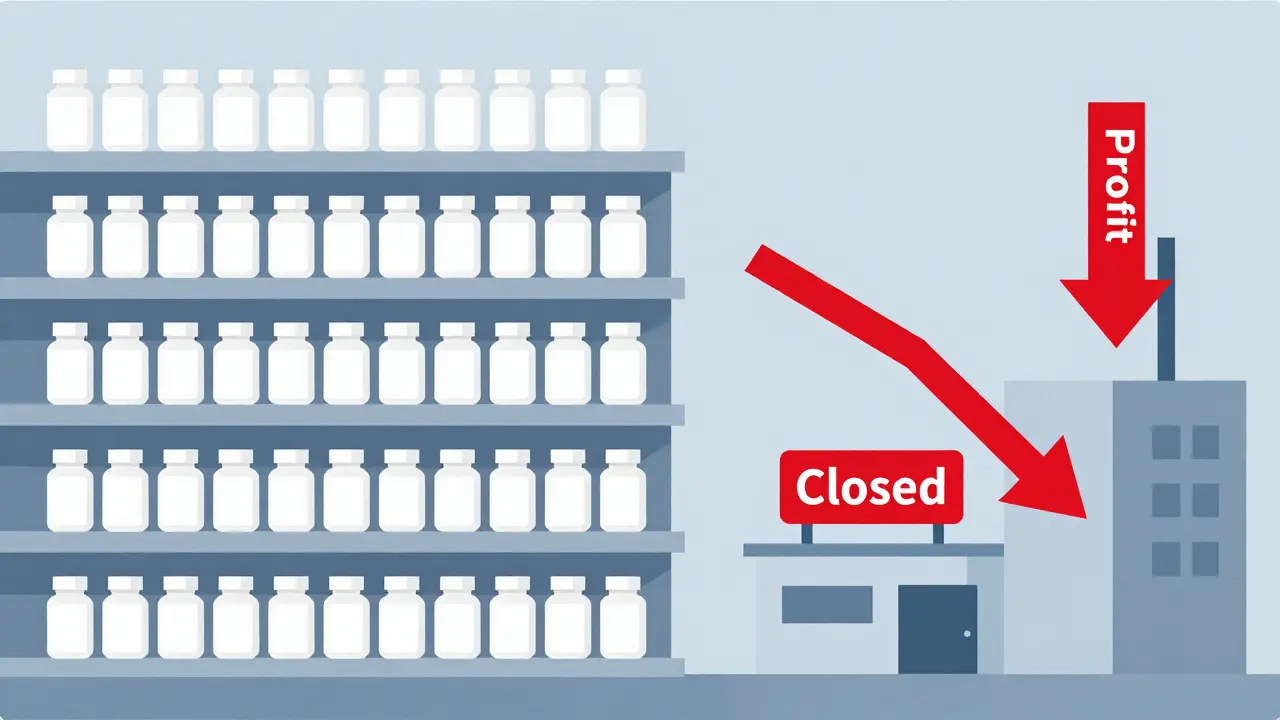
You might wonder why companies leave the market if there is so much demand. The answer lies in profit margins. For older, simple generic drugs like aspirin or basic antibiotics, the market is saturated. Companies engage in a "race to the bottom," slashing prices to gain market share. Eventually, the price becomes so low that it doesn't cover the cost of production, let alone provide a profit.
When a manufacturer decides the game isn't worth playing, they exit. But here’s the problem: there aren’t always backup suppliers ready to step in. According to IQVIA’s 2024 analysis, 35% of generic drug markets have fewer than three active manufacturers. Worse still, 12% have only one single supplier. If that sole supplier shuts down due to financial pressure, regulatory issues, or a natural disaster, the drug disappears overnight.
This concentration risk is particularly dangerous for essential medicines. Centers for Medicare & Medicaid Services (CMS) data reveals that average prices for 50 commonly used generics actually increased by 15.7% annually since 2018. Why? Because as manufacturers exited unprofitable markets, the remaining few had less competition and could raise prices. So, ironically, less competition leads to higher prices and greater shortage risks.
| Factor | High Competition (Many Makers) | Low Competition (Few Makers) |
|---|---|---|
| Drug Price | Very Low (20% of brand price) | Rising (up to 15.7% annual increase) |
| Supply Stability | Fragile (quality cuts lead to shutdowns) | Vulnerable (single point of failure) |
| Manufacturer Profit | Thin to Negative | Moderate to High |
| Patient Impact | Shortages due to quality failures | Shortages due to capacity limits |
The Barrier to Entry: Complex Generics
Not all generic drugs are created equal. Making a simple tablet is relatively easy. But producing complex generics, such as sterile injectables (drugs given directly into veins), requires specialized facilities with strict environmental controls. These facilities can cost between $200 million and $500 million to build and validate.
Because of these high barriers to entry, the market for sterile injectables is highly concentrated. Just five suppliers hold 46% of this subsegment's market share (Mordor Intelligence, 2024). This means if one major player fails, there are very few others capable of picking up the slack. This was evident in 2023 when a major manufacturer’s facility shutdown led to a critical shortage of generic epinephrine auto-injectors.
New entrants face steep learning curves. They must prove their product is identical to the original in every way except packaging. Regulatory compliance is also tightening. The FDA issued 147 warning letters for data integrity breaches in 2023, a 23% increase from the previous year. These enforcement actions are necessary for safety, but they also disrupt supply chains when facilities are forced to halt production.
Regulatory Pressures and Future Trends
The regulatory landscape is shifting rapidly. The Inflation Reduction Act, with its drug price negotiation provisions starting in 2026, is expected to squeeze manufacturer margins further by 15-25%. While this aims to lower costs for consumers, it may accelerate the exit of smaller manufacturers who cannot survive on razor-thin profits.
Simultaneously, the FDA’s Drug Competition Action Plan has increased first-generic approvals by 40% since 2017. More approvals mean more potential competition, but post-approval compliance actions have also risen by 32%. This suggests that while getting into the market is easier, staying in good standing is harder.
Looking ahead, biosimilars-generic versions of complex biological drugs-are becoming a significant part of the market. Evaluate Pharma forecasts that by 2029, biosimilars will account for 25% of the incremental growth in the generic market. These products offer hope for reducing shortages in high-cost therapeutic areas like oncology, but they introduce new complexities in manufacturing and regulation.
Finding the Balance: The Optimal Number of Makers
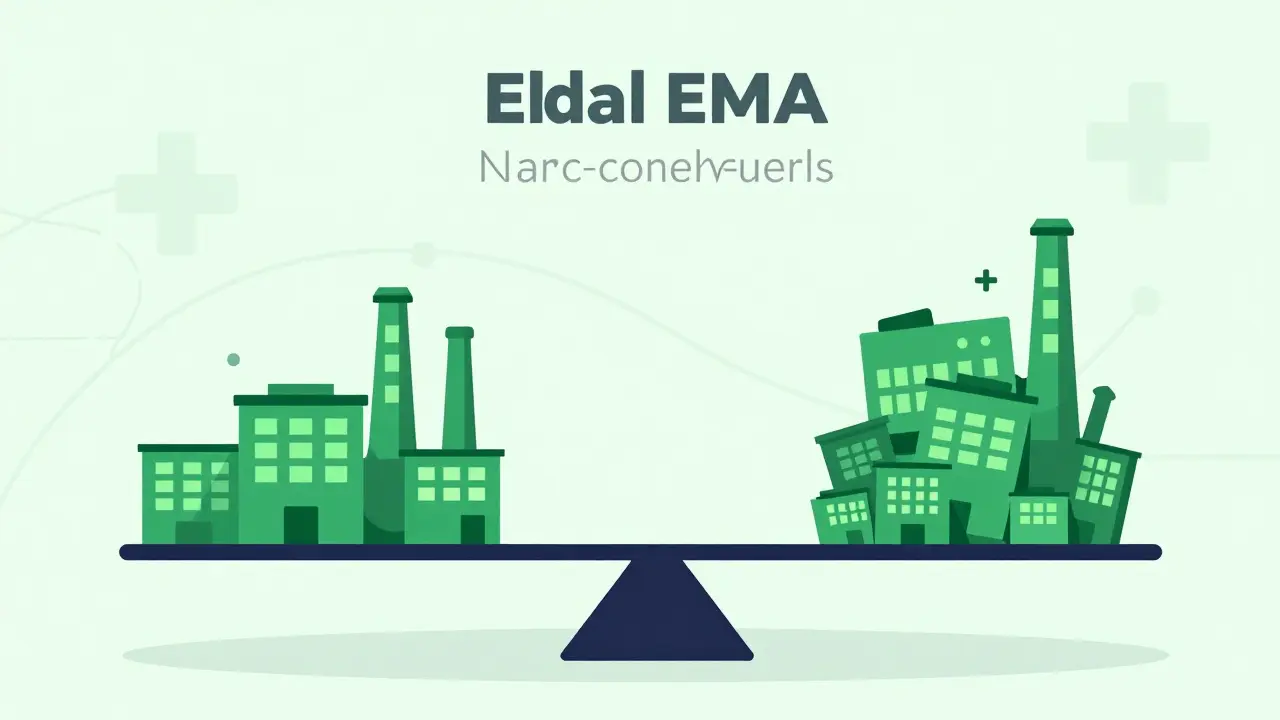
So, is the problem too many generics or too few makers? The European Medicines Agency (EMA) provides a clear benchmark: the optimal number of generic manufacturers for essential medicines is 4 to 6. This range provides enough competition to keep prices reasonable while ensuring that no single company holds all the cards. It allows for redundancy-if one factory fails, others can step in.
Currently, only 65% of essential generic medications globally meet this standard. For the remaining 35%, we are either dealing with monopolies (one maker) or oligopolies (two to three makers) that are vulnerable to shocks. The goal shouldn't be to maximize the number of competitors at all costs, but to ensure a stable, resilient supply chain with adequate margins to maintain quality.
Healthcare providers are feeling the strain. A 2023 American Medical Association survey found that 78% of physicians experienced at least one generic drug shortage in the previous year, with 42% saying it frequently impacted patient care. Cardiovascular medications, antibiotics, and oncology drugs are the most affected categories.
To solve this, policymakers and industry leaders need to rethink incentives. We need systems that reward reliability and quality, not just the lowest price. This might involve strategic stockpiling, better transparency in manufacturing, or adjusted pricing models that allow for sustainable margins on essential medicines. Without these changes, the cycle of shortages and price hikes will continue, leaving patients and providers in the lurch.
Why do generic drug shortages happen if there are many manufacturers?
Shortages occur because intense price competition drives down profits, leading manufacturers to cut corners on quality or exit the market entirely. Additionally, many generic markets have fewer than three active suppliers, creating a fragile supply chain where one failure causes widespread shortages.
What is an Abbreviated New Drug Application (ANDA)?
An ANDA is a regulatory submission required by the FDA for generic drugs. It demonstrates that the generic version is bioequivalent to the original branded drug, meaning it works the same way in the body, without requiring full clinical trials.
How does the Inflation Reduction Act affect generic drug manufacturers?
The Inflation Reduction Act introduces drug price negotiations that are expected to reduce reference prices by 15-25% starting in 2026. This squeezes manufacturer margins, potentially forcing smaller companies out of the market and increasing supply chain vulnerability.
What is the ideal number of generic manufacturers for a drug?
The European Medicines Agency recommends 4 to 6 manufacturers for essential medicines. This balance ensures competitive pricing while maintaining supply resilience, allowing other producers to step in if one facility experiences issues.
Are complex generics more prone to shortages than simple tablets?
Yes, complex generics like sterile injectables have high barriers to entry due to expensive manufacturing facilities ($200-$500 million). This results in fewer suppliers (high market concentration), making the supply chain more vulnerable to disruptions compared to simple oral tablets.
How do biosimilars impact the generic drug market?
Biosimilars are generic versions of complex biological drugs. By 2029, they are projected to account for 25% of incremental growth in the generic market. They help reduce costs for high-priced therapies but introduce new manufacturing and regulatory challenges.