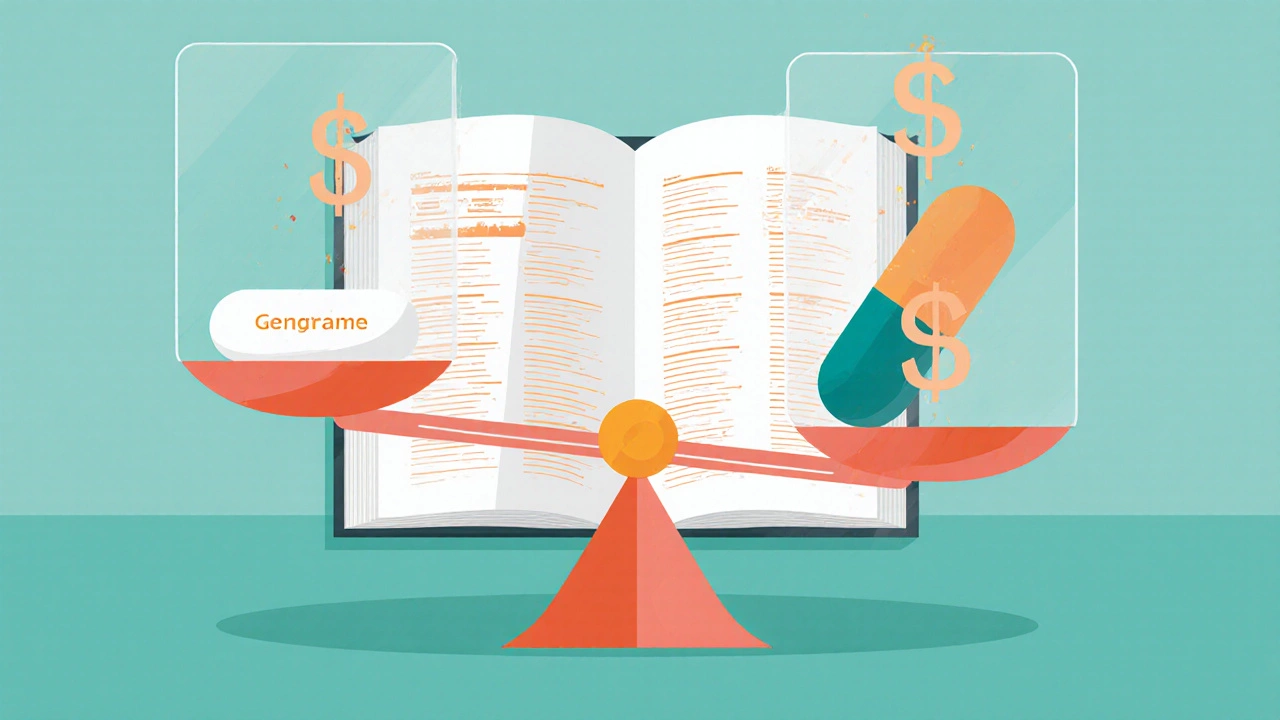
When you pick up a generic medication at your local pharmacy, it’s easy to assume the journey from lab to shelf is straightforward. But behind that simple transaction lies a complex regulatory and logistical pipeline that can take over a year after initial approval. Understanding how generic drug approval translates into actual availability helps explain why some medicines appear quickly while others face significant delays.
The Regulatory Foundation: What Is an ANDA?
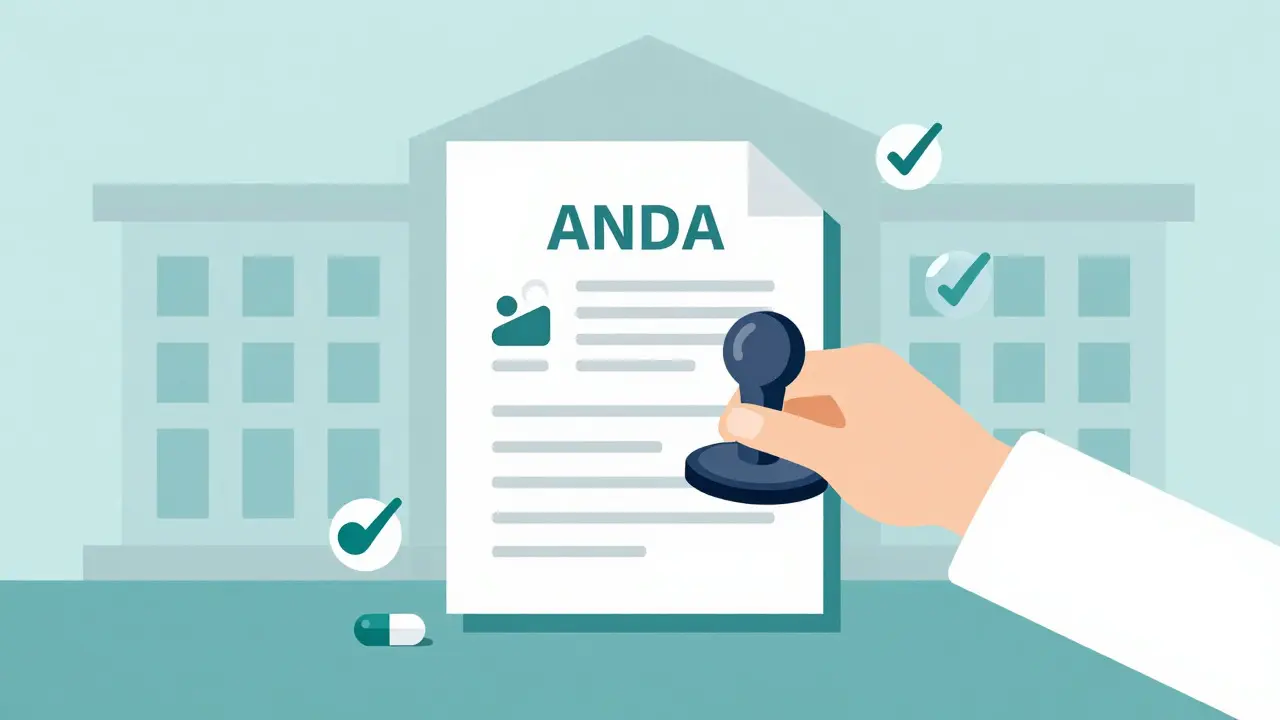
To understand the path to the shelf, we first need to look at the starting line. The Abbreviated New Drug Application (ANDA) is the specific regulatory route used by manufacturers to bring generic versions of already-approved brand-name drugs to the U.S. market. Established by the Hatch-Waxman Act in 1984, this pathway allows companies to skip the expensive and time-consuming clinical trials required for new inventions. Instead, they prove their product is bioequivalent to the original Reference Listed Drug (RLD). This means the generic works the same way in the body, with the same active ingredients, dosage form, and strength.
The U.S. Food and Drug Administration (FDA) oversees this process through its Center for Drug Evaluation and Research (CDER). As of recent years, over 11,000 generic products have been approved via this route, accounting for roughly 90% of all prescriptions filled in the country. For standard generics, the review timeline averages about 30 months from submission to final approval. However, this clock stops once the FDA grants approval; it does not track when the product actually hits store shelves. That gap is where the real-world challenges begin.
Scaling Up: From Pilot Batches to Commercial Production
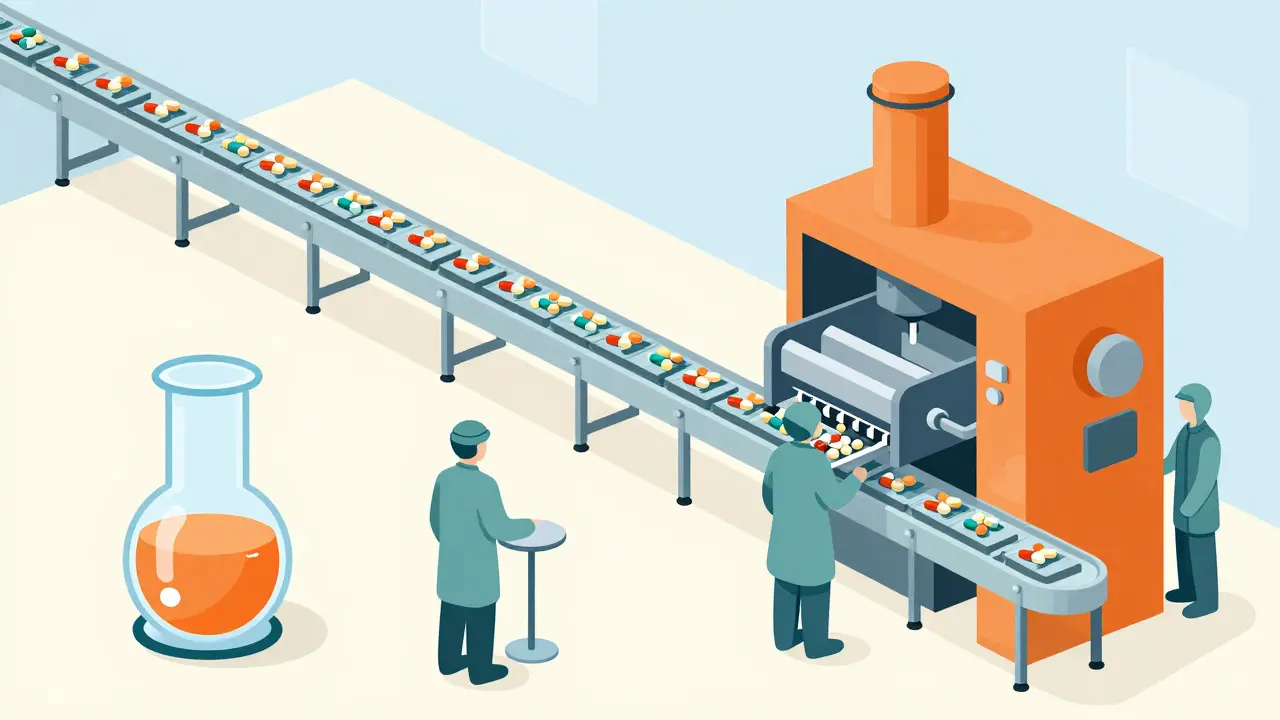
Receiving the FDA approval letter is often described by industry insiders as only the "first half of the battle." Before a single pill reaches a distributor, the manufacturer must scale production. Most generic companies start with small pilot batches to ensure quality consistency. Transitioning to commercial-scale manufacturing requires rigorous testing to maintain strict quality controls. Industry benchmarks suggest this phase takes anywhere from 60 to 120 days. During this window, facilities upgrade equipment, train staff on larger volume operations, and run stability tests to guarantee the product remains effective throughout its shelf life.
This stage is critical because any quality hiccup here can delay everything downstream. If a batch fails quality checks, the entire launch timeline shifts. Manufacturers must balance speed with precision, ensuring that the millions of units produced are identical to the samples tested during the ANDA review.
Navigating Payers and PBMs: The Financial Gatekeepers
Once production is ready, the next major hurdle isn't physical-it's financial. In the U.S., most patients don't pay cash for prescriptions; they use insurance. This means the generic manufacturer must negotiate with Pharmacy Benefit Managers (PBMs), such as Express Scripts or OptumRx, to get the drug listed on formularies. A formulary is essentially a list of covered drugs, organized into tiers based on cost and preference.
Getting placed on Tier 1 (preferred generics) is crucial for success. Data shows that generics with preferred status can capture 75% of the market share within six months, compared to just 35% for non-preferred alternatives. However, securing this spot often requires offering deep rebates. Manufacturers frequently report having to discount their prices by 20-30% below initial projections to win these contracts. This negotiation phase typically lasts between 30 and 90 days, adding significant uncertainty to the launch schedule.
Distribution Logistics: Getting Into the Warehouse
With payer agreements signed, the physical movement of goods begins. Most generic drugs flow through large wholesalers like McKesson, Cardinal Health, or AmerisourceBergen. These distributors act as the central hub connecting manufacturers to thousands of independent and chain pharmacies. Integrating a new product into their systems isn't instant. It involves updating inventory software, setting up shipping protocols, and managing warehouse space. This integration process generally takes 15 to 30 days. During this time, the product moves from the manufacturer’s facility to regional distribution centers, ready for local delivery.
The Final Mile: Pharmacy System Updates
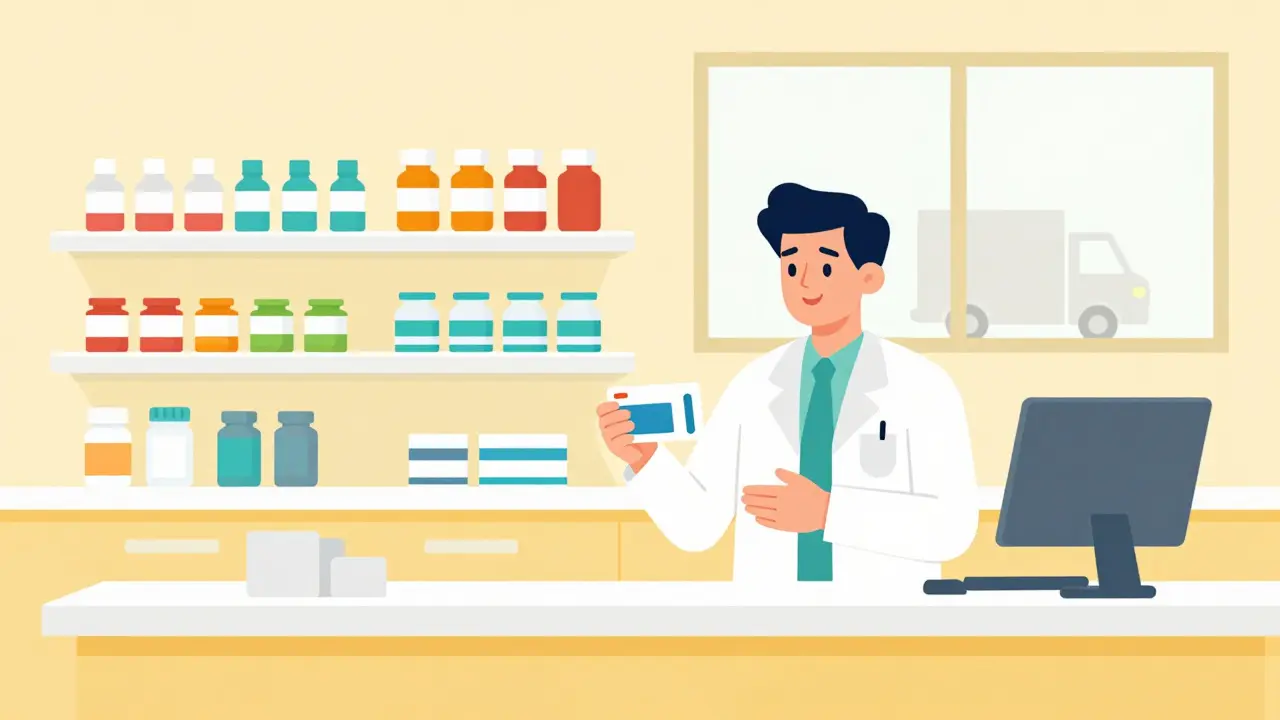
The last step is getting the drug into the hands of the pharmacist. Once wholesaler shipments arrive at retail locations, pharmacy technicians and pharmacists must update their point-of-sale systems. They need to enter the National Drug Code (NDC), set up pricing, and sometimes undergo brief training if the product has unique administration instructions. This final phase is usually quick, taking only 7 to 14 days. By the end of this period, the prescription can be written, dispensed, and handed to the patient.
| Phase | Key Activities | Typical Duration |
|---|---|---|
| Manufacturing Scale-Up | Pilot to commercial production, quality control | 60-120 days |
| Payer & PBM Contracting | Formulary placement, rebate negotiations | 30-90 days |
| Distribution Integration | Wholesaler system updates, logistics setup | 15-30 days |
| Retail Onboarding | Pharmacy system updates, staff training | 7-14 days |
Why Do Some Generics Take Longer?
While the average time from approval to first retail dispensing is approximately 112 days, this number varies wildly depending on the type of drug. Simple cardiovascular tablets might hit shelves in under three months. Complex respiratory inhalers or transdermal patches, however, can take closer to five months (145 days). The complexity affects both manufacturing difficulty and payer scrutiny. Additionally, if a manufacturer is the "first generic" to file for a popular brand-name drug, they face intense competition and tighter timelines to establish market presence before other competitors launch.
Economic Impact and Future Trends
This intricate process ultimately drives down costs for the healthcare system. Generic drugs save consumers roughly $313 billion annually. As the FDA continues to refine its processes under the Generic Drug User Fee Amendments (GDUFA), we are seeing faster approvals for high-priority drugs. Yet, the post-approval journey remains a bottleneck. Industry experts predict that artificial intelligence will soon help streamline bioequivalence modeling and manufacturing controls, potentially cutting preparation times by 25-30%. Until then, the gap between regulatory approval and retail availability remains a key area for improvement in pharmaceutical supply chains.
What is the difference between an ANDA and an NDA?
An NDA (New Drug Application) is for entirely new drugs requiring full clinical trials, costing billions and taking over a decade. An ANDA (Abbreviated New Drug Application) is for generic versions of existing drugs, relying on bioequivalence data rather than new safety trials, which reduces costs to a few million dollars and shortens the development timeline significantly.
How long does it take for a generic drug to reach the pharmacy after FDA approval?
On average, it takes about 112 days from FDA approval to the first retail dispensing. This includes time for manufacturing scale-up, payer negotiations, distribution logistics, and pharmacy system updates. Complex drugs may take longer, up to 145 days.
Why do PBMs influence the price of generic drugs so heavily?
PBMs manage insurance formularies and determine which drugs are covered and at what tier. To get onto preferred lists (Tier 1), manufacturers often offer deep rebates. Since most patients use insurance, this makes PBM approval essential for market success, directly impacting the net price manufacturers receive.
What is a 'First Generic'?
A First Generic is the first company to successfully challenge the patents on a brand-name drug and get FDA approval. They receive 180 days of marketing exclusivity, meaning no other generics can enter the market for that period. This creates a race among manufacturers to file early and efficiently.
Do all generic drugs go through the same supply chain?
Most standard oral solids follow a similar path through major wholesalers like McKesson or Cardinal Health. However, specialty generics or those with unique storage requirements might use specialized logistics partners, potentially altering the timeline and cost structure of the distribution phase.