Imagine you are ten weeks pregnant. You have been taking an antidepressant to manage severe anxiety for three years. Suddenly, your mind races with a terrifying question: "Is this medicine hurting my baby?" This is not a hypothetical scenario. It is the daily reality for millions of women navigating the complex intersection of mental health and pregnancy. The decision to continue or stop Selective Serotonin Reuptake Inhibitors (SSRIs) during pregnancy is one of the most stressful choices a mother can face, largely because the stakes feel incredibly high on both sides.
The good news is that modern medicine has moved past vague warnings. We now have robust data from large-scale studies that allow us to weigh specific risks against concrete benefits. The short answer? For many women, especially those with moderate to severe depression, staying on medication is often safer than stopping. But getting there requires understanding exactly what the numbers say about birth defects, developmental outcomes, and the very real dangers of untreated maternal mental illness.
Understanding SSRIs and How They Work in Pregnancy
To make an informed choice, it helps to understand what these medications actually do. SSRIs are a class of psychiatric medications that increase serotonin levels in the brain to regulate mood and reduce anxiety. Common examples include sertraline (Zoloft), fluoxetine (Prozac), citalopram (Celexa), and paroxetine (Paxil). Since their approval in the late 1980s, they have become the first-line treatment for depression and anxiety disorders.
During pregnancy, your body undergoes massive hormonal shifts. These changes can trigger new episodes of depression or worsen existing conditions. Approximately 10-15% of pregnant women experience a depressive or anxiety disorder that may require treatment. When you take an SSRI, the drug crosses the placenta. Studies show that sertraline, for instance, has a placental transfer rate of about 60-70%, meaning the baby is exposed to a significant portion of the dose you take. This biological reality is what fuels the concern about fetal effects.
However, exposure does not automatically equal harm. The FDA replaced its old letter-based pregnancy categories (A, B, C, D, X) in 2015 with the Pregnancy and Lactation Labeling Rule (PLLR). This change was made because the old system was too simplistic. Today, drug labels provide detailed narratives summarizing risks based on human data rather than animal studies alone. Most major SSRIs now carry risk summaries indicating no substantial evidence of increased major congenital malformations when used as prescribed.
The Real Risk: Birth Defects and Neonatal Outcomes
Let’s look at the specific physical risks associated with SSRI use during pregnancy. The most common fear among expectant mothers is causing structural birth defects. Large population studies, including a 2020 analysis of 1.8 million births in Nordic countries published in JAMA Psychiatry, have provided reassuring data. The absolute risk of major congenital malformations in babies exposed to SSRIs is approximately 2.8%, compared to 2.5% in non-exposed populations. While this represents a slight statistical increase, the difference is small and likely influenced by the severity of the mother's underlying condition rather than the drug itself.
| Risk Factor | General Population / Non-Exposed | SSRI-Exposed Pregnancies | Clinical Context |
|---|---|---|---|
| Major Congenital Malformations | 2.5% | 2.8% | Slight increase; largely confounded by depression severity |
| Persistent Pulmonary Hypertension (PPHN) | 1-2 per 1,000 births | 3-6 per 1,000 births | Increased risk if used in third trimester; usually treatable |
| Preterm Birth (<37 weeks) | 9.5% (depressed, non-exposed) | 12.5% (SSRI-exposed) | Risk drops significantly when controlling for depression severity |
| Low Birth Weight (<2,500g) | 6.2% (depressed, non-exposed) | 8.7% (SSRI-exposed) | Associated with lower gestational age and maternal factors |
One specific area of concern is Persistent Pulmonary Hypertension of the Newborn (PPHN). This is a serious but rare condition where the baby’s blood vessels remain constricted after birth, making it hard to get enough oxygen. In the general population, PPHN occurs in 1-2 out of every 1,000 live births. With SSRI exposure in the third trimester, this risk rises to 3-6 per 1,000. While the relative risk doubles, the absolute risk remains low. Furthermore, most cases of PPHN are treatable in neonatal intensive care units, and long-term outcomes are generally good.
Newborns exposed to SSRIs near delivery may also experience Neonatal Adaptation Syndrome. About 30% of these infants show symptoms like jitteriness, mild respiratory distress, or feeding difficulties. However, these symptoms are typically transient, resolving within two weeks without long-term consequences. It is crucial to distinguish between temporary adjustment issues and permanent developmental harm.
The Hidden Danger: Untreated Depression
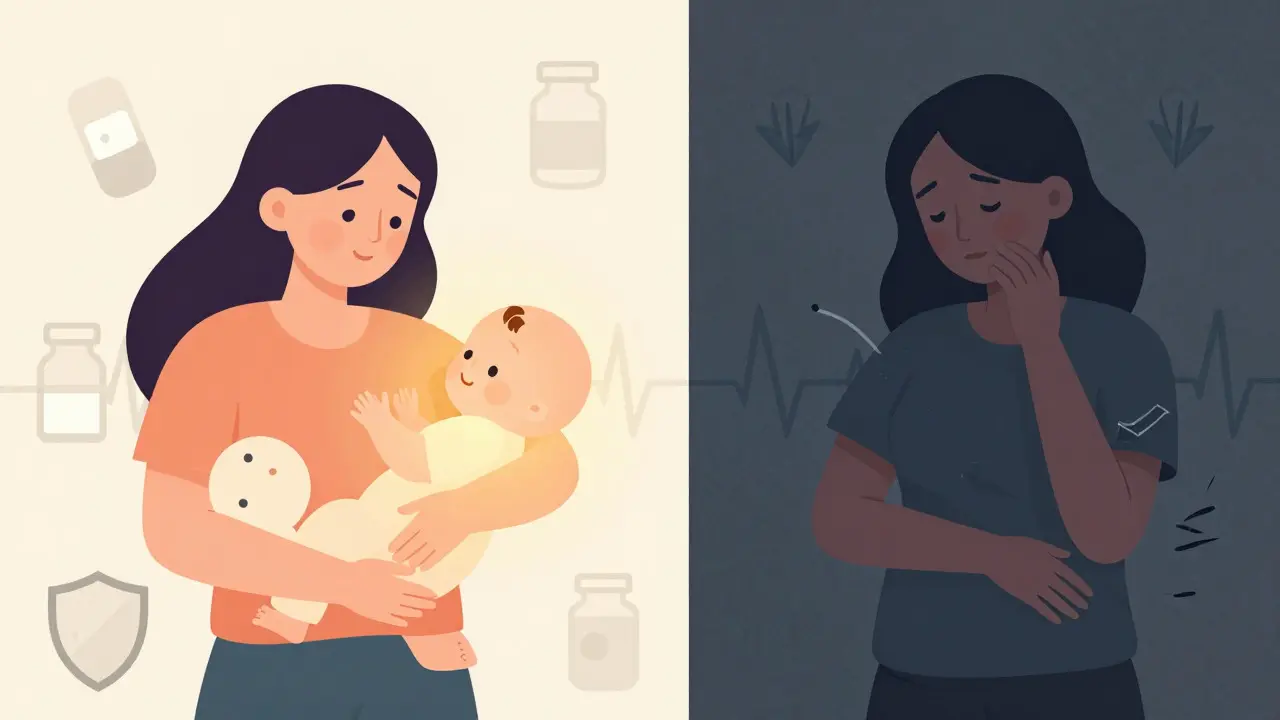
When we talk about risks, we often focus solely on the medication. But we must equally consider the risk of not treating depression. Untreated perinatal depression is not benign. It poses significant threats to both the mother and the developing fetus. According to CDC data from 2022, suicide accounts for 20% of all pregnancy-related deaths in the United States. This statistic underscores why managing mental health is a matter of life and death.
For the baby, a mother’s untreated depression creates a toxic stress environment. High levels of cortisol (the stress hormone) cross the placenta and can affect fetal development. Research shows that untreated depression increases the risk of preterm birth by 2.2-fold. It is also linked to low birth weight and impaired cognitive development later in childhood. Moreover, depressed mothers are more likely to struggle with bonding. The Maternal Postpartum Attachment Scale shows 30% lower attachment scores in women with untreated depression, which can impact the child’s emotional security and social development.
Consider the relapse rates. A 2022 randomized controlled trial published in JAMA Psychiatry found that women who discontinued SSRIs during pregnancy had a 4.3-fold increased risk of depressive relapse. Specifically, 92% of women who stopped their medication experienced a return of symptoms, compared to only 21% of those who continued treatment. Relapsing into severe depression mid-pregnancy is far more dangerous to the pregnancy outcome than continuing a stable, effective medication regimen.
Choosing the Right Medication: Sertraline vs. Paroxetine
Not all SSRIs are created equal when it comes to pregnancy. If you are already on an SSRI and it is working well, the American College of Obstetricians and Gynecologists (ACOG) generally recommends continuing it. Switching medications introduces the risk of destabilizing your mood. However, if you are starting treatment or considering a switch, the choice of drug matters.
Sertraline is widely considered the first-line SSRI for pregnancy due to its extensive safety data and favorable side effect profile. It has the lowest association with PPHN among SSRIs and is often preferred by clinicians. Other acceptable options include citalopram and escitalopram. Fluoxetine is also used but has a longer half-life, which means it stays in the system longer, potentially prolonging withdrawal symptoms if stopped abruptly.
Conversely, Paroxetine is generally avoided during the first trimester due to a higher risk of cardiac septal defects. Data from Nordic registries indicate a 1.5 to 2.0-fold increased risk of heart defects with paroxetine use early in pregnancy. The absolute risk rises from 0.5% to roughly 0.7-1.0%. If you are currently taking paroxetine, do not stop it cold turkey. Talk to your doctor about a gradual taper or a switch to sertraline before conception or as soon as pregnancy is confirmed.
Expert Consensus and Recent Guidelines
The medical community is largely aligned on this issue, despite occasional public confusion caused by regulatory debates. In July 2025, an FDA advisory panel discussed SSRI risks, leading to some media headlines suggesting these drugs were unsafe. However, major professional organizations pushed back strongly. ACOG President Steven J. Fleischman criticized the panel as "alarmingly unbalanced," noting that only one expert discussed the benefits of treatment. SMFM issued a concurrent statement affirming that available data consistently show SSRI use is not associated with congenital anomalies or long-term developmental problems.
The 2023 joint guideline from ACOG and SMFM provides clear direction: for women with moderate to severe depression, the benefits of continuing SSRIs generally outweigh the potential risks. They recommend using the lowest effective dose. For example, sertraline might be started at 25-50mg daily and titrated up to 150-200mg as needed. The goal is stability, not necessarily remission of every minor symptom, though full remission is ideal if achievable safely.
There is some nuance regarding long-term neurodevelopmental outcomes. Some researchers, such as Jay Gingrich at Columbia University, have raised concerns about increased rates of depression in children exposed to SSRIs in utero, citing a study showing 28% depression rates by age 15 versus 12% in non-exposed peers. However, critics argue these studies struggle to fully control for genetic and environmental factors. The NIH’s 2023 comprehensive review concluded that while mixed evidence exists, the immediate risks of untreated maternal depression are far more certain and severe than any potential long-term psychological risks to the child.
Practical Steps for Decision Making
If you are facing this decision, here is a practical framework to discuss with your healthcare provider:
- Assess Severity: Mild depression might be managed with therapy, lifestyle changes, and support groups. Moderate to severe depression usually requires medication.
- Review Your History: Have you relapsed before when stopping meds? If yes, continuation is strongly advised.
- Optimize the Drug: Are you on paroxetine? Consider switching to sertraline. Are you on a high dose? Can you taper to the lowest effective amount?
- Monitor Closely: If you stay on meds, monitor blood pressure weekly after 20 weeks to check for gestational hypertension. If you stop, screen for depression weekly using tools like the PHQ-9.
- Plan for Delivery: Inform your obstetrician and pediatrician about your medication use so they can monitor the baby for adaptation syndrome immediately after birth.
Remember, this is not a decision you have to make alone. Involve your OB-GYN, psychiatrist, and partner. Write down your questions. Ask for specific statistics, not just general advice. Understanding that the absolute risk of harm from medication is low, while the risk of harm from untreated severe depression is high, can help alleviate the guilt and fear that often accompany this choice.
Frequently Asked Questions
Is it safe to take Zoloft (sertraline) while pregnant?
Yes, sertraline is considered one of the safest SSRIs during pregnancy. Large studies have shown no significant increase in major birth defects. It is often the first-choice medication for pregnant women because it has a well-established safety profile and a lower risk of persistent pulmonary hypertension (PPHN) compared to other SSRIs.
Should I stop taking my antidepressant as soon as I find out I'm pregnant?
Do not stop abruptly. Stopping suddenly can cause withdrawal symptoms and a high risk of depression relapse (up to 92% in some studies). Instead, consult your doctor immediately. If your depression is mild, they might suggest a slow taper. If it is moderate to severe, they will likely recommend continuing the medication, possibly adjusting the dose or switching to a safer alternative like sertraline.
What is the risk of birth defects with SSRIs?
The overall risk of major congenital malformations is slightly elevated, moving from about 2.5% in the general population to 2.8% in SSRI-exposed pregnancies. However, this small increase is often attributed to the severity of the mother's depression rather than the drug itself. Paroxetine carries a higher specific risk for heart defects, so it is usually avoided in the first trimester.
Can SSRIs cause autism or ADHD in children?
Research on this topic is mixed. Some earlier studies suggested a link, but more recent, rigorous studies that control for genetic and environmental factors (like familial history of mental illness) have found no significant association. The 2021 Lancet study showed no significant increase in autism risk when adjusting for confounding variables. Current consensus suggests that genetics play a much larger role than prenatal SSRI exposure.
What happens if I take SSRIs in the third trimester?
Third-trimester use is associated with a small increased risk of Persistent Pulmonary Hypertension of the Newborn (PPHN), rising from 1-2 per 1,000 to 3-6 per 1,000 births. Babies may also experience Neonatal Adaptation Syndrome, characterized by jitteriness, breathing issues, or poor feeding. These symptoms are usually temporary and resolve within two weeks with supportive care in the hospital.
Is untreated depression dangerous for the baby?
Yes. Untreated depression increases the risk of preterm birth, low birth weight, and impaired mother-infant bonding. High levels of maternal stress hormones can affect fetal brain development. Additionally, untreated depression is the strongest predictor of postpartum depression, which can hinder your ability to care for your newborn and affects your long-term mental health.
Which antidepressant should I avoid during pregnancy?
Paroxetine (Paxil) is generally avoided, especially during the first trimester, due to a higher risk of cardiac septal defects. If you are currently taking paroxetine, talk to your doctor about switching to sertraline, citalopram, or escitalopram, which have better safety profiles in pregnancy.