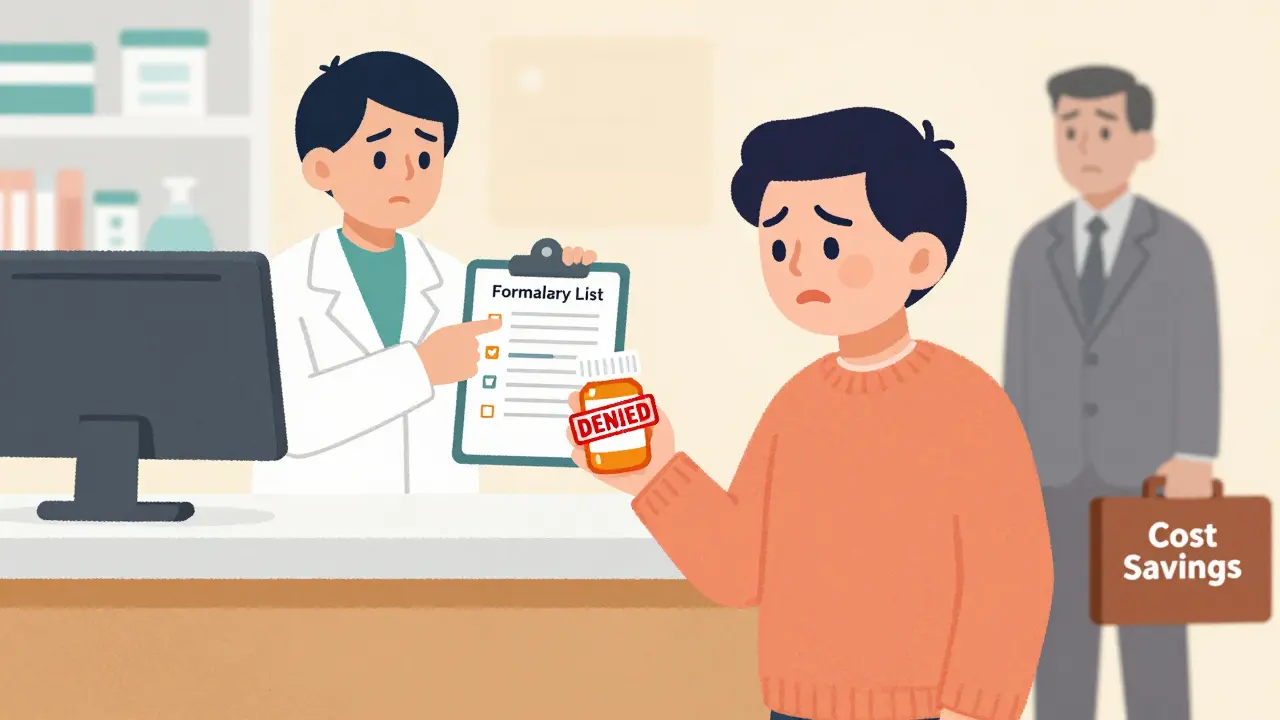
When your doctor prescribes a generic medication and the pharmacy says it’s not covered, it’s not a mistake. It’s a non-formulary generic-a drug that’s cheap, effective, and FDA-approved, but your insurance plan doesn’t list it. This happens more often than you think. In 2022, over 12.7% of all generic prescriptions were blocked by formulary restrictions. For people with chronic conditions like Crohn’s disease, diabetes, or epilepsy, that denial can mean going without treatment for weeks while you fight to get what you need.
Why your insurance won’t cover a generic drug
Generic drugs are supposed to be the affordable alternative to brand-name meds. But insurance companies don’t cover all of them. They build a list-called a formulary-that includes only the generics they’ve negotiated lower prices for. Even if a drug is identical in active ingredients, your plan might exclude it because it’s not part of their preferred supplier deal. For example, you might be prescribed generic metformin ER, but your plan only covers the immediate-release version. Or your doctor recommends a specific generic mesalamine for ulcerative colitis, but your insurer only lists two other brands on their list. The drug works. It’s safe. It’s cheaper than the brand. But it’s not on the list. So they deny it. This isn’t about cost savings for the patient. It’s about profit margins for the plan. Studies show patients pay 3.7 times more out-of-pocket for non-formulary generics. One person paid $417 for 90 days of generic metformin ER when the same drug normally costs $15. That’s not a pricing error. That’s how the system works.The legal right to appeal
You’re not stuck. Federal law requires every Medicare Part D and most commercial insurance plans to have a formal exceptions process. If a drug is medically necessary and alternatives won’t work, you have the right to ask for coverage-even if it’s not on the formulary. The process isn’t magic. It’s paperwork. But it works. The Crohn’s & Colitis Foundation found that 58% of initial denials for non-formulary generics are overturned on appeal. The Bleeding Disorders Advocacy Alliance reports 74% of well-documented requests get approved on the first try. Here’s the key: your doctor has to say why the formulary alternatives won’t work. Not just “it’s better.” Not “I prefer it.” They need clinical proof. For diabetes: show A1c levels that improved on the specific generic. For IBD: cite fecal calprotectin levels or endoscopy results. For epilepsy: document seizure frequency before and after switching. The more specific the data, the higher the chance of approval.How to file an exception request
Step 1: Get the denial in writing. The pharmacy must give you a formal coverage determination within 24 hours of your request. Keep a copy. Step 2: Ask your doctor to complete the Coverage Determination Request form. This isn’t a quick signature. It needs:- Why every covered alternative would fail (e.g., “Patient had severe diarrhea on generic A, rash on generic B”)
- Previous failed attempts with dates
- Specific clinical data proving medical necessity
- Risk of harm if switched

What to do if your request is denied
If your first request gets denied, don’t give up. You have two more steps. First: Internal Appeal. File within 60 days of the denial. Include any new lab results, letters from specialists, or evidence that the drug worked before. Many approvals happen here. Second: External Review. If the plan says no again, you can request an independent third-party review. This is mandatory under federal law. The review body doesn’t work for your insurer. They look at the clinical evidence alone. The timeline? Standard appeals take 14-21 days. If you’re in danger-like you’re having seizures or your blood sugar is sky-high-you can ask for an expedited review. The plan must respond in 24 hours. Emergency supplies (72 hours of medication) must be provided during the wait. But here’s the catch: 37% of plans skip this step. If they do, file a complaint with your state insurance department.Costs and hidden traps
Even if you win the exception, you’re not out of the woods. Federal rules say: if your non-formulary drug is approved, you can’t ask for a lower cost-sharing tier. That means you might still pay $150 a month for a drug that’s $20 on the formulary list. That’s not a typo. It’s a loophole. Dr. Mark Parisi at MMIT warns: “Many providers don’t realize you can request a tier exception separately.” So even if the drug is covered, you’re stuck with high copays unless you file a second, independent request. And then there’s the waiting game. Over 78% of people on patient forums say they went without medication during the 72-hour review period. For some, that’s dangerous. If you’re on a drug for heart failure or epilepsy, those days matter.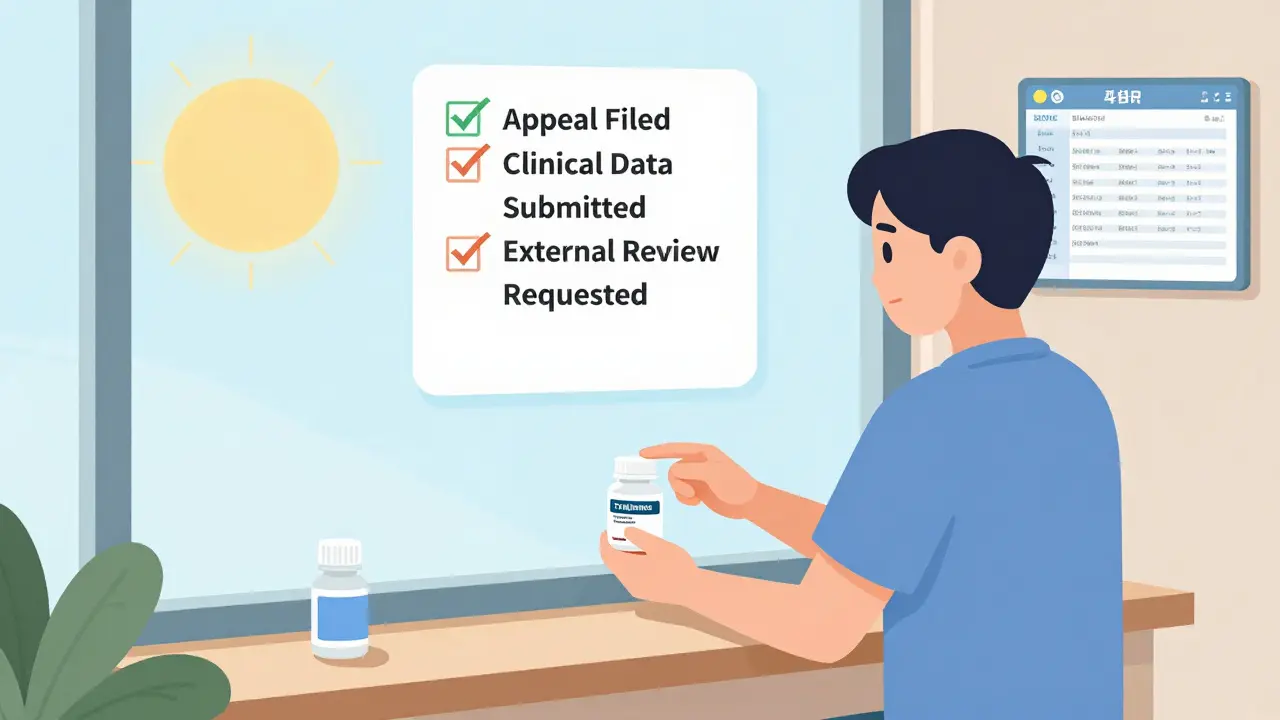
What’s changing in 2025
The system is slowly improving. In October 2023, CMS rolled out standardized clinical criteria for common conditions like diabetes, IBD, and hypertension. Doctors now have clearer templates for what evidence to include. Early results show a 15-20% drop in denials. The Inflation Reduction Act of 2023 now forces Medicare plans to automatically approve exceptions for insulin and naloxone-two drugs where delays can be deadly. By 2025, CMS plans to connect the exception process directly to electronic health records. That means your doctor’s notes, lab results, and prescriptions will auto-populate the request. No more typing. No more missing data. Just a click. But new problems are emerging. Some plans are carving out certain generics-like bioidentical hormones or compounded medications-into specialty pharmacy networks. These aren’t covered under standard formularies at all. And they’re not always subject to the same appeal rules.What you can do today
If you’re facing a denial:- Don’t accept “no” as final. Ask for the formulary exception process.
- Insist your doctor documents clinical data-not opinions.
- Ask about emergency supplies if you’re at risk.
- File a tier exception separately if your drug is approved but too expensive.
- Use resources like the Crohn’s & Colitis Foundation’s toolkit or GoodRx’s appeal guide.
What is a non-formulary generic?
A non-formulary generic is a generic medication that your insurance plan doesn’t include on its approved list of covered drugs-even though it’s the same active ingredient as a covered version. These drugs are often cheaper than brand names but excluded due to cost-negotiation deals between insurers and drug manufacturers.
Can I still get a non-formulary generic if it’s denied?
Yes. Federal law requires insurers to offer an exceptions process. If your doctor proves the drug is medically necessary and alternatives won’t work or would cause harm, your plan must approve coverage. About 58% of initial denials are overturned through this process.
How long does the exception process take?
Standard requests take up to 72 business hours. For urgent cases-like risk of hospitalization or worsening symptoms-the plan must respond within 24 hours. You can also request emergency supplies of the drug for up to 72 hours while your request is reviewed.
Do I have to pay more if my non-formulary drug is approved?
Yes. Even if your exception is approved, you may still pay a higher copay because you can’t request a lower cost-sharing tier for non-formulary drugs. You need to file a separate tier exception request to reduce your out-of-pocket cost.
What if my appeal is denied?
You can file an internal appeal within 60 days. If that’s denied, you’re entitled to an external review by an independent third party. This is mandatory under federal law. Many approvals happen at this stage, especially when clinical data is strong.
Which drugs are most often denied?
Gastrointestinal drugs like mesalamine for IBD have the lowest approval rates-only 52% in 2022. Autoimmune, neurological, and psychiatric generics also face high denials. Insurers often claim “therapeutic alternatives” exist, even when those alternatives cause side effects or don’t work for the individual.
Can I get help filing an appeal?
Yes. Organizations like the Crohn’s & Colitis Foundation, Patients Rising, and state health insurance assistance programs (SHIP) offer free templates, guides, and advocacy help. GoodRx also provides step-by-step appeal tools. Don’t go it alone-use the resources available.
Why do insurance plans exclude effective generics?
Insurers exclude generics to control costs and steer patients toward drugs they’ve negotiated lower prices for. Even if two generics are identical, one may be cheaper for the plan due to bulk contracts. Exclusion isn’t about safety or effectiveness-it’s about profit.
What’s the success rate for appeals?
Overall, 68.4% of non-formulary exception requests are approved on the first submission, according to CMS data. But success depends on documentation. Requests with specific clinical evidence have approval rates as high as 74%, while vague requests are denied over 80% of the time.
Are there any new rules coming in 2025?
Yes. By 2025, CMS plans to integrate the exception process directly into electronic health records, cutting processing time by 40%. Also, Medicare will automatically approve exceptions for insulin and naloxone. These changes aim to reduce delays and paperwork for patients with life-threatening conditions.
So let me get this straight - the system is designed to make you pay 3.7x more for the exact same drug because some suit in a cubicle decided the manufacturer didn't negotiate hard enough? Wow. I'm shocked. Not. This isn't healthcare. It's a rigged casino where your life is the chip and the house always wins. And don't get me started on the 'tier exception' loophole. Like, oh you got your drug approved? Cool. Now pay $150 a month because why make it easy when you can extract maximum suffering?
Anyone who thinks this is about 'cost savings' is delusional. Insurance companies aren't charities. They're profit machines disguised as protectors of public health. The fact that 78% of people go without meds during the 72-hour review window? That's not a glitch. That's the business model. And if your doctor doesn't document every single lab result like they're writing a PhD thesis? Too bad. You lose. Welcome to American healthcare.
One cannot help but observe the structural alienation inherent in the pharmaceutical-industrial complex - a Hegelian dialectic where the patient is the thesis, the insurer the antithesis, and the formulary the synthesized negation of human dignity. The very notion of 'medical necessity' has been commodified into a bureaucratic performance art, wherein clinical truth is rendered legible only through the hermeneutics of paperwork. The irony? The drug is identical. The suffering is not. And yet, the system persists - not because it is efficient, but because it is profitable. The patient becomes a cipher in a ledger, not a subject of care.
I remember when I was denied my generic mesalamine last year - I had to go 11 days without it because the pharmacy said 'not on formulary' and my doctor was on vacation. I was in so much pain I cried in the bathroom at work. I had to call my GI specialist at 2 a.m. to beg her to fill out the form. She said she’d done 47 of these last month. Forty-seven. And that’s just her. Imagine how many people just give up. I didn’t. I fought. I sent copies to my state senator. I wrote to the insurance CEO. I even got a letter from my local pharmacist saying ‘this is ridiculous.’ And guess what? They approved it on the second appeal. But it took 37 days. Thirty-seven days of pain. Of missing work. Of being terrified that this was going to be the flare that landed me in the hospital. And now? I’m still paying $140 a month for a drug that costs $18 elsewhere. So yeah. I won. But I lost too.
Same. Got denied my generic metformin ER. Paid $390. Called pharmacy. They said ‘it’s not on list.’ Called doc. They said ‘file appeal.’ Filed. Waited. Got approved. Still pay $120. No one talks about the tier exception. That’s the real scam.
It is imperative to clarify that the term 'non-formulary generic' is not a misnomer, nor is it a failure of the healthcare system - it is a deliberate and lawful mechanism of cost-containment under the auspices of managed care. The patient’s right to appeal is not a privilege, but a statutory obligation of the insurer, and compliance with federal regulations is non-negotiable. Any assertion that this is 'profit-driven' ignores the actuarial models and risk-pooling principles that sustain insurance solvency. To equate formulary exclusions with malice is both logically fallacious and empirically unsound.
I just cried reading this. 🥺 I’ve been through this with my epilepsy meds. The 72-hour wait? I had a seizure on day 3. My mom had to drive 45 minutes to the ER just to get a 3-day supply because the pharmacy said ‘nope, not covered.’ I’m so glad you mentioned emergency supplies - most people don’t know they’re legally entitled to them. Please, if you’re reading this and you’re being denied - DO NOT GIVE UP. You’re not alone. I’ve been there. And I’m still here. 💪❤️
Let’s be honest - most patients don’t have the cognitive bandwidth to navigate this. The entire system is designed to extract value from the vulnerable. The ‘clinical data’ requirement? That’s a gatekeeping mechanism disguised as evidence-based medicine. You need to be a medical anthropologist just to get your damn metformin. And the fact that CMS is ‘integrating’ this into EHRs in 2025? That’s not progress - that’s just automating the bureaucracy. We’re not fixing the system. We’re just making it faster at breaking people.
i had this happen with my dad’s heart med. doc filled out the form but missed one box. got denied. we had to resubmit. i think i cried in the car. he’s 72 and still works part time just to afford meds. i just want people to know - it’s not you. it’s the system. and you’re not being lazy for struggling. this is hard. really hard.
Perhaps the deeper question is not how to navigate the system, but why we have allowed healthcare to become a transactional domain at all. The fact that a drug’s efficacy is irrelevant if it doesn’t align with a corporate contract speaks to a civilization that has confused value with price. The non-formulary generic is not merely a denied prescription - it is a mirror held up to our collective moral decay. We have outsourced compassion to actuaries. And now we wonder why people suffer in silence.