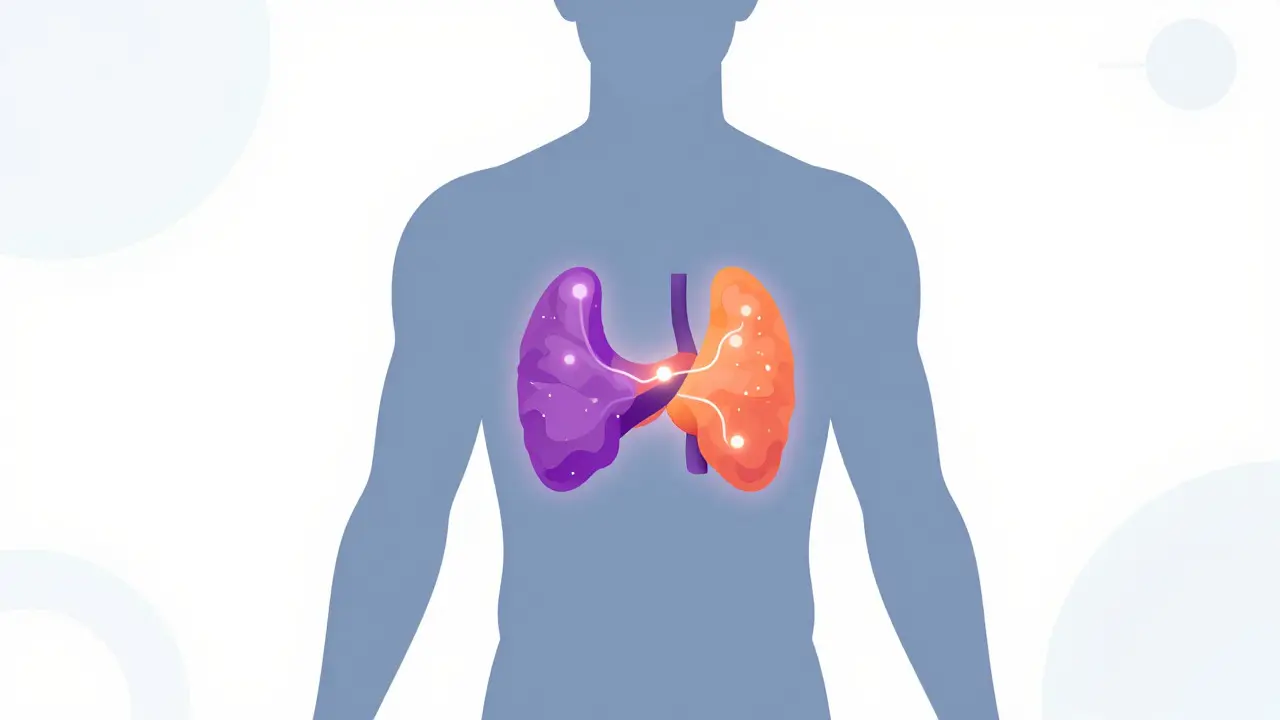
Imagine trying to tune a radio while someone keeps changing the station. That is essentially what happens in your body when you have both diabetes and a condition affecting blood sugar control and a thyroid disorder. These two conditions are not just random neighbors in the world of health; they are deeply connected partners that influence each other constantly. If you have one, you are significantly more likely to develop the other. Understanding this link isn't just academic-it can save you from dangerous complications and help you feel like yourself again.
The Hidden Connection Between Your Glands
Your body runs on hormones, which act like messengers telling different parts of what to do. The pancreas produces insulin to manage blood sugar, while the thyroid gland regulates metabolism. When these systems talk to each other properly, everything runs smoothly. But when one fails, the other often follows suit. Research published in Nature Communications in 2024 highlights that about 21.9% of people with thyroid dysfunction also have Type 2 diabetes, compared to only 16.96% in the general population. This isn't a coincidence. It’s biology.
Think of it this way: if your thyroid is underactive (hypothyroidism), your metabolism slows down by roughly 25-30%. This slowdown makes your cells resistant to insulin, causing blood sugar levels to rise. On the flip side, an overactive thyroid (hyperthyroidism) speeds up glucose metabolism by 15-20%, which can lead to rapid drops in blood sugar or require higher doses of insulin. For those with Type 1 diabetes, the risk is even starker. You are 5 to 10 times more likely to develop a thyroid issue because both conditions share autoimmune roots. Your immune system mistakenly attacks both the pancreas and the thyroid.
Why Symptoms Confuse Even Doctors
One of the biggest challenges in managing these conditions is that they wear the same disguise. Fatigue, weight changes, hair loss, and mood swings are common complaints for both diabetes and thyroid disease. In fact, studies show that fatigue affects 78% of patients dealing with both issues, while unexplained weight changes occur in 65-70% of coexisting cases. This overlap creates a diagnostic fog where doctors might treat one condition while missing the other.
Consider muscle cramps, hoarse voice, or poor memory. While less common, these symptoms appear in significant numbers of patients-muscle cramps in 33% and memory issues in 45%-and often point toward thyroid involvement rather than just blood sugar fluctuations. The danger lies in misattribution. Hypothyroidism can mask the warning signs of low blood sugar (hypoglycemia). A study from Tampa Bay Endocrine Institute found that 41% of patients experienced unrecognized low blood sugar episodes because their slowed metabolism hid the typical shaking or sweating signals. Without proper testing, you might think your diabetes medication is working perfectly when, in reality, your thyroid is throwing off the balance.

How Each Condition Changes Treatment Needs
Managing diabetes alone requires careful monitoring. Managing it alongside a thyroid disorder requires precision engineering. Your thyroid status directly dictates how much insulin or medication your body needs. Dr. Elena Rodriguez, Chief of Endocrinology at Johns Hopkins, notes that untreated hyperthyroidism can increase insulin requirements by 20-40%. Conversely, hypothyroidism can decrease insulin needs by 15-25%. Ignoring these shifts leads to glycemic instability, meaning your blood sugar swings wildly without warning.
This dynamic also affects how your body processes medications. Levothyroxine, the standard treatment for hypothyroidism, relies on good absorption in the gut. However, many diabetics suffer from gastroparesis-a condition where stomach emptying slows due to nerve damage. Research indicates that levothyroxine absorption decreases by 15-20% in these patients. If you take your thyroid pill with food or don’t account for delayed stomach emptying, you might be taking a placebo. Similarly, hyperthyroidism increases the clearance of insulin from your body by 20-25%, meaning you might need up to 30% more insulin to achieve the same effect. Adjusting dosages without understanding this interaction is like driving blindfolded.
| Thyroid Condition | Effect on Metabolism | Impact on Insulin Needs | Key Risk |
|---|---|---|---|
| Hypothyroidism | Slows by 25-30% | Decreases by 15-25% | Masked hypoglycemia; elevated LDL cholesterol |
| Hyperthyroidism | Accelerates by 15-20% | Increases by 20-40% | Rapid glucose utilization; higher hospitalization risk |
| Euthyroid (Normal) | Stable | Predictable | Standard diabetes management applies |
Long-Term Health Risks of Untreated Comorbidity
Leaving either condition unchecked while treating the other invites serious complications. The heart is particularly vulnerable. Hypothyroidism in diabetic patients elevates LDL cholesterol by 18-22 mg/dL and triglycerides by 25-30 mg/dL. This combination dramatically raises the risk of cardiovascular events, which are already a leading cause of death in diabetics. Beyond the heart, your eyes are at stake. A 2024 study revealed that Type 2 diabetes patients with subclinical hypothyroidism had a 37.2% higher risk of developing diabetic retinopathy, a condition that can lead to blindness if not managed early.
The financial toll is equally heavy. Patients with both thyroid disease and diabetes incur $4,872 higher annual healthcare costs compared to those with diabetes alone. This extra cost stems from increased emergency visits, hospitalizations, and complication management. Dr. Michael Chen from Harvard Medical School found that proper integrated care reduces hospitalization rates by 22% and emergency department visits by 17%. Treating them as separate issues is not just medically inefficient; it’s economically draining.
A Practical Guide to Integrated Care
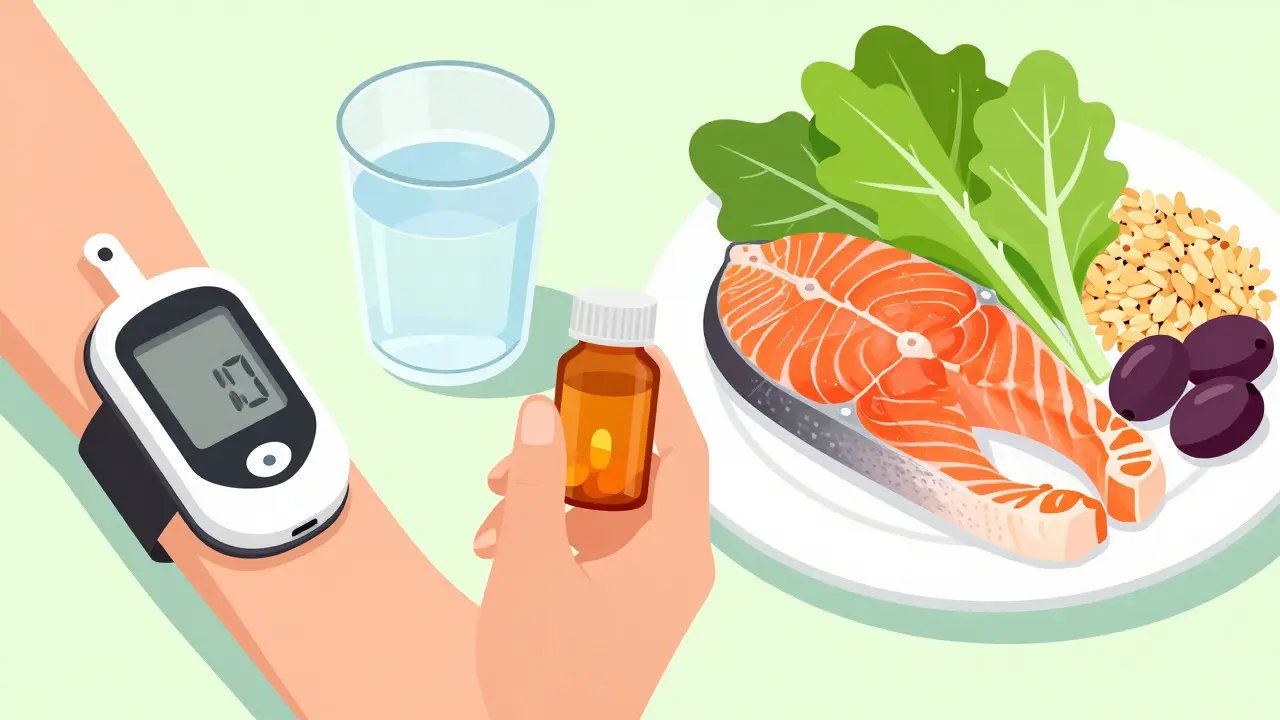
So, how do you break the cycle? First, demand comprehensive screening. The American Diabetes Association now recommends annual TSH testing for all Type 1 diabetes patients and high-risk Type 2 patients. If you have both conditions, quarterly TSH checks are advisable. Don’t wait for symptoms to appear; look at the data. Second, consider technology. Continuous Glucose Monitors (CGMs) have proven invaluable for dual-diagnosis patients. A 2022 JAMA Internal Medicine study showed CGM users had 32% fewer hypoglycemic events and better time-in-range metrics than those relying on fingersticks. Real-time data helps you see how thyroid fluctuations impact your sugar levels instantly.
Diet plays a crucial role too. The Mediterranean diet has shown measurable efficacy, improving HbA1c by 0.8-1.2% and TSH levels by 0.5-0.7 mIU/L in six-month trials. Focus on whole foods, healthy fats, and fiber to stabilize both blood sugar and inflammation. Finally, communicate openly with your care team. Ensure your endocrinologist knows about your diabetes and your primary care doctor knows about your thyroid. Fragmented care leads to fragmented results. By treating your endocrine system as a unified network, you regain control over your health and reduce the guesswork in daily management.
Should I get tested for thyroid disease if I have diabetes?
Yes, absolutely. Current guidelines from the American Diabetes Association recommend annual TSH testing for all Type 1 diabetes patients and high-risk Type 2 patients. Given that 30% of diabetic patients have some form of thyroid disorder, regular screening is essential to catch issues early before they complicate blood sugar control.
Can thyroid medication affect my blood sugar levels?
Yes. Starting or adjusting thyroid medication can significantly change your insulin requirements. Hyperthyroidism increases insulin needs by up to 40%, while hypothyroidism decreases them by up to 25%. Always monitor your blood sugar closely when starting new thyroid treatments and consult your doctor for dosage adjustments.
What are the shared symptoms between diabetes and thyroid disease?
Common overlapping symptoms include fatigue (78% of combined cases), unexplained weight changes (65-70%), hair loss (42%), skin changes (37%), mood swings (55%), and temperature intolerance (61%). Because these symptoms mimic each other, specific tests are needed to distinguish the root cause.
How does hypothyroidism mask hypoglycemia?
Hypothyroidism slows down overall metabolism and physiological responses. This can dampen the typical adrenaline-driven symptoms of low blood sugar, such as shaking, sweating, or rapid heartbeat. As a result, 41% of patients may experience unrecognized hypoglycemic episodes, making continuous glucose monitoring highly recommended.
Is there a dietary approach that helps both conditions?
The Mediterranean diet is highly effective for both. Studies show it can improve HbA1c levels by 0.8-1.2% and lower TSH levels by 0.5-0.7 mIU/L within six months. It focuses on anti-inflammatory foods, healthy fats, and fiber, which support stable blood sugar and reduced autoimmune activity.