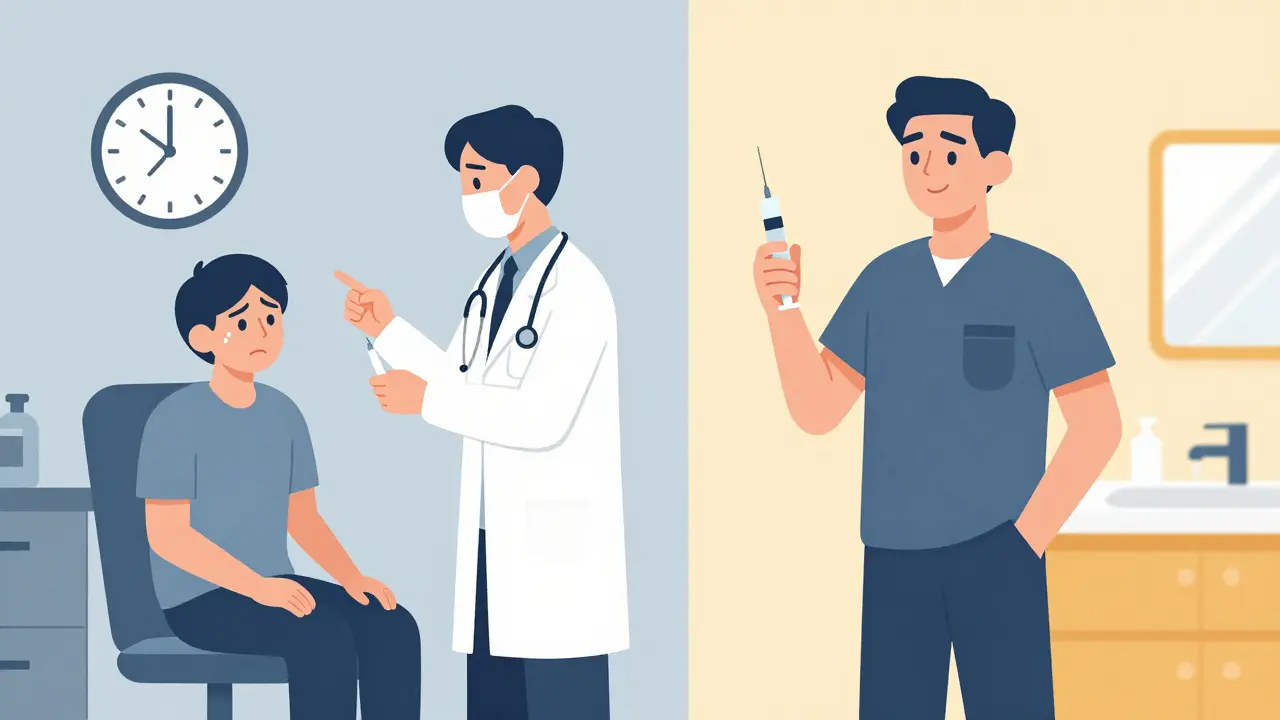
Imagine being handed a pen that holds your medicine for the next six months. You’re told it’s simple. You watch a quick demo, try it once on a dummy device, and then you’re sent home with a box of real needles. This is the reality for millions of people starting biologic therapies, which are complex drugs derived from living organisms used to treat conditions like rheumatoid arthritis, psoriasis, and Crohn's disease. But here is the catch: if you do not inject correctly, you risk more than just a bruise. You risk serious skin infections and treatment failure.
The stakes are high. Biologics suppress parts of your immune system to stop inflammation. When your immune defense is lowered, even a minor break in sterile technique can lead to significant complications. Yet, current training practices often leave patients unprepared. Studies show that nearly one-third of patients receive little to no formal hands-on training before their first home injection. This gap between clinical expectation and patient reality creates a dangerous environment where anxiety and improper technique collide.
The Reality of Current Training Gaps
You might think your doctor spent an hour teaching you how to use your new medication. In many cases, they did not. A 2022 study published in PubMed by Hawthorne et al. found that while 91.7% of patients reported receiving some form of training, the average duration was shockingly short. Patients reported spending only about 38 minutes in total training time. Healthcare providers, who are often rushed, reported spending even less-around 30 minutes.
This brevity matters because effective learning requires repetition. The same study highlighted that only 27% of patients received the "gold standard" of training, which includes three components: verbal instruction (tell), demonstration (show), and supervised practice (try). Without all three, you are guessing. Another study in Dove Medical Press revealed that 11.5% of biologic-naïve patients received absolutely no training at all. They were given verbal instructions and expected to figure it out alone.
Why does this happen? Time constraints in clinics are severe. Doctors are not trained as teachers; they are trained as diagnosticians. As Dr. Marty Coyne, a co-author of the 2022 study, noted, the current paradigm relies heavily on trial-and-error. This approach fails both the patient and the provider. When you leave the clinic without confidence, the likelihood of stopping your treatment skyrockets. Discontinuation rates within the first year can reach 45%, largely due to fear and lack of skill.
Anatomy of a Safe Injection
To prevent infection and ensure the drug works, you need to understand the mechanics of the device and the biology of your skin. Most modern biologics come in autoinjectors or prefilled syringes designed to hide the needle. While this reduces visual anxiety, it requires specific handling techniques. If you press too hard, angle wrong, or remove the device too early, you may not deliver the full dose or may damage tissue.
Here is what proper preparation looks like:
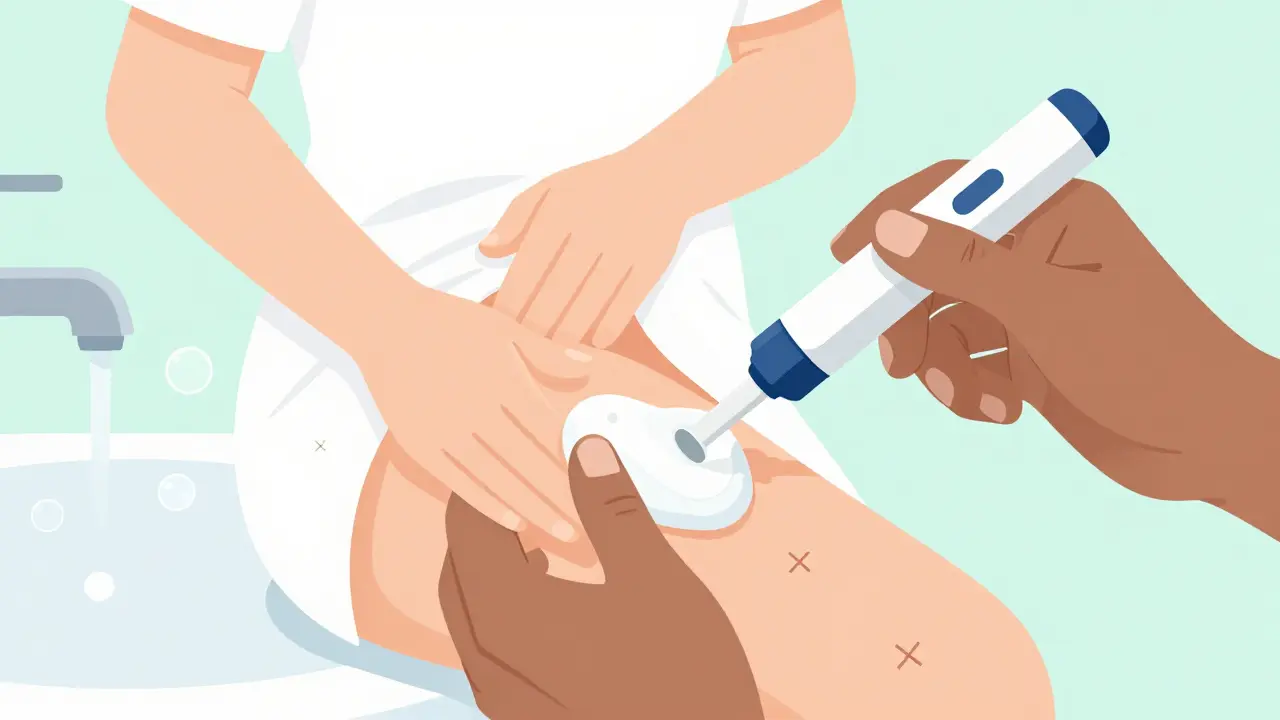
- Hand Hygiene: The Centers for Disease Control and Prevention (CDC) mandates washing hands with soap and water for at least 20 seconds. Alcohol wipes are a backup but do not replace thorough washing if hands are visibly dirty.
- Site Selection: Common sites include the abdomen (avoiding the 2-inch area around the navel), thighs, and upper arms. You must rotate sites. Injecting into the same spot repeatedly causes lipodystrophy (dents or lumps under the skin), which can affect drug absorption and increase infection risk.
- Spacing: Keep injections at least 1 inch apart. This allows the previous site to heal fully before introducing a new needle.
- Cleanliness: Clean the injection site with an alcohol swab and let it air dry completely. Do not blow on it or wave your hand over it, as this introduces bacteria.
The device itself usually has a colored button or cap. Understanding the weight and balance of the pen is crucial. Many patients report shaking or trembling during the first few attempts. Practicing with a trainer device-which looks and feels exactly like the real thing but has no needle or drug-can reduce this anxiety by up to 65%. It allows you to make mistakes without consequence.
Infection Risks and Warning Signs
Because biologics modulate the immune system, your body’s ability to fight off bacteria introduced during injection is compromised. The CDC’s 2022 guidelines emphasize that improper technique increases infection risk by 37%. This isn’t just theoretical; it affects real lives. Improper self-injection contributes to 12.7% of outpatient skin and soft tissue infections related to injectable medications.
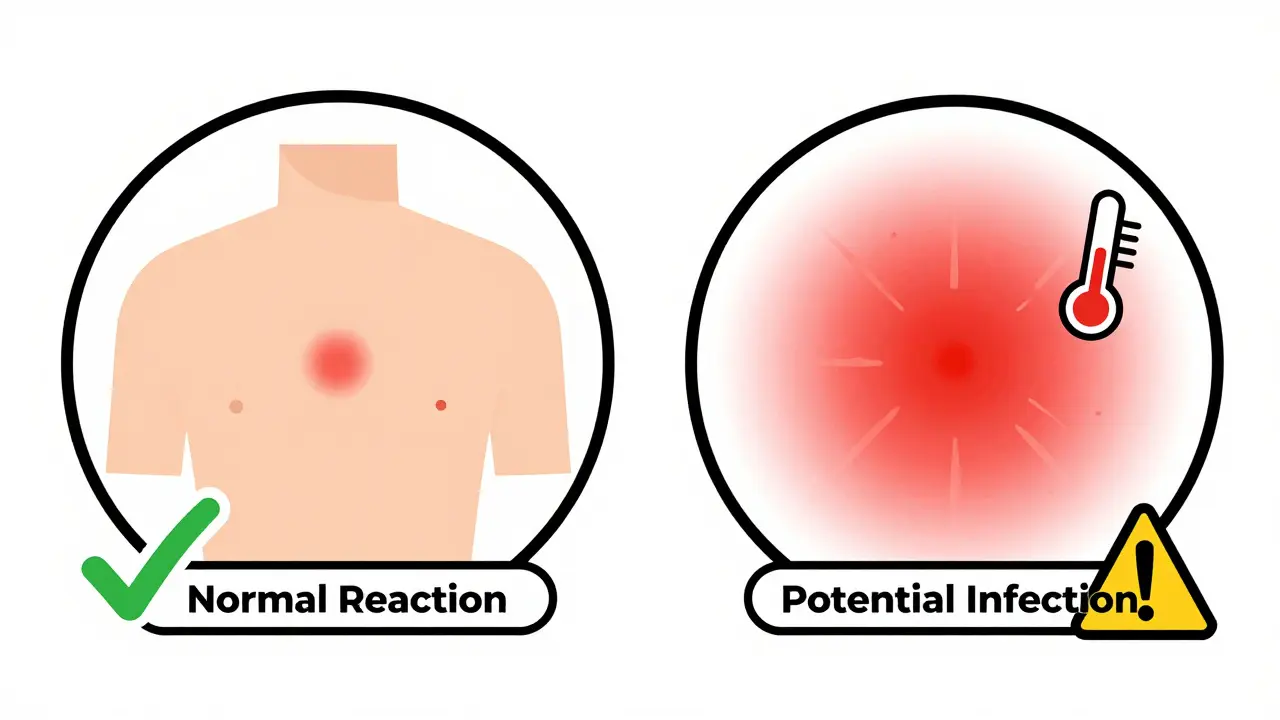
What should you look for? Not every redness is an infection. Mild redness or itching at the site is common and usually resolves within a day. However, you need to distinguish normal reactions from signs of trouble.
| Symptom | Normal Reaction | Potential Infection |
|---|---|---|
| Redness | Mild, less than 2cm diameter | Expanding redness >2cm, spreading streaks |
| Pain | Mild stinging or ache | Throbbing, increasing pain after 24 hours |
| Temperature | Warmth at site only | Fever >100.4°F (38°C) or hot to touch |
| Duration | Resolves in 24-48 hours | Worsens or persists beyond 3 days |
| Discharge | None or slight clear fluid | Pus, yellow/green discharge |
If you notice any signs in the "Potential Infection" column, contact your healthcare provider immediately. Do not wait. Early intervention prevents abscesses and systemic infections, which are far more dangerous when your immune system is suppressed.
Mastering the Technique: Beyond the Basics
Knowing the steps is different from doing them confidently. Research shows that distributing training over multiple short sessions is far more effective than one long session. Drug Delivery Business Journal (2023) found that spaced-out training increased patient retention of critical steps by 62%. If your doctor only gave you one chance to practice, take the initiative to ask for a follow-up.
Use the "Teach-Back" method. After your provider demonstrates the injection, explain it back to them and perform it on a trainer device. Ask them to correct your grip, angle, and pressure. Pay attention to these details:
- Grip: Hold the pen firmly but not tightly. A loose grip can cause the device to twist during activation.
- Angle: Most pens are designed for a 90-degree angle into the skin. Some allow 45 degrees for thinner patients. Confirm which applies to you.
- Activation: Press the button firmly and hold. Do not pull the pen away until you hear the click or see the indicator window change color. Premature removal is a common error that leads to under-dosing.
- Pressure: Apply steady pressure. Jerky movements can cause needle bending or incomplete delivery.
Emotional readiness is just as important as mechanical skill. Anxiety triggers muscle tension, which makes injection harder. James Hawthorne’s research indicates that emotional factors contribute to 57% of early treatment discontinuations. Developing a personal "injection ritual" can help. This might include deep breathing exercises, listening to calming music, or injecting at the same time each day to build routine. One Reddit user shared that anchoring their injection to their morning coffee routine helped them overcome the dread associated with the process.
Resources and Support Systems
You do not have to do this alone. Pharmaceutical manufacturers are increasingly providing digital support tools. Platforms like Adbry’s resource portal offer video demonstrations, virtual coaching, and injection tracking. These tools provide "just-in-time" training, meaning you can watch a refresher video right before you inject. This approach reduced technique errors by 48% in the first six months of therapy.
Pharmacists are also undervalued resources. Allan Osiemo, PharmD, BCPS, developed the "TEACH" framework to address biologic hesitancy. Pharmacists spend more time counseling patients on medication use than doctors often can. Ask your pharmacist to demonstrate the device again. They are trained in medication counseling and can offer practical tips on storage, disposal, and technique.
Proper disposal is part of safety. Never throw needles in the regular trash. Use a FDA-cleared sharps container. If you don’t have one, a heavy-duty plastic laundry detergent bottle can serve as a temporary substitute, but check local regulations. Improper disposal poses a risk to sanitation workers and family members.
Next Steps for Patients
If you are starting a biologic therapy, advocate for yourself. Request a dedicated training session separate from your medical consultation. Ask for a trainer device to keep at home. Practice until you can perform the injection blindfolded (without the needle, of course). Confidence comes from competence.
Monitor your injection sites closely. Keep a log of where and when you inject to ensure proper rotation. Take photos of any unusual reactions to show your doctor. Remember, the goal is not just to get the drug into your body, but to do so safely and consistently. Your health depends on the precision of this small, daily act.
How long does biologic injection training typically take?
Ideally, training should be distributed over multiple sessions totaling 90-120 minutes. However, studies show the average real-world training time is only 30-38 minutes. This gap highlights the need for patients to seek additional practice opportunities, such as follow-up visits or digital resources.
Can I inject myself if I am afraid of needles?
Yes. Modern autoinjectors conceal the needle, reducing visual anxiety. Using a trainer device allows you to practice the motion without the fear of a sharp object. Techniques like deep breathing and having a supportive person present can significantly reduce anxiety. If fear persists, ask your provider about topical numbing creams.
What should I do if I miss an injection?
Do not double dose. Inject the missed dose as soon as you remember, unless it is almost time for your next scheduled dose. Then skip the missed dose and return to your regular schedule. Consult your medication guide or healthcare provider for specific instructions related to your drug, as protocols vary.
How do I know if my injection site is infected?
Watch for redness larger than 2cm, expanding streaks, pus, increasing pain, or fever above 100.4°F (38°C). Mild redness and itching are normal and should resolve within 48 hours. If symptoms worsen or persist beyond three days, contact your doctor immediately.
Is it safe to reuse biologic pens or syringes?
No. Biologic devices are single-use only. Reusing them increases the risk of infection, needle breakage, and inaccurate dosing. Always dispose of used devices in a proper sharps container according to local regulations.
Where are the best places to inject biologics?
The most common sites are the abdomen (avoiding the navel), thighs, and upper arms. You must rotate sites to prevent tissue damage. Keep injections at least 1 inch apart. Follow the specific instructions provided by your healthcare provider, as some drugs have preferred sites.